Blog
Learning Materials
8 clear signs your hair growth is improving
Updated: May 5, 2026
TL;DR:
- Reduced hair shedding, new baby hairs, and thicker strands are key signs of hair regrowth. Tracking these small changes over months helps confirm progress and guides personalized treatment adjustments. Consistent documentation and professional evaluations are essential for effective hair recovery.
Watching your hair every day can make it nearly impossible to spot genuine progress. Most people dealing with thinning or shedding struggle with a frustrating question: is this actually working? The problem is that real hair regrowth is slow, subtle, and easy to misread. But specific, research-backed signs do exist, and knowing exactly what to look for changes everything. This article walks you through eight concrete indicators that your hair is recovering, how to measure each one accurately, and what personalized steps can accelerate your results.
Table of Contents
- How to tell if your hair growth is improving: signs to watch for
- Reduced hair shedding: The early improvement indicator
- Emergence of baby hairs and vellus hair: What new growth looks like
- Thicker strands and improved hair texture: Measuring real progress
- Personalized hair growth care: Boosting and sustaining improvement
- Our expert perspective: Why tracking signs matters more than timing
- Next steps: Analyze and optimize your results with MyHair
- Frequently asked questions
Key Takeaways
| Point | Details |
|---|---|
| Less shedding | Noticing fewer hairs lost during brushing or washing suggests your follicles are getting healthier. |
| New baby hairs | Soft, fine 'peach fuzz' around your hairline indicates active regrowth is underway. |
| Thicker strands | Hair that feels and looks denser than before shows meaningful progress toward fuller coverage. |
| Personalized care boosts results | Adjusting your routine based on nutrition, targeted treatments, and tracking leads to better long-term growth. |
| Expert confirmation | Dermatologist visits or advanced AI analysis provide the most reliable confirmation of your hair improvement. |
How to tell if your hair growth is improving: signs to watch for
Signs of improvement rarely show up overnight. Hair growth cycles are measured in months, not weeks, and the changes are usually gradual. But that doesn't mean you're left guessing. There are real, observable signals that tell you your follicles are responding.
It helps to understand a few terms before you start tracking. Shedding refers to the daily loss of hair strands from the root. Hair shaft diameter describes the thickness of an individual strand. Vellus hair (often called peach fuzz) is the fine, light hair that precedes full, pigmented growth. These definitions matter because the signs you're watching for involve each of these elements at different stages of the recovery process. Understanding the difference between stronger hair growth tips and general wellness advice can also sharpen your focus.
Here are the major signs that indicate your hair is moving in the right direction:
- Less hair shedding during washing and brushing
- New baby hairs or vellus growth at the hairline and temples
- Increased strand thickness and improved texture
- Reduced scalp visibility through parts and thinning zones
- Improved scalp health (less flaking, irritation, or inflammation)
- Stronger, less breakage-prone strands
- Fuller-looking ponytail volume or overall density
- Faster nail and hair growth rate (a systemic signal of improved nutrition)
Connecting your daily diet to these signs is often overlooked. Exploring foods for healthy hair gives you a practical starting point for fueling the recovery you're trying to measure.
Pro Tip: Track changes for at least 3 months before drawing conclusions. Hair growth cycles take time, and short-term variation can be misleading.
Reduced hair shedding: The early improvement indicator
With a foundation of common signs established, let's zoom in on one that's often most reassuring: reduced shedding.
Losing hair is normal. Most people shed between 50 and 100 strands per day as part of the natural growth cycle. The problem starts when that number climbs significantly or stays elevated for weeks. When you're recovering from thinning, one of the first measurable improvements is a noticeable drop in daily hair fall.
You might start noticing less hair collecting in the shower drain. Your brush gathers fewer strands after a single pass. Your pillow is cleaner in the morning. These small shifts are meaningful. Reduced shedding during washing signals that follicles are re-entering the active growth phase, which is called the anagen phase.
"Hair fall decreases when follicles shift back into the growth phase. This shift is one of the earliest measurable signs that a treatment or lifestyle change is having a positive effect on the scalp environment."
This is exactly why tracking shedding matters so much in the early months of any hair care regimen. If you're trying natural hair growth steps for the first time, reduced shedding is your first checkpoint.
Here are simple ways to monitor your shedding at home:
- Photo diary: Take a weekly photo of your brush or drain catch under consistent lighting. The difference over 8 weeks is often striking.
- Hair collection bag: Use a fine mesh bag in your drain for one week each month and count or visually compare the collected hair.
- Pillowcase check: Note how many hairs are on your pillow each morning. Fewer over time is a positive signal.
- Wash day count: Gently collect and count shed hairs during a single wash session once per month to establish a rough baseline.
The key is consistency. Measuring on different days or under different conditions introduces noise that makes it hard to see the trend.
Emergence of baby hairs and vellus hair: What new growth looks like
Reduced shedding is promising, but what about visible proof? Let's look at the arrival of new hairs and how to spot them.
Vellus hair and terminal hair are two very different things. Vellus hair is fine, soft, and often colorless or lightly pigmented. It's sometimes called peach fuzz, and while it looks fragile, its presence is actually a strong positive indicator. It means dormant follicles are becoming active again. Terminal hair is thicker, fully pigmented, and represents the mature end of the regrowth process.
When follicles recover, they typically produce vellus hair first before graduating to terminal strands. This transition can take several months but is a reliable sign that the process is moving forward.
Research using a diagnostic method called phototrichogram (a technique for measuring individual hair fibers on the scalp) found that vellus hair counts in recovering androgenetic alopecia areas averaged 12.4 compared to just 3.92 in unaffected areas. That's a significant difference and confirms that vellus emergence is a measurable clinical marker, not just a cosmetic observation.
| Hair type | Appearance | Diameter | Recovery indicator |
|---|---|---|---|
| Vellus hair | Fine, soft, light | Under 0.03 mm | Early, strong signal |
| Transitional hair | Medium, slightly pigmented | 0.03 to 0.06 mm | Mid-stage recovery |
| Terminal hair | Thick, fully pigmented | Over 0.06 mm | Advanced recovery |
New baby hairs tend to appear first along the hairline and temples, areas that have the most active follicle turnover. Checking these spots regularly gives you an early window into what the rest of the scalp is doing.
Steps to visually check for baby hair emergence:
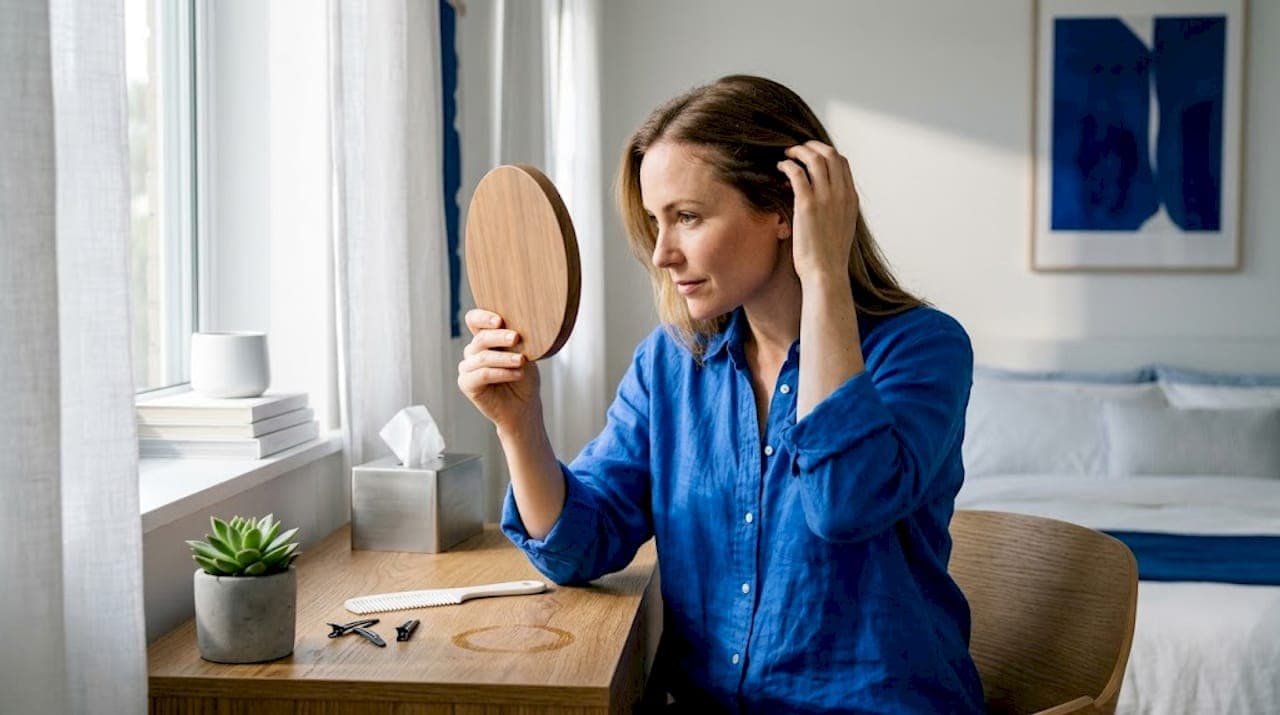
- Use a handheld mirror and good lighting (natural daylight or a bright lamp works best).
- Focus on the hairline, temples, and any visible thinning zones at the part.
- Look for very short, fine hairs that weren't present in previous checks.
- Document with a close-up photo for comparison month to month.
- If you notice fine hairs in areas where there were none, that's a strong positive indicator worth noting.
For men in particular, exploring targeted hair regrowth treatments alongside these checks can help match treatment strategies to the specific stage of regrowth you're observing.
Thicker strands and improved hair texture: Measuring real progress
Early signals are encouraging, but thicker hair is what most people really want. Here's how to identify it.
Hair shaft diameter is one of the most accurate measures of hair health. A thin, fragile strand and a thick, resilient strand are structurally different. When thinning occurs, shaft diameter typically decreases. As hair recovers, that diameter increases again. You might not measure this at home with lab tools, but you absolutely can feel and see it.
Clinical evidence supports this. Nutraceuticals significantly increased hair shaft diameter by the 6-month mark in patients with documented thinning, which confirms that dietary and supplement interventions have measurable structural impact on the strand itself.
| Trait | Before improvement | After improvement |
|---|---|---|
| Strand diameter | Fine, easily breakable | Noticeably thicker, more resilient |
| Volume | Flat, limp after washing | More lift and bounce |
| Texture | Rough, dry, brittle | Smoother, more elastic |
| Part line | Wider, scalp visible | Narrowing, more coverage |
| Density feel | Sparse, thin at fingertips | Fuller, denser to the touch |
Noticing these differences doesn't require a lab. Run your fingers through freshly washed, air-dried hair. Does it feel fuller? Does it hold a style better? Does your part look narrower than it did three months ago? These are real indicators of improved shaft diameter and follicle output.
Pro Tip: Take a ponytail circumference measurement once a month using a flexible tape measure. Even a few millimeters of increase signals meaningful density gains across hundreds of follicles.
Understanding what supports strand thickness from the inside is just as important as topical treatments. Deep research into hair nutrition food gives a clearer picture of how internal factors drive external change.
Personalized hair growth care: Boosting and sustaining improvement
Recognizing improvements is empowering, but maximizing results requires a tailored approach. Let's talk strategy.
No two people's hair loss looks the same, which means no two recovery plans should look the same either. Research confirms that addressing nutrition, stress, and hormones alongside treatments like minoxidil, PRP, and nutraceuticals produces the most consistent empirical gains. A scattered approach rarely works. A personalized one does.
Building your plan starts with what you're already seeing. If shedding has reduced but baby hairs are sparse, nutritional support may be the missing piece. If thickness is improving but density is still low, a targeted topical treatment may accelerate follicle activation. The signs you track guide the strategy you choose.
Key nutritional and lifestyle adjustments to prioritize:
- Protein: Hair is made almost entirely of keratin, a structural protein. Low protein intake directly reduces follicle output.
- Iron: Iron deficiency is one of the most common drivers of diffuse thinning, especially in women.
- Biotin: Supports the cellular infrastructure of hair follicles and is often depleted in high-stress periods.
- Stress reduction: Elevated cortisol pushes follicles into the resting phase prematurely, cutting growth cycles short.
- Sleep quality: Growth hormone is released during deep sleep, directly supporting follicle regeneration.
Steps to build a personalized hair care plan:
- Identify your primary sign of concern: shedding, density, texture, or a combination.
- Get blood work done to check iron, ferritin, vitamin D, thyroid, and hormone levels.
- Adjust your diet to fill any documented nutritional gaps before adding supplements.
- Choose one evidence-based topical or oral treatment and commit to it for a full 6 months.
- Track the signs in this article monthly to evaluate progress objectively.
- Reassess with a dermatologist at the 6-month mark to adjust as needed.
Warning signs that mean you should see a dermatologist immediately: sudden patchy loss, scalp pain or burning, loss in circular patterns, or no measurable change after 6 months of consistent care. These may indicate underlying conditions that need clinical diagnosis.
Exploring a resource like personalized hair care can help you align your observations with evidence-based recommendations tailored to your specific pattern.
Our expert perspective: Why tracking signs matters more than timing
Most people approach hair recovery with one obsessive question: how long will this take? It's the wrong question. And honestly, asking it too early often causes people to quit before results have a real chance to show.
After seeing thousands of hair journeys, one thing stands out clearly: the people who recover best are not the ones who find the fastest treatment. They're the ones who track consistently, stay objective, and stay the course. There's a psychology here that matters. When you have documented evidence of even small improvements such as 20% less shedding or a few new baby hairs along the temples, it's much easier to maintain the habits that drive those improvements.
Without tracking, progress feels invisible. And when progress feels invisible, most people stop. Consulting a dermatologist for confirmation is valuable precisely because self-observation alone is limited without trichoscopy or phototrichogram to establish precise clinical benchmarks.
But here's the insight most articles skip: even imperfect self-tracking with photos, ponytail measurements, and a monthly shedding count gives you something to act on. Objective confirmation from a professional is the gold standard, but consistency in your own documentation is what keeps you engaged long enough to reach that standard.
There's also a real danger in waiting to see changes before you start tracking. Starting documentation from day one, even before improvements appear, creates the baseline that makes progress visible later. Think of it like building a financial record from zero. The most valuable part isn't the current statement. It's the comparison.
The brands and treatments that promise results in 30 days are often selling you on urgency rather than science. Real follicle recovery, as supported by clinical timelines, takes 3 to 6 months at minimum. And holistic hair health practices that combine nutrition, stress management, and targeted topical care outperform single-solution approaches over the long run. Patience paired with evidence is what separates successful recovery from an expensive cycle of abandoned treatments.
Next steps: Analyze and optimize your results with MyHair
You now have a clear framework for spotting genuine hair growth improvement. The next challenge is measuring it with precision, not just intuition.
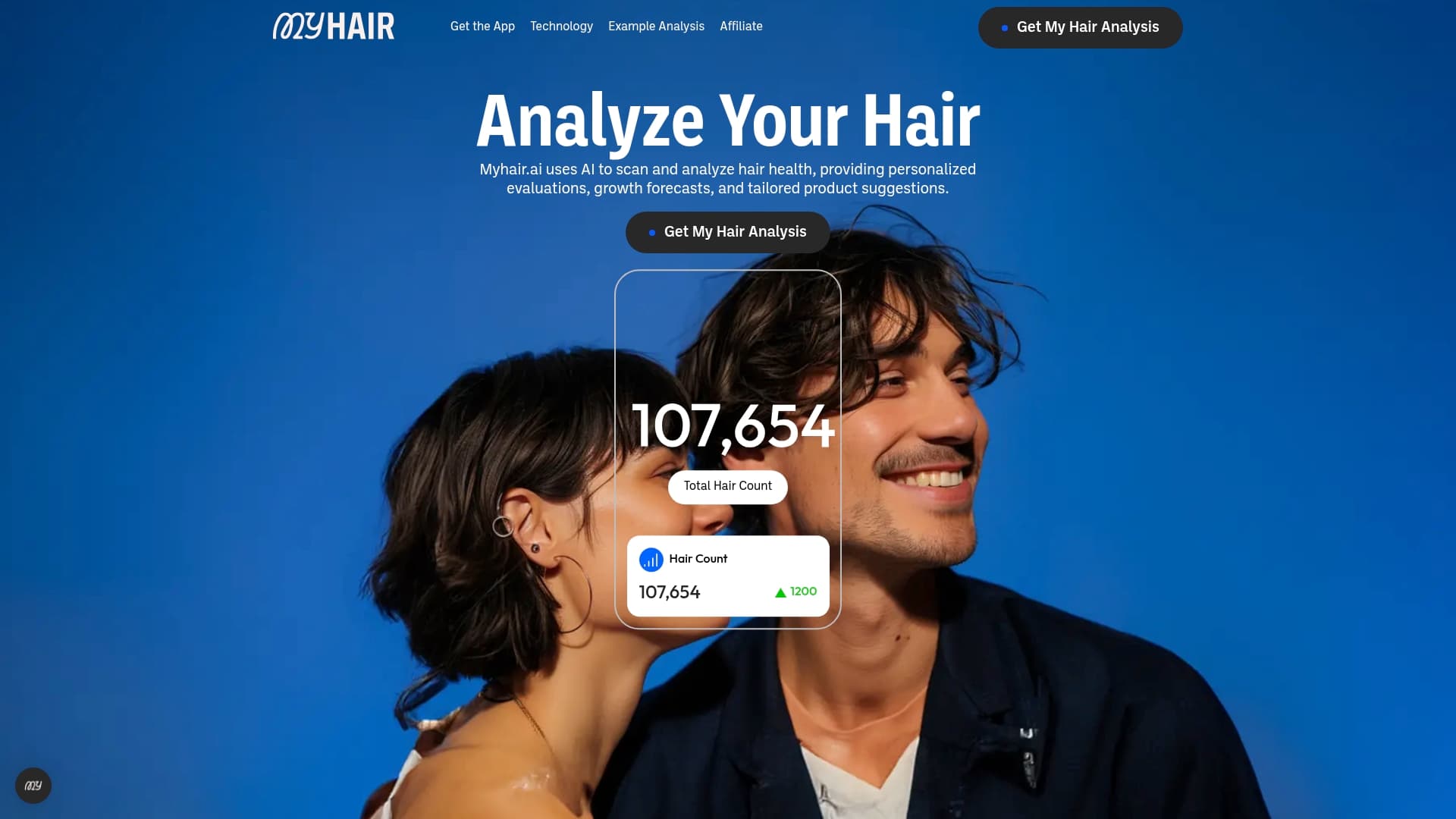
MyHair uses advanced AI technology to analyze your hair health from a simple scan, tracking changes in density, shaft thickness, and scalp coverage over time. Instead of guessing whether your routine is working, you get a data-driven picture of exactly where your hair stands. The MyHair AI scanner gives you an objective baseline and ongoing progress analysis that turns your monthly check-ins into actual evidence. You can also access your personal hair growth score to understand how your unique pattern compares and what personalized product recommendations align with your current stage. Ready to move from observation to action? Get started with MyHair and let the data guide your next step.
Frequently asked questions
How long does it take to see signs of hair growth improvement?
Visible signs like less shedding or baby hairs often appear after 3 to 6 months of consistent care, with shaft diameter gains measurable at the 6-month mark in clinical studies.
What is the difference between vellus and terminal hair?
Vellus hair is fine and soft (peach fuzz), while terminal hair is thicker and fully pigmented. In recovering scalps, vellus counts average 12.4 versus 3.92 in unaffected areas, confirming active follicle activity.
Do I need to see a dermatologist to confirm hair growth progress?
Self-observation is useful for monthly tracking, but trichoscopy and phototrichogram provide the precise clinical benchmarks that confirm whether recovery is on track.
Which nutrients are most important for hair growth improvement?
Protein, iron, and biotin are the three most critical nutrients. Addressing these alongside stress and hormone balance produces the most consistent improvements in both shedding and strand quality.
What are warning signs that hair growth improvement isn't happening?
Continued heavy shedding, scalp irritation, circular or patchy loss, or no new growth after 6 or more months are all signals that a professional assessment is needed rather than continued self-management.