Blog
Learning Materials
5 Causes of Age Related Hair Loss and What to Test First
Updated: September 3, 2026
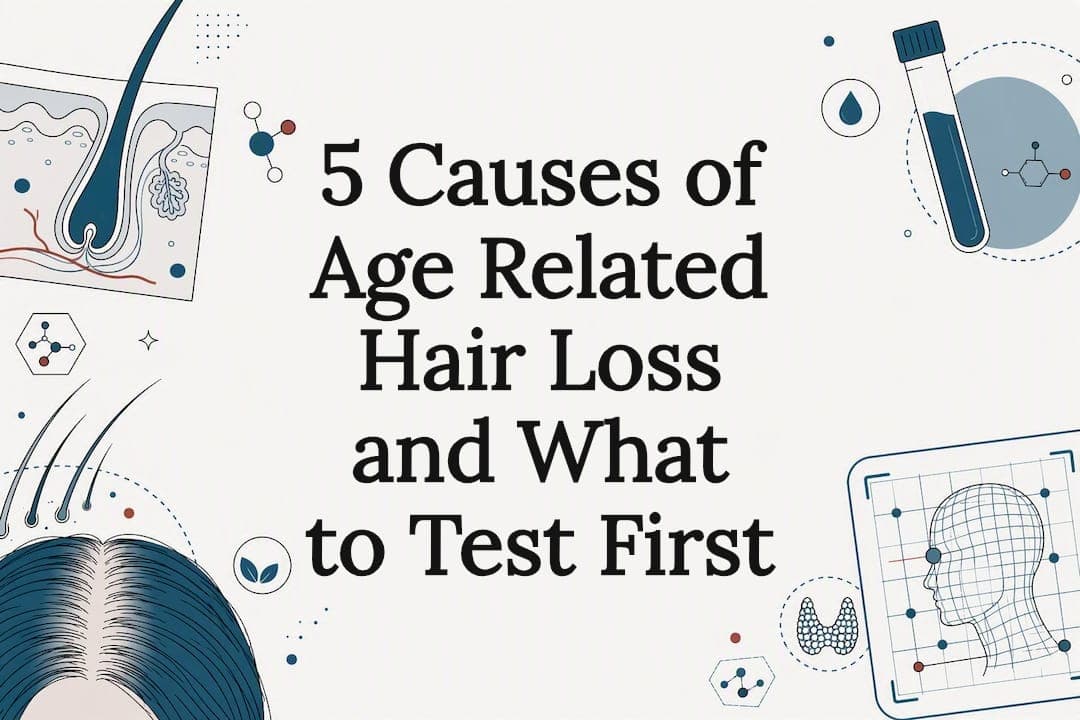
Age-related hair loss comes from five overlapping causes: inherited androgen sensitivity, cellular aging inside the follicle itself, hormonal shifts like menopause and thyroid dysfunction, medical or nutritional deficits, and cumulative environmental damage. Some of this is treatable. Androgenetic alopecia affects roughly 50% of Caucasian men by age 50, rising to about 80% by 70, while follicle scarring and advanced fibrosis are largely permanent.
TL;DR:
- Age-related thinning often involves early widening of the part line and finer hair, with more visible scalp, especially near the crown and temples.
- Androgenetic alopecia responds to androgen-blocking treatments, while senescent alopecia, caused by follicle aging, generally does not.
- Lifestyle factors such as low ferritin, vitamin D deficiency, poor nutrition, smoking, and UV exposure significantly contribute to thinning and should be addressed first.
- Medical conditions like thyroid disease, iron deficiency, and medication side effects can accelerate thinning and require proper diagnosis and treatment.
- Early intervention with treatments like minoxidil and correcting deficiencies offers the best chance to slow or partially reverse early follicle miniaturization before fibrosis occurs.
Table of Contents
- How Hair Changes With Age: Signs and Prevalence
- What Happens at the Follicle: The Biology of Hair Aging
- Hormones and Age: Androgens, Menopause, Thyroid, and Stress
- Medical Causes and Medications That Accelerate Hair Loss With Age
- Lifestyle, Nutrition, and Environment: What You Can Actually Change
- Diagnosis: What a Clinical Workup Looks Like
- Treatment Options and Realistic Expectations
- How AI Tracking Fits Into the Picture
- The Uncomfortable Truth About "Anti-Aging" Hair Advice
- Sources
- FAQ
How Hair Changes With Age: Signs and Prevalence
Most people notice a widening part line before they notice actual bald patches. That's usually the earliest visible marker of pattern thinning, followed by reduced density at the crown or temples, finer individual shafts, and, separately, graying as pigment cells decline. These changes don't all stem from the same process, and telling them apart matters for treatment.
Pattern hair loss, or androgenetic alopecia (AGA), is driven by androgen sensitivity in genetically susceptible follicles and tends to follow a predictable map: temples and crown in men, diffuse crown thinning in women. Senescent alopecia, by contrast, is diffuse, affects the whole scalp evenly, and reflects the follicle's own aging clock rather than hormone sensitivity. A review of hair disorders in elderly patients found that by age 65, roughly 53% of men and 37% of women show measurable balding, often with more than one process happening at once.
Signs worth tracking:
- A part line that looks wider than it did five years ago
- Visibly finer hair shafts, especially near the crown
- More scalp visible under bright light or wet hair
- Even, all-over thinning with no clear pattern (a hint of senescent rather than androgenetic loss)
- Increased strands on the pillow or in the shower drain
The distinction isn't academic. AGA responds to androgen-blocking treatments; senescent alopecia generally does not, because it isn't androgen-driven in the first place.
What Happens at the Follicle: The Biology of Hair Aging
Every hair follicle cycles through growth (anagen), transition (catagen), and rest (telogen) before shedding and starting over. Aging shortens anagen and stretches telogen, so a larger share of follicles sit dormant at any given time. That shift alone raises shedding rates even before any follicle is lost for good.
Underneath that visible cycle, three cellular processes do most of the damage. Follicle stem cells lose their regenerative capacity over decades, mitochondrial function within the follicle declines, and peri-follicular fibrosis, essentially scar-like tissue building up around the follicle base, physically restricts its ability to produce a full-diameter shaft. An expert Delphi consensus on hair aging identifies stem cell exhaustion, fibrosis, and hair-cycle shift as the three pillars of intrinsic follicle aging, distinct from androgen-driven miniaturization.
Chronic low-grade inflammation around the follicle, sometimes described in the literature as a senescence-associated secretory phenotype, keeps follicles in a state of persistent low-level stress that impairs their ability to fully regenerate with each cycle.
That inflammatory backdrop compounds with oxidative stress from ordinary metabolic activity, and the two together appear to accelerate the fibrosis process rather than cause it outright. Structural evidence backs this up at the molecular level: aging hair shafts show altered keratin expression and cortex changes that reduce shaft diameter and ellipticity, which is part of why hair looks and feels thinner even before you lose a single follicle. Once fibrosis sets in around a follicle, the odds of restoring normal growth with standard therapy drop considerably, according to the hair longevity research cited in later sections. That's the biological argument for catching thinning early rather than waiting for a bald patch to form.
Hormones and Age: Androgens, Menopause, Thyroid, and Stress
Androgens, specifically dihydrotestosterone (DHT), bind receptors in genetically susceptible follicles and gradually shrink them through repeated cycles, a process called miniaturization. This is the direct mechanism behind male and female pattern hair loss, and it explains why AGA prevalence climbs steadily with age as cumulative androgen exposure adds up.
Menopause complicates the picture for women. Falling estrogen removes a hormone that had been partially offsetting androgen effects on the follicle, so many women notice accelerated crown thinning and reduced hair shaft diameter in their late 40s and 50s, even without a family history of pattern baldness. Thyroid dysfunction, both underactive and overactive, disrupts the hair cycle broadly and can cause diffuse shedding that mimics or worsens age-related thinning. Chronically elevated cortisol from prolonged stress does something similar by pushing more follicles into telogen prematurely.
Signs that point toward a hormonal workup rather than simple pattern loss:
- Sudden acceleration in shedding over weeks rather than years
- Thinning paired with fatigue, weight changes, or temperature sensitivity (possible thyroid signs)
- New-onset diffuse thinning around perimenopause
- Hair loss accompanied by irregular cycles or other hormonal symptoms
Pro Tip: If your shedding pattern changed abruptly rather than gradually, that's usually a hormonal or medical signal, not a cosmetic one. Gradual, years-long thinning points more toward genetics and follicle aging.
Medical Causes and Medications That Accelerate Hair Loss With Age
Several medical conditions mimic or worsen age-related thinning, and they're worth ruling out before assuming genetics is the whole story. Thyroid disease sits at the top of the list, followed closely by iron deficiency, which clinical reviews tie to hair thinning when ferritin drops below roughly 70 ng/mL, a threshold lower than what's considered "anemic" but still enough to stress the follicle. Autoimmune conditions and chronic systemic illness round out the common contributors.
Certain medication classes are also well-documented triggers for telogen effluvium, a diffuse shedding pattern that can layer on top of age-related thinning:
- Chemotherapy agents, which target rapidly dividing cells, including hair matrix cells
- Some antihypertensive medications, particularly beta blockers
- Retinoids, especially at higher oral doses
- Anticoagulants, which have a known shedding side effect in a subset of patients
- Mood stabilizers and certain psychiatric medications
If shedding accelerates within a few months of starting a new medication, or if fatigue, cold intolerance, or unexplained weight change accompany the hair loss, that's worth a conversation with a clinician rather than a new shampoo. A basic panel, thyroid function, ferritin, and a complete blood count, often catches the underlying issue.
Lifestyle, Nutrition, and Environment: What You Can Actually Change
Nutrition is one of the few genuinely modifiable levers here, and it's underused. Low ferritin and vitamin D deficiency show up repeatedly in the research linking nutrient status to hair thinning, and inadequate protein intake compounds both. Mayo Clinic Press has noted that reduced appetite in older adults, including appetite suppression from GLP-1 medications, can quietly starve hair follicles of the protein they need to build keratin.
Environmental exposure adds a slower, cumulative layer of damage. UV exposure and pollution both drive oxidative stress at the scalp and shaft level, the same oxidative pathway implicated in follicle fibrosis discussed earlier. Smoking and repeated crash dieting add further stress, the latter because rapid weight loss is a classic trigger for telogen effluvium.
Practical steps that make a measurable difference:
- Get ferritin and vitamin D checked rather than guessing
- Prioritize protein intake, especially if appetite has declined
- Skip extreme or rapid-weight-loss diets
- Wear a hat or use scalp SPF during high UV exposure
- Reduce or quit smoking, which worsens follicular oxidative stress
None of these steps reverse fibrosis or genetic sensitivity to androgens, but they close the gap between how your hair could be aging and how it's actually aging under compounding modifiable stress.
Diagnosis: What a Clinical Workup Looks Like
A proper evaluation starts with history and a visual exam, not a lab test. Clinicians look at pattern and distribution first: temples and crown suggest androgenetic alopecia, while even diffuse thinning points toward senescent alopecia or a systemic cause.
- History and visual scalp exam to map the pattern of loss
- A gentle hair pull test to estimate active shedding
- Trichoscopy (magnified scalp imaging) to assess follicle density and shaft diameter
- Bloodwork, typically CBC, ferritin, TSH, and vitamin D
- Scalp biopsy, reserved for unclear or scarring cases
Certain findings should prompt faster referral: patchy rather than diffuse loss, visible scarring or scalp redness, sudden severe shedding, or hair loss accompanied by systemic symptoms like fatigue or joint pain. Those patterns suggest something beyond typical age-related thinning, and tracking changes over time between visits gives a clinician more to work with than memory alone.
Treatment Options and Realistic Expectations
Topical minoxidil remains the treatment with the broadest evidence base and the only therapy an expert Delphi consensus endorsed with strong agreement for hair aging generally. For men with androgenetic alopecia, oral 5-alpha-reductase inhibitors like finasteride are commonly added, since they directly block the DHT pathway driving miniaturization. Correcting an underlying cause, low ferritin, thyroid dysfunction, matters just as much as any topical treatment, because no product overcomes an active deficiency.
Finasteride is FDA-indicated for men only. Women who are or may become pregnant must not handle crushed or broken finasteride tablets, due to the risk of harm to a male fetus. It can also cause sexual side effects (reduced libido, erectile dysfunction) in a minority of men, which usually resolve after stopping treatment. Discuss these risks with a physician before starting.
Supportive, non-drug measures round out a realistic plan:
- Nutritional correction guided by actual lab values, not assumptions
- Smoking cessation to reduce follicular oxidative stress
- Gentle scalp care and sun protection
- Cosmetic concealment (fibers, strategic styling) while other measures take effect
Pro Tip: Minoxidil and finasteride both take three to six months to show visible results because they work across full hair cycles, not overnight. Judging either too early is the most common reason people quit before they'd see benefit.
When fibrosis or advanced miniaturization has already set in, procedural options like hair transplantation become more relevant, but even surgery works best on follicles that are miniaturized, not gone entirely. That's the honest limit of current therapy: it slows or partially reverses early thinning far better than it restores follicles that have been scarred for years. For general guidance on protecting thinning hair while pursuing treatment, Myhair's care guide covers practical daily steps.
How AI Tracking Fits Into the Picture
AI-powered scans give you a way to quantify what's often just a gut feeling, whether the crown looks a little thinner than it did last year. Uploaded photos can be analyzed to estimate hair density and shaft characteristics over time, helping to guide product suggestions based on what the scan shows.
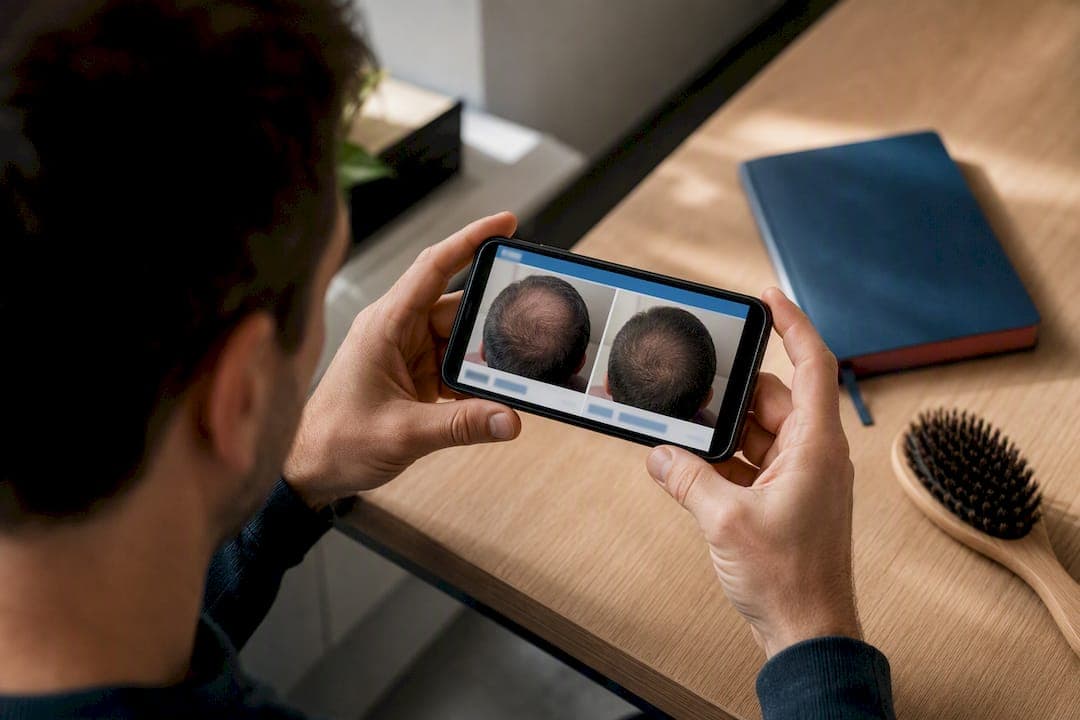
That kind of quantified tracking, consistent photos and counts taken the same way each time, gives you and any clinician you see actual data instead of memory. It can be useful for deciding whether a treatment is working or whether shedding is accelerating faster than expected. It is not a diagnostic tool and doesn't replace a clinician's bloodwork or exam; think of it as the record you bring to that appointment, available through the Myhair app.
The Uncomfortable Truth About "Anti-Aging" Hair Advice
Most hair loss advice aimed at older adults treats every case like it's androgenetic alopecia waiting for the right shampoo. It isn't. The research is clear that senescent alopecia, driven by stem cell exhaustion and fibrosis rather than androgens, doesn't respond to the same playbook, and conflating the two wastes years people don't get back with follicles that are still salvageable.
The bigger miss is nutrition. It gets treated as an afterthought next to minoxidil and finasteride, but ferritin below 70 ng/mL and low vitamin D show up constantly in the thinning-hair population, and they're both fixable with a blood test and a supplement, not a prescription. Fix deficiencies first. It's cheaper, faster, and it removes a variable that makes every other treatment look less effective than it actually is.
If you take one thing from this: track your pattern honestly before assuming which category you're in, then get the labs that separate a fixable cause from an aging process you'll need to manage rather than reverse.
— Cyriac
This article is general information, not a substitute for advice from a qualified doctor. Consult a qualified healthcare professional about your own circumstances before acting on anything here.
Sources
- Androgenetic Alopecia - StatPearls - NCBI Bookshelf
- Hair Aging and Hair Disorders in Elderly Patients - PMC - NIH
- Hair Aging Revisited: An Expert Delphi Consensus on Pathogenesis, Clinical Features, and Future Therapies
- A Multifaceted View on Ageing of the Hair and Scalp
- Why hair loss happens with age — Mayo Clinic Press healthy-aging commentary
FAQ
What shampoo is best for hair loss?
No shampoo reverses age-related thinning, since shampoos work on the scalp surface rather than the follicle's growth cycle. Look for gentle, sulfate-free formulas that reduce scalp irritation, and treat shampoo as a supporting habit alongside evidence-based treatments like minoxidil.
How can I stop age-related hair loss?
You can't fully stop the intrinsic aging of follicles, but you can slow it by correcting nutritional deficiencies, treating thyroid or hormonal issues, and starting topical minoxidil early, since it works best before fibrosis sets in. Genetics-driven pattern loss and medical shedding causes both respond better to earlier intervention than late.
How do I reduce hair shedding?
Start by ruling out medical triggers: ferritin below 70 ng/mL, thyroid dysfunction, and recent medication changes are common, treatable causes of excess shedding. If labs come back normal, gradual shedding tied to aging usually responds to consistent minoxidil use over three to six months.
Can you regrow hair that's thinned with age?
Regrowth is realistic for follicles that are miniaturized but not yet scarred, especially with early minoxidil or finasteride use and correction of any underlying deficiency. Once significant fibrosis has developed around a follicle, standard therapies are far less likely to restore full growth, which is why earlier evaluation matters more than a specific product choice.