Blog
Learning Materials
AI hair loss treatments: 30% shedding reduction results
Updated: April 5, 2026

TL;DR:
- AI-powered scalp analysis achieves dermatologist-level accuracy for early hair loss detection.
- Personalized AI regimens significantly reduce shedding and improve scalp health without prescription drugs.
- New biologic therapies like ABS-201 target unique biological pathways, promising advanced treatment options.
A recent clinical trial found that AI-personalized kits led to over 30% shedding reduction and 88.9% participant improvement — without a single prescription drug. If you've been told that minoxidil or finasteride are your only real options, that story is changing fast. A new wave of AI-driven, personalized solutions is showing genuine clinical results for people in the early stages of hair loss. This guide breaks down exactly how these tools work, what the science says, and how to figure out which approach fits where you are right now.
Table of Contents
- Why hair loss happens: The shifting landscape of diagnosis and treatment
- How AI personalization is transforming early-stage hair loss treatment
- Introducing ABS-201: The next frontier in AI-designed hair regrowth therapies
- Choosing the right treatment: Which path is best for you?
- Our take: The future of hair loss care belongs to personalized AI — and informed choices
- Ready to see your personalized path? AI analysis is just a click away
- Frequently asked questions
Key Takeaways
| Point | Details |
|---|---|
| AI transforms diagnosis | AI can now match dermatologist-level accuracy in assessing hair loss patterns, making tailored treatment possible from home. |
| Personalized regimens work | Clinical studies show AI-customized routines reduce shedding and improve hair health for early-stage users. |
| New therapies on the rise | Innovative AI-designed drugs like ABS-201 offer hope for those with more persistent or advanced hair loss. |
| Start early, adjust often | Early intervention and ongoing treatment personalization deliver better results than waiting for severe loss. |
Why hair loss happens: The shifting landscape of diagnosis and treatment
Hair loss is rarely one thing. The most common form, androgenetic alopecia (AGA), is driven by a combination of genetics and hormones — specifically, a sensitivity to dihydrotestosterone (DHT), which causes follicles to shrink over time. But stress-related shedding (telogen effluvium), nutritional gaps, and scalp conditions also play a major role, especially in people under 40. The tricky part is that these causes often overlap, making early diagnosis frustrating.
Traditional diagnosis usually means a dermatologist visit, a visual exam, and sometimes a scalp biopsy. This process is slow, expensive, and highly subjective. Two doctors can look at the same scalp and reach different conclusions about severity. That delay matters because hair follicles that miniaturize over time become harder to rescue. The earlier you act, the better your odds.
This is where AI-powered scalp analysis changes the game. By processing high-resolution smartphone images, AI systems can:
- Identify hair loss patterns across the scalp in seconds
- Map density and severity across zones
- Track changes over time with consistent, objective measurements
- Flag early signs that a human eye might miss
The results are striking. AI-powered scalp analysis now matches dermatologist accuracy at 94% in pilot studies. That's not a minor improvement — it's a fundamental shift in who can access reliable diagnosis and how fast they can act.
"The biggest barrier to effective hair loss treatment has always been catching it early enough. AI removes that barrier by putting clinical-grade assessment in your pocket."
Exploring AI-powered hair solutions is no longer a fringe idea — it's becoming the most practical first step for anyone noticing early thinning. The technology doesn't replace a dermatologist, but it gives you a clear, data-driven picture before you ever walk into a clinic.
How AI personalization is transforming early-stage hair loss treatment
Knowing you have hair loss is one thing. Knowing exactly what to do about it — in the right order, with the right products — is another. This is where AI personalization goes beyond diagnosis and into active treatment planning.
Here's how a modern AI-personalized hair loss platform typically works:
- Scalp image capture: You photograph your scalp using your smartphone under consistent lighting conditions.
- Pattern mapping: The algorithm analyzes the images to identify loss pattern, density, and severity across different zones.
- Questionnaire input: You answer questions about your lifestyle, stress levels, diet, family history, and previous treatments.
- Regimen generation: The system recommends a multi-mechanism plan — often covering topicals, medicated shampoos, supplements, and nutritional guidance.
- Progress tracking: You re-scan every few months, and the regimen adjusts based on your response.
The clinical data behind this approach is compelling. Personalized AI regimens including topicals, shampoos, supplements, and collagen showed significant improvement in a 24-week clinical trial — with 32 to 37% shedding reduction, 69% improved scalp hydration, and 89% overall participant satisfaction.
| Feature | Traditional treatment | AI-personalized regimen |
|---|---|---|
| Diagnosis speed | Days to weeks | Minutes |
| Customization | Generic protocols | Individual pattern-based |
| Drug requirement | Often yes | No (OTC-based) |
| Progress tracking | Manual/subjective | Automated image analysis |
| Scalp hydration improvement | Variable | Up to 69% in trials |
This approach works best for people in the early stages of loss who want a non-drug, multi-mechanism solution. It's not a one-size-fits-all pill — it's a living plan that adapts as your scalp does. You can learn more about what this looks like in practice through AI-powered hair growth therapy resources that walk you through each step.
Pro Tip: Repeat your scalp photo analysis every 8 to 12 weeks. Regimens built on stale data underperform. Consistent tracking is what lets the algorithm catch shifts early and keep your plan effective.
For those curious about the broader picture of personalized growth with AI, the evidence is clear: matching the treatment to the individual — not the average — is what drives lasting improvement. And AI insights for hair care are making that kind of precision accessible without a clinic visit.
Introducing ABS-201: The next frontier in AI-designed hair regrowth therapies
AI-personalized kits are powerful for early-stage loss, but some cases need something more targeted. Enter ABS-201, a biologic therapy designed using generative AI that targets a completely different biological pathway than anything currently on the market.
Most existing treatments — minoxidil, finasteride — work by either increasing blood flow to follicles or blocking DHT. ABS-201 takes a different route. It targets the prolactin receptor (PRLR) pathway, which plays a role in follicle miniaturization in androgenetic alopecia. By blocking this receptor, the therapy aims to rescue shrinking follicles and restore the normal hair growth cycle.
Here's what the preclinical data shows:
- Superior to minoxidil in mice for hair regrowth outcomes
- Complete regrowth in macaques (a primate model much closer to human biology)
- Rescued follicles in human scalp models in lab settings
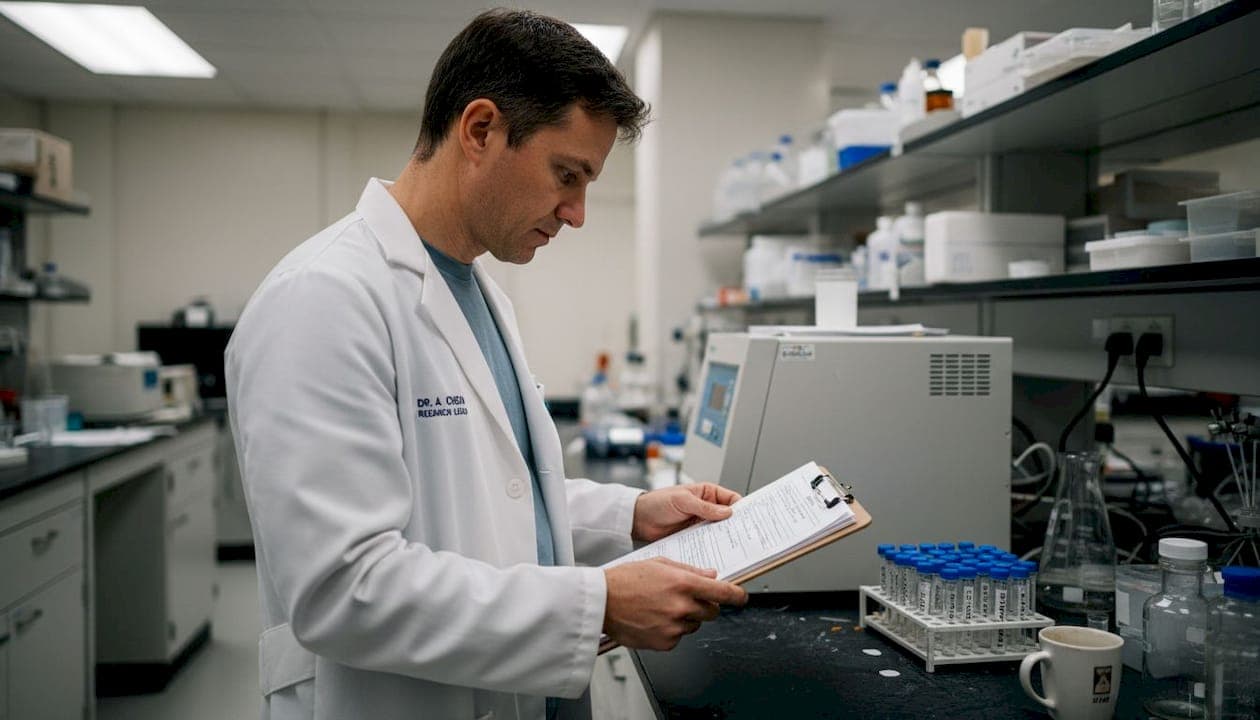
ABS-201 showed full regrowth in macaques, outperformed minoxidil in mice, and is now in a Phase 1/2a human trial with 227 participants. Results from that trial are expected through 2026.
| Therapy | Mechanism | Administration | Frequency |
|---|---|---|---|
| Minoxidil | Increases scalp blood flow | Topical | Daily |
| Finasteride | Blocks DHT conversion | Oral | Daily |
| ABS-201 | Blocks prolactin receptor | Injection | Potentially monthly |
What makes ABS-201 particularly interesting is the dosing potential. Because it's a biologic antibody, it may only require infrequent injections rather than daily topical application. For people who struggle with treatment adherence, that's a meaningful practical advantage.
This is early-stage research, and human trial results will determine how it performs in real patients. But the MyHair research team is tracking this space closely because the PRLR pathway represents a genuinely new mechanism — one that could help people who haven't responded to conventional treatments.
Choosing the right treatment: Which path is best for you?
With AI-personalized kits producing strong results and biologics like ABS-201 on the horizon, the real question is: where do you start?
The answer depends on two things: how far along your hair loss is, and how willing you are to pursue medical interventions.
| Situation | Best fit | Why |
|---|---|---|
| Early thinning, no drugs preferred | AI-personalized kit | Non-invasive, fast, multi-mechanism |
| Moderate loss, tried OTC products | AI kit plus dermatologist consult | Escalation with data to guide decisions |
| Persistent or advanced AGA | ABS-201 (when available) or prescription drugs | Targets biology beyond topicals |
| Unsure of severity | AI scalp analysis first | Establishes baseline before any spend |
Here's a practical framework for deciding:
- Start with an AI scalp scan. It costs nothing to get a baseline read on your pattern and severity.
- Try a personalized non-drug regimen for at least 6 months. Consistency matters more than product choice in early stages.
- Track your results with photos. Subjective impressions mislead — data doesn't.
- Escalate only when needed. If a non-drug regimen plateaus, that's the signal to consult a dermatologist about stronger options.
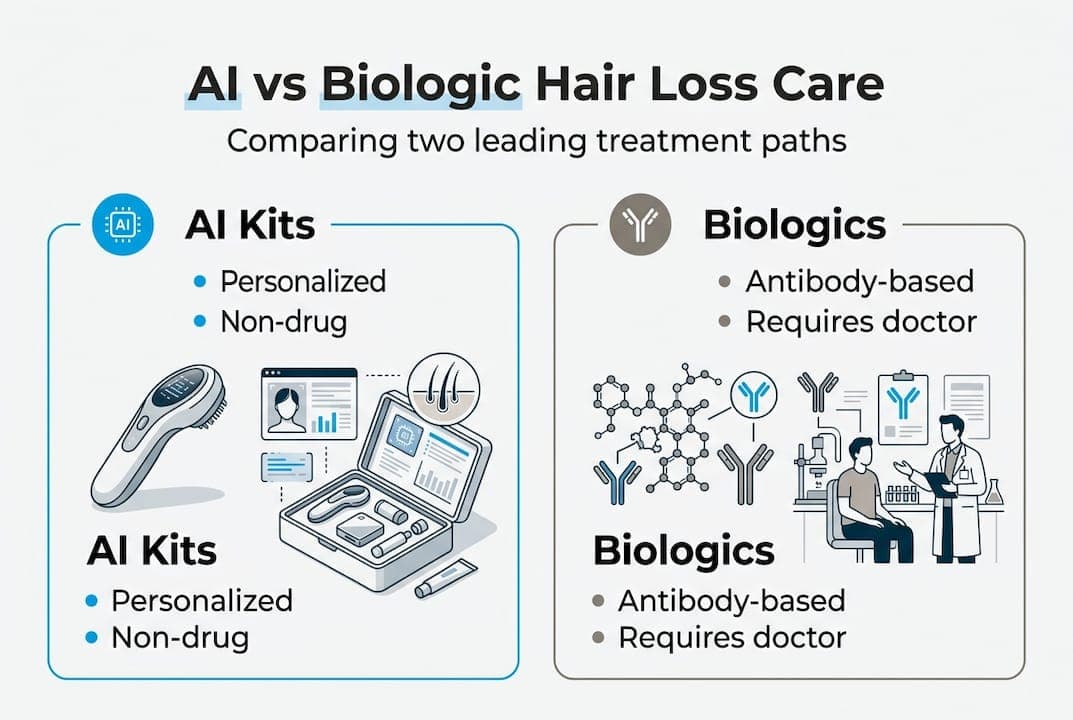
AI-personalization suits early, non-drug users well, while ABS-201 offers real hope for moderate and persistent cases that haven't responded to conventional approaches.
Pro Tip: Don't wait until loss is visible to others before acting. The follicles most responsive to treatment are the ones that are miniaturizing but not yet gone. Early action is your biggest advantage.
For a side-by-side breakdown of current tools, the app-based hair care comparison covers what's available now and how platforms differ in their approach to personalization.
Our take: The future of hair loss care belongs to personalized AI — and informed choices
Here's the uncomfortable truth most hair loss content won't say: the obsession with finding a single miracle fix is the reason so many people waste years and money on treatments that don't fit their biology.
The real shift happening right now isn't about a new drug or a better shampoo. It's about moving from generic to specific. AI makes that possible at scale. But the technology only works if you engage with it consistently, update your data, and stay patient through the process.
The best outcomes come from integrating AI insights, evidence-based regimens, and a willingness to adapt solutions over time. Static treatments fail because hair loss is dynamic. Your scalp changes, your stress levels shift, your nutrition fluctuates — and your regimen needs to keep up.
We believe the people who will see the most lasting results are not the ones who find the "best" product. They're the ones who commit to personalized hair care perspective — treating hair health as an ongoing practice, not a one-time fix. That mindset, combined with AI-driven precision, is what actually moves the needle.
Ready to see your personalized path? AI analysis is just a click away
If you've been watching your hairline shift and wondering what to actually do about it, the answer starts with data — not guesswork. MyHair.ai puts clinical-grade AI scalp analysis in your hands, giving you a clear picture of your hair health and a personalized direction forward.
See your AI-powered hair score and get a personalized read on your scalp health in minutes. Want to go deeper into the science? Explore MyHair research to see what's driving the next generation of hair wellness. And if you're a clinic looking to bring AI-powered hair analysis to your patients, clinic onboarding is your starting point. The tools are here. The data is real. Your next step is just one scan away.
Frequently asked questions
How does AI personalize hair loss treatment?
AI analyzes your scalp images and questionnaire responses to build a pattern and severity heatmap that guides specific product and regimen recommendations tailored to your individual biology.
Are AI-powered hair loss treatments safe?
Yes. No adverse effects were reported in a 24-week clinical trial of AI-personalized kits, and the regimens rely on established OTC ingredients rather than prescription compounds.
What is ABS-201 and how does it work?
ABS-201 is an AI-designed antibody therapy that blocks the PRLR pathway to restore hair growth by targeting follicle miniaturization at a biological level not addressed by minoxidil or finasteride.
Which is better: AI-personalized kits or new biologic therapies?
AI regimens work well for early-stage, non-drug users, while biologics like ABS-201 are the more promising option for moderate androgenetic alopecia that hasn't responded to conventional treatments.