Blog
Learning Materials
Stop thinning: solutions for a bald spot at the front hairline
Updated: April 10, 2026
TL;DR:
- Early identification and targeted treatment can reverse some types of front hairline thinning.
- Causes include traction alopecia, androgenetic alopecia, scarring conditions, and stress-related shedding.
- Combining evidence-based treatments with monitoring improves chances of regrowth and hairline preservation.
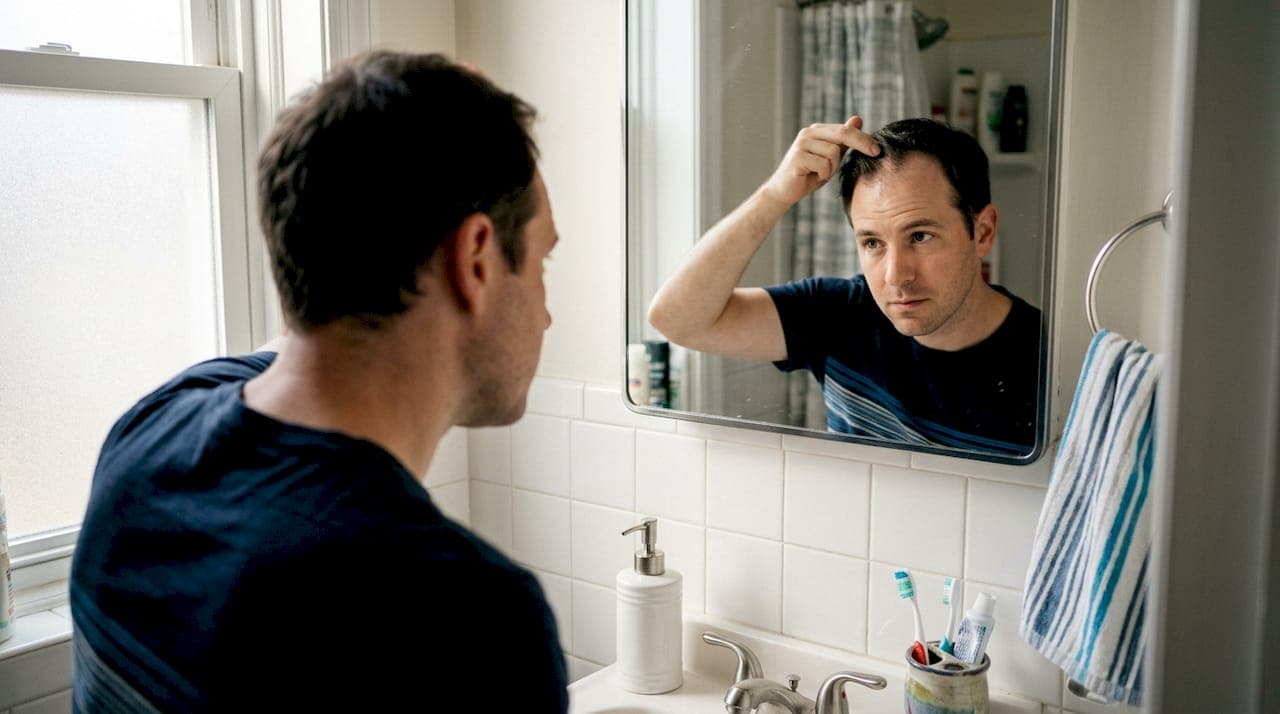
A thinning front hairline isn't always a life sentence. Many people assume a bald spot at the front hairline means permanent loss, but some forms are reversible when you catch them early and take the right action. The difference between a spot that grows back and one that doesn't often comes down to identifying the cause quickly. In this guide, you'll learn exactly how to pinpoint what's driving your hairline thinning, which science-backed treatments actually work, and how to make smart styling choices in the meantime. No generic advice here. Just personalized, evidence-based solutions built around your specific situation.
Table of Contents
- Common causes of a bald spot at the front hairline
- How to diagnose your bald spot: What to look for
- Science-backed treatments for a bald spot at the front hairline
- Styling and cosmetic fixes to minimize appearance
- What most hair loss guides miss about the front hairline
- Personalized solutions for your hairline: Next steps
- Frequently asked questions
Key Takeaways
| Point | Details |
|---|---|
| Early detection matters | Addressing hairline thinning early increases the chance of reversal. |
| Effective treatments exist | FDA-approved solutions like minoxidil and finasteride can regrow hair at the front hairline. |
| Personalization is key | Combining clinical solutions with customized tracking and styling brings the best results. |
| Cosmetic fixes help | Makeup, fibers, and styling techniques can instantly boost confidence while treatments work. |
Common causes of a bald spot at the front hairline
Not all frontal hairline thinning looks or behaves the same. Understanding what's driving yours is the single most important step before trying any treatment. There are four main culprits, and each has its own set of clues.
Traction alopecia happens when repeated tension from tight hairstyles, think braids, ponytails, or extensions, pulls on the follicles at the hairline. One key sign is the "fringe sign," a row of short baby hairs along the edge that survive because they're slightly less exposed to tension. Traction alopecia caught early is often fully reversible. Left untreated, it can cause scarring that permanently destroys follicles.
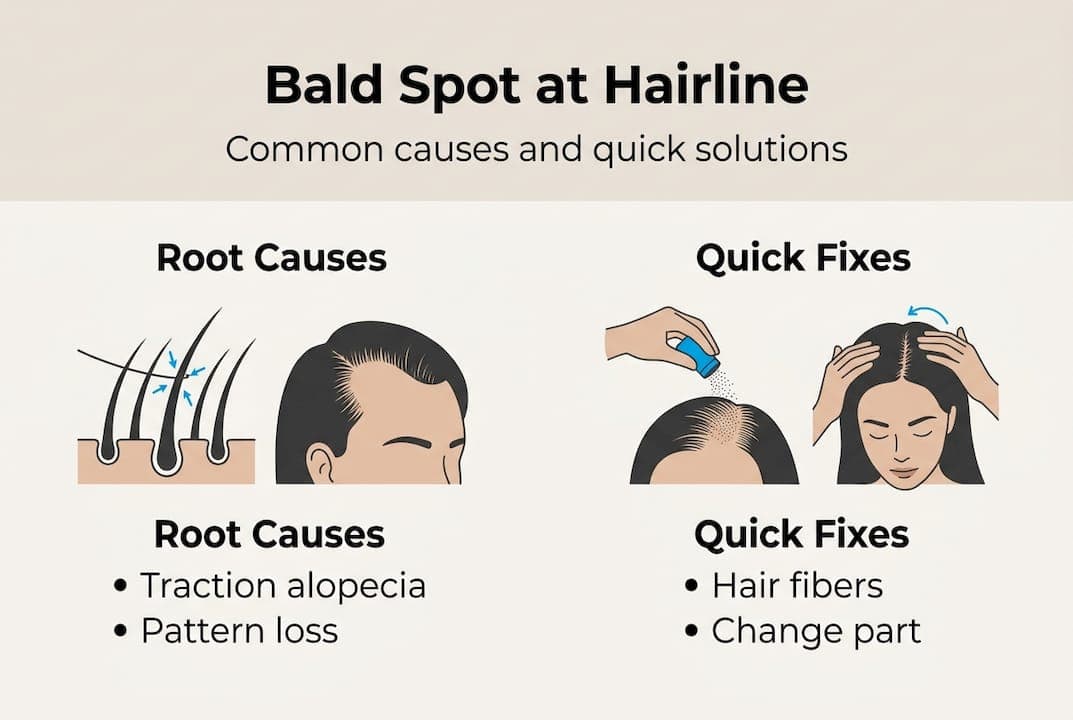
Androgenetic alopecia (pattern hair loss) is driven by the hormone DHT, which shrinks follicles over time. In men, this typically shows as a receding M-shaped hairline. In women, it often appears as diffuse thinning at the part. You can learn more about how hairline causes differ by pattern and gender.
Frontal fibrosing alopecia is a scarring form of hair loss that slowly moves the hairline backward. The skin along the edge often looks pale and slightly shiny. Eyebrow and eyelash loss sometimes accompany it. This one requires a dermatologist, fast.
Telogen effluvium is worth mentioning because it's often misdiagnosed. It causes diffuse shedding after stress, not a focal frontal bald spot. If you're seeing widespread thinning two to three months after an illness or major stressor, that's telogen effluvium, not a classic hairline issue.
Here's a quick comparison to help you sort through what you might be dealing with:
| Cause | Reversible? | Key sign | Urgency |
|---|---|---|---|
| Traction alopecia | Yes, if caught early | Fringe sign, baby hairs | Moderate |
| Androgenetic alopecia | Partially with treatment | Gradual recession | Low to moderate |
| Frontal fibrosing alopecia | No (scarring) | Shiny, pale skin at edge | High |
| Telogen effluvium | Yes | Diffuse, not focal | Low |
See a doctor immediately if your bald spot progression is sudden, spreading fast, or comes with eyebrow loss. These can signal scarring conditions or autoimmune causes that need prompt attention. For other patterns, check out what different bald patch causes look like to compare.
When in doubt, act early. The window for reversibility is real, but it closes. Waiting to see if it "gets better on its own" is the most common mistake people make.
How to diagnose your bald spot: What to look for
Once you understand the main causes, the next step is honest self-assessment. You don't need a medical degree to gather useful clues. You just need to ask the right questions in the right order.
- When did it start? Gradual over years points to androgenetic alopecia. Sudden onset over weeks suggests telogen effluvium or alopecia areata.
- What hairstyles have you worn? If you've worn tight styles consistently, traction alopecia moves to the top of your list.
- Is there itching, flaking, or redness? Inflammation can indicate seborrheic dermatitis or frontal fibrosing alopecia. Healthy follicle loss is usually symptom-free.
- Are your eyebrows or lashes thinning too? This is a red flag for frontal fibrosing alopecia and warrants a dermatology visit.
- Do you see baby hairs at the edge? The fringe sign is a strong indicator of traction alopecia rather than androgenetic loss, which tends to thin more uniformly.
Look closely at the texture of the skin along your hairline. Smooth, slightly shiny skin suggests scarring. Normal skin texture with miniaturized hairs (thin, wispy strands) points to androgenetic alopecia or early traction.
Up to 60% of traction alopecia cases are reversible in the early stages, but that window shrinks the longer tension continues. Tracking your hairline over time is one of the most underrated tools available. Monitoring bald spot progression with consistent photos makes it much easier to spot subtle changes before they become significant. You can also compare your pattern to documented cases of a spot on the side to rule out localized causes.
Pro Tip: Set a monthly reminder to take a photo of your hairline under the same lighting. Even a basic time-lapse over three months will show you whether the edge is stable, improving, or retreating.
Science-backed treatments for a bald spot at the front hairline
Once you've narrowed down the likely cause, you can match it to the right treatment. Here's what the evidence actually supports.
Minoxidil is the most accessible starting point. Applied topically twice daily, it works by increasing blood flow to the follicle and extending the growth phase. Topical minoxidil and finasteride are both FDA-approved, and using them together delivers superior results, adding up to 9.22 extra hairs per square centimeter and increasing hair diameter by 2.26 micrometers compared to minoxidil alone.
Finasteride works differently. It blocks DHT, the hormone that shrinks follicles in androgenetic alopecia. Oral finasteride at 1mg daily is FDA-approved for men. Topical finasteride is gaining traction as a lower-systemic-exposure option. Finasteride stabilizes loss in about 66% of severe cases, while minoxidil alone helps 60% of users see thicker hair within three months.
Dutasteride is stronger than finasteride at blocking DHT but is currently off-label for hair loss. Some dermatologists prescribe it for cases that don't respond to finasteride.
Here's a practical breakdown:
| Treatment | Rx needed? | Timeline | Best for |
|---|---|---|---|
| Topical minoxidil 5% | No | 3 to 6 months | Androgenetic, traction |
| Oral finasteride 1mg | Yes | 6 to 12 months | Androgenetic (men) |
| Topical finasteride | Yes | 6 to 12 months | Men seeking lower side effects |
| Oral dutasteride | Yes (off-label) | 6 to 12 months | Resistant androgenetic |
- OTC options: Minoxidil foam or solution, biotin supplements, caffeine shampoos (mild support only)
- Prescription: Finasteride, dutasteride, spironolactone (women)
- Procedural: PRP (platelet-rich plasma) injections, low-level laser therapy
For a full breakdown of what's working in 2026, see our guide on bald spot treatments. If you're specifically considering topical solutions for the hairline, the guide on using Rogaine for hairline covers application technique in detail. For those preferring a gentler approach first, natural remedies can complement medical treatment.
Pro Tip: Consistency beats intensity every time. Using minoxidil at 5% every single day outperforms using a stronger formula sporadically. Set a daily alarm until it becomes automatic.
Styling and cosmetic fixes to minimize appearance
Long-term regrowth takes months. In the meantime, there are smart, immediate options that make a real difference in how your hairline looks today.

Hair fibers and volumizing powders are among the most effective quick fixes. Products like Toppik or similar keratin fiber sprays bind to existing hair and create the appearance of density. They work best when there's still some hair present to attach to.
Strategic parting is free and surprisingly powerful. Shifting your part slightly away from the thinnest area can redistribute volume and draw the eye away from the spot. A side part often covers more ground than a center part for frontal thinning.
Scalp concealers and tinted sprays match your scalp color to your hair, reducing the contrast that makes thinning so visible. These are especially useful in bright lighting or for photos.
For salon-level options:
- Microblading the hairline: A semi-permanent technique that creates the illusion of hair strokes along the edge. Results last one to two years.
- Semi-permanent scalp micropigmentation: Tiny pigment dots that mimic the look of a closely shaved head or add density to thinning areas.
- Custom shape cuts: A skilled stylist can cut layers and angles that redirect attention away from the front bald spot entirely.
Makeup and hair fibers can successfully conceal minor patches for everyday confidence, making them a practical bridge while treatments take effect. For a wider range of techniques, the guide on best cover-up tips walks through options by severity and hair type.
Pro Tip: Ask your stylist specifically for a "hairline camouflage cut." Not all stylists are familiar with this approach, so naming it directly gets you better results.
What most hair loss guides miss about the front hairline
Most articles on frontal hair loss hand you a list of products and call it done. What they skip is the most important part: early, consistent self-monitoring is what separates people who catch reversible loss in time from those who don't.
The pop culture narrative around hair loss, that you either accept it or get a transplant, ignores the wide middle ground where evidence-based treatment genuinely works. Minoxidil and finasteride aren't miracle cures, but used early and consistently, they preserve and restore hair that would otherwise be gone permanently.
Personalization also matters more than most guides admit. A treatment plan built around your specific pattern, your hormone profile, your styling habits, and your timeline will always outperform a one-size-fits-all approach. Generic advice doesn't account for whether your thinning is scarring or non-scarring, hormone-driven or tension-driven.
The real insight from reverse balding research is that outcomes improve dramatically when people combine clinical treatment with ongoing tracking. Knowing your baseline and measuring change over time is what lets you course-correct before it's too late.
Personalized solutions for your hairline: Next steps
You now have a clear picture of what causes a bald spot at the front hairline, how to assess your own pattern, and which treatments have real evidence behind them. The next step is making it personal.
MyHair.ai uses AI-powered analysis to scan your hairline, identify your specific pattern, and recommend treatments matched to your situation. Instead of guessing, you get a data-driven starting point. Use the AI hair scanner to get your baseline today, then track how your hairline responds over time. The personalized onboarding walks you through your results step by step, and you can check your hair score to see where you stand right now. Real progress starts with knowing exactly what you're working with.
Frequently asked questions
How long does it take to see results from minoxidil at the hairline?
Most people see visible thickening within 3 to 6 months when using minoxidil consistently. About 60% of users notice thicker hair by the three-month mark with daily use.
Is a bald spot at the front hairline always permanent?
Not always. Traction alopecia reversed early can restore the hairline fully, but scarring types like frontal fibrosing alopecia are usually permanent once established.
What is the most effective medication for new bald spots at the hairline?
A combination of topical minoxidil and oral or topical finasteride delivers the best outcomes. Combined therapy adds 9.22 hairs per cm² and increases hair diameter significantly compared to minoxidil alone.
Do natural remedies work for a frontal bald spot?
Natural remedies can support overall scalp health, but proven regrowth comes from FDA-approved treatments like minoxidil and finasteride, not from supplements or oils alone.
Recommended
- Top Hair Thinning Problem Solutions for 2025: Expert Tips | MyHair
- How to Reverse Balding: Effective Solutions for Hair Regrowth | MyHair
- How to Fix a Bald Spot on Crown of Head: 2025 Hair Growth Guide | MyHair
- Best Natural Treatment for Receding Hairline in 2025: Safe & Effective Solutions | MyHair
- How to Enhance Hair with Collagen for Healthier Growth