Blog
Learning Materials
Scalp First Preventive Hair Care: See Less Breakage in Weeks
Updated: August 29, 2026
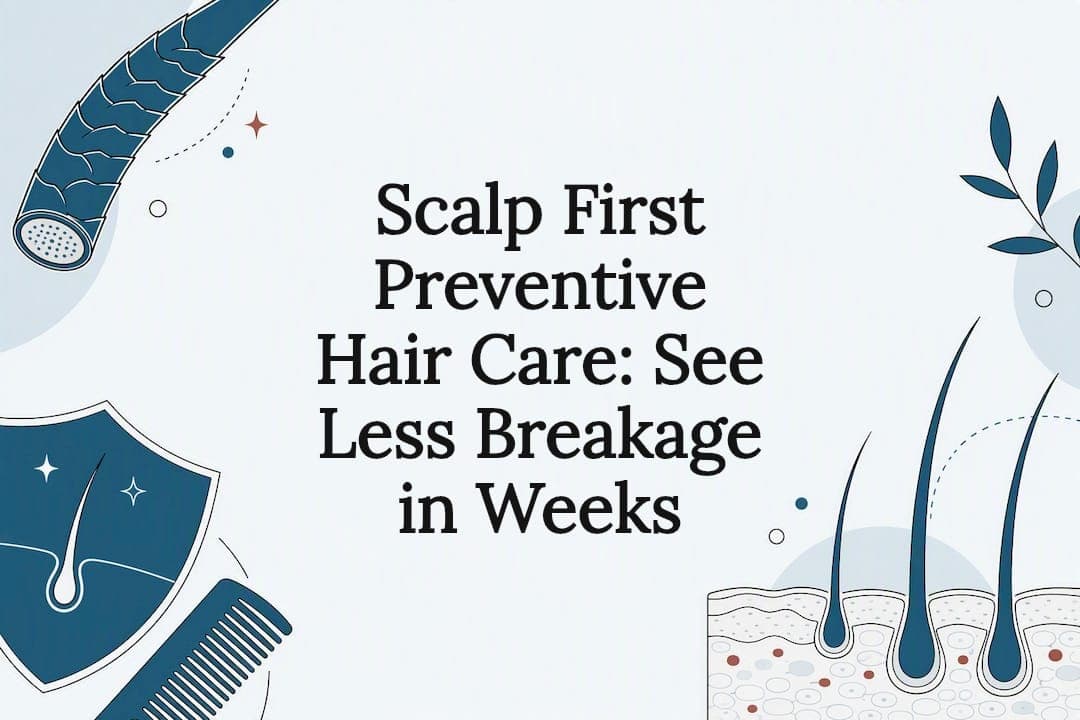
Preventive hair care preserves density, cuts down on breakage, and keeps your scalp healthy enough to support growth instead of working against it. These gains show up faster than regrowth ever will, since protecting a follicle that's still active is a far easier job than trying to restart one that's gone dormant. Most people notice softer, less frizzy hair within weeks, but the deeper structural benefits, like measurable shedding reduction, tend to take three to four months to show.
TL;DR:
- Regular, personalized scalp scans help establish a baseline and track hair density over time, allowing early detection of abnormal shedding patterns.
- Preventive care reduces breakage and shedding within weeks, but structural benefits like noticeable thinning reversal take three to four months to appear.
- Proper routine adjustments should match scalp oil production and hair type, avoiding over-washing, excessive heat, or tight styling that can cause damage or inflammation.
- Scalp inflammation and microbial imbalance contribute to shedding, so using targeted medicated shampoos like zinc pyrithione or ketoconazole a few times a week can improve scalp health.
- Lifestyle factors such as adequate sleep, balanced nutrition, and managing stress directly support systemic health and address underlying causes of hair thinning.
Table of Contents
- What You Actually Gain From Preventive Hair Care
- Building Daily and Weekly Routines That Actually Prevent Damage
- Why the Scalp Microbiome Deserves Your Attention
- The Nutrition and Lifestyle Connection
- When Prevention Isn't Enough: Warning Signs to Watch
- Turning All of This Into a Routine You'll Actually Follow
- Why Prevention Beats Waiting Every Time
- Start With a Baseline, Not a Guess
- Sources
- FAQ
What You Actually Gain From Preventive Hair Care
Prevention works on two fronts: protecting the hair shaft you already have and protecting the follicles that make new hair. Damaged cuticles from heat and friction weaken strands so they snap before they ever reach a healthy length, while an inflamed or imbalanced scalp can shorten the growth phase of the hair cycle itself. Those are two different problems, and a good routine addresses both.
Scalp inflammation and chronic dandruff do more than itch. Left unmanaged, they can accelerate shedding by disrupting the follicle's environment. It helps to know what's normal first: losing around 100 hairs a day is a routine part of the growth cycle, not a red flag on its own.
The tangible upside of staying consistent:
- Noticeably less breakage within a few weeks of switching to gentler styling habits
- Reduced flaking and itching once scalp buildup is under control
- Easier detangling and more natural volume, since fewer split ends means less matting
- Lower risk of inflammation-driven shedding that pushes follicles into a resting phase early
Pro Tip: Track your shedding for one week before changing anything. Collect what falls out during washing and brushing, count it, and you'll have a real baseline instead of a guess.
Building Daily and Weekly Routines That Actually Prevent Damage
Preventive care isn't one universal checklist. Dermatologists are clear that washing frequency should match your scalp's oil production and hair type, not a generic schedule you saw online. Someone with a naturally oily scalp might need to wash every other day; someone with dry, coarse hair might do fine at once a week.
- Cleanse where it counts. Apply shampoo to the scalp, not the length of your hair, and let the suds rinse through the ends naturally. Washing too often can strip natural oils and trigger a rebound where your scalp overproduces oil to compensate.
- Condition strategically. Focus conditioner on mid-lengths and ends, and add a deep-conditioning treatment weekly if your hair is dry, chemically treated, or textured.
- Cap the heat. Keep styling tools under 350°F when possible, always use a heat protectant, and give chemical services (color, relaxers, perms) at least six to eight weeks of spacing.
- Protect against tension. Chronic pulling from tight ponytails, braids, or extensions can cause traction alopecia. Rotate styles and loosen anything that leaves a headache or visible tension at the hairline.
- Detangle gently. Start from the ends and work up with a wide-tooth comb, and consider a silk or satin pillowcase to cut down on overnight friction.
- Clarify occasionally. Once every two to four weeks, use a clarifying shampoo or a light scalp scrub to remove product buildup that can suffocate follicles over time.
Why the Scalp Microbiome Deserves Your Attention
The scalp is skin, and it behaves like skin: it has a microbial ecosystem, a barrier function, and a stress response. Research increasingly treats the scalp as connected to oxidative stress and microbial balance, particularly involving the yeast species Malassezia, which is linked to increased inflammation and premature shedding when it overgrows.
This isn't just theory. Clinical trials on shampoos containing zinc pyrithione or ketoconazole have shown measurable drops in oxidative stress markers and, in some cases, visible increases in hair counts compared with placebo.
Regular gentle cleansing paired with targeted medicated treatment when scalp inflammation is present can reduce subclinical irritation that would otherwise chip away at hair retention over months.
Where to focus your scalp routine:
- Use a zinc pyrithione or ketoconazole shampoo a few times a week if you notice flaking, itching, or oiliness that won't resolve with regular washing.
- Avoid layering heavy styling products directly on the scalp, since buildup can worsen the same inflammation you're trying to calm.
- See a dermatologist if scalp redness, pain, or scaling persists past a few weeks of consistent care.
The Nutrition and Lifestyle Connection
Hair follicles are metabolically demanding, so systemic health shows up in your hair before it shows up almost anywhere else. Protein, iron, vitamin D, and omega-3 fatty acids all play a documented role in supporting normal growth cycles, and restrictive diets or rapid weight loss are recognized triggers for a shedding pattern called telogen effluvium.
Before adding supplements, get tested. Iron and vitamin D deficiencies are common causes of diffuse shedding, but supplementing blindly wastes money and sometimes causes its own problems.
Low-friction changes that support hair from the inside:
- Aim for consistent protein intake across meals, not just at dinner
- Ask your doctor for a ferritin and vitamin D panel if shedding feels excessive
- Prioritize seven or more hours of sleep, since poor sleep is tied to elevated stress hormones that disrupt hair cycling
- Build in regular movement, even walking, to manage cortisol over time
When Prevention Isn't Enough: Warning Signs to Watch
Preventive care handles gradual, diffuse thinning well. It does not replace medical evaluation when something looks or feels different from ordinary shedding.
See a clinician if you notice:
- Sudden or patchy hair loss, especially in coin-sized patches
- Scalp pain, burning, or visible scarring
- Eyebrow or eyelash thinning alongside scalp changes
- No improvement after several months of consistent preventive care
Timelines matter here. A multifactorial approach combining nutrition, scalp care, and lifestyle changes typically shows the earliest sign, reduced shedding, around three to four months in, with visible regrowth in pattern hair loss studies usually landing between four and 12 months. If you're past that window with zero change, it's time for bloodwork, a scalp biopsy, or a prescription-strength option like minoxidil.
Turning All of This Into a Routine You'll Actually Follow
Generic advice fails because scalps and hair types genuinely differ. What works for fine, oily hair will frustrate someone with thick, dry, curly hair, and dermatological guidance backs that up: personalization, not a universal routine, drives results.
- Assess first. Note your scalp's oiliness, any flaking, your hair's texture, and your history of heat or chemical damage before buying a single product.
- Match products to what you found. Pick a wash frequency, a targeted scalp treatment if needed, and one or two protective styling habits, then set a check-in point three to six months out.
- Track it properly. Take photos under the same lighting each time, log shedding counts weekly, and consider a scan through a tool like Myhair to get a baseline hair count and density reading you can compare against later. If you hit a red flag or see zero change by month four, bring that data to a dermatologist instead of starting over blind.
Why Prevention Beats Waiting Every Time
The evidence keeps pointing the same direction: it's far easier to protect a follicle that's still cycling normally than to coax one back into action once it's gone dormant. That's not a marketing line, it's how the hair growth cycle actually works.
What people underestimate is how much small, boring consistency matters more than any single product. A scalp shampoo used twice a week for six months will outperform an expensive treatment used sporadically for two.
— Cyriac
Start With a Baseline, Not a Guess
Most preventive routines fail for one reason: no baseline. You try something for a few weeks, don't see instant results, and switch products before anything had time to work. Myhair fixes that by giving you an actual starting point, an AI-powered scan that reads your scalp and hair density, flags early warning patterns, and recommends products matched to what it actually finds instead of what's trending.
Once you have that baseline, tracking becomes simple. You take a follow-up scan every few months instead of squinting in the mirror trying to remember what your hairline looked like last year. If your scan or your shedding count flags something outside normal ranges, that's your cue to loop in a dermatologist rather than keep guessing.
Start with a baseline scan today, and give your hair the same kind of measured attention you'd give any other part of your health you actually cared about tracking.
Sources
This article is general information, not a substitute for advice from a qualified doctor. Consult a qualified healthcare professional about your own circumstances before acting on anything here.
FAQ
What's the healthiest thing you can do for your hair?
Consistent, gentle cleansing matched to your scalp type, paired with heat and chemical moderation, does more for long-term hair health than any single product or treatment.
What are the "big three" for hair regrowth?
The three most commonly cited evidence-backed options are minoxidil, finasteride (for pattern hair loss in men), and low-level laser therapy, though a scalp-focused preventive routine supports all three by reducing inflammation that can undercut their effects.
Finasteride is FDA-indicated for men only. Women who are or may become pregnant must not handle crushed or broken finasteride tablets, due to the risk of harm to a male fetus. It can also cause sexual side effects (reduced libido, erectile dysfunction) in a minority of men, which usually resolve after stopping treatment. Discuss these risks with a physician before starting.
What organ is linked to hair health?
The scalp itself functions like skin and has its own microbiome and barrier function, but thyroid function and gut health are also closely tied to hair cycling through their effect on nutrient absorption and hormone balance.
At what age is hair usually thickest?
Hair density and shaft thickness generally peak in the teens to twenties, and gradually decline afterward as follicles miniaturize with age, a process preventive care can slow but not fully stop.
How much hair loss per day is considered normal?
Losing around 100 hairs a day is typical; consistent loss well above that, or sudden patchy shedding, warrants medical evaluation.