Blog
Learning Materials
Top hair products for thick hair: hydration, control, shine
Updated: April 13, 2026

TL;DR:
- Thick hair requires moisturizing and sealing products, not volumizing formulas.
- Using targeted ingredients like shea butter, argan oil, and hydrolyzed keratin benefits thick hair.
- A simple, consistent routine tailored to your hair type outperforms complex, overloaded regimens.
Thick hair looks effortless from the outside. But if you live with it, you know the reality: endless frizz, stubborn tangles, and products that either weigh your hair down or do absolutely nothing. The biggest mistake most thick-haired people make is reaching for volumizing shampoos or skipping conditioner altogether, thinking their hair is already "too much." It isn't. Thick hair is actually one of the most moisture-hungry hair types out there, and without the right products, it fights back hard. This guide breaks down exactly what your thick hair needs, from the best ingredients to the top-performing products, so you can build a routine that actually works.
Table of Contents
- Why thick hair needs specialized care
- Essential ingredients for thick hair products
- The best shampoos, conditioners, and masks for thick hair
- Leave-ins, treatments, and styling products for thick hair
- A different approach: What most people get wrong about thick hair care
- Personalize your thick hair routine with MyHair
- Frequently asked questions
Key Takeaways
| Point | Details |
|---|---|
| Hydration is key | Thick hair thrives best with moisture-rich, non-volumizing products that reduce frizz and dryness. |
| Choose the right ingredients | Look for shea butter, argan oil, hyaluronic acid, and other proven hydrators over harsh sulfates. |
| Tailor your routine | Weekly masks, leave-ins, and targeted treatments increase manageability and overall hair health. |
| Personalization boosts results | AI-driven analysis or expert advice helps find what really works for your unique thick hair. |
Why thick hair needs specialized care
First, let's clear up a common mix-up. Thick hair refers to the diameter of each individual strand, meaning each hair is physically wider than average. Dense hair means you have a lot of strands on your scalp. You can have thick strands without density, or dense hair with fine strands. Most people use these terms interchangeably, but the distinction matters when you're choosing products.
Thick strands have a larger surface area and a more complex cuticle layer. That means moisture has a harder time penetrating the hair shaft, and once it escapes, frizz takes over fast. Here's what thick hair typically deals with:
- Chronic dryness even after conditioning
- Frizz and flyaways, especially in humidity
- Tangles and knots that form quickly
- Heaviness and bulk that makes styling exhausting
- Slow drying time that increases heat damage risk
One of the most persistent myths is that thick hair needs volume. It doesn't. Thick hair requires hydrating, moisturizing products to combat dryness, frizz, and manageability issues rather than volumizing ones. Volumizing formulas are designed to coat fine strands and puff them up. On thick hair, that same coating creates buildup, stiffness, and even more frizz.
The real goal for thick hair is sealing the cuticle, not lifting it. A sealed cuticle means smoother, shinier, more manageable hair.
This is why prioritize moisture balance over volume is the golden rule: hydration seals cuticles and keeps thick hair cooperative. Think of your hair cuticle like roof shingles. When they lie flat, water stays out and shine stays in. When they're raised, everything gets rough and unpredictable.
Choosing the right tools matters too. The wrong brush can tear through thick hair and cause breakage, so pairing your products with best brushes for thick hair makes a real difference in your daily routine. And if you're curious whether a thickening shampoo tips approach might actually be counterproductive for your hair type, you're not alone in wondering.
Essential ingredients for thick hair products
Now that you understand why thick hair's needs are unique, let's get specific about the ingredients that make the real difference. Not all moisturizing products are created equal. Thick hair needs ingredients that can actually penetrate the shaft, not just sit on top of it.
Top ingredients to look for:
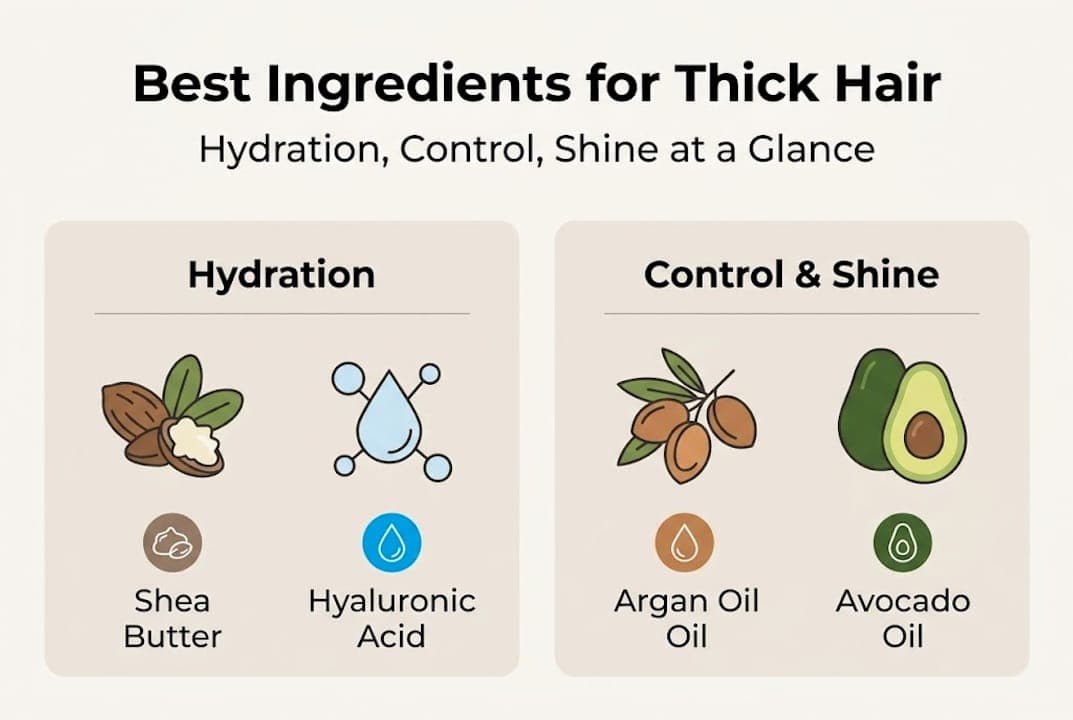
- Shea butter: A rich emollient that softens and seals the cuticle without making hair greasy
- Argan oil: Lightweight enough to absorb, delivers shine and reduces frizz
- Avocado oil: Penetrates deeply due to its small molecular size, great for intense moisture
- Hyaluronic acid: Draws water into the hair shaft and keeps it there
- Glycerin: A humectant that pulls moisture from the air into your strands
- Hydrolyzed keratin: Fills gaps in the cuticle, smooths texture, and reduces breakage
- Bond-repair technologies: Products like Olaplex rebuild broken disulfide bonds inside the hair
Key ingredients for thick hair include shea butter, argan oil, avocado oil, hyaluronic acid, glycerin, hydrolyzed keratin, bond-repair technologies like Olaplex, and sulfate-free formulas. Sulfate-free matters because sulfates strip natural oils, and thick hair already struggles to retain moisture.
What to avoid: volumizing polymers, heavy non-soluble silicones (like dimethicone in high concentrations), and alcohol-based styling products. These either coat the hair without moisturizing or dry it out completely.
Protein treatments deserve a special mention. Protein treatments for thick hair rebuild the internal structure of the strand. But more isn't always better. Use a protein treatment once every 4 to 6 weeks, not weekly. Overloading on protein makes thick hair stiff and prone to snapping.
| Ingredient | Benefit | Best for |
|---|---|---|
| Shea butter | Deep moisture, cuticle sealing | Dry, coarse thick hair |
| Argan oil | Frizz control, shine | All thick hair types |
| Hyaluronic acid | Hydration retention | Dry or chemically treated |
| Hydrolyzed keratin | Smoothing, breakage reduction | Damaged or frizzy thick hair |
| Glycerin | Humectant, softness | Normal to dry thick hair |
Pro Tip: Flip your product bottle and read the ingredient list before buying. If a moisturizing ingredient appears in the first five listed, the formula has enough of it to actually work. If it's near the bottom, it's mostly marketing.
For more guidance on building your regimen, explore products for thicker hair and learn why shea butter benefits go beyond just softness.
The best shampoos, conditioners, and masks for thick hair
With ingredients in mind, let's discover which shampoos, conditioners, and masks consistently deliver for thick hair. The market is crowded, but a few products stand out for actually doing what they promise.
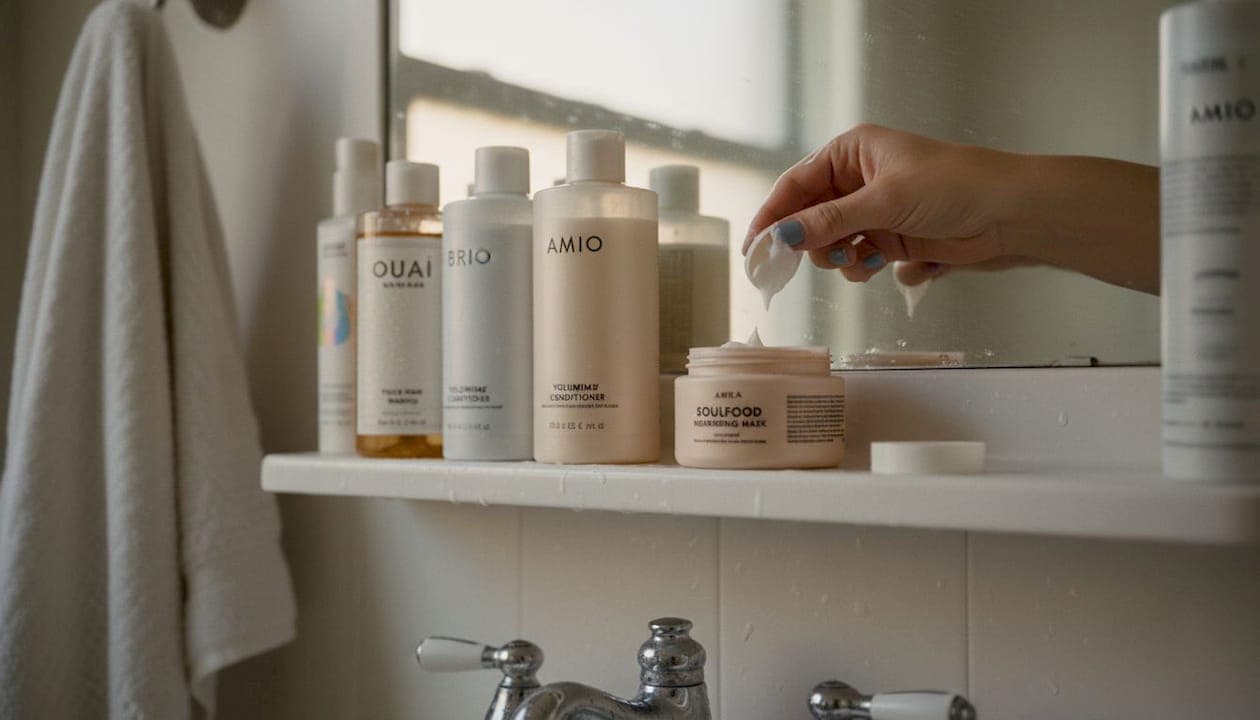
Ouai Thick Hair Shampoo and Conditioner contain marshmallow root and shea butter for hydration and frizz control. The Brazilian Blowout Anti-Frizz line uses sulfate-free ingredients for volume reduction without stripping moisture. Both are strong starting points for thick hair that battles frizz daily.
When applying conditioner, focus on mid-lengths and ends. The roots of thick hair tend to produce enough natural oil, and loading conditioner there leads to greasiness and buildup. Work the product through with your fingers or a wide-tooth comb while it's still in, then rinse with cool water to seal the cuticle.
Top picks at a glance:
- Ouai Thick Hair Shampoo: Marshmallow root, shea butter, sulfate-free
- Brazilian Blowout Anti-Frizz Shampoo: Gentle cleanse, volume reduction
- Briogeo Farewell Frizz Shampoo: Rosehip oil, argan oil, frizz control
- Amika Soulfood Nourishing Mask: Weekly deep hydration, softness
- Olaplex No. 8 Bond Intense Moisture Mask: Bond repair plus moisture in one step
Hair masks for deep hydration like the Amika Soulfood Nourishing Mask and Olaplex No. 8 are recommended for weekly use to reduce frizz significantly. Thick hair benefits enormously from this weekly reset because daily washing and environmental exposure constantly deplete moisture.
| Product | Key feature | Hair need | Frequency |
|---|---|---|---|
| Ouai Thick Shampoo | Marshmallow root, shea | Frizz, dryness | 2-3x weekly |
| Brazilian Blowout Shampoo | Sulfate-free | Volume control | 2-3x weekly |
| Amika Soulfood Mask | Deep nourishment | Intense dryness | Weekly |
| Olaplex No. 8 Mask | Bond repair + moisture | Damaged thick hair | Weekly |
For a broader look at what works across hair types, check out hair growth and care products and browse best conditioners for thick hair for even more tested options.
Leave-ins, treatments, and styling products for thick hair
While the essentials build a foundation, leave-ins and special treatments are keys to advanced care for thick hair's nuances. Once you step out of the shower, your work isn't done. Thick hair needs a finishing layer of protection and moisture to stay manageable through the day.
Leave-in treatments like Olaplex No. 6 Bond Smoother and Oribe Supershine Moisturizing Cream treat and style for smoothness and reduced breakage. These aren't just styling products. They actively repair and protect while giving your hair a polished finish.
How to apply leave-ins correctly:
- Detangle your hair while it's still wet, using a wide-tooth comb
- Section hair into 4 to 6 parts for even product distribution
- Apply leave-in to damp (not soaking wet) hair for best absorption
- Work from ends upward to avoid root buildup
- Finish with a cool rinse or air dry when possible
For thick curly hair, Briogeo Curl Charisma or Ouai Thick work well for coarse strands, while damaged thick hair responds best to Olaplex bond repair. Curl-specific products are formulated to define and hydrate simultaneously, which is exactly what thick curly hair needs without the crunch.
Bond-repair technology, specifically Olaplex and K18, works differently from regular conditioners. These products rebuild broken disulfide bonds inside the hair shaft, restoring elasticity and strength. If your thick hair breaks easily or feels gummy when wet, bond repair is worth prioritizing.
Pro Tip: Apply your leave-in before any heat protectant, not after. The leave-in needs direct contact with the hair shaft. Layering heat protectant on top seals everything in and gives you double protection.
If your thick hair has also been chemically treated or heat-damaged, explore products for damaged hair for targeted recovery options. And if you're considering smoothing treatments, natural hair straightening treatment options have come a long way.
A different approach: What most people get wrong about thick hair care
After covering all the best products and routines, it's worth stepping back to consider what actually makes the biggest impact long term.
Here's the uncomfortable truth: most people with thick hair over-complicate their routine. They layer five products, buy the most expensive "extra strength" formulas, and switch brands every few weeks when results aren't instant. The result? Product overload, scalp buildup, and hair that feels heavier and duller than before.
Thick hair doesn't need more product. It needs the right product, applied consistently. A simple routine with two or three well-chosen products will outperform a complicated ten-step regimen almost every time. Scalp health is also massively underrated. If your scalp is congested from product buildup, nothing you apply to your strands will work properly.
Personalized routines also beat generic ones. What works for someone else's thick hair may not work for yours, because coarse, thick hair behaves differently from fine, thick hair, and curly thick hair has entirely different needs than straight thick hair. Exploring hair thickening product insights can help you identify what's actually driving your hair's behavior, rather than guessing based on someone else's results. Consistency over time, not product quantity, is what transforms thick hair.
Personalize your thick hair routine with MyHair
Ready to stop guessing and start seeing real results? Every thick hair type is different, and what works for one person may actively work against another. That's where AI-powered analysis changes the game.
MyHair's AI hair analysis scans your hair and scalp to identify your specific needs, whether that's moisture deficiency, breakage patterns, or scalp congestion. Instead of trial and error with expensive products, you get targeted recommendations built around your actual hair profile. Get started with MyHair and find out exactly which products and ingredients your thick hair is missing. You can even see your hair score to track improvement over time and know when your routine is actually working.
Frequently asked questions
What ingredients should I avoid in products for thick hair?
Avoid volumizing agents, heavy non-soluble silicones, and harsh sulfates. Instead, prioritize sulfate-free formulas with shea butter, argan oil, and hydrolyzed keratin for real moisture.
How often should I use a hair mask if I have thick hair?
Weekly deep hydration masks are recommended for most thick-haired individuals to control frizz and significantly boost manageability between washes.
Can I use the same products if my thick hair is curly or damaged?
Not exactly. For thick curly hair, curl-specific hydrators like Briogeo Curl Charisma work best. For damaged thick hair, bond-repair treatments like Olaplex should come first.
Why do volumizing products not work for thick hair?
Volumizing products cause frizz and dryness in thick hair because they're designed to coat and lift fine strands, not seal and smooth the wider cuticle that thick hair has.