Blog
Learning Materials
Common Hair Growth Myths Debunked: What's True
Updated: June 17, 2026
TL;DR:
- Trimming hair does not speed up growth, but it prevents breakage and maintains hair health.
- Washing reveals natural shedding but does not cause hair loss, which is primarily driven by genetics and hormones.
Most popular beliefs about hair growth are myths disproven by clinical research. From trimming your hair to make it grow faster, to "training" your scalp to produce less oil, these common hair growth myths have circulated for decades without scientific support. Trichologists and dermatologists consistently find that the real drivers of healthy hair are scalp health, genetics, and evidence-based treatments. Not scissors, brushes, or castor oil. This article breaks down the top myths, replaces them with facts, and gives you a clearer picture of how your hair actually works.
1. Does cutting hair make it grow faster?
Trimming your hair does not make it grow faster. Hair grows from follicles in the scalp, and scissors never touch those follicles. The average growth rate is roughly 0.5 inches (1.25 cm) per month regardless of how often you cut.

Where trimming does help is at the ends. Split ends travel up the hair shaft if left untreated, causing breakage that makes hair look shorter and thinner over time. Regular trims every 8–12 weeks preserve length by preventing that upward damage. The hair is not growing faster. It is simply retaining more of the length it already grew.
Here is what trimming actually does for you:
- Removes split ends before they cause shaft breakage
- Improves the appearance of thickness and shine
- Prevents tangling caused by frayed ends
- Keeps styles looking intentional rather than ragged
Pro Tip: Products that claim to "repair" split ends only coat the hair temporarily. Split ends cannot be permanently fused by any conditioner or serum. Trimming is the only real fix.
2. Does shampooing cause hair loss?
Washing your hair does not cause hair loss. Normal daily shedding is 50–100 hairs, and those hairs become visible in the shower drain, which is why so many people blame washing. The washing reveals the shedding. It does not cause it.
Skipping washes to "protect" your hair actually works against you. Buildup of sebum, dead skin cells, and product residue clogs follicles and creates an environment where hair health deteriorates. A clean scalp is a productive scalp. For a practical breakdown of how often to wash and what products to use, the hair wash routine guide from Myhair is worth reading.
Pro Tip: If you notice significantly more than 100 hairs shedding daily over several weeks, that is worth discussing with a dermatologist. Seasonal shedding peaks in September and October, so a temporary increase in fall is normal.
3. Do natural oils accelerate hair growth?
Natural oils hydrate and protect the hair shaft, but they do not speed up follicle activity. This is one of the most persistent hair growth misconceptions, driven largely by social media marketing. Castor oil, coconut oil, and argan oil all have legitimate conditioning benefits. None of them have robust clinical evidence showing they increase the rate of hair growth.
Rosemary oil is the most discussed example. Rosemary oil's effectiveness remains largely anecdotal compared to 5% minoxidil, which is FDA-approved and clinically proven. One small study showed comparable results to 2% minoxidil, but that study has not been replicated at scale. The marketing around rosemary oil has outpaced the science by a wide margin.
What oils can do:
- Reduce breakage by increasing hair's elasticity and moisture retention
- Soothe scalp irritation when used in small amounts
- Improve the appearance of shine and manageability
- Support scalp circulation when massaged in, which may modestly benefit follicle environment
For a direct comparison of rosemary oil versus proven treatments, Myhair's supplement guide covers the clinical gap clearly.
4. Do hats suffocate your hair follicles?
Hats do not cause hair loss. Follicles receive oxygen through blood circulation, not through the air on your scalp's surface. Wearing a baseball cap, beanie, or hard hat does not deprive follicles of anything they need to function.
The confusion likely comes from conflating hat-wearing with androgenetic alopecia, the genetic form of hair loss. Men who wear hats often also have male-pattern baldness, but the hat is not the cause. Genetics and dihydrotestosterone (DHT) sensitivity drive that condition.
The real tension-related risk is traction alopecia, which comes from prolonged mechanical pulling. Tight braids, high ponytails, weaves, and extensions worn consistently over months or years create enough tension to damage follicles. Dermatologists identify this through the "fringe sign," where traction alopecia causes hair loss along the hairline in a distinctive pattern. Caught early, it is reversible. Left untreated, the follicle damage becomes permanent.
Protective steps worth taking:
- Alternate tight styles with loose ones to give follicles recovery time
- Use fabric-covered elastics instead of rubber bands
- Avoid sleeping in tight braids or extensions regularly
- Watch for hairline recession as an early warning sign
5. Does "hair training" reduce oil production?
Hair training, the practice of stretching out washes to teach your scalp to produce less sebum, does not work. Scalp sebum production is not trainable. Trichologists are clear on this point. Sebaceous glands respond to hormones and genetics, not to how often you wash.
What actually happens when you delay washing is sebum accumulation. That buildup coats the follicle opening, traps dead skin cells, and creates conditions where scalp health declines. For people prone to dandruff, infrequent washing makes the condition worse, not better. Dandruff is manageable with the right medicated shampoos, but it is not curable. Avoiding washing is one of the worst strategies for controlling it. The causes and solutions for dandruff are covered in depth by Myhair's dedicated guide.
6. Does brushing 100 strokes a day improve hair health?
Brushing 100 strokes a day is harmful, not helpful. Excessive brushing causes breakage by creating friction along the hair shaft, especially when hair is wet and at its most fragile. This myth likely originated from an era when daily brushing was used to distribute scalp oils down the hair shaft before modern conditioners existed.
Today, the recommendation from hair professionals is simple: brush only to detangle, and use the right tool for the job. A wide-tooth comb on wet hair causes far less damage than a paddle brush. Detangling from the ends upward, rather than root to tip, prevents snapping.
Practical brushing guidelines:
- Use a wide-tooth comb or a wet brush on damp hair
- Start detangling from the ends and work upward
- Brush dry hair gently and only as needed for styling
- Avoid brushing hair that is tangled without first applying a detangling product
7. Do hair vitamins guarantee faster growth?
Hair vitamins do not guarantee faster growth for people who are not nutritionally deficient. This is one of the most commercially exploited hair growth misconceptions. Biotin, the ingredient most commonly marketed in hair supplements, has solid evidence supporting its role in hair health only when the person taking it has a biotin deficiency. For people with normal biotin levels, additional supplementation produces no measurable growth benefit.
Iron, zinc, vitamin D, and ferritin deficiencies are genuinely linked to hair shedding and slower growth. If a blood panel reveals a deficiency, targeted supplementation can make a real difference. Without that deficiency, you are largely paying for expensive urine. Visible results from any hair growth treatment take 3–4 months due to the hair growth cycle, which means many people abandon effective treatments before they have a chance to work, and credit ineffective ones when hair naturally cycles back into growth.
8. Does hard water damage your hair permanently?
Hard water negatively affects hair texture and appearance, but the damage is not permanent. Hard water contains high concentrations of calcium and magnesium ions that bind to keratin and coat the hair shaft, leaving it feeling rough, dull, and harder to manage. Over time, this coating can make hair more prone to breakage.
The fix is practical. Chelating shampoos, which are specifically formulated to remove mineral buildup, restore hair texture effectively. A chelating shampoo for hard water removes mineral deposits without stripping the hair of its natural oils. Using a water softener or a filtered shower head also reduces mineral exposure at the source.
Key takeaways
Most hair growth myths persist because they feel logical, but the biology of hair growth consistently contradicts them.
| Point | Details |
|---|---|
| Trimming does not grow hair faster | Growth happens at the follicle; trimming only prevents breakage at the ends. |
| Washing reveals shedding, not causes it | Normal daily loss is 50–100 hairs; a clean scalp supports follicle health. |
| Oils condition but do not accelerate growth | Only FDA-approved treatments like minoxidil have clinical proof of efficacy. |
| Hair training is ineffective | Sebum production is hormone-driven; delaying washes causes buildup, not adaptation. |
| Supplements only help if you are deficient | Biotin and other vitamins show benefit only when a deficiency is confirmed by blood work. |
Why I stopped trusting hair growth "hacks"
I have spent years reading the research behind hair health claims, and the pattern is always the same. A product or practice gets amplified on social media, a few anecdotal success stories circulate, and suddenly millions of people are convinced they have found the answer. Rosemary oil is the clearest recent example. The science behind it is genuinely interesting, but the leap from "one small study" to "better than minoxidil" is a marketing invention, not a clinical conclusion.
What I find more useful than any single product is understanding scalp health as the foundation. Follicles that are clean, well-circulated, and not under chronic tension grow hair at their genetic maximum. No serum changes that ceiling. What changes it is addressing deficiencies, managing conditions like dandruff properly, and avoiding the mechanical damage that comes from tight styles or aggressive brushing.
The hardest truth about hair growth is that patience is the actual strategy. Hair growth treatments take 3–4 months to show visible results. Most people quit before that window closes. The myths about hair growth thrive precisely because the real answer, consistency and time, is less satisfying than a bottle of oil.
— Cyriac
See your hair health clearly with Myhair
Debunking myths is the first step. Knowing what is actually happening with your own scalp is the next one.
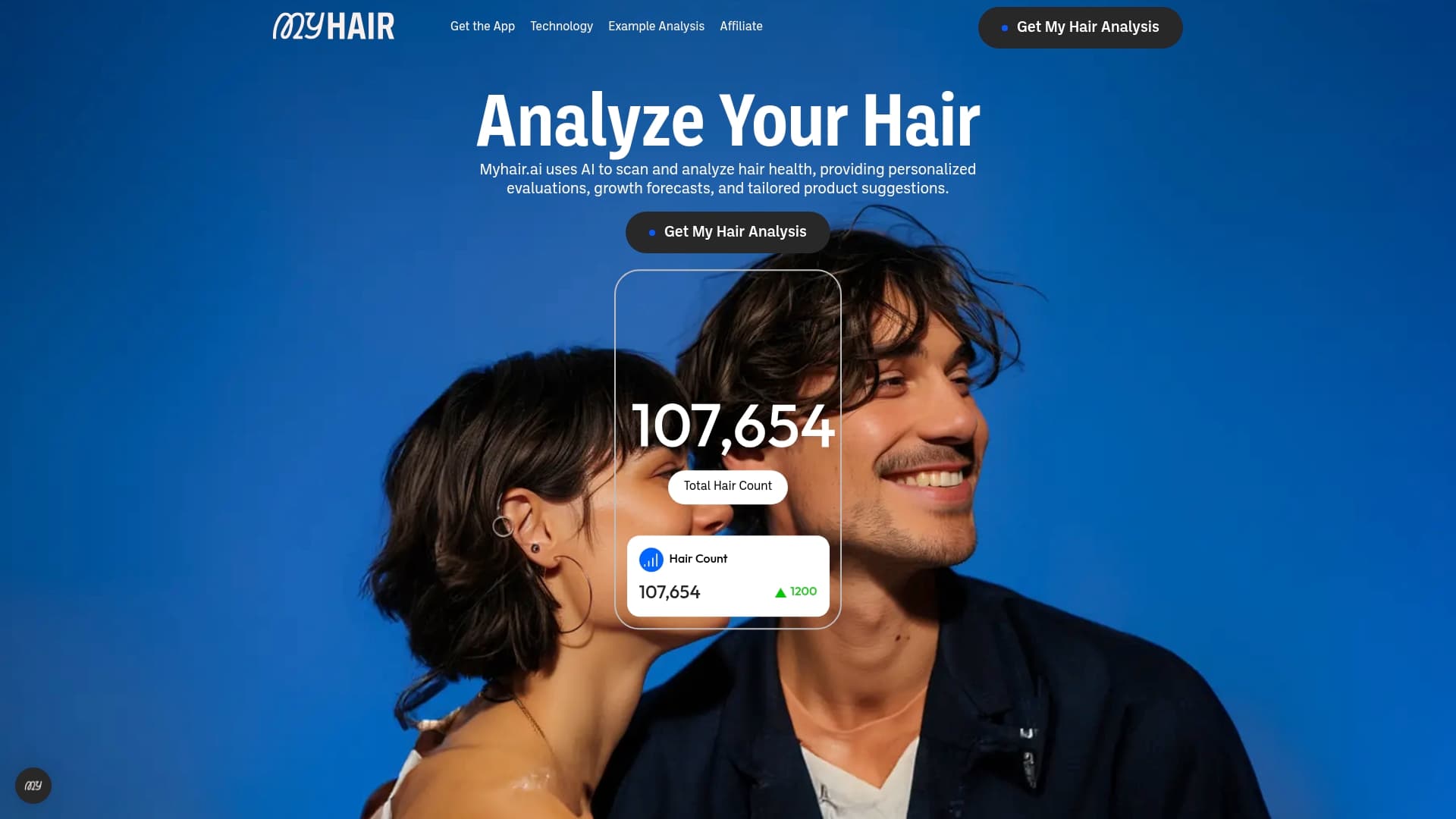
Myhair uses AI-powered analysis to assess your scalp condition and hair health from a simple scan. Instead of guessing whether your shedding is normal or your thinning is progressing, you get a personalized hair health score based on your actual data. The platform tracks changes over time and recommends products matched to your specific condition, not generic advice built for someone else. If you have been spending money on supplements or oils without knowing whether your scalp actually needs them, this is where to start.
FAQ
Does trimming hair make it grow faster?
No. Hair grows from scalp follicles at roughly 0.5 inches per month regardless of trimming. Cutting only improves appearance and prevents breakage.
How many hairs is it normal to lose per day?
Losing 50–100 hairs daily is normal. Shedding becomes visible during washing because loose hairs collect, but the washing itself is not the cause.
Do hair vitamins work for everyone?
Hair vitamins only produce measurable results when a specific deficiency, such as low iron, zinc, or vitamin D, is confirmed through blood work. Supplementing without a deficiency offers no proven growth benefit.
Can dandruff be cured permanently?
Dandruff is manageable but not curable. Consistent use of medicated shampoos controls it effectively, while infrequent washing makes symptoms worse by allowing sebum and skin cell buildup.
Is traction alopecia from tight hairstyles reversible?
Traction alopecia is reversible if caught early. Prolonged tension from tight braids or extensions can permanently damage follicles over time, so reducing tension styles at the first sign of hairline recession is critical.