Blog
Learning Materials
Dandruff Hair Loss: Causes, Treatment, and Recovery
Updated: May 18, 2026

TL;DR:
- Dandruff-related hair loss is primarily caused by scalp inflammation and scratching, not the flakes themselves. Most cases are reversible with targeted treatment like ketoconazole shampoo and long-term maintenance, but persistent issues may require medical evaluation. Regular monitoring and proper diagnosis are crucial for effective recovery and managing underlying scalp conditions.
If you're finding more hair in the shower and more flakes on your shoulders, you're probably wondering if the two are connected. The relationship between dandruff hair loss is real, but it's widely misunderstood. Most people assume the flakes themselves are pulling hair out. They aren't. Scalp disorders affect roughly 50% of adults worldwide, yet the actual mechanism linking dandruff and hair loss, the inflammation and trauma underneath the flakes, goes largely unaddressed. This article explains exactly what's happening on your scalp, how to treat it, and what recovery looks like.
Table of Contents
- Key takeaways
- What dandruff actually does to your scalp
- The dandruff and hair loss connection explained
- Evidence-based treatment for dandruff-related hair loss
- What recovery actually looks like
- My honest take on dandruff and hair loss
- How Myhair can help you track and manage your scalp health
- FAQ
Key takeaways
| Point | Details |
|---|---|
| Flakes don't pull hair out | The real culprits are scalp inflammation and scratching, not the dandruff flakes themselves. |
| Shedding is usually reversible | In 85-90% of cases, dandruff-related hair loss is temporary and fully recoverable with treatment. |
| Ketoconazole is the gold standard | A 2% ketoconazole shampoo used 2-3 times weekly is the most evidence-backed starting treatment. |
| Maintenance matters long term | Even after flakes clear, ongoing use once every 1-2 weeks prevents rapid relapse. |
| Get evaluated if it persists | If hair loss and redness continue past 4-6 weeks of treatment, see a dermatologist to rule out other causes. |
What dandruff actually does to your scalp
Dandruff is not just dry skin. It's a chronic inflammatory condition triggered primarily by a yeast called Malassezia globosa, which lives on virtually every human scalp. The problem starts when this yeast feeds on scalp sebum and produces oleic acid, a byproduct that irritates the skin for people who are sensitive to it. The result is accelerated skin cell turnover, visible flaking, redness, and persistent itching.
Seborrheic dermatitis is the more severe version of the same process. Where dandruff stays mostly cosmetic, seborrheic dermatitis involves deeper inflammation, often spreading to the eyebrows, ears, and sides of the nose. Both conditions can disrupt the scalp environment in ways that directly affect hair follicles.
Here's what that disruption looks like at the follicle level:
- Inflammatory cytokines released during a flare-up surround the hair follicle and interfere with normal cycling, pushing hairs prematurely into the telogen (resting) phase.
- Blocked follicular openings from built-up scale prevent normal sebum flow and oxygenation around the follicle base.
- Itching-driven scratching causes physical trauma to the follicle shaft and root, directly increasing hair fall.
- Persistent inflammation weakens the follicle's structural integrity over time, even before visible thinning begins.
Pro Tip: If your scalp itches more right before a flare-up, that's the inflammatory cycle beginning. Treating it at that stage, before the flakes peak, reduces both scalp damage and associated shedding.
The dandruff and hair loss connection explained
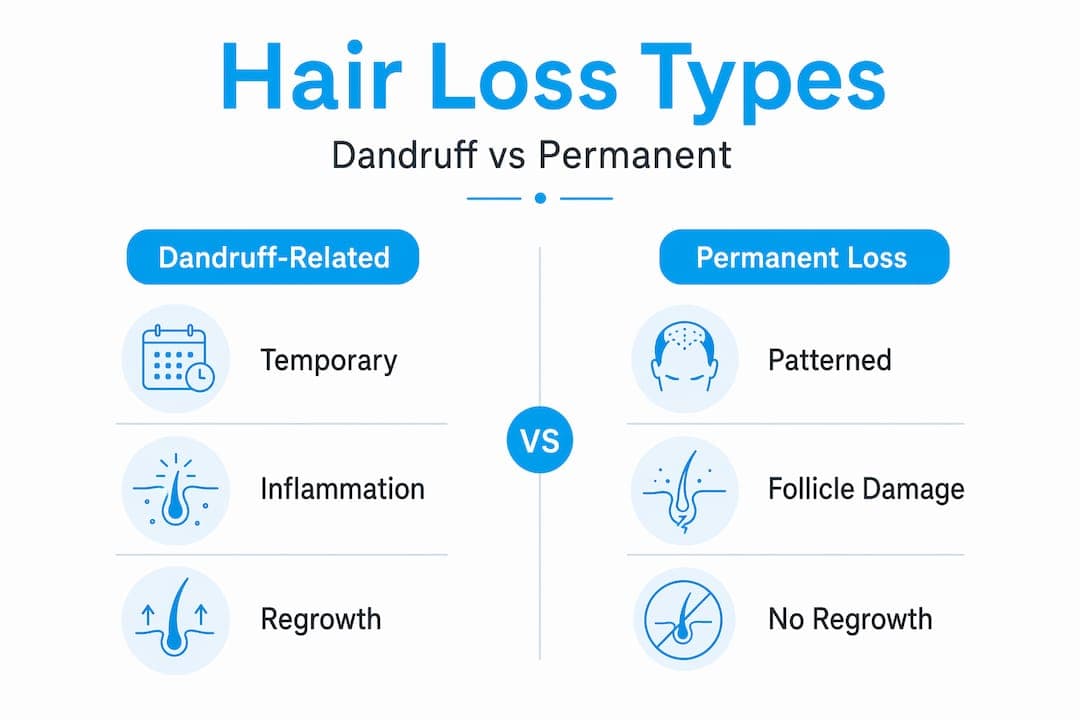
The most useful distinction you can make is this: dandruff causes temporary hair loss, not permanent follicle destruction. Understanding that difference tells you both how serious your situation is and what kind of treatment will actually help.
Chronic inflammation from seborrheic dermatitis works by shifting hair follicles into the resting phase without destroying them. This is called telogen effluvium. Hairs that enter telogen prematurely shed roughly 2-3 months later, which is why many people notice shedding seems disconnected from when their dandruff was at its worst. The hair follicle shift is reversible; once inflammation is controlled, follicles return to the growth phase.
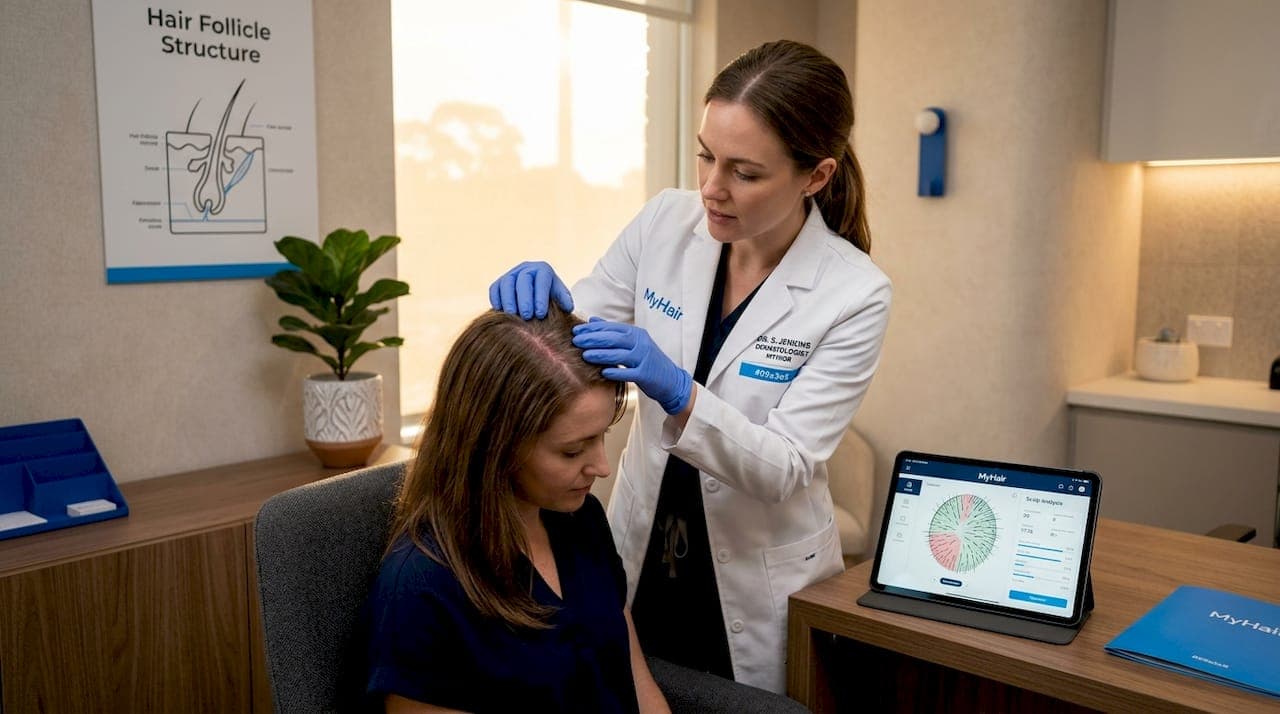
Scratching adds a separate, mechanical layer of damage. Scalp scratching increases hair fall by up to 30% in affected individuals, independent of the inflammatory process. The two mechanisms compound each other.
Here's how dandruff-related hair loss compares to the other common cause most people worry about:
| Feature | Dandruff-related hair loss | Androgenetic alopecia |
|---|---|---|
| Onset pattern | Diffuse shedding across scalp | Receding hairline or crown thinning |
| Scalp condition | Flaking, redness, itching | Usually clear scalp |
| Follicle status | Intact, temporarily suppressed | Miniaturizing over time |
| Reversibility | Fully reversible with treatment | Progressive without intervention |
| Primary driver | Inflammation and scratching | DHT sensitivity and genetics |
| Age of typical onset | Any age | Usually 20s-40s and beyond |
The overlap becomes tricky because androgenetic alopecia can co-exist with dandruff, masking the full picture and leading to ineffective treatment choices. If you treat the dandruff thoroughly and still notice a distinct thinning pattern at the crown or temples three months later, that's worth investigating separately.
Pro Tip: Photograph your scalp and hairline every four weeks under the same lighting. Pattern changes become much easier to spot with side-by-side comparisons than relying on memory alone.
Evidence-based treatment for dandruff-related hair loss
Treating dandruff to stop hair loss requires more than grabbing any anti-dandruff bottle off the shelf. You need the right ingredients, the right technique, and a realistic timeline. Here's a step-by-step approach grounded in current evidence.
-
Start with ketoconazole 2% shampoo. Ketoconazole 2% is the gold-standard treatment, used 2-3 times per week for the first 2-4 weeks. It directly targets Malassezia and reduces scalp inflammation simultaneously. Over-the-counter 1% versions exist, but the 2% formulation provides meaningfully stronger antifungal activity.
-
Apply correctly. Most people shampoo their hair and accidentally treat their hair length rather than their scalp. The active ingredients need scalp contact. Massage the shampoo directly into the scalp and leave it on for 3-5 minutes before rinsing. This contact time is what makes the difference.
-
Add salicylic acid for heavy scaling. When thick scale is present, salicylic acid shampoos used before ketoconazole help lift built-up flakes and allow the antifungal to reach the skin surface. Alternate them rather than using both in one wash.
-
Use topical corticosteroids for acute inflammation. When redness and burning are present alongside flaking, a short course of low-potency topical corticosteroid (like hydrocortisone) calms the inflammatory response quickly. This is typically a 1-2 week intervention, not a long-term strategy.
-
Avoid scalp irritants during treatment. Styling sprays, dry shampoos, and heavy oils trap dead skin and feed the yeast. Give your scalp a clean slate during the active treatment phase.
-
Switch to maintenance mode. Once flakes clear, don't stop treatment entirely. Malassezia yeast levels rebound quickly after treatment stops, making relapse almost certain. Dropping to once every 1-2 weeks keeps the yeast suppressed without over-treating.
-
See a dermatologist if no improvement by week four. If redness, crusting, or hair loss persist after 4-6 weeks of consistent treatment, you need professional evaluation. The cause may be psoriasis, a fungal infection, or a condition that requires prescription-strength treatment.
For guidance on selecting the right product, Myhair's breakdown of dandruff shampoo selection walks through the key ingredients and what to look for based on your specific symptoms.
Pro Tip: Rotate between two antifungal shampoos (ketoconazole and zinc pyrithione, for example) every few months. This reduces the chance of Malassezia adapting to a single active ingredient.
What recovery actually looks like
Setting realistic expectations prevents unnecessary panic. If you've started treatment and you're still seeing shedding a month in, that doesn't mean it's not working. The hair growth cycle runs on its own clock, independent of your treatment start date.
Here's a realistic recovery timeline:
- Weeks 1-4: Flaking and scalp itching begin to reduce. Inflammation calms down. Hair shedding may still be occurring because the follicles pushed into telogen weeks ago are still finishing that phase.
- Months 2-3: Shedding rate decreases noticeably. New growth begins at follicles that had temporarily shut down.
- Months 3-4: Visible regrowth typically starts in the areas of heaviest previous shedding. Regrowth begins around 3-4 months post-inflammation control.
- Months 6-12: Density returns progressively. Full recovery from dandruff-related hair loss may take up to 12 months for significant shedding episodes.
The situation where recovery stalls deserves its own attention. If hair density has not meaningfully improved after 6 months of consistent, well-executed treatment, the diagnosis needs to be revisited.
| Scenario | Likely cause | Next step |
|---|---|---|
| Flakes controlled, regrowth occurring | Dandruff-related loss resolving | Continue maintenance |
| Flakes controlled, no regrowth at 6 months | Possible co-existing androgenetic alopecia | Dermatology consult |
| Flakes persist despite treatment | Wrong diagnosis or resistant yeast strain | Prescription treatment needed |
| Scarring on scalp visible | Prolonged untreated inflammation | Specialist referral, permanent loss possible |
Nutrition supports recovery too. Iron, zinc, and biotin deficiencies are often found in people experiencing hair shedding. Addressing these through diet or targeted supplementation gives your regrowth phase the building blocks it needs. And for persistent or significant thinning, PRP (platelet-rich plasma) therapy has shown meaningful results as a regenerative option that supports follicle reactivation.
Digital trichoscopy, a dermatoscopic assessment of the scalp and follicles, is worth requesting if your recovery stalls. It gives a clinician a precise picture of follicle health without biopsy, and it distinguishes miniaturization from temporary suppression.
My honest take on dandruff and hair loss
I've reviewed hundreds of cases where people spent months treating the wrong thing. They were buying wet dandruff remedies, trying every shampoo on the shelf, getting frustrated when the shedding didn't stop. In most of those cases, the flakes were under control. The inflammation wasn't.
What I've learned is that most people, and honestly many general practitioners, underestimate how much damage the scratching alone contributes. You stop the itch, you stop the trauma. That alone can cut shedding significantly before any antifungal has a chance to work. People skip that step because it doesn't come with a product.
The other thing I'd push back on: dandruff being treated as a one-time problem you fix and move on from. It's a chronic, relapsing condition requiring ongoing maintenance. The patients who do best are the ones who accept that, set up a sustainable long-term routine, and don't wait until the next flare-up is severe before acting. Early action means shorter recovery and less cumulative follicle stress.
If you're unsure whether you're dealing with dandruff-related shedding, androgenetic alopecia, or something else entirely, please don't guess. Get a proper evaluation. The sooner the right diagnosis is made, the sooner the right treatment starts. That gap between the two is where most of the unnecessary hair loss happens.
— Cyriac
How Myhair can help you track and manage your scalp health
Managing dandruff hair loss gets significantly easier when you can actually see what's happening on your scalp over time, not just guess based on how bad it feels on a given morning.
Myhair's AI-powered hair analysis gives you a detailed, data-driven picture of your scalp condition, follicle density, and changes over time using just your phone. The platform detects early signs of scalp inflammation, tracks treatment response month by month, and surfaces personalized product recommendations based on your actual hair health data, not generic suggestions. For anyone managing dandruff and hair thinning together, having a visual record of progress makes it far easier to know when your treatment is working and when it's time to escalate. Getting started takes minutes through the Myhair app onboarding process, and the insights it delivers are the kind you'd otherwise need a clinical visit to get.
FAQ
Does dandruff directly cause permanent hair loss?
Permanent hair loss is rare with dandruff. It becomes possible only after 12 or more months of untreated inflammation that causes follicular scarring. In most cases, dandruff-related shedding is fully reversible.
How long does hair take to grow back after treating dandruff?
Most people see regrowth starting at 3-4 months after getting inflammation under control, with full density recovery taking up to 12 months for more significant cases.
What is the best shampoo for dandruff and hair loss?
Ketoconazole 2% shampoo is the most evidence-backed option, used 2-3 times per week for 2-4 weeks initially, then scaled to maintenance frequency once symptoms clear.
Can scratching your scalp make hair loss worse?
Yes. Mechanical trauma from scratching can increase hair fall by up to 30% in affected individuals. Controlling the itch with appropriate treatment is as important as addressing the flakes.
When should you see a doctor about dandruff hair loss?
See a dermatologist if redness, crusting, or hair loss continue after 4-6 weeks of consistent treatment. It may indicate psoriasis, a fungal infection, or a condition requiring prescription care.