Blog
Learning Materials
Build an effective oil hair routine for growth & health
Updated: April 15, 2026

TL;DR:
- Personalized oil routines based on hair type, scalp condition, and loss pattern improve hair growth results.
- Rosemary oil and blends like rosemary-lavender outperform single oils, matching or exceeding clinical treatments.
- Regular tracking and AI analysis help optimize strategies, ensuring adjustments lead to better hair health.
If you've tried product after product and still see more hair in the drain than on your head, you're not alone. Generic shampoos and one-size-fits-all treatments often fall short because they ignore your specific scalp type, loss pattern, and hair texture. The good news is that a personalized oil routine can make a measurable difference. Rosemary oil matches minoxidil results over six months with significantly less scalp irritation. This guide walks you through identifying your needs, choosing the right oils, applying them correctly, and tracking real progress.
Table of Contents
- Identify your hair and scalp needs
- Essential oils and their proven benefits
- Step-by-step oil hair routine for growth
- Monitoring results and adjusting your routine
- What most guides miss about oil hair routines
- Personalize your oil routine with AI-powered solutions
- Frequently asked questions
Key Takeaways
| Point | Details |
|---|---|
| Personalized routines are vital | Matching oils and blends to your hair and scalp type leads to better results and fewer issues. |
| Clinical evidence outperforms hype | Oils like rosemary and targeted blends have strong research backing for growth and thickness. |
| Routine and tracking matter | Consistent application, correct technique, and adjusting based on progress maximize benefits. |
| Avoid common mistakes | Too much oil or wrong formula can cause buildup, irritation, or worsen loss—use tailored approaches. |
| Technology enhances your results | AI-powered analysis can personalize routines and track improvements for optimal hair health. |
Identify your hair and scalp needs
Before you pour any oil onto your scalp, you need to understand what you're working with. Skipping this step is exactly why most people end up frustrated. A routine built for thick, dry hair will overwhelm fine, oily strands and clog follicles fast.
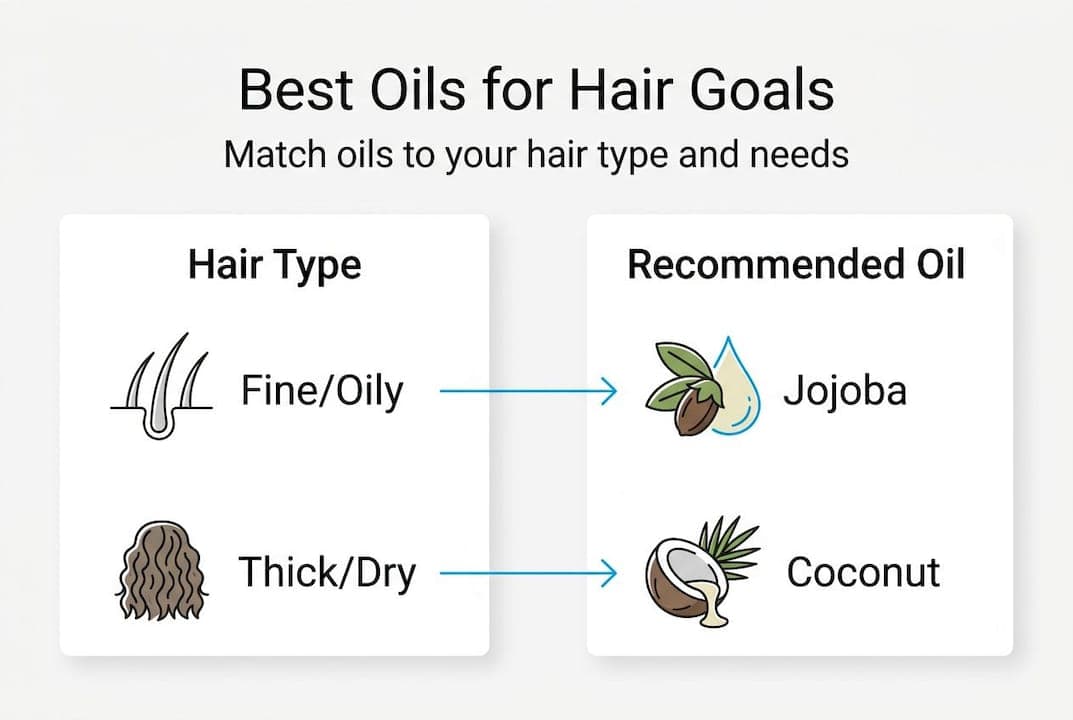
Start by assessing your hair type. Fine hair needs lightweight oils that absorb quickly and won't weigh strands down. Thick or coarse hair benefits from heavier, more nourishing formulas. Curly hair tends to be drier and craves moisture-rich oils, while straight hair can get greasy faster and needs a lighter touch.
Next, identify your loss pattern. Diffuse thinning across the scalp is different from patchy loss or edge thinning along the hairline. Each pattern often signals a different root cause, from hormonal shifts to traction stress, and responds better to targeted approaches. Choosing the right oil starts with knowing which area you're trying to support.
Then evaluate your scalp condition:
- Dry scalp: flaking, tightness, and itching. Benefits from heavier oils like castor or coconut.
- Normal scalp: balanced oil production. Works well with most oils in moderate amounts.
- Oily scalp: excess sebum, limp hair. Needs lightweight oils like jojoba or grapeseed applied sparingly.
- Dandruff or inflammation: requires anti-fungal or soothing oils like tea tree or peppermint, used carefully.
One critical warning: overuse causes buildup and clogged follicles, which can worsen dandruff and inflammation. Avoid heavy oils entirely on infected or highly reactive scalps.
For fine or oily hair, thickening oil tips often recommend applying oil only to the mid-lengths and ends rather than directly to the scalp.
| Hair/scalp type | Recommended oil weight | Best oil choices |
|---|---|---|
| Fine, oily | Lightweight | Jojoba, grapeseed, argan |
| Thick, dry | Heavy | Castor, coconut, avocado |
| Curly, coarse | Medium to heavy | Coconut, olive, castor |
| Dandruff-prone | Light, anti-fungal | Tea tree, peppermint (diluted) |
Pro Tip: Always patch test a new oil on your inner arm for 24 hours before applying it to your scalp. This catches sensitivities early and saves you from a week of irritation.
Essential oils and their proven benefits
Not all oils are created equal. Some have decades of anecdotal praise. Others have actual clinical trials behind them. Here's what the research says.
Rosemary oil is the current gold standard. It matches minoxidil results in increasing hair count and density over six months, without the scalp dryness and itching that minoxidil often causes. It works by improving circulation to the scalp and may block DHT, the hormone most linked to androgenetic alopecia.

Coconut oil is one of the few oils that actually penetrates the hair shaft rather than just coating it. This matters because it reduces protein loss during washing and styling. The proven benefits of natural oils like coconut extend to strengthening the hair structure from the inside out, which means less breakage over time.
Castor oil is thick and rich in ricinoleic acid, which has anti-inflammatory properties. While clinical data is still limited compared to rosemary, many users report improved density and edge regrowth with consistent use.
Lavender oil has shown real promise in newer research. When combined with rosemary, the results are striking. Rosemary-lavender blends increased hair growth rate by up to 57%, density by 32%, and thickness by 66% in recent studies. That's not a small margin.
"Rosemary-lavender or castor blends increased growth rate over coconut oil by 47 to 57%, making blended formulas a smarter strategy than single-oil routines."
Here's a quick comparison of what each oil targets:
| Oil | Primary benefit | Clinical support |
|---|---|---|
| Rosemary | Growth, density | Strong (matches minoxidil) |
| Coconut | Protein retention, strength | Moderate |
| Castor | Thickness, edge growth | Limited but promising |
| Lavender | Growth rate, density (in blends) | Growing evidence |
For those ready to go deeper, combined oil strategies explain how to layer oils for maximum effect. And if you're newer to the topic, essential oils for hair breaks down the basics without the jargon.
The takeaway: blends consistently outperform single oils in newer research. If you're only using one oil, you may be leaving real results on the table.
Step-by-step oil hair routine for growth
Knowing which oils work is only half the equation. How you apply them matters just as much. Here's a practical routine you can start this week.
- Select your oil or blend. Based on your hair type and scalp condition from Section 1, choose your base oil. Add a few drops of rosemary essential oil (diluted to 2 to 3%) if targeting growth.
- Warm the oil slightly. Place the bottle in a bowl of warm water for a few minutes. Warm oil absorbs more easily and feels better on the scalp.
- Section your hair. Part your hair into four sections so you can apply oil evenly across the entire scalp, not just the top.
- Apply to the scalp first. Use a dropper or your fingertips to apply oil directly to the scalp along each part.
- Massage for 5 to 10 minutes. Use circular motions with light to medium pressure. This step is non-negotiable. Scalp massage increases blood flow and improves oil absorption, directly supporting follicle stimulation.
- Work through the lengths. After the scalp, distribute remaining oil through the mid-lengths and ends to reduce breakage.
- Wait 30 to 60 minutes or overnight. Longer contact time allows deeper penetration, especially for coconut oil routines targeting protein retention.
- Wash out thoroughly. Use a gentle, sulfate-free shampoo. You may need two rounds to fully remove heavier oils like castor.
Coconut oil reduces breakage and protein loss, which is why leaving it on for at least 30 minutes before washing gives the best results.
For frequency: most people do well with 2 to 3 applications per week. Daily use is fine for very mild, lightweight oils on dry hair types. For fine or oily hair, once a week may be enough.
Pro Tip: Less is more. A few drops of oil applied with a good massage outperforms a heavy coat applied without technique every time.
Tools and signs to watch:
- Tools: dropper bottle, fine-tooth comb for sectioning, shower cap for overnight treatments
- Positive signs: reduced shedding, improved shine, less scalp tightness
- Warning signs: increased flaking, greasy roots that don't wash out, new scalp irritation
If you're dealing with damaged hair care needs alongside growth goals, prioritize protein-retaining oils first. And don't overlook olive oil for growth, which works well as a gentle base for sensitive scalps.
Monitoring results and adjusting your routine
A routine without tracking is just guessing. You need a system to know if your oils are actually working.
Start with weekly photos. Take them under the same lighting, at the same angle, every week. Use your phone's front camera with a consistent background. Over 8 to 12 weeks, you'll see patterns that are invisible day to day.
Measure density and thickness by parting your hair in the same spot each week and noting how wide the part looks. A narrowing part over time is a positive sign. You can also count shed hairs in the shower on a consistent basis.
Here's how single oils compare to blends in clinical outcomes:
| Metric | Single oil (coconut) | Rosemary-Redensyl serum |
|---|---|---|
| Density increase | Moderate | +37.92% |
| Thickness increase | Mild | +80.85% |
| Hair fall reduction | Moderate | 64.89% less fall |
Those numbers from a rosemary-Redensyl serum trial are hard to ignore. If you've been using a single oil for three months without visible change, it may be time to switch to a blend.
Warning signs that your routine needs adjustment:
- No visible reduction in shedding after 10 to 12 weeks
- Scalp feels consistently greasy or itchy after oiling
- New flaking or redness that wasn't there before
- Hair feels limp or heavy even after washing
For fine or oily hair, reduce frequency first before switching oils. For dry or coarse hair, try extending leave-in time before changing your formula. Explore natural oils for hair loss to find alternatives if your current oil isn't delivering. And revisit tracking hair thickness for structured measurement methods.
What most guides miss about oil hair routines
Here's the uncomfortable truth: most oil hair routine guides are written as if every scalp is the same. They recommend rosemary oil, tell you to massage for five minutes, and call it done. That advice isn't wrong. It's just incomplete.
What actually drives results is the combination of the right oil for your specific loss pattern, the right frequency for your scalp type, and consistent tracking so you know when to adjust. Most people quit after six weeks because they see no change. But they were using the wrong formula for their hair type, or applying it too infrequently to matter.
The science is also moving faster than most guides acknowledge. Blend formulas are outperforming single oils by significant margins in recent trials. Yet most articles still recommend coconut oil as a standalone solution. Olive oil insights are another area where the nuance gets lost. Results also plateau. Rotating oils or adjusting frequency every 8 to 10 weeks can restart progress when gains stall.
Personalize your oil routine with AI-powered solutions
Building a routine that actually fits your hair takes more than good intentions. It takes data.

MyHair.ai uses AI-powered analysis to assess your scalp and hair health from a simple scan, then maps your specific patterns to the most effective oil strategies for your situation. Instead of guessing whether rosemary or castor is right for you, you get a personalized recommendation backed by your actual hair data. The platform tracks your progress over time, so you can see real changes and adjust your routine as your hair responds. Start with your AI hair analysis to get your hair score, then begin your analysis or use the scanner camera to take your first scan today.
Frequently asked questions
Which oil is best for hair regrowth in cases of androgenetic alopecia?
Rosemary oil has the strongest clinical support, matching minoxidil results in hair count and density over six months with less scalp irritation.
Can coconut oil help prevent hair breakage and loss?
Yes. Coconut oil reduces protein loss by up to 39% by penetrating the hair shaft, which strengthens strands and minimizes breakage with regular use.
How often should I apply oil for hair growth?
Most people benefit from 2 to 3 applications per week. However, overuse causes buildup and clogged follicles, so fine or oily hair types should start with once weekly and adjust from there.
Are oil blends better than single oils for hair growth?
In most recent research, yes. Rosemary-lavender blends increased hair growth rate by up to 57% and thickness by 66%, significantly outperforming single-oil routines.
What should I do if oils worsen my scalp condition?
Stop use immediately and let your scalp reset for one to two weeks. Buildup and clogged follicles can worsen inflammation, so consult a dermatologist if irritation or thinning continues after stopping.