Blog
Learning Materials
Test First: How Diet Affects Your Hair and When to Get Labs
Updated: August 28, 2026
Yes, diet materially affects hair growth, strength, and shedding, but not in the way most supplement ads suggest. The biggest levers are correcting real deficits in protein, iron, and vitamin D, getting enough healthy fat, and avoiding megadoses of anything. If you suspect a deficiency, get blood work done first. Whatever you change, expect months before you see a difference in the mirror.
TL;DR:
- Correcting deficiencies in iron, vitamin D, and protein typically yields noticeable hair growth improvements within several months.
- Blood tests should guide supplement use, focusing on confirmed deficiencies rather than megadosing or random supplementation.
- Dietary patterns such as crash dieting, excessive alcohol, and high processed food intake increase hair loss risk, while balanced, antioxidant-rich diets support retention.
- Hair shedding from nutritional causes usually appears two to four months after a deficit occurs and reverses slowly once corrected.
- Tracking hair density and thickness over time with objective tools can help verify if dietary changes are effective ongoing.
Table of Contents
- The Effects of Diet on Hair: Which Nutrients Actually Matter
- How Nutritional Deficits Actually Cause Hair Loss
- What to Eat for Healthier Hair: A Food-First Plan
- Which Diets and Foods Raise Your Hair-Loss Risk?
- Do Hair Supplements Actually Work?
- When Should You Get Tested for Nutritional Hair Loss?
- How Long Until Diet Changes Show Up in Your Hair?
- How Myhair Supports a Diet-First Approach to Hair Health
- A Test-First Philosophy Beats Guesswork Every Time
- Track Your Progress While You Change Your Diet
- Sources
- FAQ
The Effects of Diet on Hair: Which Nutrients Actually Matter
Not every nutrient sold in a "hair vitamin" bottle has evidence behind it, and the ones that do matter mostly work by fixing a deficit, not by exceeding normal levels. A 2025 systematic review covering more than 61,000 participants across 17 studies found that higher vitamin D and iron levels were inversely related to alopecia, while higher intake of alcohol and sugary beverages tracked with increased hair loss risk. That is a population-level pattern, not a guarantee for any one person, but it lines up with what dermatology clinics see in practice.
Iron and ferritin. Low ferritin, the protein that stores iron, is linked to telogen effluvium, the diffuse shedding pattern that shows up two to four months after a physical stressor. The tricky part: you can have low ferritin without full-blown anemia, and some clinicians treat that gray zone differently than others. A normal hemoglobin does not rule out a hair-relevant iron problem.
Zinc. Zinc supports the hair follicle's growth cycle, but there is limited evidence that supplementing above normal levels helps if your zinc status is already fine. Excess zinc can actually cause copper deficiency and its own hair and blood problems, so more is not automatically better here.
Vitamin D. Observational studies consistently associate lower vitamin D levels with alopecia, and the evidence is strong enough that most dermatologists will check it. Supplementation makes sense when a blood test confirms deficiency, not as a blanket precaution.
Biotin and B vitamins. True biotin deficiency causes brittle hair and skin rashes, but it's genuinely rare in people eating a normal diet. Biotin supplements are everywhere in hair products anyway, and there's a practical downside: biotin can skew thyroid and cardiac lab results, sometimes masking a real problem or creating a false alarm.
Vitamin A and selenium. Both are essential in the right amounts and toxic in excess. Too much vitamin A is a documented cause of hair shedding, and selenium toxicity can produce the same effect along with brittle nails and gastrointestinal symptoms. These are cases where "natural" and "safe" are not synonyms.
Protein and amino acids. Hair shaft is built almost entirely from keratin, a protein that requires a steady amino acid supply to synthesize. Chronic low-protein diets, whether from restrictive dieting or protein-energy malnutrition, force the body to prioritize organs over hair, and shedding follows.
Omega-3s and GLA. These fats support the anti-inflammatory pathways around the follicle, and clinical reviews point to modest positive signals from oral macromolecule and fatty-acid supplementation on hair density and shedding in targeted trials, though multi-ingredient formulas make it hard to credit any single component.
Here's a quick reference for how these map to real-world signs:
- Iron/ferritin deficiency: diffuse thinning, fatigue, pale skin, and cravings for ice or starch.
- Zinc deficiency: hair loss plus slow wound healing and a diminished sense of taste.
- Vitamin D deficiency: hair thinning alongside bone or muscle aches and low sun exposure.
- Biotin deficiency: brittle hair and nails with a scaly rash around the eyes, nose, and mouth (rare).
- Protein insufficiency: hair that feels thin and weak, plus visible loss of muscle mass over time.
How Nutritional Deficits Actually Cause Hair Loss
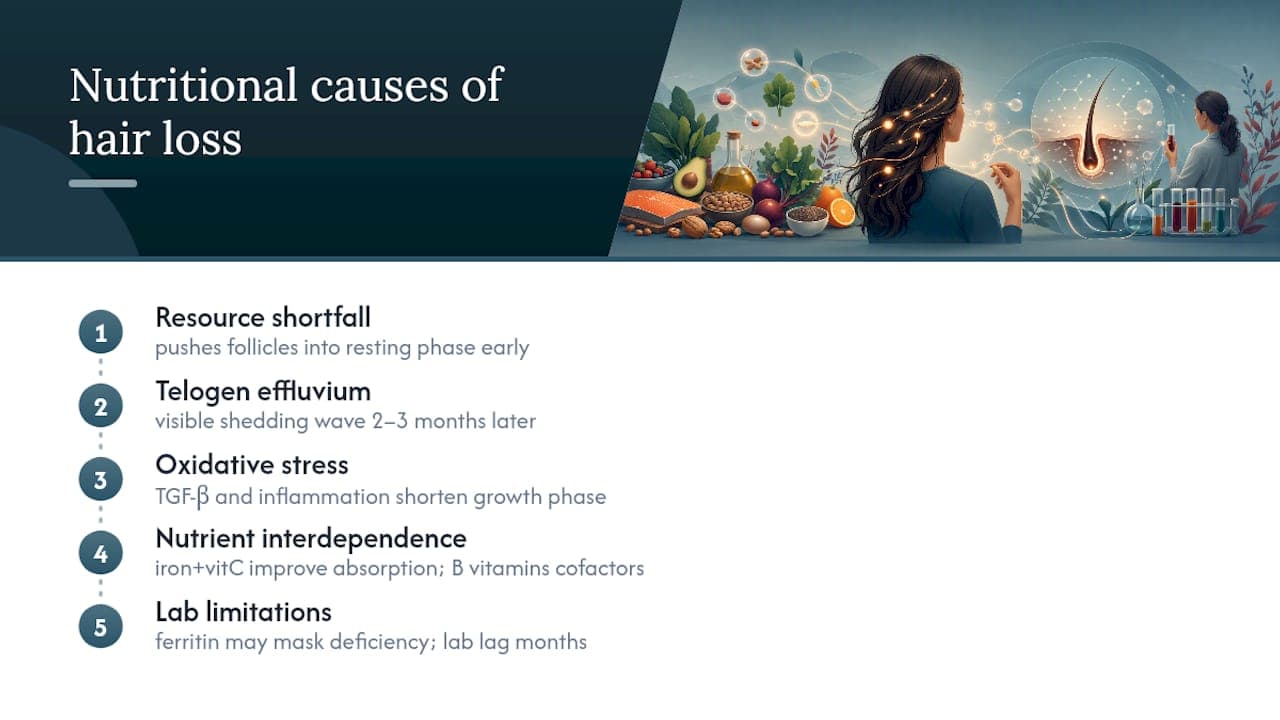
Hair follicles are metabolically demanding tissue, and the body treats them as expendable when resources run short. When protein or overall calorie intake drops sharply, whether from illness, surgery, or a crash diet, the body pushes a disproportionate number of follicles out of the active growth phase and into the resting phase early. That shift is telogen effluvium, and it explains why a stressful month often shows up as a shedding wave two to three months later.
Oxidative stress compounds the problem. Inflammatory signaling molecules, including transforming growth factor beta (TGF-β), can shorten the growth phase and push follicles toward miniaturization when the body's antioxidant defenses are outmatched. Diets low in antioxidant-rich produce leave fewer defenses against that process, which is part of why the Mendelian randomization data found antioxidant-heavy foods like melons and tea carrying a protective association with hair retention.
Nutrients also depend on each other in ways that complicate simple fixes. Iron absorption from plant sources rises substantially when paired with vitamin C, and several B vitamins act as cofactors for enzymes involved in keratin production, meaning a shortfall in one nutrient can blunt the effect of correcting another.
This interdependence is also why lab results sometimes lie by omission. Ferritin is a storage marker, and the body can maintain it near-normal for a while by pulling iron from other reserves before a true deficiency shows up on paper. Add the months-long lag between a nutritional shift and any visible hair change, and it's easy to see why cause and effect can be hard to pin down without a careful history.
What to Eat for Healthier Hair: A Food-First Plan
Food does more of the work than any pill, largely because whole foods deliver nutrients alongside the cofactors that help the body use them. Cleveland Clinic's clinical nutrition guidance points to a Mediterranean-style eating pattern as a practical template: plenty of fish, olive oil, legumes, vegetables, and moderate lean protein.
Here's how to build that out in practice:
- Anchor each meal with a protein source. Two eggs, a palm-sized piece of salmon or chicken, or a cup of cooked lentils each supply roughly 15 to 25 grams of protein, enough to support steady keratin production across the day.
- Pair iron-rich foods with vitamin C. Add red bell pepper or citrus to a spinach salad, or squeeze lemon over lentils, to meaningfully boost non-heme iron absorption from plant sources.
- Work in fatty fish twice a week. Salmon, sardines, and mackerel deliver omega-3s that support the anti-inflammatory environment around the follicle; walnuts and flaxseed are reasonable plant-based backups.
- Fill half the plate with color. Berries, citrus, leafy greens, and cruciferous vegetables bring the antioxidants and vitamin C that help iron absorption and counter oxidative stress.
- Choose whole grains over refined ones. Oats, quinoa, and brown rice supply B vitamins and selenium in amounts that are hard to overdo, unlike a supplement pill.
- Swap sugary drinks for water or unsweetened tea. This single change addresses one of the dietary factors most consistently tied to higher hair-loss risk in the research.
Pro Tip: Keep a rotating list of five "hair-friendly" meals you actually enjoy cooking. Consistency over months matters more than any single perfect meal, and you're far more likely to stick with food you like.
For deeper nutrient-by-nutrient food lists, Myhair's guide on foods for healthy hair breaks down specific sources by target nutrient, and the hair nutrition overview covers how these pieces fit together.
Which Diets and Foods Raise Your Hair-Loss Risk?
Some dietary patterns show up again and again in the research as risk factors, and most of them share a common thread: they either starve the follicle of resources or push the body into a low-grade inflammatory state.
- Crash dieting and extreme calorie restriction are among the most reliable triggers for telogen effluvium, because the body interprets a sudden, severe deficit as a signal to conserve resources and shed hair.
- Very-low-protein approaches, including some aggressive weight-loss plans, starve keratin synthesis directly and tend to produce shedding within a few months.
- Alcohol was flagged as the single strongest dietary risk factor in a 2026 Mendelian randomization study of 187 dietary exposures, which used genetic data to establish a causal link between alcohol intake and non-scarring hair loss risk.
- Sugary beverages correlated with increased alopecia risk in the same systematic review that found protective associations for vitamin D and iron, likely through a combination of inflammation and nutrient displacement.
- Highly processed, pro-inflammatory foods, including certain processed dairy and pastry items identified in the Mendelian randomization data, appeared to raise risk, while whole, antioxidant-rich foods leaned protective.
One caution worth repeating: eliminating entire food groups on your own, whether it's gluten, dairy, or all carbohydrates, can backfire if it strips out nutrients you actually need without professional guidance. Myhair's breakdown of foods linked to hair loss covers specific culprits in more depth if you want to audit your own diet.
Do Hair Supplements Actually Work?
Supplements have a narrow, well-defined job: correcting a documented deficiency. Outside of that job, the evidence gets thin fast, and the risk of harm goes up.
Iron supplementation helps when blood work confirms iron-deficiency anemia or low ferritin. Vitamin D supplementation helps when a test shows deficiency. Biotin supplementation helps, meaningfully, only in the rare case of a true biotin deficiency. Clinical reviews are consistent on this point: when labs come back normal, there is no strong evidence that adding more of these nutrients improves hair growth, and supplementing without a documented deficiency offers little upside while adding real risk.
Excess vitamin A, selenium, or iron intake is a documented cause of hair loss and broader toxicity, not just a benign "extra" dose. Harvard Health's clinical guidance is explicit that megadosing without a confirmed deficiency can do more harm than good.
Before adding anything to your routine:
- Get labs drawn first; don't guess at what you're low in.
- Correct only the deficiencies your bloodwork actually shows.
- Choose reputable, third-party-tested brands if a supplement is genuinely warranted.
- Recheck labs after a few months rather than assuming a supplement is working.
- Loop in a physician if you're combining multiple supplements, since interactions compound quickly.
Myhair's deeper look at supplements that can cause hair loss walks through specific overdose scenarios worth knowing before you buy anything.
When Should You Get Tested for Nutritional Hair Loss?
Testing makes sense when your history points to a plausible cause: rapid weight loss, a restrictive or fad diet, a gastrointestinal condition that limits absorption, heavy menstrual bleeding, or a recent illness or surgery. A clinician will usually start with a physical exam and a detailed history before ordering anything.
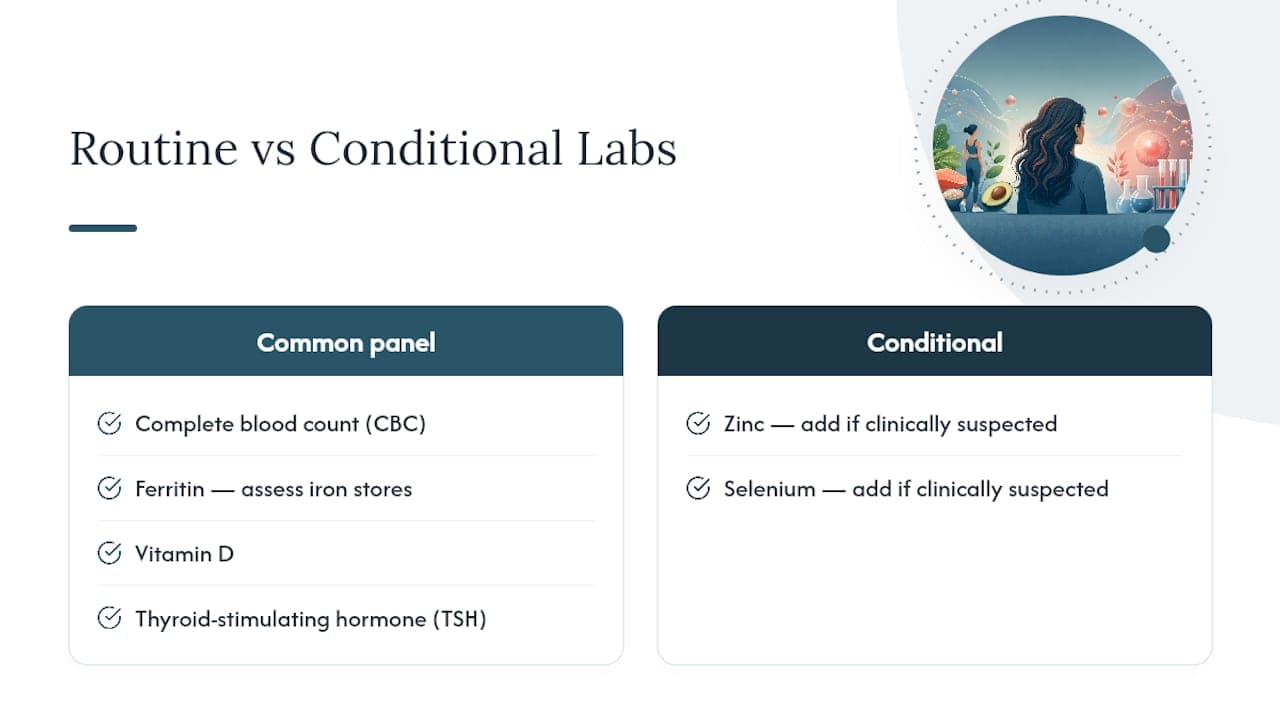
When labs are warranted, the common panel includes a complete blood count, ferritin, vitamin D, thyroid-stimulating hormone, and a basic metabolic panel, with zinc or selenium added only if there's a specific clinical reason to suspect those deficiencies. Ferritin thresholds for "low enough to matter for hair" are debated among specialists, and a value that looks acceptable on a standard lab report can still be too low for optimal hair growth. Labs are one input, not the whole picture.
If shedding continues despite normal labs and a reasonable diet, or if you notice patchy rather than diffuse hair loss, that's a signal to see a dermatologist or endocrinologist rather than keep adjusting your diet on your own.
How Long Until Diet Changes Show Up in Your Hair?
Hair growth runs on a cycle, and that cycle is exactly why patience matters here. A follicle that shifts into the resting phase because of a nutritional deficit doesn't shed immediately. It sheds two to four months later, and correcting the deficiency doesn't reverse that timeline instantly either. Clinical observation treats telogen effluvium as a lagging indicator: recovery is possible, but it's typically delayed by months after the underlying nutritional issue is fixed.
A simple daily plate model: fill a quarter with protein (eggs, fish, legumes), a quarter with whole grains, and half with vegetables and fruit, with a serving of healthy fat worked in somewhere. One breakfast example: Greek yogurt with berries, walnuts, and a drizzle of honey. One dinner example: baked salmon, quinoa, and a spinach salad with bell pepper and a lemon vinaigrette.
To track whether it's working:
- Take photos of the same section of scalp under the same lighting every four weeks.
- Do a rough shedding count (hairs in the brush or drain) a few times a week rather than obsessing daily.
- Keep a short symptom log noting energy, nail and skin changes, and diet consistency.
- Recheck any abnormal labs around three months after starting corrective changes.
If you've followed a corrected diet and, where relevant, addressed a confirmed deficiency for four to six months with no improvement, that's the point to escalate to a specialist rather than keep waiting.
How Myhair Supports a Diet-First Approach to Hair Health
Diet changes work slowly, and slow change is exactly where memory fails you. Myhair's AI-powered scan analyzes your hair from photos and tracks density, thickness, and pattern changes over time, giving you an objective record instead of a guess about whether your grocery list is actually helping.
That kind of tracking doesn't replace bloodwork. It complements it, giving you a visual timeline to pair with the labs your clinician orders, so you can see whether a corrected iron deficiency or a dietary overhaul is translating into real follicle-level change. Myhair's research page documents the validation work behind the platform's analysis for readers who want the technical background.
A Test-First Philosophy Beats Guesswork Every Time
The instinct to buy a hair vitamin before getting bloodwork done is understandable, but it's backwards. Food first, testing second, supplements only when a lab confirms you need them: that order matters more than which specific supplement you pick.
Track what you're doing, share your results with a clinician, and give it the months it actually needs before judging whether it worked. Hair doesn't respond to good decisions overnight, and it doesn't need to for the decisions to be right.
— Cyriac
Track Your Progress While You Change Your Diet
Diet changes take months to show results, and without a consistent way to measure them, it's easy to give up right before you'd see a difference. Myhair's AI-powered hair analysis scans your hair and tracks density and thickness over time, so the improvements from fixing an iron deficiency or cutting back on alcohol show up as data, not guesswork.
This isn't a replacement for bloodwork or a dermatologist visit. It's a way to see whether your dietary changes and any clinician-guided corrections are actually moving the needle between checkups. If you're ready to start tracking, the onboarding walkthrough takes just a few minutes to set up your first scan and get a baseline before you make any changes.
This article is general information, not a substitute for advice from a qualified doctor. Consult a qualified healthcare professional about your own circumstances before acting on anything here.
Sources
- Systematic review linking vitamin D, iron, and dietary beverages to alopecia (2025)
- Mendelian randomization linking dietary exposures to non-scarring hair loss (2026)
- Diet and hair loss: effects of nutrient deficiency and supplement use (PMC)
- Vitamins, minerals, and hair loss: Is there a connection? - Harvard Health
FAQ
What are the "big three" nutrients for thinning hair?
Iron (measured by ferritin), vitamin D, and protein show the most consistent links to hair thinning across clinical and observational research. Correcting a documented deficiency in any of these tends to produce the most noticeable improvement.
Will hair loss caused by dieting eventually grow back?
In most cases, yes, once the underlying deficit is corrected, because diet-related shedding is typically telogen effluvium rather than permanent follicle damage. Regrowth is usually delayed several months due to the hair growth cycle.
Can hair thinning caused by diet be reversed?
It can often be reversed by correcting the specific nutritional gap involved, whether that's protein, iron, or vitamin D, though full recovery generally takes months rather than weeks. Persistent thinning despite dietary correction warrants a dermatology evaluation.
What foods help stop hair loss?
Protein sources like eggs, fish, and legumes, iron-rich foods paired with vitamin C, fatty fish for omega-3s, and antioxidant-rich fruits and vegetables all support the nutrient needs tied to hair retention. Cutting back on alcohol and sugary beverages addresses two of the dietary factors most consistently linked to higher hair-loss risk.
When should I get lab testing for diet-related hair loss?
Testing makes sense if you've had rapid weight loss, follow a restrictive diet, have a gastrointestinal condition affecting absorption, or notice ongoing diffuse shedding without an obvious cause. A clinician can determine which labs, typically ferritin, vitamin D, and a complete blood count, are appropriate for your situation.