Blog
Learning Materials
Protect Thinning Hair: Clinician Backed Brushing Checklist with AI
Updated: September 19, 2026
Brush thinning or fragile hair regularly each week, always starting at the ends and working upward, never top down. Use a flexible detangling brush or wide-tooth comb on wet hair, then switch to a soft boar or mixed-bristle brush once hair is dry. Limit yourself to one full session a day, stop the moment the brush moves through freely, and consider a tool like MyHair.ai if you want to track whether shedding actually improves over time.
TL;DR:
- Use a flexible detangler on wet hair and switch to a soft boar-bristle brush only once hair is dry to prevent breakage.
- Limit brushing to three to five times per week, focusing on supporting fragile strands with proper sectioning and supported tension.
- Avoid rigid brushes on soaking wet hair and support the scalp with your hand to reduce tension during detangling and finishing.
- Replace brushes every six to twelve months, clean them weekly, and pair with silk pillowcases and microfiber towels to minimize friction damage.
- Track your brushing routine and hair condition with MyHair.ai to assess progress, but understand it does not replace medical advice for underlying thinning.
Table of Contents
- Good Brushing Habits Checklist You Can Follow Today
- How to Brush Fragile or Thinning Hair Safely
- Which Brushes and Tools Actually Work for Thinning Hair
- When to Skip the Brush and Detangle by Hand Instead
- Brush Care and Small Habits That Add Up
- How MyHair.ai Fits Into Your Brushing Routine
- Why I Trust Gentle Brushing Over Habit
- Try MyHair.ai to Build and Track Your Own Checklist
- Sources
- FAQ
Good Brushing Habits Checklist You Can Follow Today
Most guidance for straight or wavy hair suggests brushing anywhere from three times a week up to twice daily to keep knots from turning into breakage. If your hair is fine or thinning, aim for the lower end of that range. Once a day is usually enough. More than that just adds friction you don't need.
Here's the sequence that actually protects fragile strands, in order:
- Detangle before you touch a brush. Run your fingers through damp hair first to find knots, so you're not dragging a brush blindly into a snag.
- Apply a light leave-in or slip product if hair is dry and prone to static. It cuts down the tugging you'd otherwise feel mid-stroke.
- Section the hair. Working in two or three sections, rather than attacking the whole head at once, means less compounded tension on any single area.
- Stabilize above the knot. Hold the hair just above a tangle with one hand so the pull stops at your fingers, not at the scalp.
- Work ends to root, never root to ends. Clear the bottom third first, then the middle, then finally the roots.
- Keep root contact brief. A few short strokes at the scalp are enough to pick up natural oil. You're not trying to "brush out" thinning; that's not how it works.
- Stop when the brush glides freely. That's your signal you're done, not a fixed count of strokes.
- Cap the session. Three to five minutes per section is plenty. Today points to roughly four minutes of daily brushing as a reasonable target for most people.
Pro Tip: Screenshot this list and keep it in your phone's notes app. Checking it for a week straight will tell you more about your habits than trying to memorize the steps.
How to Brush Fragile or Thinning Hair Safely
The technique that trichologists and stylists lean on most is often called the split pass: separate detangling from finishing so you're never asking one brush to do both jobs badly.
- Step 1: Divide and assess. Split hair into sections and look for where knots cluster, usually at the nape or where hair rubs against clothing.
- Step 2: Detangle the ends first. Use your fingers or a wide-tooth comb, adding a flexible detangling brush on damp hair if knots resist.
- Step 3: Do the supported transfer. Hold the hair steady with one hand, make brief contact at the root to pick up oil, then glide that oil down the lengths without ever pulling against resistance.
- Step 4: Finish with a light pass. Once hair is dry and fully detangled, a soft boar-bristle brush smooths the surface. Avoid running it over the same part line repeatedly, since that concentrates pressure exactly where a thinning area is most visible.
Wet hair strands stretch and snap far more easily than dry ones, which is why Vichy's guidance on preventing breakage specifically warns against rigid brushes on soaking hair. The split pass respects that fragility by keeping the rigid tool out of the equation until hair is dry and calm.
Which Brushes and Tools Actually Work for Thinning Hair
Different brushes do different jobs, and using the wrong one for the wrong stage is where most damage happens.
- Flexible nylon detanglers or wide-tooth combs handle wet or conditioner-coated hair, where bristles need to flex around knots instead of snagging them.
- Soft boar-bristle or mixed-bristle paddle brushes work on dry, already-detangled hair, redistributing scalp oil down the shaft and smoothing the surface.
- Mixed-bristle brushes, combining boar with nylon, are a practical middle ground for thinning hair because they detangle lightly while still redistributing oil in the same pass, per JunYi Beauty's breakdown for fine and thin hair.
- Vented or round brushes belong only in careful heat-styling sessions, and even then, keep heat low and force minimal.
Flexible bristles that move with the hair, rather than fighting it, disperse tension more evenly than a stiff, rigid brush ever will, according to MantaHair's trichologist commentary. That's the whole logic behind splitting detangling and finishing into two separate tools instead of asking one brush to do both.
When to Skip the Brush and Detangle by Hand Instead
Wet hair is at its weakest point, stretched, swollen, and far more prone to snapping than dry hair. That's the moment most people reach for a brush out of habit, right after a shower, and it's exactly when they shouldn't.
- Wait until hair is damp, not dripping, before introducing any tool.
- Coat strands in conditioner or a slip product first, since that reduces friction between fibers.
- Use a wide-tooth comb or flexible detangling brush, moving ends to root.
- Support the hair above each knot with your free hand so the pull never reaches the scalp.
- Skip boar bristle and any rigid brush entirely until hair is dry.
Brush Care and Small Habits That Add Up
A dirty or worn-out brush undoes a lot of the gentle technique you just built. Pull out trapped hair after every use, and wash bristles weekly with a mild soap, drying the brush bristle-down so water doesn't pool at the base and warp it.
- Replace a brush every six to twelve months, sooner if bristles are bent, missing, or fraying at the tips.
- Swap cotton pillowcases for silk or satin to cut overnight friction.
- Dry hair with a microfiber towel instead of rubbing with terry cloth, which roughs up the cuticle before you've even picked up a brush.
How MyHair.ai Fits Into Your Brushing Routine
A checklist tells you what to do. It doesn't tell you whether it's working. That's the gap MyHair.ai is built to close: scan your hair, get an AI-generated read on density and condition, then follow a personalized plan that includes habit checklists like this one.
The loop is simple: scan, get a plan, follow the checklist, then rescan in a few weeks to see if shedding or texture actually shifted. That kind of before-and-after comparison is hard to judge by eye alone, especially with something as gradual as hair thinning.

One honest caveat: this is a tracking and recommendation tool, not a medical treatment. Gentle brushing can reduce breakage you're causing yourself, but it won't reverse thinning that starts at the root.
Why I Trust Gentle Brushing Over Habit
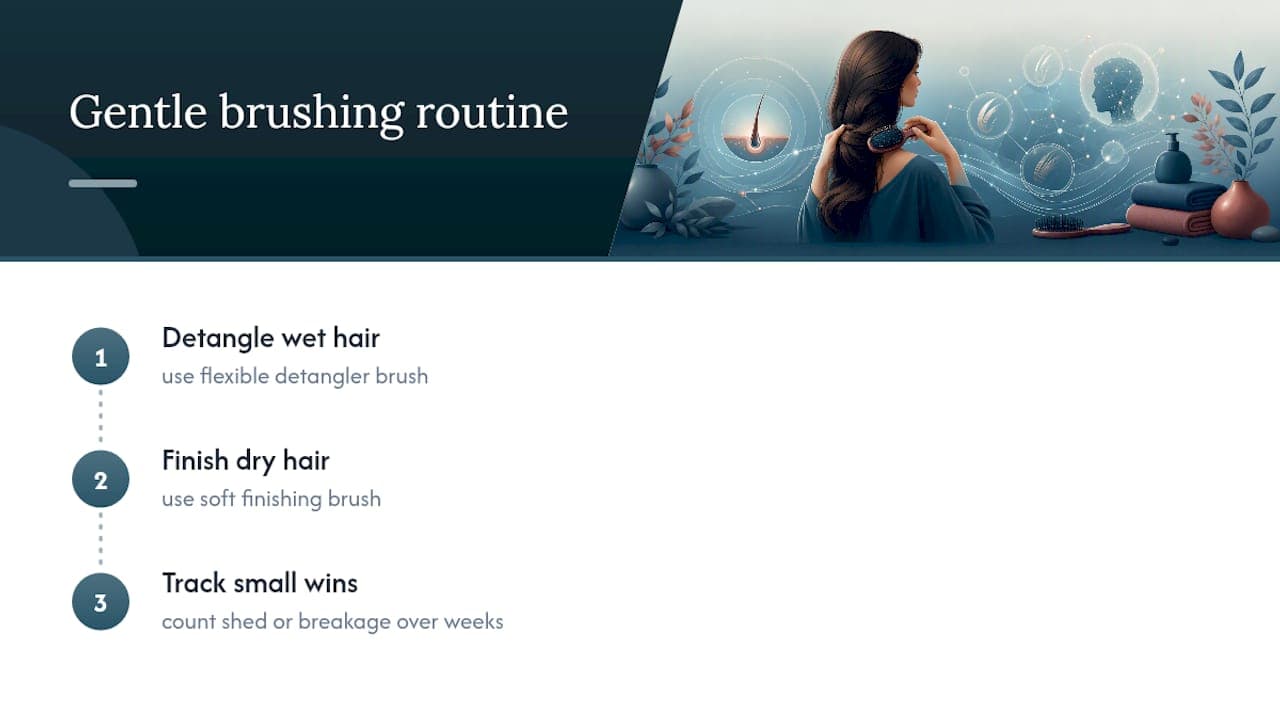
Switching from a stiff paddle brush to a flexible detangler on wet hair, then a soft finishing brush on dry hair, made an obvious difference within a couple of weeks. Less hair on the pillow, less hair in the shower drain. That's not proof of regrowth, and I wouldn't sell it as one.
What it did do is remove a source of damage I'd been causing myself for years without noticing. If you're dealing with thinning, track small wins like shed count or breakage, not overnight reversal. That's the honest bar.
— Cyriac
Try MyHair.ai to Build and Track Your Own Checklist
Myhair gives you something a printed checklist can't: a way to see whether your gentler brushing routine is actually paying off. The Free Plan starts with an AI scan that establishes your baseline, plus a personalized checklist tailored to your hair type and thinning pattern.

From there, upgrading to a Monthly plan at $9.99 unlocks ongoing tracking, so you can log brushing sessions and shedding counts side by side and actually spot a trend instead of guessing. If root-level thinning looks like more than a brushing issue, the platform also connects you to a directory of hair clinics and restoration doctors for a second opinion.
To be clear: this is a tracking and recommendation tool, not a medical treatment. Start with the free scan, follow your personalized checklist for a few weeks, and rescan to see what's actually changed.
Sources
- Healthline — Brushing hair guidance
- ProBeauty — Boar bristle brushes: professional role of oil distribution
- Vichy — How to prevent hair breakage
- JunYi Beauty — Best hair brush for fine and thin hair
FAQ
How Often Should I Brush Thinning Hair?
Aim for three to five times a week rather than the twice-daily upper range some guidance gives for straight or wavy hair. Thinning or fragile strands generally do better with less mechanical contact, not more.
Can Brushing Actually Cause Hair Loss?
Brushing itself doesn't cause thinning at the root, but rough technique, rigid brushes on wet hair, and repeated passes over the same section can cause breakage that looks like worsening loss. Gentle, supported technique reduces that preventable damage without treating the underlying cause of thinning.
What's the Best Brush for Fine or Thinning Hair?
A two-tool approach works best: a flexible nylon detangler for wet or damp hair, and a soft boar or mixed-bristle brush for dry finishing, according to JunYi Beauty's guide. Mixed-bristle brushes are a solid single option if you want fewer tools to manage.
Is It Bad to Brush Wet Hair?
Wet hair stretches and breaks more easily than dry hair, so brushing it with a rigid or boar-bristle brush raises the risk of snapping strands. Detangle damp, conditioner-coated hair with a wide-tooth comb or flexible detangler instead, and save rigid brushes for once hair is fully dry.
Does MyHair.ai Replace Seeing a Specialist?
No. MyHair.ai provides AI-based scans, personalized checklists, and progress tracking through its Free Plan, but it doesn't diagnose or treat medical causes of hair loss. For persistent thinning, the platform's clinic and doctor directories can point you toward a specialist.