Blog
Learning Materials
Good Hair Transplant: Achieving Lasting Natural Results
Updated: January 9, 2026

Over 35 million American men experience noticeable hair thinning before age 50. Early hair loss can rapidly affect confidence and lead to endless searches for reliable solutions. The latest hair transplant methods offer natural results tailored to your specific hair type, with personalized recommendations that reflect your individual health assessment. Discover what defines a truly effective hair transplant and get insights that help you spot the best options, guided by proven research and expert advice.
Table of Contents
- What Defines A Good Hair Transplant
- Hair Transplant Techniques And Methods
- Candidate Selection And Health Prerequisites
- Costs, Risks, And What To Avoid
- Post-Transplant Care And Growth Monitoring
Key Takeaways
| Point | Details |
|---|---|
| Natural Results Require Expertise | A good hair transplant focuses on precision and a strategic approach to achieve realistic results, not just moving hair. |
| Techniques Matter | Follicular Unit Transplantation (FUT) and Follicular Unit Extraction (FUE) are the primary methods, each with unique benefits tailored to specific needs. |
| Candidate Evaluation is Essential | Comprehensive screening for physical and psychological readiness ensures only suitable candidates undergo surgery for optimal outcomes. |
| Post-Transplant Care is Crucial | Meticulous care and follow-up consultations are vital for graft survival and the overall success of hair growth post-transplant. |
What Defines a Good Hair Transplant
A good hair transplant goes far beyond simply moving hair from one area to another. The procedure requires precision, expertise, and a strategic approach to achieve natural, lasting results. Modern hair restoration is an intricate process that demands careful evaluation of a patient's unique hair loss pattern and donor hair characteristics.
Successful hair transplantation involves strategic follicular unit extraction that preserves the natural growth pattern and ensures seamless integration with existing hair. The key is not just moving hair, but reconstructing a realistic hairline that looks authentic from every angle. Surgeons must carefully assess donor area density, hair texture, and potential growth patterns to create a result that appears completely natural.
The hallmarks of an exceptional hair transplant include minimal scarring, natural hair growth direction, and a density that matches the patient's original hair. This means transplanting hair in small, natural groupings rather than large, obvious plugs. The surgeon's skill becomes paramount - they must understand how to distribute grafts to create depth, dimension, and a balanced appearance that looks like the patient's original hair configuration.
Pro Tip: Always request to see multiple before and after photographs of a specific surgeon's actual patients to evaluate their precision and natural-looking results.
Hair Transplant Techniques and Methods
Hair transplantation has evolved significantly, offering men multiple advanced techniques to address hair loss effectively. Modern approaches focus on precision and natural-looking results, moving far beyond the outdated methods of earlier decades. Two primary techniques dominate the current landscape of hair restoration: Follicular Unit Transplantation (FUT) and Follicular Unit Extraction (FUE), each with unique characteristics and benefits.
The primary hair transplant techniques involve carefully extracting hair follicles from donor areas and strategically reimplanting them in thinning or balding regions. FUT involves removing a strip of hair-bearing scalp and dissecting it into individual follicular units, while FUE extracts individual follicles directly from the scalp. Both methods aim to preserve the natural grouping of hair, typically working with follicular units containing 1-4 hairs to ensure a seamless, authentic appearance.
Surgeons today utilize sophisticated approaches that go beyond simple hair movement. Advanced techniques now incorporate robotic assistance, precise graft placement, and meticulous planning to ensure optimal results. The key considerations include assessing donor hair density, understanding natural hair growth patterns, and creating a hairline that looks completely natural. Some modern approaches even use microscopic technologies to map the scalp and determine the most effective transplantation strategy for each individual patient.
Here's a comparison of the two main hair transplant techniques:
| Technique | Procedure Details | Recovery Time | Most Common Uses |
|---|---|---|---|
| FUT (Strip Method) | Removes scalp strip; grafts units | Longer—about 2 weeks | Large bald areas |
| FUE | Extracts individual follicles | Shorter—few days | Smaller, precise zones |
Pro Tip: Request a comprehensive consultation that includes digital scalp mapping and a detailed analysis of your specific hair loss pattern before committing to any hair transplant procedure.
Candidate Selection and Health Prerequisites
Successful hair transplantation is not a one-size-fits-all solution. The journey begins with a comprehensive evaluation to determine whether an individual is an ideal candidate for this intricate procedure. Candidacy depends on multiple critical factors that extend beyond simple hair loss patterns and involve a holistic assessment of physical and psychological readiness.

Candidate selection for hair transplant requires a meticulous screening process that evaluates several key health parameters. Potential patients must demonstrate stable hair loss, sufficient donor hair density, and good overall health. The most suitable candidates typically suffer from permanent hair loss conditions like androgenic alopecia, have realistic expectations about surgical outcomes, and possess a healthy scalp environment that can support graft survival.
Beyond physical considerations, psychological preparedness plays a crucial role in the success of hair restoration procedures. Surgeons conduct comprehensive medical history reviews, examining potential contraindications such as autoimmune disorders, scalp conditions, or medications that might interfere with healing. Blood tests, scalp biopsies, and detailed consultations help determine a patient's surgical eligibility, ensuring that only those with optimal healing potential and appropriate hair loss characteristics proceed with the transplantation.
Pro Tip: Schedule consultations with multiple hair restoration specialists to obtain comprehensive assessments and compare their professional recommendations for your specific hair loss scenario.
Costs, Risks, and What to Avoid
Hair transplantation represents a significant financial and medical commitment that requires careful consideration of potential outcomes, expenses, and associated risks. Understanding the full landscape of investment and potential complications is crucial for anyone contemplating this transformative procedure. The decision should never be made impulsively or based solely on cost considerations.
Hair transplant surgery risks encompass multiple medical and aesthetic dimensions that patients must thoroughly evaluate. Potential complications include infection, scarring, uneven hair growth, and potential graft failure. Costs can vary dramatically, typically ranging from $4,000 to $15,000 depending on the extent of hair loss, surgical technique, and geographic location. The most expensive procedures are not always the most successful, and budget clinics often compromise on critical surgical standards.
Patients should be especially vigilant about selecting qualified practitioners and understanding realistic expectations. Red flags include extremely low pricing, unlicensed surgeons, and clinics promising unrealistic results. Comprehensive consultations, board certification verification, and reviewing extensive before-and-after portfolios are essential steps in mitigating surgical risks. Additional financial considerations include potential multiple treatment sessions, recovery time, and post-operative care expenses that extend beyond the initial procedure.
Key cost and risk considerations to keep in mind when deciding on a hair transplant:
| Factor | What to Consider | Impact on Results |
|---|---|---|
| Clinic Credentials | Board certification is vital | Reduces surgical risks |
| Pricing | Too low signals low quality | May affect safety outcome |
| Follow-up Care | Multiple visits often needed | Improves graft survival |
Pro Tip: Request detailed written documentation of surgical risks, potential complications, and total projected costs during your initial consultation to ensure complete financial and medical transparency.
Post-Transplant Care and Growth Monitoring
Successful hair transplantation extends far beyond the surgical procedure itself, requiring meticulous post-operative care and strategic monitoring to ensure optimal results. Patients must understand that the journey to a full, natural-looking head of hair is a gradual process involving multiple stages of healing and hair growth regeneration.
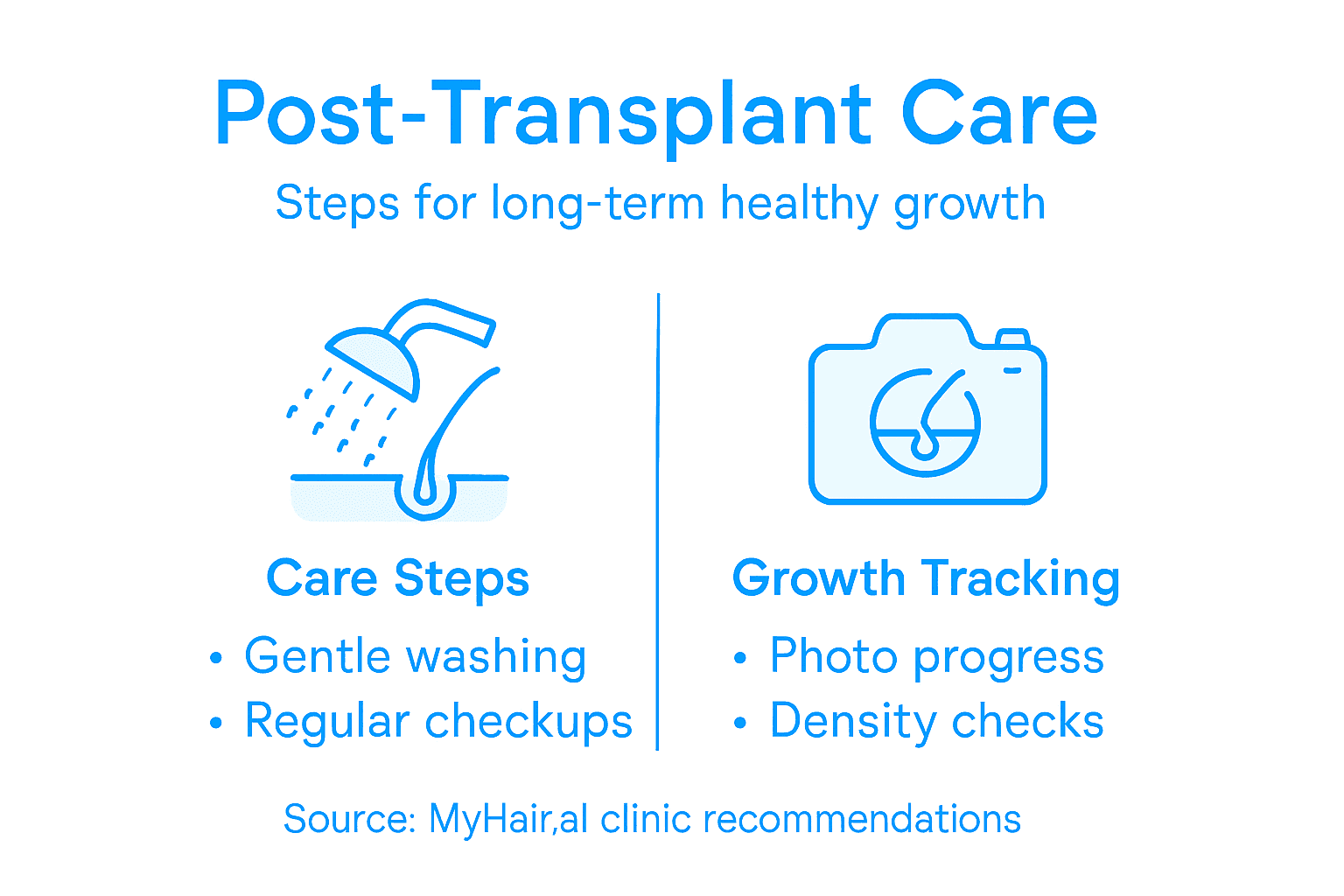
Post-transplant care protocols are critical for ensuring graft survival and promoting healthy hair growth. Patients should expect a carefully managed recovery period involving specific washing instructions, medication protocols, and activity restrictions. The initial weeks are crucial, with patients advised to avoid strenuous activities, direct sun exposure, and any actions that might compromise the delicate grafts. Swelling and temporary hair shedding are normal physiological responses that should not cause alarm.
Growth monitoring involves multiple follow-up consultations where surgeons assess graft integration, healing progress, and emerging hair patterns. Most patients experience a temporary shedding phase within the first few months, followed by gradual new hair growth that continues to improve over 9-12 months. Advanced techniques like platelet-rich plasma (PRP) therapy might be recommended to enhance follicular regeneration and improve overall transplant outcomes. Patients should maintain realistic expectations and understand that individual healing and growth rates can vary significantly.
Pro Tip: Photograph your scalp regularly from consistent angles and lighting to track your hair transplant progress objectively and discuss changes with your surgeon during follow-up appointments.
Achieve Natural Hair Transplant Results with Personalized AI Insights
Understanding what makes a hair transplant truly successful involves careful assessment of hair loss patterns, donor hair quality, and growth projections. The article highlights key challenges such as selecting ideal candidates, monitoring post-transplant growth, and avoiding common risks. These complex factors require precise information and ongoing tracking to ensure lasting, natural-looking results.
MyHair.ai offers a powerful solution by providing AI-based hair health analysis and personalized growth projections. Our platform helps you monitor your hair condition through easy scan uploads and delivers tailored product recommendations to support your hair restoration journey. With a focus on precision and individual needs, MyHair.ai bridges the gap between surgical expertise and daily hair care.
Discover how you can track your hair transplant progress, understand your unique hair growth pattern, and make informed decisions at every stage. Visit MyHair.ai to start your personalized hair health assessment today.
Looking to turn hair transplant knowledge into real results? Explore our AI-powered tools now.

Take control of your hair restoration journey with accurate data and personalized insights. Visit MyHair.ai to upload your hair scan and receive your customized growth report. Begin your path to confident, natural hair today.
Frequently Asked Questions
What is a good hair transplant?
A good hair transplant involves precision and expertise, ensuring a natural look by considering a patient’s unique hair loss pattern and donor hair characteristics. It requires a skilled surgeon who can create an authentic hairline with minimal scarring and proper hair density.
What are the main techniques used in hair transplantation?
The two primary techniques for hair transplantation are Follicular Unit Transplantation (FUT) and Follicular Unit Extraction (FUE). FUT involves removing a strip of scalp and dissecting it into grafts, while FUE extracts individual follicles directly from the scalp, allowing for a less invasive procedure.
How do I know if I am a good candidate for a hair transplant?
Good candidates for a hair transplant typically have stable hair loss, sufficient donor hair density, and a healthy scalp environment. A comprehensive evaluation by a surgeon will assess physical and psychological readiness for the procedure.
What should I expect in terms of costs and risks associated with hair transplantation?
Costs for hair transplantation can range from $4,000 to $15,000, depending on factors like the extent of hair loss and the chosen technique. Risks may include infection, uneven hair growth, and graft failure. It's crucial to choose a qualified practitioner and to set realistic expectations about the results.
Recommended
- Successful Hair Transplants: Key Factors & Best Results 2025 | MyHair
- Conte Hair Transplant Guide 2025: Results, Methods & Aftercare | MyHair
- Conte Hair Transplant Guide 2025: Results, Methods & Aftercare | MyHair
- Understanding Male Hair Transplant: What You Need to Know | MyHair
- Význam aftercare po tetování – Prevence komplikací a dlouhodobé výsledky