Blog
Learning Materials
Good Hair Treatments: Personalized Approaches That Work
Updated: January 24, 2026
Thinning hair can feel like an unsolvable puzzle for many tech-forward adults, especially when generic solutions fail to deliver real results. Modern hair treatments go far beyond surface fixes, now combining regenerative medicine strategies like stem cell therapies and platelet-rich plasma with personalized recommendations. With advanced AI-powered analysis available on platforms such as MyHair.ai, you gain a comprehensive, individualized roadmap, making it possible to tackle hair loss by addressing both biological health and unique lifestyle factors.
Table of Contents
- Defining Good Hair Treatments Today
- Major Types of Hair Treatments Explained
- Personalization: AI Analysis For Hair Health
- Realistic Expectations And Potential Results
- Common Mistakes And How To Avoid Them
Key Takeaways
| Point | Details |
|---|---|
| Modern Treatments Focus on Hair Health | Today, effective hair treatments enhance biological health and target underlying issues rather than just superficial aesthetics. |
| Personalization is Key | AI-driven analysis allows for tailored treatment plans, ensuring solutions match individual hair profiles and conditions. |
| Manage Expectations | Realistic results take time; significant improvements generally manifest over months, not weeks. |
| Holistic Care Matters | Addressing scalp health and lifestyle factors is essential, as treatments work best when supported by overall wellness. |
Defining Good Hair Treatments Today
Good hair treatments in 2024 look fundamentally different from what they did ten years ago. Back then, the focus was simple: make hair look better on the surface. Thicker, shinier, smoother. Today's treatments operate on an entirely different principle. Instead of just cosmetic improvement, modern approaches target the biological foundations of hair health itself. This shift reflects what researchers now understand about hair loss and thinning. The real work happens at the cellular level, where regenerative medicine strategies like stem cell therapies and platelet-rich plasma aim to restore the follicular microenvironment damaged by hormones, genetics, and aging. What makes a treatment "good" today is whether it can address these underlying biological issues while delivering lasting results, not just temporary cosmetic fixes.
The second piece of the puzzle involves understanding hair's actual structure and what damages it over time. Hair isn't inert. It's exposed constantly to environmental stress, heat styling, chemical processing, and oxidative damage. A holistic approach to hair care now means using biobased conditioning agents and natural formulations that restore shine and smoothness while minimizing toxic environmental impact. Modern consumers expect treatments to work harder. They want products that improve aesthetics without compromising what's beneath the surface. This is where personalization enters the picture. Not all hair responds identically to the same treatment. Your genetics, current hair condition, scalp environment, and lifestyle all influence which approach will actually work for you. That's why generic solutions often fail. A treatment that works brilliantly for someone else might be completely ineffective for your specific situation.
With AI-driven hair analysis tools, personalized treatment now moves beyond guesswork. Tools like hair care treatment options informed by AI insights can assess your individual hair profile and recommend approaches tailored to your exact needs. This eliminates the trial-and-error cycle most people experience. You're not buying treatments based on marketing claims or what worked for your friend. You're receiving recommendations grounded in data about your hair's actual condition, growth patterns, and response potential. Good hair treatments today combine three elements: they target biological health at the cellular level, they use evidence-based ingredients that minimize damage while restoring vitality, and they're personalized to your individual hair profile rather than applied as one-size-fits-all solutions.
Pro tip: Start by getting a comprehensive assessment of your hair's current state before committing to any treatment plan. Knowing your specific hair profile, scalp condition, and loss patterns ensures you invest in approaches that actually address your situation rather than chasing trends.
Major Types of Hair Treatments Explained
Hair treatments fall into two broad categories, and understanding the difference between them is crucial for making informed decisions about what you put on your head. The first category includes aesthetic treatments that change how your hair looks. These are the chemical treatments you've probably experienced: coloring, perming, relaxing, and straightening. They work by fundamentally altering your hair's keratin structure to achieve the look you want. But here's what matters: chemical hair treatments alter keratin structure in ways that can damage hair fibers and scalp health over the long term. This doesn't mean you can never use them, but it does mean understanding the trade-off. You gain the aesthetic result you want today, but you potentially compromise your hair's integrity tomorrow. The more treatments you layer (color plus straightener plus relaxer, for example), the compounding damage becomes significant.
The second category addresses actual hair loss and restoration, which operates on an entirely different level. This is where modern medicine has made real strides. Pharmacological agents like minoxidil and finasteride have been used for decades and work by slowing hair loss or promoting regrowth through chemical pathways in your scalp. But the emerging frontier is regenerative therapies. Platelet-rich plasma and stem cell-based solutions represent a fundamentally different approach to the problem. Rather than just slowing loss or stimulating growth chemically, these treatments aim to restore the actual biological environment where hair grows. The challenge with restoration treatments is that they vary significantly in mechanism, efficacy, and how your individual hair responds to them. What works brilliantly for one person might produce minimal results for another, which is exactly why personalization matters so much.
Here is a concise comparison of chemical vs. regenerative hair treatments to clarify their key differences:
| Aspect | Chemical Treatments | Regenerative Treatments |
|---|---|---|
| Primary Goal | Change hair's appearance | Restore hair and scalp function |
| Main Method | Alters keratin structure with chemicals | Uses biological therapies, like PRP or stem cells |
| Typical Side Effects | Fiber and scalp damage over time | Temporary discomfort, possible non-response |
| Longevity of Results | Often temporary, require re-treatment | Can offer longer-lasting improvements |
| Personalization Potential | Limited, mainly by hair type | High, adapts to individual biology |
This is where your individual hair profile becomes the deciding factor. You might respond well to minoxidil but see no results from finasteride. Or you might be a candidate for platelet-rich plasma therapy where pharmaceutical options haven't worked. Understanding different hair damage types and their causes helps you recognize whether you're dealing with damage that needs repair or actual loss that requires restoration. Some people have both problems simultaneously. Your scalp might be damaged from years of chemical treatments while also experiencing genetic hair loss. That scenario requires a completely different approach than someone with only one problem. This is precisely why generic treatment recommendations fail so often. The treatment that works depends on what's actually happening with your hair, which brings you back to the importance of assessment before action.
Pro tip: Before pursuing any treatment, know whether you're addressing damage to existing hair or actual hair loss. They require different solutions, and mixing the wrong approach wastes time and money.
Personalization: AI Analysis for Hair Health
Here's the reality: your hair is as unique as your fingerprint. The treatments that transform someone else's hair might do nothing for you, or worse, make things worse. This is where AI-driven personalization changes everything. Rather than guessing which treatment might work or following generic protocols, AI analysis examines your specific hair and scalp conditions to build a treatment plan tailored exclusively to you. The technology doesn't just look at your hair type or loss pattern. It analyzes the microenvironment where your hair grows, identifies which follicles are dormant versus actively declining, and predicts how your individual biology will respond to different interventions. This level of precision wasn't possible five years ago. Today, AI-enhanced analysis determines patient-specific hair conditions to optimize dosing and customize treatment plans for improved outcomes. When you're investing time and money into hair restoration, knowing exactly what you're treating and how your body will respond makes an enormous difference.
The mechanism behind AI personalization works on multiple levels simultaneously. First, imaging technology captures detailed information about your scalp health, hair density, and follicle characteristics. AI algorithms then analyze this data against patterns from thousands of other users and scientific research to identify what's actually happening with your hair. Is your hair loss genetic? Environmental? A combination? Are your follicles permanently gone, dormant, or temporarily suppressed? Different answers require completely different treatment approaches. Then comes the prediction piece. Exosome therapies with AI-driven diagnostics enable customized therapeutic regimens by analyzing how your follicle microenvironment will respond to specific treatments. This means the platform can forecast which stem cell therapies, pharmaceutical options, or regenerative approaches are most likely to work for your unique biology. You're not picking treatments based on marketing or hope. You're selecting based on data about your specific situation.
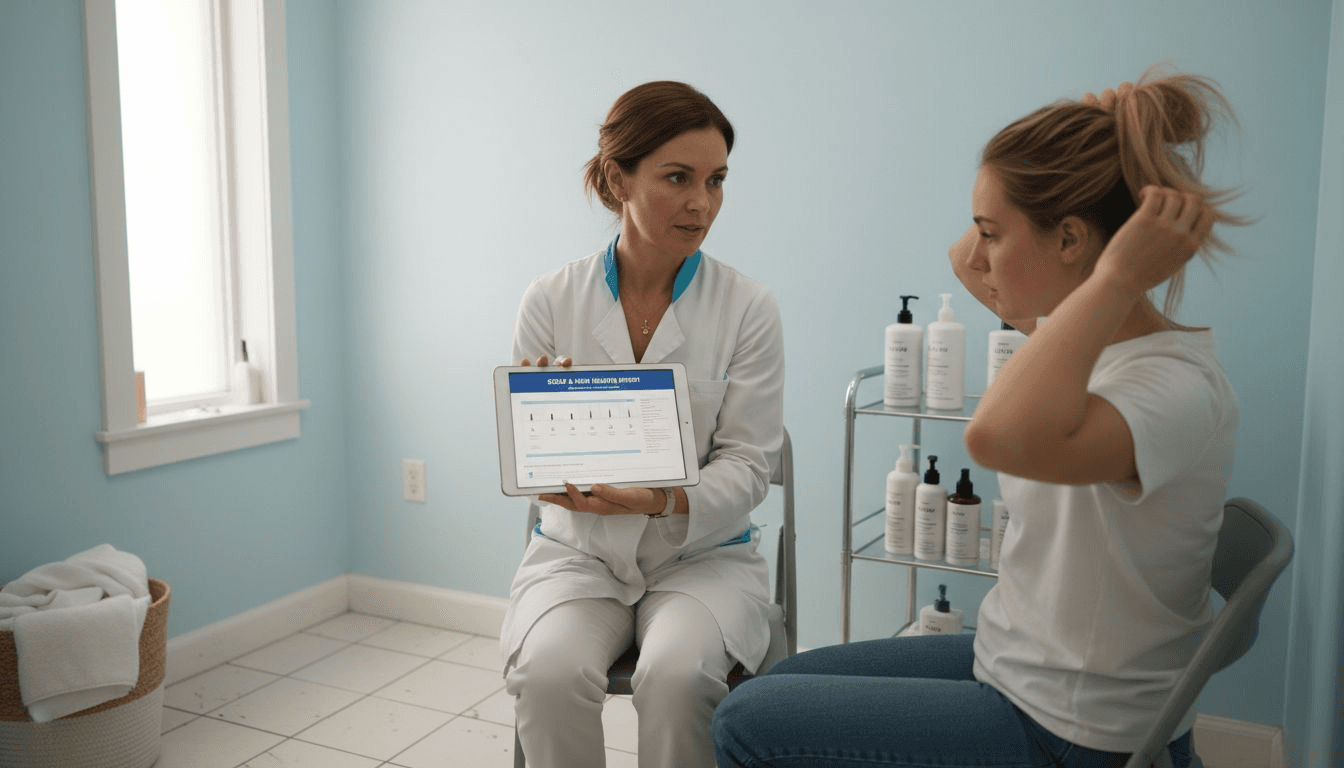
What makes this approach genuinely transformative is the feedback loop. As you progress through treatment, you can submit updated scans and data. The AI learns how your hair actually responded compared to predictions. Did minoxidil work better than expected? Did platelet-rich plasma fail to deliver results? This information refines future recommendations, making the system smarter about you over time. AI-powered personalized growth strategies adapt as your hair changes, which is crucial because hair health isn't static. Your scalp condition evolves, your follicles respond to treatment, and external factors shift. A treatment plan that made perfect sense six months ago might need adjustment now. AI-driven personalization handles this dynamically rather than locking you into a fixed protocol. You get recommendations that are specific to you today and continuously refined as you move forward.
Pro tip: When you get your initial AI analysis, ask for the confidence level on each recommendation. Some treatments will show 85 percent likelihood of success while others show 60 percent. Start with the high-confidence recommendations and track results carefully before moving to lower-confidence options.
Realistic Expectations and Potential Results
Let's be direct about this: hair treatments don't work like the before and after photos you see online. Those images represent best-case scenarios, often cherry-picked from hundreds of cases, and sometimes edited. Real results are messier, slower, and more variable. This is why understanding realistic expectations before you start matters so much. Most people expect transformation within weeks. The actual timeline is months. Good hair treatments work gradually, promoting increased hair density and improved quality over extended periods rather than delivering instant visible results. The science is clear about this. Holistic treatment approaches combining nutrition, lifestyle, and scalp care maintain hair longevity and support regrowth, but these are long-term investments. You're not regrowing a full head of hair in ninety days. You're starting a process that, if successful, stabilizes what you have within two to three months and begins showing visible density improvements around month four to six. Some people see faster results. Many see slower ones. The variability depends on factors you can't fully control: your genetics, age, how long you've been losing hair, your overall health, and how your biology responds to the specific treatment.
When you look at actual clinical data, the results are encouraging but not miraculous. Minoxidil users typically see about 20 to 30 percent more hair density after six months of consistent use. Finasteride slows hair loss in roughly 85 percent of users and regrows hair in about 30 to 50 percent. Regenerative therapies like platelet-rich plasma show promise but require multiple sessions and don't work for everyone. Here's what matters: these treatments don't work once and then stop. Emerging pharmacotherapies require maintenance therapies for sustained benefits because hair loss is typically ongoing. You stop taking minoxidil, and hair loss resumes. You complete platelet-rich plasma sessions, and without maintenance, benefits decline. This isn't failure. It's simply how your body works. Hair loss is a chronic condition for most people, not something you cure permanently. You manage it by maintaining treatment consistency.
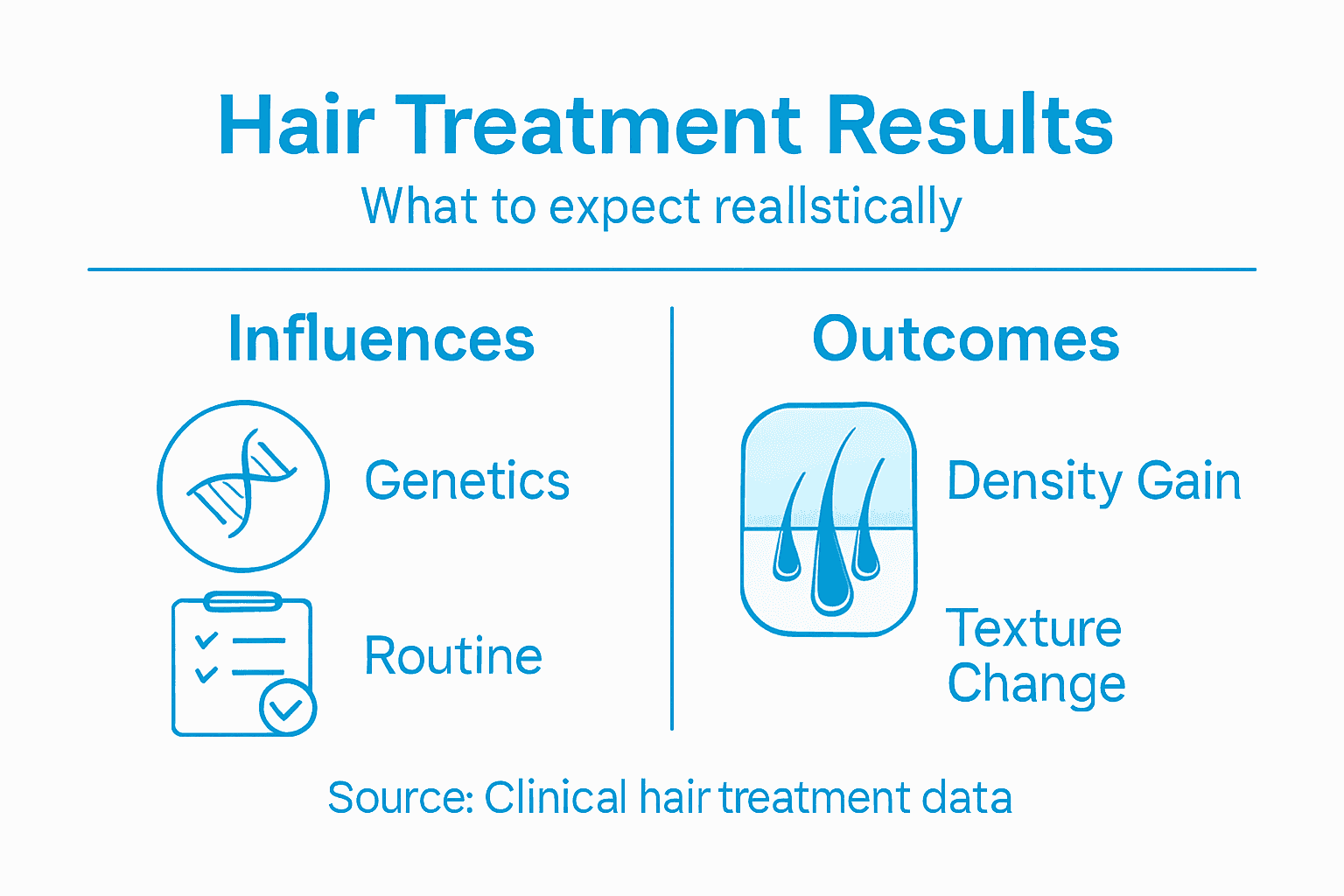
Below is a summary table outlining major factors that influence realistic hair treatment outcomes:
| Factor | Impact on Success | Timeframe |
|---|---|---|
| Genetics | Sets baseline for possible results | Ongoing, cannot be changed |
| Treatment Consistency | Essential for sustained benefits | At least 4-6 months |
| Scalp Health | Foundation for treatment efficacy | Must be maintained throughout |
| Nutritional Status | Supports regrowth and density | Changes show after several months |
| Age | Affects regrowth speed and density | Slower results with age |
The biggest expectation mismatch comes from assuming that more aggressive treatment equals faster results. It doesn't. Combining treatments sometimes helps, sometimes causes complications, and sometimes produces no additional benefit beyond using one treatment alone. This is why AI-driven personalization matters. Rather than throwing everything at the problem, the platform identifies which single treatment or minimal combination is most likely to work for you. You avoid wasting money on treatments that won't help and focus energy on what actually will. One more reality check: some people simply don't respond well to available treatments. This isn't common, but it happens. Your body might metabolize medications differently, your scalp microenvironment might not respond to stem cell therapy, or your hair loss might be resistant to pharmaceutical interventions. This is why baseline assessment and tracking matter. You discover early whether your chosen treatment is working rather than continuing for months hoping for results that never come.
Pro tip: Set a clear benchmark before starting any treatment. Take photos in consistent lighting, count hairs in a small area monthly, and give yourself at least four months before deciding whether a treatment is working for you.
Common Mistakes and How to Avoid Them
Most people make the same critical errors when addressing hair loss. The first mistake is treating your scalp as an afterthought. You focus on the hair itself, using expensive treatments and products, while completely neglecting the foundation where hair actually grows. Your scalp is skin. It needs proper care just like the skin on your face. If your scalp is inflamed, dry, clogged with product buildup, or unhealthy, even the best hair growth treatment won't perform optimally. Neglecting scalp health and overusing harsh chemical products directly undermines treatment efficacy. You can't restore hair growth on a damaged scalp. This means establishing a basic scalp care routine before you invest heavily in advanced treatments. Use a gentle cleanser, exfoliate occasionally to remove buildup, and if your scalp is inflamed or itchy, address that first. Think of scalp health as the prerequisite, not an optional add-on.
The second major mistake is assuming that more aggressive treatment equals faster results. People layer multiple treatments simultaneously, thinking they'll accelerate progress. Minoxidil plus finasteride plus stem cell therapy plus platelet-rich plasma all at once. In reality, this approach often backfires. Combining treatments increases the risk of adverse reactions, makes it impossible to identify which treatment actually works for you, and sometimes causes complications that derail progress entirely. You also ignore what evidence-based treatment selection and thorough clinical assessment require. Before you start any treatment, you need a clear diagnosis. Is your hair loss genetic? Nutritional? Stress-related? Environmental? Different root causes respond to completely different interventions. Treating genetic hair loss with supplements won't work. Treating nutritional hair loss with minoxidil might help marginally but won't address the actual problem. The assessment phase isn't optional. It's foundational.
Third, people ignore the lifestyle and nutritional factors that directly influence hair growth. Hair is living tissue that requires protein, zinc, iron, B vitamins, and adequate calories to grow. If your diet lacks these nutrients or you're chronically stressed and sleep-deprived, no topical treatment will compensate. You'll see minimal results regardless of how good the medication is. This is why a holistic care approach addressing underlying health issues works better than treatments in isolation. You need adequate protein intake, consistent sleep, stress management, and basic nutrition. This isn't glamorous or expensive, but it's non-negotiable. The final mistake is abandoning treatments too quickly or not tracking results properly. You try minoxidil for six weeks, see minimal visible change, and quit. You never gave it time to work. Realistic progress takes three to four months minimum. But you need benchmarks to know whether progress is actually happening. Take baseline photos, establish a tracking system, and commit to at least four months of consistent treatment before evaluating whether it's working.
Pro tip: Start with assessment and scalp health before adding any treatments. Get your diagnosis confirmed, establish baseline measurements, and fix scalp issues first. Then add one treatment at a time, waiting at least four months before adding another, so you know what actually works for you.
Unlock Personalized Hair Treatment with AI Precision
Struggling to find hair treatments that truly work for your unique hair and scalp challenges is frustrating. The article highlights how modern hair care needs to go beyond generic solutions and embrace personalized, biology-driven approaches. Understanding your individual hair loss patterns and scalp condition is key to choosing treatments that are effective and sustainable. With the rise of AI-powered assessments, you no longer have to guess or settle for one-size-fits-all answers that may cause wasted time and money.
Discover how MyHair.ai uses advanced AI technology to analyze your hair health in detail, providing you a comprehensive profile tailored to your exact needs. By leveraging data-driven insights, you can receive customized product recommendations and treatment plans with higher confidence in their success. This personalized approach reflects the article’s emphasis on targeting biological health at the cellular level and avoiding treatments that could damage hair or scalp further. Don’t wait months guessing what works—get precise guidance today, track your progress over time, and optimize your journey to stronger hair. Start your transformation now at MyHair.ai and make hair treatment about what is best for you.
Frequently Asked Questions
What are the main differences between chemical and regenerative hair treatments?
Chemical treatments primarily focus on altering the appearance of hair by modifying its keratin structure and can lead to long-term damage. In contrast, regenerative treatments aim to restore hair and scalp function using biological therapies that target the root causes of hair loss.
How can I personalize my hair treatment plan effectively?
To personalize your hair treatment plan, consider getting a comprehensive assessment of your hair's current state using AI-driven analysis, which can evaluate your hair and scalp conditions. This way, you can select treatments tailored to your unique hair profile and biological needs rather than relying on one-size-fits-all solutions.
What kind of results should I realistically expect from hair treatments?
Realistically, hair treatments typically take months to show noticeable results. Many users experience increased hair density and improved quality around the four to six-month mark, but individual outcomes can vary based on genetics, treatment consistency, and overall health.
Why is scalp health important in hair treatment?
Scalp health is crucial because unhealthy scalp conditions, like inflammation or buildup, can hinder effective hair growth treatments. Proper scalp care helps create an optimal environment for hair growth, ensuring that treatments work more effectively.