Blog
Learning Materials
Your Hair Goals Checklist: A Measurable Plan That Works
Updated: August 25, 2026
Pick one measurable hair goal, anchor a weekly wash-day checklist to it, and start an 8-week log to track results. Begin by identifying your hair type and porosity, choosing a single primary goal (growth, less shedding, easier styling), and scheduling your first trim or scalp check this week. Recheck progress every eight to twelve weeks using the same photo angle and a short list of tracked metrics.
TL;DR:
- Focusing on one measurable hair goal, such as growth or reduced shedding, improves tracking accuracy and results over trying to accomplish multiple objectives simultaneously.
- Regularly checking progress every 8 to 12 weeks using consistent photo angles and specific metrics helps identify effective routine changes and avoid product cycling.
- Proper weekly routines involve four key tasks—cleaning, conditioning, protecting, and trimming—tailored to your scalp type and hair porosity for consistent maintenance.
- Tracking shed count, scalp health, hair feel, and style retention weekly during an 8-week log allows for precise adjustments and early identification of setbacks.
- Using tools like MyHair.ai automates measurement and product recommendations, supporting goal adherence without guesswork, especially when combined with a clear, S.M.A.R.T.-based plan.
Table of Contents
- A Practical Hair Goals Checklist You Can Adapt Today
- Set S.M.A.R.T. Hair Goals and Build a Timeline
- Your Weekly, Monthly, and Quarterly Checklist
- Track Progress With an 8-Week Log and a Photo Protocol
- Common Mistakes That Sabotage Hair Goals
- How MyHair.ai Turns This Checklist Into a Measurable Plan
- Choose Consistency Over Trends
- Scan, Set a Goal, Start Tracking With MyHair
- Sources
- FAQ
A Practical Hair Goals Checklist You Can Adapt Today
Most people fail at hair goals not because they lack discipline, but because they chase five goals at once with no way to measure any of them. Pick one primary goal and one maintenance goal. That's it. Trying to fix breakage, boost growth, and change your color routine simultaneously means you'll never know which change actually worked.
Here's a working checklist of common, realistic goals, each with a measurable target and a starting action:
- Length growth — Target: measurable progress over several months. Start this week: take a baseline photo and measure with a soft tape at the same spot on your part.
- Reduce shedding — Target: fewer strands on your brush or in the shower drain compared to your baseline week. Start this week: count strands during one detangling session to set a starting number.
- Low-maintenance color — Target: no root touch-up needed for 10+ weeks. Start this week: talk to your colorist about grow-out-friendly placement like balayage.
- Embrace natural texture — Target: three curl-defined days per week without heat. Start this week: do a strand test to confirm your curl pattern and porosity.
- Improve shine and strength — Target: fewer split ends at your 8-week check. Start this week: swap one heat-styling session for an air-dry day.
- Thicker-looking hair — Target: visible density improvement in a same-angle photo at 12 weeks. Start this week: check whether your shampoo is weighing down fine strands.
- Healthier scalp — Target: no flaking or itch by week four. Start this week: switch to a clarifying wash every two to three weeks.
- Consistent maintenance — Target: consistent regular trims every few months, no skipped appointments. Start this week: book your next two trims now.
Most goals need monthly attention; scalp and shedding goals need weekly tracking since they change faster.
Set S.M.A.R.T. Hair Goals and Build a Timeline
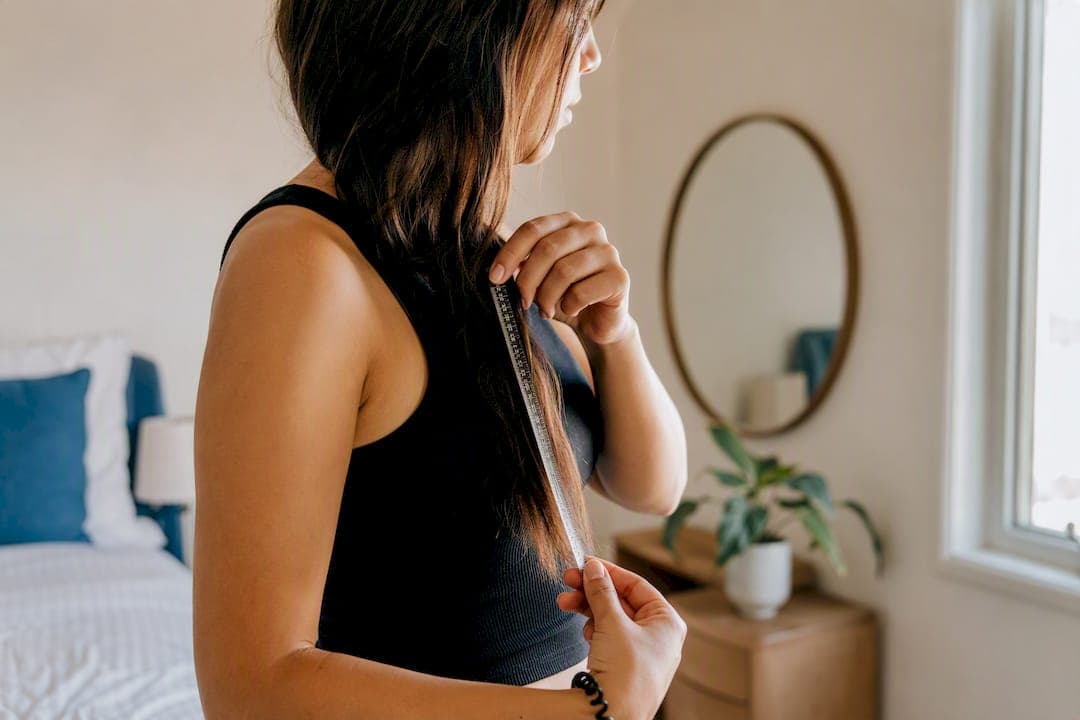
Vague goals like "healthier hair" don't give you anything to measure. The S.M.A.R.T. framework fixes that, and it's the same structure dermatology-backed hair care guidance uses when recommending quarterly progress checks.
Here's what each part looks like applied to hair:
- Specific: "Grow 3 inches" beats "grow my hair out."
- Measurable: Track with a monthly photo plus a soft tape measurement at the same part line.
- Attainable: Average scalp hair grows about half an inch a month, so 3 inches in six months is realistic; 3 inches in six weeks isn't.
- Relevant: A goal has to fit your actual routine. If you can't commit to weekly deep conditioning, don't set a goal that depends on it.
- Time-bound: Set a real date, like "by August 2026," not "eventually."
Break a 12-month goal into three-month milestones and check in quarterly, which structured hair-planning guidance recommends as the standard rhythm. Add a professional treatment (protein service, scalp treatment) only after your 8-week log shows a stalled metric, not before. Delay salon extras if your basics, like wash frequency and heat use, aren't dialed in yet.
Your Weekly, Monthly, and Quarterly Checklist
Anchor everything to one fixed wash day. Floating routines get skipped; a fixed day doesn't. The core weekly structure comes down to four jobs, and this is the same Clean, Condition, Protect, Retain framework behind most weekly hair care checklists, which takes about 15 to 25 active minutes per week.
- Clean: Shampoo scalp and roots, matched to your scalp's oil production.
- Condition: Apply mid-length to ends only, never the scalp, since scalp-safe conditioning practices recommend this to avoid weighing down roots.
- Protect: Detangle gently before bed, use a silk or satin pillowcase, and skip tight overnight styles.
- Retain: Trim every 8 to 12 weeks to remove split ends before they travel up the shaft.
Wash frequency depends on your scalp, not a fixed rule. Fine or oily scalps often need washing every one to two days, while coily or dry hair can often stretch to about a week or more between washes. Deep condition weekly if your hair runs dry or textured.
| Task | Frequency | Time Per Session |
|---|---|---|
| Cleanse (Clean) | Every 1–2 days, by scalp type | 5–10 minutes |
| Conditioning (Condition) | Every wash day | 3–5 minutes |
| Deep condition | Weekly for dry/textured hair | 15 to 25 minutes |
| Nighttime protection | Nightly | 1–2 minutes |
| Trim | Every few months | Salon visit |
| Quarterly goal check | Every 8–12 weeks | 10 minutes |
Track Progress With an 8-Week Log and a Photo Protocol
Eight weeks is long enough to see a real signal and short enough that you haven't lost track of what you changed. Here's the protocol:
- Photograph the same way every time. Same angle (front, side, and crown), same lighting (natural daylight near a window works best), and same hair state (freshly detangled, no product).
- Log four metrics weekly on wash day: shed count during detangling, how your ends feel (dry, splitting, smooth), scalp condition (itchy, flaky, clear), and how well your style holds on day two.
- Review at week eight. Compare your first and last photos side by side, and check whether your logged metrics trended in the right direction.
- Change one variable at a time. If nothing improved, swap a single product or habit before your next 8-week cycle, per the same log protocol used to gauge routine effectiveness. If shedding or scalp irritation worsens instead of improves, that's the point to talk to a dermatologist or trichologist rather than keep experimenting.
Common Mistakes That Sabotage Hair Goals
Product cycling kills more hair goals than bad genetics ever could. Switching shampoos every few weeks means you never give any single change enough time to show results, and you lose the ability to tell what's actually working.
- Random product cycling → Fix: audit your shelf and commit to one system for a full 8-week cycle.
- Overwashing the lengths → Fix: focus shampoo at the scalp, let runoff cleanse the ends.
- Conditioner applied to the scalp → Fix: apply from mid-shaft down only.
- Ignoring porosity → Fix: run a simple strand-in-water test before buying new products.
- Heat and tight styles daily → Fix: set one heat-free day weekly and loosen ponytails and buns.
Pro Tip: Switch to a silk or satin pillowcase and let hair air-dry to 80% before any heat styling. This one environmental change reduces the friction that snaps strands overnight, often showing up in your log as fewer split ends within a few weeks.
How MyHair.ai Turns This Checklist Into a Measurable Plan
A checklist works better when the tracking is automatic. MyHair.ai scores your hair type and porosity from a scan, so you skip the guesswork on which products actually match your strand type. The platform then builds a monthly progress graph from your uploaded photos, mirroring the same 8-week log structure, and generates a product audit that maps directly to whatever S.M.A.R.T. goal you set. You can review the methodology behind the scoring on the MyHair research page.

Choose Consistency Over Trends
Chasing whatever hair trend is popular this month is how people end up with routines that don't fit their actual lives. Pick one measurable goal and one maintenance habit, then protect the fifteen or twenty minutes a week that habit requires. Small, repeated actions compound over months in ways a single expensive treatment never will. Let your 8-week log tell you what to change next, not another trend cycle.
— Cyriac
Scan, Set a Goal, Start Tracking With MyHair
MyHair.ai turns the checklist above into something you don't have to manage by hand. Upload a scan, and the platform reads your hair type and porosity in minutes instead of guesswork. From there, you pick your primary goal: growth, less shedding, easier styling, and the app maps a product audit directly to that target.
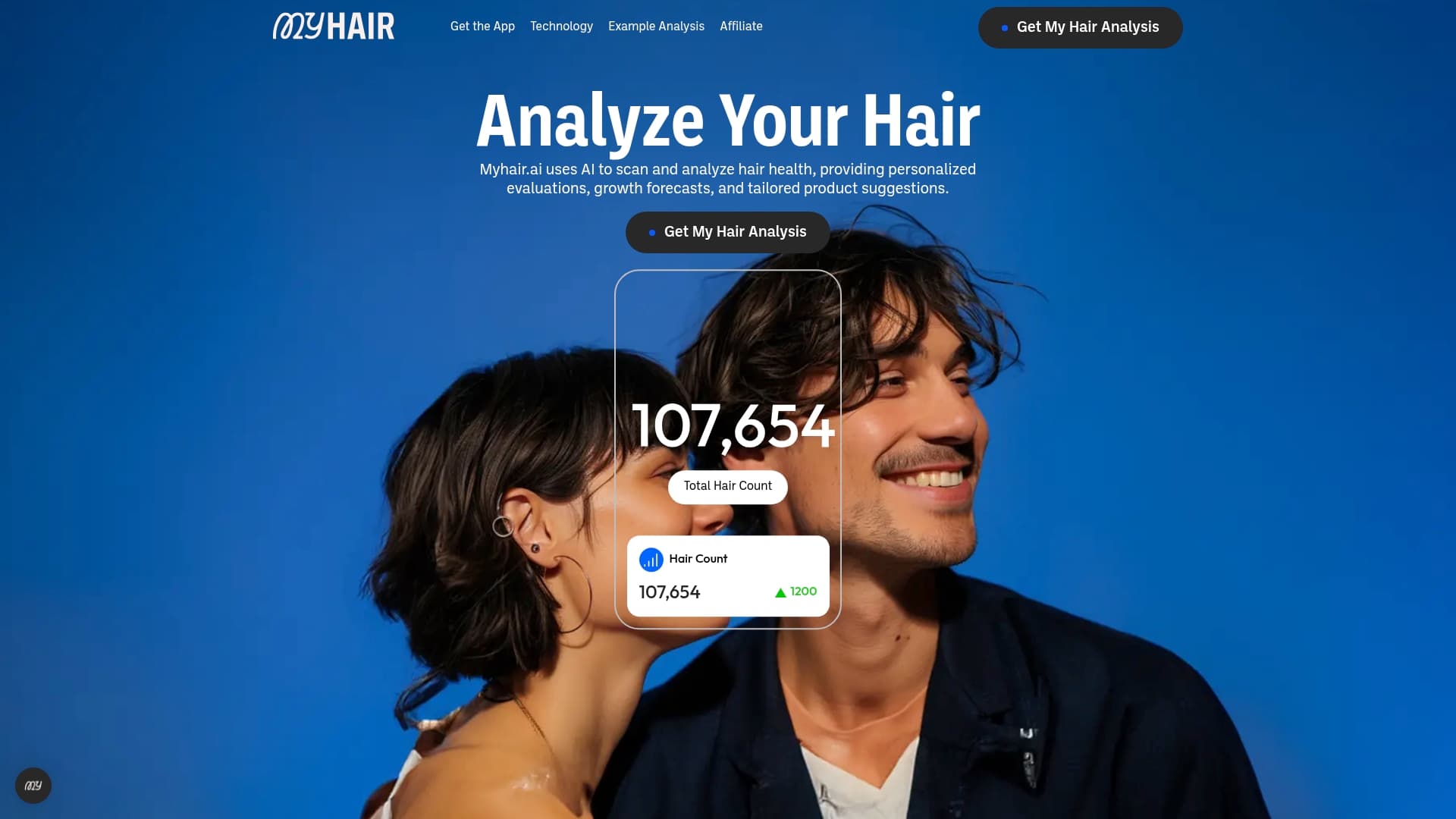
Onboarding takes three steps: scan, set your goal, start your 8-week log. The measurement side is handled automatically, so your job is just showing up on wash day. Start your scan through MyHair's app onboarding and let your first progress graph populate before your next trim is due.
Sources
- American Academy of Dermatology — Healthy hair tips
- How To Build A Weekly Hair Care Checklist For Healthy & Strong Hair — InStyluxe
- Hair care routine guide — Verywell Health
FAQ
What are good hair goals?
Good hair goals are specific and measurable, such as growing 2 to 3 inches in six months, reducing shedding compared to a baseline count, or maintaining a trim schedule every 8 to 12 weeks rather than vague aims like "healthier hair."
What are the big three for hair regrowth?
While definitions vary across sources, a common version centers on scalp health, consistent gentle routines, and minimizing mechanical damage from heat and tight styling, with a structured checklist reinforcing all three at once.
Which organ is connected to hair?
The scalp's skin and its follicles are the direct structures behind hair growth, and scalp condition (flaking, itching, oil balance) is one of the clearest early signals of whether your routine is working.
What stimulates hair growth best?
Consistent scalp care, matched wash frequency, and mid-length-only conditioning support the conditions hair needs to grow, and tools like MyHair.ai can help you track scalp scores and photo progress over an 8-week cycle to see what's actually moving the needle.