Blog
Learning Materials
Hair Growth After Alopecia: What Actually Works
Updated: May 17, 2026
TL;DR:
- Many patients with alopecia can experience meaningful hair regrowth since follicles often remain dormant rather than destroyed. Advances like JAK inhibitors have significantly improved success rates, especially in non-scarring alopecia, with results typically visible after several months. Consistent treatment, early diagnosis, and personalized approaches maximize the chances of recovery and long-term management.
Most people who lose hair to alopecia assume the worst. They believe the follicles are gone for good and that regrowth is either a distant hope or a medical lottery. That assumption is often wrong. Hair growth after alopecia is a real, documented outcome for many patients, and recent advances in treatment have pushed success rates higher than ever before. The key is understanding what type of alopecia you have, what your follicles are actually doing, and which strategies give you the best shot at meaningful regrowth. This guide covers all of it.
Table of Contents
- Key takeaways
- Hair growth after alopecia: what your follicles are actually doing
- Best treatments for alopecia and their real-world results
- Managing expectations during the regrowth process
- Practical ways to support hair regrowth at home
- My honest take after years of working with alopecia patients
- How Myhair helps you track and accelerate your regrowth
- FAQ
Key takeaways
| Point | Details |
|---|---|
| Regrowth is often possible | Spontaneous regrowth occurs in 33-50% of patients within one year, especially with patchy hair loss. |
| JAK inhibitors are a breakthrough | New medications like upadacitinib achieve near-complete regrowth in up to 84.6% of adolescents with severe alopecia. |
| Treatment takes time | Results should be evaluated after 3-6 months since hair cycling delays visible progress. |
| Combination therapy works best | Personalized treatment plans that combine therapies outperform single-treatment approaches. |
| Early fine hair is a good sign | White or wispy hair appearing during treatment signals follicle reactivation, not poor regrowth quality. |
Hair growth after alopecia: what your follicles are actually doing
Understanding why does hair fall out in alopecia starts at the follicle level. In alopecia areata, which is the most common autoimmune form, the immune system mistakenly targets hair follicles. White blood cells cluster around the follicle root and disrupt the normal hair growth cycle. The follicle does not die. It goes dormant.
That distinction matters enormously. A dormant follicle can reactivate. A destroyed one cannot. This is why hair restoration after alopecia is genuinely possible for many patients, particularly those with alopecia areata rather than scarring forms like lichen planopilaris or frontal fibrosing alopecia, where the follicle is replaced by scar tissue.
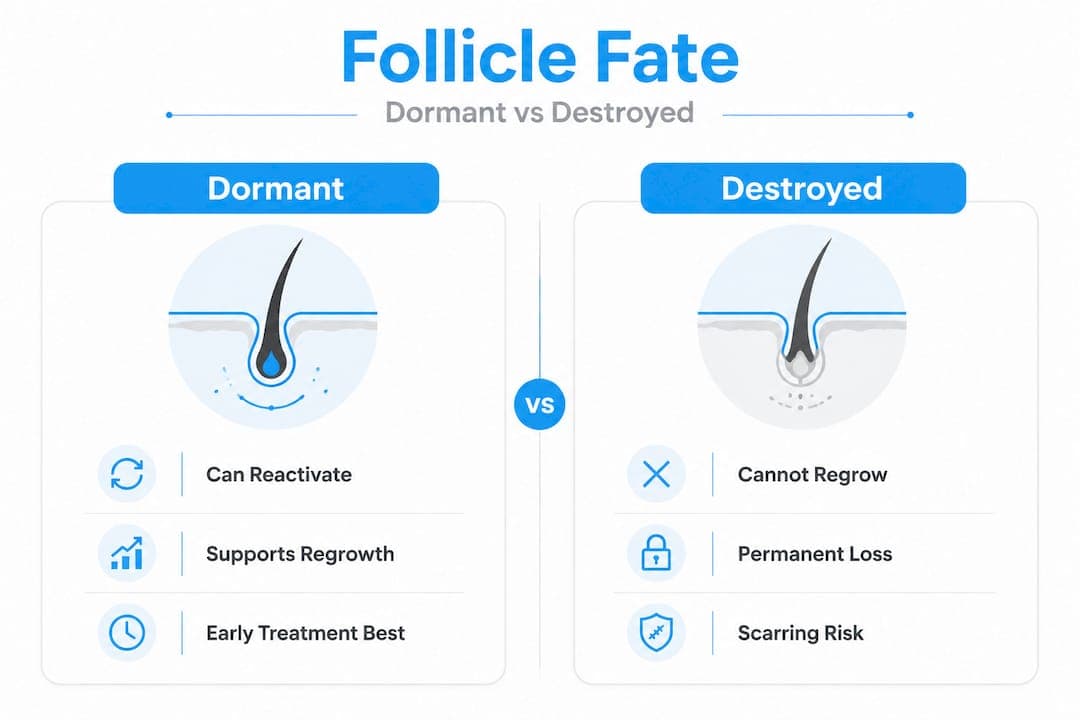
The hair growth cycle has four phases: anagen (active growth), catagen (transition), telogen (resting), and exogen (shedding). Alopecia disrupts the anagen phase, pushing follicles prematurely into telogen or a prolonged dormancy. When the autoimmune attack subsides, follicles can re-enter anagen. But they do so on their own schedule, not yours.
Here is what matters most about regrowth potential:
- Type of alopecia matters. Non-scarring types like alopecia areata and telogen effluvium carry much better regrowth prospects than scarring forms.
- Extent of hair loss matters. Patchy alopecia areata has a more favorable prognosis than alopecia totalis (full scalp loss) or alopecia universalis (full body hair loss).
- Duration of hair loss matters. Follicles that have been dormant for many years respond less predictably to treatment.
- Age of onset matters. Early-onset, widespread alopecia tends to be more persistent.
Pro Tip: If you are newly diagnosed, get a scalp biopsy early. Distinguishing scarring from non-scarring alopecia changes the entire treatment strategy and prognosis.
Early diagnosis also allows you to start treatment before extended follicle dormancy sets in, which is one of the strongest predictors of a better outcome when dealing with alopecia hair loss.
Best treatments for alopecia and their real-world results
Dealing with alopecia hair loss means sifting through a lot of options, some proven and some overpromised. Here is a grounded look at what the evidence actually supports.
Corticosteroid injections
Intralesional corticosteroid injections remain one of the most widely used first-line treatments for patchy alopecia areata. Injections at 5 mg/mL result in approximately 81% hair regrowth, with the 10 mg/mL concentration achieving around 76%. They are administered every four to six weeks directly into the scalp patches. The mechanism works by suppressing the local immune attack on follicles, allowing them to re-enter the growth phase. The tradeoff is that temporary skin atrophy at injection sites can occur, appearing as small depressions or dimples. This is usually reversible, but it is worth discussing with your dermatologist before starting.
JAK inhibitors
This is where alopecia hair restoration has taken a major step forward. JAK (Janus kinase) inhibitors block specific immune signaling pathways that drive the autoimmune attack on follicles. The results in clinical trials have been striking. Upadacitinib produced near-complete scalp hair regrowth in up to 84.6% of adolescents at 24 weeks, with adult response rates ranging from 44 to 53%. Beyond efficacy, JAK inhibitors reduce reliance on long-term systemic corticosteroids, which carry heavier side effect profiles. Baricitinib and ritlecitinib are now FDA-approved for moderate to severe alopecia areata in adults, marking a real shift in the standard of care.
Topical and adjunctive therapies
Minoxidil does not treat the autoimmune cause of alopecia areata, but it stimulates follicle activity and is often used alongside primary treatments to support regrowth. Topical immunotherapy, using compounds like diphenylcyclopropenone (DPCP), works by redirecting the immune response away from follicles and has shown benefit in extensive cases. Platelet-rich plasma (PRP) therapy, in which concentrated growth factors from your own blood are injected into the scalp, shows promising results in early studies, though larger trials are still ongoing.
| Treatment | Best for | Expected timeline | Approximate success rate |
|---|---|---|---|
| Corticosteroid injections | Patchy alopecia areata | 6-12 weeks per patch | 76-81% |
| JAK inhibitors (oral) | Moderate to severe cases | 16-24 weeks | 44-84.6% |
| Topical minoxidil | Adjunctive support | 3-6 months | Variable |
| Topical immunotherapy | Extensive alopecia areata | 3-6 months | Up to 50-60% |
| Platelet-rich plasma | Early or patchy loss | 3-6 months | Emerging evidence |
Pro Tip: Combination approaches consistently outperform single treatments. Research confirms that combining corticosteroids with complementary therapies reduces relapse rates compared to using one treatment alone. Ask your dermatologist about a multimodal plan from the start.
You can also explore the latest hair loss treatment innovations to stay current on emerging options being used in clinical settings.
Managing expectations during the regrowth process
One of the biggest reasons people abandon treatment too early is that they expect to see results within a few weeks. The biology simply does not work that fast. Treatment results should be evaluated after three to six months because the hair growth cycle itself delays visible change. A follicle can reactivate and still take weeks to push visible hair through the scalp surface.
Here is what realistic progress looks like for most patients:
- Weeks 4-8: The scalp may show small, pale, or colorless hairs in treated patches. This is a positive sign of follicle reactivation.
- Months 3-6: Fine, white, or depigmented hairs become more visible and begin to thicken.
- Months 6-12: Terminal hair with normal pigmentation starts filling in. Density continues improving.
- Beyond 12 months: Full regrowth, if it occurs, may take over a year in moderate to severe cases.
Hair regrowth often starts as fine, white, or depigmented strands that gradually darken and thicken as the follicle normalizes. Seeing pale, wispy hair is not a sign that something is wrong. It is a sign that something is working.
Relapses are also a real part of alopecia recovery. The autoimmune process can flare again, even after full regrowth. This does not mean treatment failed. It means alopecia, for many people, is a chronic condition that requires ongoing monitoring.
"Prognosis for alopecia areata is variable, and treatment goals should be personalized rather than assuming a universal cure." This perspective, drawn from clinical practice, reframes the goal from "cure" to "management and regrowth phases," which is a healthier and more accurate way to approach recovery.
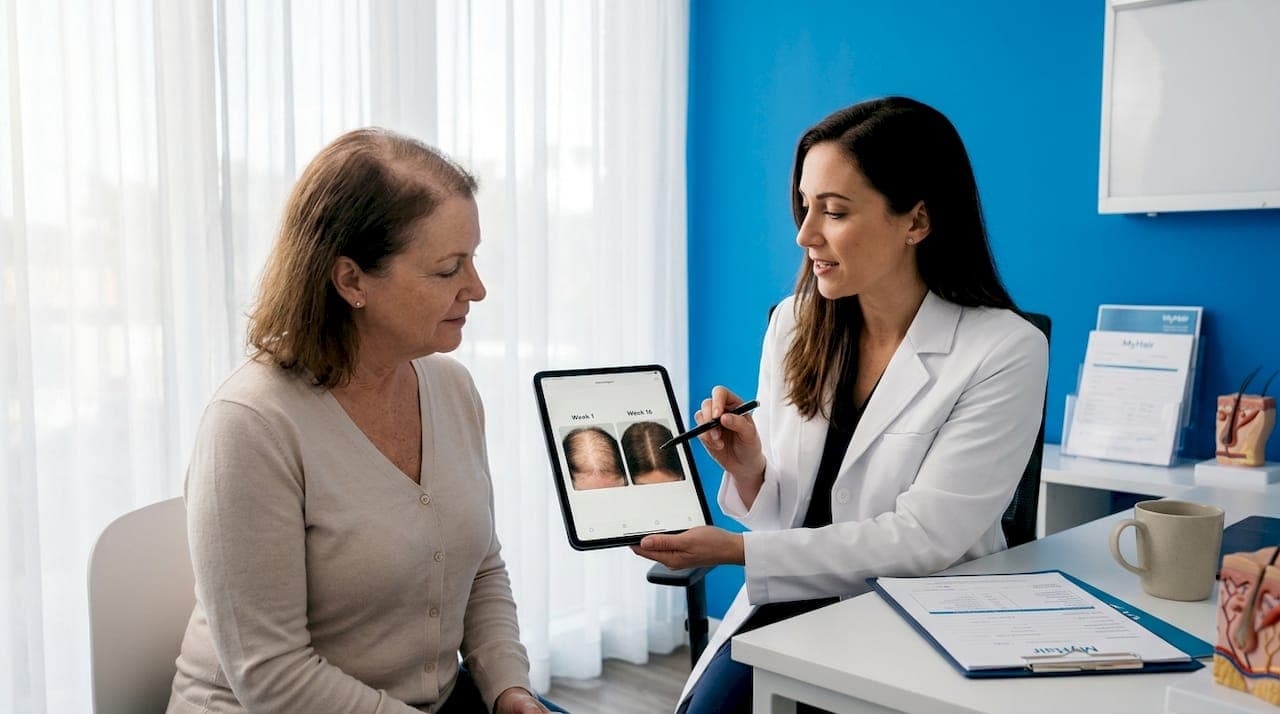
Working closely with a dermatologist or trichologist who tracks your progress at regular intervals makes a significant difference. Document your patches photographically, note any changes in hair texture or density, and bring that information to appointments.
Practical ways to support hair regrowth at home
Medical treatment does the heavy lifting, but daily habits play a real supporting role in promoting hair regrowth. None of these replace clinical care, but they create better conditions for your follicles to do their job.
- Prioritize iron, zinc, and biotin. Deficiencies in these nutrients are documented contributors to hair shedding. A blood panel can identify gaps, and targeted supplementation fills them without guessing.
- Reduce physical stress on your scalp. Avoid tight hairstyles, heat tools, and chemical treatments during regrowth phases. Fragile new hair is more susceptible to mechanical damage.
- Address psychological stress. Chronic stress elevates cortisol, which disrupts immune regulation and can worsen autoimmune activity. Practices like mindfulness, exercise, and consistent sleep lower this biological burden.
- Use gentle, sulfate-free shampoos. Harsh cleansers strip the scalp and irritate sensitive follicles. A clean but gentle scalp environment supports healthier regrowth.
- Consider AI-powered hair analysis. Tracking your scalp condition with precision tools helps you identify which areas are responding to treatment and which need more attention. Personalizing your approach with data leads to better decisions.
Pro Tip: Do not overlook natural regrowth strategies as adjunctive support. Scalp massage performed for four minutes daily has shown measurable effects on hair thickness in small studies, likely through increased blood flow to the follicle.
Working with a trichologist or a dermatologist who specializes in alopecia recovery tips will always outperform self-directed care alone. Use these lifestyle strategies to complement, not replace, your medical treatment plan.
My honest take after years of working with alopecia patients
I have worked with enough people dealing with alopecia hair loss to recognize a pattern. The patients who do best are rarely the ones who found the "right" treatment immediately. They are the ones who stayed consistent, communicated openly with their care team, and adjusted their expectations without abandoning hope.
What I have learned is that the emotional weight of alopecia gets underestimated in clinical conversations. Hair is tied to identity in deep ways, and watching it come back in patchy, uneven stages can feel harder than losing it all at once. That phased regrowth, the fine white hairs, the slow thickening, requires a kind of tolerance most patients are not prepared for. I have seen people stop treatment during the exact window when their follicles were finally responding.
My take on the current treatment landscape: JAK inhibitors have genuinely changed what is possible for severe cases. I have seen patients who had years of failed topical and injection therapy respond to baricitinib or ritlecitinib in ways that seemed unlikely before. If you have moderate to severe alopecia areata and have only tried older approaches, this class of medication deserves a serious conversation with your dermatologist.
What I tell every patient: no single protocol fits every case. Your alopecia is not identical to anyone else's, and your regrowth path will not be either. The goal is a plan that is built around your specific type, history, and biology, not a generic protocol borrowed from a forum or a single clinical study.
Stay consistent. Track your progress. Ask hard questions of your care providers. And give it time.
— Cyriac
How Myhair helps you track and accelerate your regrowth
Knowing that treatment is working requires more than intuition. You need to see the data.
Myhair's AI-powered hair analysis uses advanced scanning technology to assess your scalp and hair health in detail, identifying areas of active regrowth, dormancy, and change over time. Instead of guessing whether your treatment is making a difference, you get a scored, visual assessment that tracks progress precisely. The platform also provides tailored product recommendations based on your individual hair profile, so every step of your alopecia recovery plan is built around your specific needs. Start with a personalized hair score and get clarity on where you actually stand today.
FAQ
Can hair grow back fully after alopecia?
Yes, full regrowth is possible, especially in non-scarring types like alopecia areata. One-third to half of patients experience spontaneous regrowth within 12 months, and medical treatments significantly improve those odds for more extensive cases.
How long does hair growth after alopecia take?
Most patients see initial signs of regrowth within six to twelve weeks of starting treatment, but visible results typically require three to six months. Full density restoration can take a year or longer.
What are the most effective treatments for alopecia hair regrowth?
JAK inhibitors like baricitinib and ritlecitinib currently show the strongest results for moderate to severe alopecia areata, while intralesional corticosteroid injections remain effective for patchy cases with proven regrowth rates of 76 to 81%.
Is white hair growing back a bad sign?
No. Fine, white, or depigmented hair appearing at treated sites is a normal and positive sign of follicle reactivation. Color and thickness return as the follicle continues to normalize over subsequent growth cycles.
Can alopecia hair loss come back after successful regrowth?
Yes. Relapse is common in alopecia areata, which is why ongoing monitoring matters even after full regrowth. Maintaining contact with your dermatologist and staying on a management plan reduces the risk of extended setbacks.