Blog
Learning Materials
Hair Solution: AI-Powered Paths to Hair Growth
Updated: January 11, 2026

Finding a trustworthy hair solution can feel confusing when so many american and global myths make it hard to separate fact from fiction. Up to 40 percent of people notice visible thinning by their mid-thirties. Early-stage hair loss is rarely just about aging or poor shampoo habits. If you want clear answers and effective care, AI-driven analysis offers game-changing details and personalized product suggestions that help you take control of your hair health with confidence.
Table of Contents
- Defining Hair Solution And Common Myths
- Types Of Hair Loss And Treatment Solutions
- How Ai-Powered Hair Analysis Works
- Personalized Product Recommendations Explained
- Risks And Misconceptions To Avoid
- Comparing Alternatives And Cost Factors
Key Takeaways
| Point | Details |
|---|---|
| Comprehensive Hair Health | Hair solutions require a holistic understanding of hair growth involving genetics, nutrition, and proper care practices. |
| Myth Dispelled | Hair loss is influenced by factors like hormonal changes and stress, not solely hygiene or aging. |
| Consult Professionals | Always consult a dermatologist for personalized treatment options to address specific hair concerns safely. |
| Evaluate Costs | Assess various treatment options considering effectiveness, costs, and potential side effects before making a decision. |
Defining Hair Solution and Common Myths
Hair solutions encompass a comprehensive approach to maintaining scalp and hair health, extending far beyond basic washing and styling. These strategies involve understanding the intricate biological processes of hair growth, addressing potential underlying conditions, and selecting targeted treatments that support hair vitality. While many individuals assume hair health is straightforward, the reality involves complex interactions between genetics, nutrition, environmental factors, and personal care practices.
Popular myths about hair solutions often mislead people into ineffective or potentially harmful treatments. Many believe that hair loss is solely a result of poor hygiene or aging, but scientific research reveals a more nuanced reality. Comprehensive hair health research indicates that factors like hormonal changes, medical conditions, nutritional deficiencies, and stress play significant roles in hair growth and maintenance. These myths can prevent individuals from seeking appropriate interventions or understanding the root causes of their hair concerns.
Understanding the potential risks associated with hair treatments is crucial for making informed decisions. Some hair products, particularly chemical treatments, can pose unexpected health risks. Research from the National Institutes of Health suggests that certain hair straightening chemicals might have associations with serious health conditions, challenging the assumption that all cosmetic hair products are inherently safe. Consumers must scrutinize product ingredients, understand potential long-term impacts, and consult healthcare professionals when developing personalized hair care strategies.
Pro tip: Develop a holistic approach to hair health by tracking changes, maintaining a balanced diet, and consulting professionals before starting any new hair treatment regimen.
Types of Hair Loss and Treatment Solutions
Hair loss is a complex condition with multiple underlying causes, presenting in several distinct types that require specialized approaches. Comprehensive hair loss diagnostics reveal that understanding the specific type of hair loss is crucial for determining the most effective treatment strategy. The primary categories include androgenetic alopecia (pattern baldness), alopecia areata (autoimmune hair loss), telogen effluvium (stress-induced shedding), and other less common variations that impact hair growth and scalp health.
Androgen-related pattern baldness represents the most prevalent form, affecting both men and women through genetic predispositions. Alopecia areata emerges as an autoimmune condition where the body's immune system attacks hair follicles, causing sudden and often unpredictable hair loss in patches. Telogen effluvium typically occurs after significant physical or emotional stress, causing widespread hair shedding that can be temporary but potentially distressing for individuals experiencing the condition.
Treatment solutions vary dramatically based on the specific hair loss type, ranging from topical medications and oral prescriptions to advanced surgical interventions. Minoxidil and finasteride remain primary pharmaceutical options for androgenetic alopecia, while corticosteroid treatments can help manage autoimmune-related hair loss. Hair loss treatment strategies often require a multifaceted approach, combining medical interventions with lifestyle modifications, nutritional support, and stress management techniques to optimize hair regrowth potential.
Pro tip: Consult a professional dermatologist for a precise diagnosis before starting any hair loss treatment to ensure you're addressing the root cause effectively.
Here's a comparison of primary hair loss types and their recommended treatments:
| Hair Loss Type | Main Cause | Typical Treatment | Regrowth Potential |
|---|---|---|---|
| Androgenetic Alopecia | Genetics, hormones | Minoxidil, finasteride | Moderate with medication |
| Alopecia Areata | Autoimmune response | Corticosteroids, immunotherapy | Variable, may recover |
| Telogen Effluvium | Stress, medical events | Lifestyle changes, supplements | High if stress controlled |
| Scarring Alopecia | Inflammation, trauma | Anti-inflammatories, surgery | Limited, often permanent |
How AI-Powered Hair Analysis Works
Advanced hair analysis technologies leverage sophisticated machine learning algorithms to transform how we understand and assess hair health. These AI-powered systems utilize complex imaging techniques and deep learning models to capture intricate details about hair structure, density, and potential growth patterns. By processing high-resolution images or video captures, the technology can analyze multiple aspects of hair and scalp conditions with unprecedented precision, providing insights that traditional diagnostic methods might miss.
The core mechanism of AI hair analysis involves sophisticated 3D modeling techniques that reconstruct hair geometry with remarkable accuracy. Advanced algorithms can now detect subtle variations in hair strand characteristics, including thickness, color variations, potential damage indicators, and growth cycle stages. These systems process vast amounts of visual data, comparing individual hair characteristics against extensive databases of hair health profiles to generate personalized assessments that go beyond surface-level observations.

Machine learning models in hair analysis continuously improve their diagnostic capabilities through iterative learning processes. By integrating data from multiple sources, including clinical research, user submissions, and dermatological studies, these AI systems develop increasingly nuanced understanding of hair health patterns. Personalized hair diagnostic technologies enable users to receive comprehensive insights about their specific hair conditions, potential risk factors, and recommended treatment strategies tailored to their unique physiological characteristics.
Pro tip: Capture clear, well-lit images from multiple angles when using AI hair analysis tools to ensure the most accurate and comprehensive assessment possible.
Personalized Product Recommendations Explained
AI-powered recommendation systems represent a sophisticated approach to delivering tailored product suggestions by leveraging advanced machine learning algorithms. These intelligent systems analyze multiple data points, including user behavior, previous interactions, and specific preferences to generate highly accurate and contextually relevant recommendations. By processing complex datasets, the technology goes beyond traditional one-size-fits-all marketing strategies, creating personalized experiences that feel uniquely crafted for individual users.
The underlying mechanism of these recommendation engines involves complex natural language processing and machine learning models that continuously learn and adapt. Advanced algorithms can detect nuanced patterns in user preferences, analyzing everything from past purchasing history to subtle browsing behaviors. This dynamic approach allows the system to develop increasingly precise understanding of individual needs, creating recommendations that become more accurate and refined with each interaction.
Machine learning models integrate multiple data sources to enhance recommendation accuracy, including user feedback, product characteristics, and broader consumer trend analyses. Large language model reasoning enables these systems to understand context and provide recommendations that feel intuitive and genuinely helpful. The technology works by creating intricate user profiles that capture not just demographic information, but the subtle, nuanced preferences that make each person's hair care journey unique.
Pro tip: Actively engage with recommendation systems by providing honest feedback and completing user profiles to help AI algorithms generate more precise product suggestions.
Risks and Misconceptions to Avoid
Common hair loss treatment misconceptions can lead individuals down potentially dangerous paths of self-treatment and unrealistic expectations. Many people mistakenly believe that hair loss is always permanent or that a single universal solution exists for all hair conditions. These misconceptions often result in wasted resources, potential health risks, and increased frustration as individuals pursue ineffective or potentially harmful treatment strategies without professional guidance.
Medication-related risks represent a significant area of concern in hair loss treatment. Certain medications like minoxidil and finasteride can produce unexpected side effects, including scalp irritation, hormonal changes, and potential sexual dysfunction. Understanding these potential complications requires careful consultation with healthcare professionals who can assess individual health profiles and recommend personalized treatment approaches that minimize adverse reactions and maximize potential positive outcomes.
Self-diagnosis and unverified treatment methods pose substantial risks to both hair health and overall well-being. Dermatological treatment approaches emphasize the importance of professional evaluation and evidence-based interventions. Individuals must avoid unregulated products, miracle cure claims, and generic solutions that promise overnight transformations. Proper hair loss management involves comprehensive understanding of underlying causes, systematic diagnostic processes, and tailored treatment strategies that address individual physiological and genetic factors.
Pro tip: Always consult a certified dermatologist or trichologist before starting any hair loss treatment to understand your specific condition and potential risks.
Comparing Alternatives and Cost Factors
Hair loss treatment options represent a complex landscape of medical interventions with varying effectiveness, costs, and potential outcomes. The range of solutions spans from affordable over-the-counter topical treatments to sophisticated surgical procedures, each targeting different stages and types of hair loss. Individuals must carefully evaluate these alternatives by considering multiple factors beyond initial price, including long-term effectiveness, potential side effects, personal health profile, and expected maintenance requirements.
Cost structures for hair loss treatments demonstrate significant variation. Topical solutions like minoxidil might range from $20 to $100 monthly, while prescription medications such as finasteride can cost $30 to $90 per month. Surgical interventions like hair transplantation represent the most expensive option, with prices potentially ranging from $4,000 to $15,000 depending on the extent of treatment and geographic location. Insurance coverage remains inconsistent, with most cosmetic hair restoration procedures typically not covered by standard health insurance plans.
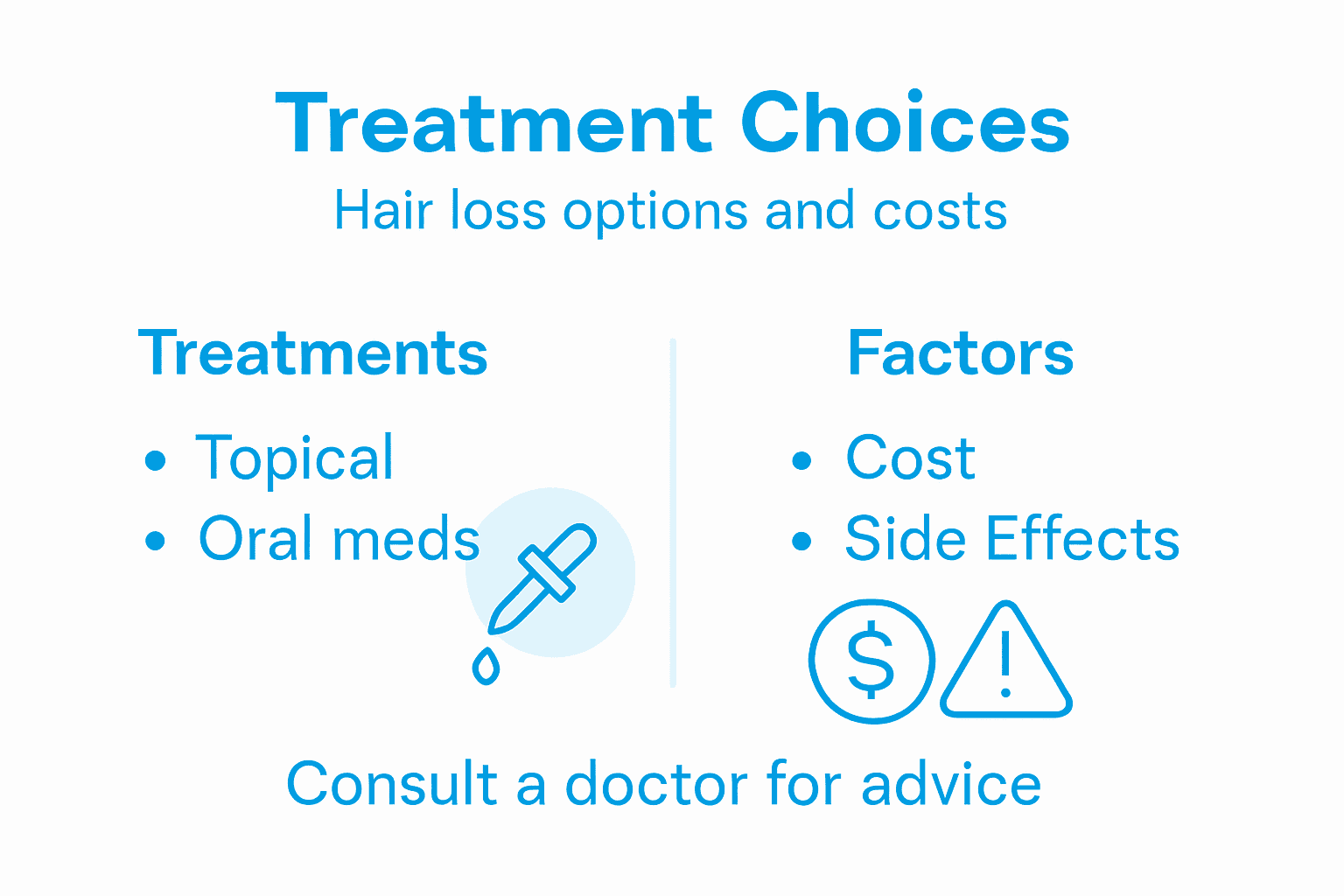
Beyond financial considerations, treatment selection requires comprehensive evaluation of individual hair loss characteristics. Genetic factors, age, overall health status, and rate of hair loss play crucial roles in determining the most appropriate intervention. Treatment effectiveness comparisons emphasize that no single solution works universally, underscoring the importance of personalized medical consultation. Successful hair restoration strategies often involve combining multiple approaches, including medical treatments, lifestyle modifications, and potentially minimally invasive procedures.
Pro tip: Create a detailed spreadsheet comparing treatment costs, potential side effects, and expected outcomes to make an informed decision about your hair restoration strategy.
The following table provides an overview of hair loss treatment cost factors and effectiveness:
| Treatment Type | Average Cost Range | Effectiveness | Typical Side Effects |
|---|---|---|---|
| Topical Solutions | $20–$100/month | Moderate for early loss | Scalp irritation |
| Oral Medication | $30–$90/month | High for some types | Hormonal, sexual effects |
| Hair Transplant | $4,000–$15,000 | Permanent solution | Surgery risks, downtime |
| Laser Therapy | $200–$1,200 (device) | Mild to moderate | Minimal, rare redness |
Discover Your Personalized AI-Powered Path to Hair Growth
Struggling with complex hair loss challenges like androgenetic alopecia or telogen effluvium can feel overwhelming. The article highlights the importance of precise diagnosis and tailored treatment strategies to combat hair thinning and scalp issues. With so many myths and risks surrounding hair solutions, achieving healthy hair requires more than guesswork It demands a clear understanding of your unique hair condition driven by advanced technology.
Experience how MyHair.ai transforms your hair care journey by using AI-powered hair analysis to deliver detailed insights into your scalp and hair condition. Our platform provides personalized product recommendations and tracks your progress over time empowering you to make informed decisions backed by scientific data. Don't wait to take control of your hair health Explore our AI hair analysis and personalized solutions today and start your journey toward confident, healthier hair.
Frequently Asked Questions
What are the common causes of hair loss?
Hair loss can result from various factors, including genetics, hormonal changes, medical conditions, nutritional deficiencies, and stress. Understanding the specific cause is crucial for effective treatment.
How does AI-powered hair analysis work?
AI-powered hair analysis uses advanced imaging techniques and machine learning algorithms to assess hair health by analyzing features like density, structure, and growth patterns, providing personalized insights beyond traditional diagnostic methods.
What types of treatments are available for different hair loss types?
Treatments vary based on the type of hair loss. Options include topical solutions like minoxidil for androgenetic alopecia, corticosteroids for alopecia areata, and lifestyle modifications for telogen effluvium. It's essential to consult a healthcare professional for tailored recommendations.
What risks are associated with hair loss treatments?
Potential risks include side effects from medications like minoxidil and finasteride, such as scalp irritation or hormonal changes, and the dangers of self-diagnosis or using unverified treatments. Always consult a dermatologist for safe and effective options.
Recommended
- Achieve Real Results with AI-Powered Hair Growth Therapy | MyHair
- Latest Hair Treatment 2025: Advanced Solutions for Hair Loss | MyHair
- Best Natural Conditioner for Hair Loss and Growth in 2025 | MyHair
- Best New Hair Growth Treatment Options in 2025 | MyHair
- Scalp Elixir - Eneleo - Natural Skin Care