Blog
Learning Materials
Hair Specialist: Personalized Solutions for Hair Loss
Updated: January 17, 2026
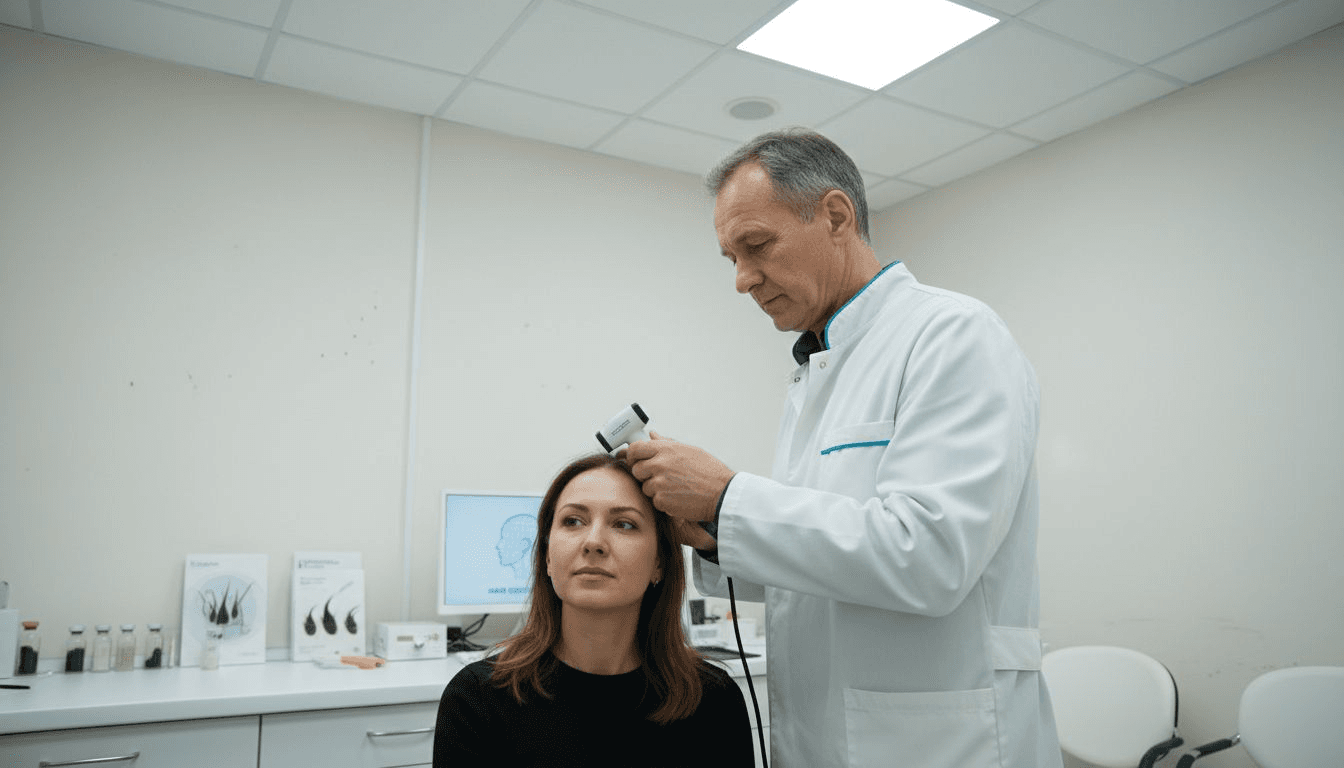
Finding answers about early-stage hair loss can feel confusing when every strand matters to your confidence. The search for the right solution is more than cosmetic—it touches your self-esteem and emotional well-being. With specialized hair clinics providing multidisciplinary teams of dermatologists, nurses, and psychologists to address both the medical and mental sides of hair loss, this guide will help you understand the true role of a hair specialist and how personalized, AI-driven tools can make a real difference for your unique needs.
Table of Contents
- What A Hair Specialist Does And Why It Matters
- Types Of Hair Specialists And Their Qualifications
- Diagnostic Methods To Assess Hair Health
- Personalized Treatment Plans And Modern Technologies
- Risks, Costs, And Choosing The Right Specialist
Key Takeaways
| Point | Details |
|---|---|
| Role of Hair Specialists | Hair specialists diagnose and manage complex hair and scalp issues, providing a holistic approach that includes psychological support. |
| Types of Specialists | Key professionals include dermatologists, trichologists, and hair restoration surgeons, each with specialized training and treatment approaches. |
| Diagnostic Techniques | Advanced diagnostic methods like trichoscopy and genetic testing help tailor precise treatment plans for hair health. |
| Choosing the Right Specialist | Evaluate a specialist's credentials, experience, and holistic approach to ensure comprehensive, patient-centered care. |
What a Hair Specialist Does and Why It Matters
A hair specialist serves as a critical medical professional dedicated to diagnosing, treating, and managing complex hair and scalp conditions. These professionals go far beyond simple cosmetic treatments, providing comprehensive care that addresses both physical symptoms and psychological impacts of hair loss. Their expertise spans multiple domains, including dermatology, endocrinology, and psychological wellness.
Hair specialists conduct thorough diagnostic assessments to understand the root causes of hair loss, which can range from genetic predispositions to autoimmune disorders. Specialized hair clinics offer multidisciplinary approaches that integrate medical professionals like dermatologists, nurses, and psychologists. These comprehensive evaluations help patients understand their specific hair loss patterns and develop targeted treatment strategies.
The psychological dimension of hair loss cannot be understated. Research indicates that hair loss is strongly linked with significant mental health challenges, including decreased self-confidence, depression, and increased anxiety. Hair specialists recognize this complex emotional landscape and provide holistic care that addresses both physical treatment and emotional support. Their interventions aim not just to restore hair growth, but to rebuild patients' self-esteem and overall psychological well-being.
Pro tip: Schedule an initial consultation with a hair specialist who offers comprehensive diagnostic services and understands the emotional complexities of hair loss.
Types of Hair Specialists and Their Qualifications
Hair specialists represent a diverse group of medical professionals with specialized training in diagnosing and treating complex hair and scalp conditions. Specialized hair clinics typically comprise a multidisciplinary team including consultant dermatologists, specialist nurses, research professionals, and psychological support experts who collaborate to provide comprehensive patient care.
The primary types of hair specialists include dermatologists, trichologists, and hair restoration surgeons. Dermatologists are medical doctors specifically trained in diagnosing scalp disorders, skin conditions, and hair loss patterns. They can prescribe medications, perform diagnostic tests, and develop targeted treatment plans. Trichologists focus more holistically on hair and scalp health, often working with non-medical interventions like nutritional counseling and specialized hair care recommendations. Hair restoration surgeons specialize in surgical procedures such as hair transplantation, utilizing advanced techniques to help patients rebuild hair density and appearance.

Qualifications for these specialists vary but generally require extensive medical training and specialized certifications. Dermatologists must complete medical school, residency in dermatology, and often additional fellowship training in hair loss management. Trichologists typically complete advanced certifications from recognized professional organizations, demonstrating expertise in hair science and scalp health. Hair restoration surgeons undergo rigorous surgical training, board certification in their specialty, and continuous education to stay current with emerging technologies and treatment methodologies.
Pro tip: Always verify a hair specialist's credentials by checking their professional certifications and membership in recognized medical associations before beginning treatment.
Diagnostic Methods to Assess Hair Health
Hair health diagnostics represent a sophisticated process that goes beyond simple visual examination. Advanced diagnostic tools enable hair specialists to conduct comprehensive assessments that uncover the underlying causes of hair loss and scalp conditions. These diagnostic methods are critical for developing precise, personalized treatment strategies that address the root of hair health challenges.
The primary diagnostic techniques include clinical examination, microscopic analysis, and specialized laboratory investigations. Trichoscopy is a non-invasive imaging technique that allows specialists to examine the scalp and hair follicles at high magnification, revealing detailed information about hair density, shaft quality, and potential disorders. Hair shaft microscopy provides insights into the structural integrity of individual hair strands, identifying potential weaknesses, breakage patterns, and signs of damage. Scalp biopsy represents a more invasive but highly informative method, enabling specialists to extract and analyze small tissue samples to understand the deeper physiological processes affecting hair growth.
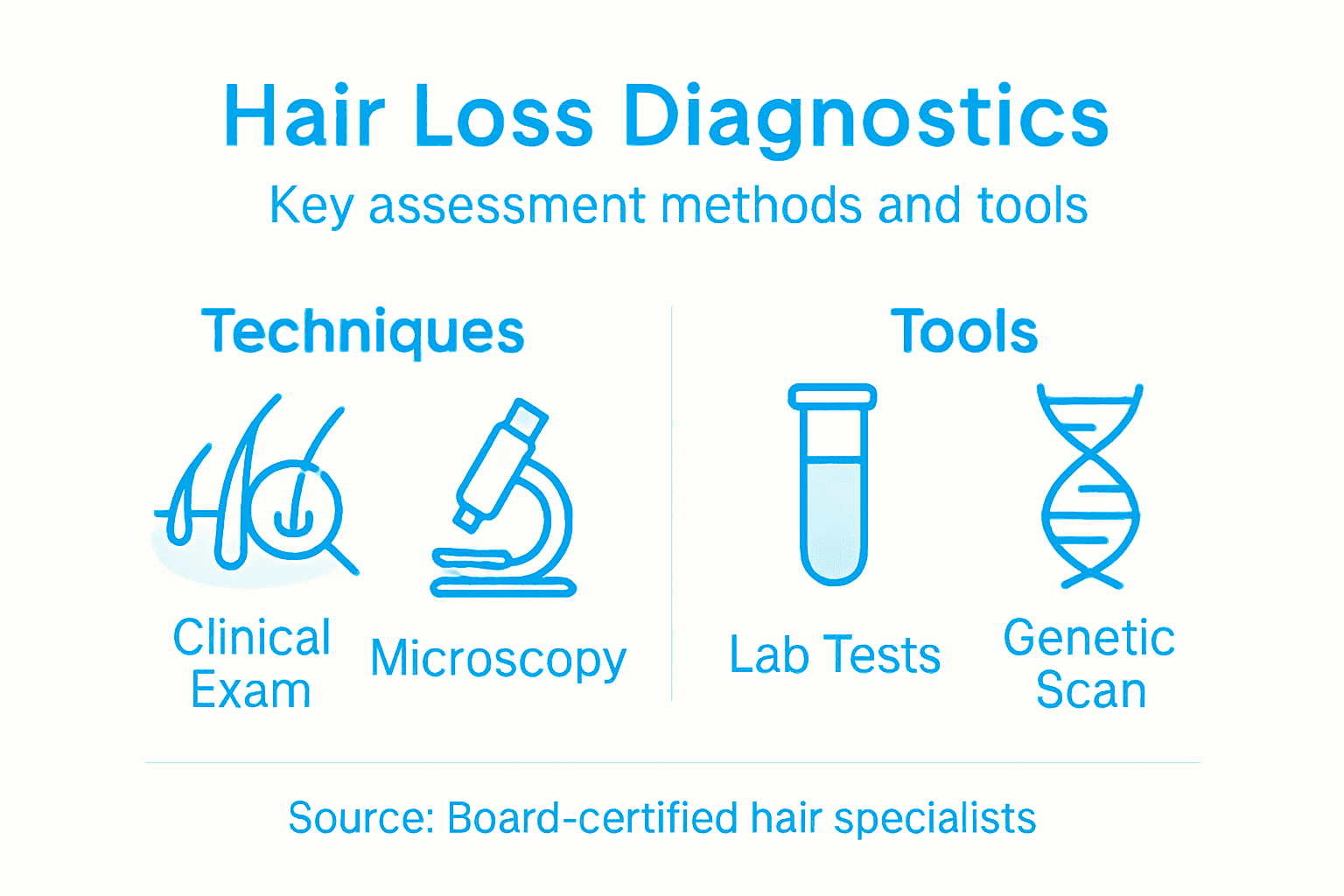
Genetic testing and advanced laboratory investigations have emerged as powerful diagnostic tools in modern hair health assessment. These methods can identify genetic predispositions to hair loss, hormonal imbalances, nutritional deficiencies, and autoimmune conditions that might impact hair growth. Blood tests can reveal crucial markers like iron levels, thyroid function, and hormonal profiles that directly influence hair health. Additionally, some specialists now incorporate sophisticated imaging technologies and computer-assisted diagnostic tools that can track hair growth patterns, predict potential future hair loss, and monitor treatment effectiveness over time.
Here's how common hair loss diagnostic methods differ in focus and invasiveness:
| Diagnostic Technique | Purpose | Invasiveness |
|---|---|---|
| Trichoscopy | Examine scalp/hair at high magnification | Non-invasive |
| Hair Shaft Microscopy | Analyze hair structure and weakness | Non-invasive |
| Scalp Biopsy | Assess deeper scalp physiology | Minimally invasive |
| Genetic Testing | Identify genetic hair loss risks | Non-invasive |
Pro tip: Request a comprehensive diagnostic workup that includes multiple assessment methods to ensure the most accurate understanding of your unique hair health condition.
Personalized Treatment Plans and Modern Technologies
Personalized treatment in hair health represents a revolutionary approach that moves far beyond traditional one-size-fits-all solutions. Targeted therapies based on individual diagnosis enable hair specialists to develop precise treatment strategies that address the unique underlying causes of hair loss for each patient.
Modern hair treatment technologies incorporate a wide range of advanced interventions tailored to specific patient needs. Topical treatments now utilize sophisticated formulations that can penetrate deeper into the scalp, delivering active ingredients directly to hair follicles. Regenerative therapies such as platelet-rich plasma (PRP) injections and stem cell treatments offer innovative approaches to stimulating hair growth by leveraging the body's natural healing mechanisms. Laser therapies and low-level light treatments provide non-invasive options for improving hair density and scalp health, using targeted light wavelengths to stimulate cellular regeneration and improve blood circulation.
Genetic and molecular analysis has transformed personalized hair treatment approaches, allowing specialists to develop extremely precise interventions. Advanced diagnostic techniques now enable practitioners to identify specific genetic markers, hormonal imbalances, and cellular-level changes that contribute to hair loss. This means treatment plans can be constructed with unprecedented accuracy, considering factors like individual genetic predisposition, metabolic profile, and unique physiological characteristics. Some cutting-edge clinics now use artificial intelligence and machine learning algorithms to predict treatment outcomes and continuously refine therapeutic approaches based on individual patient responses.
The table summarizes treatment types, how they work, and typical advantages:
| Treatment Type | Core Mechanism | Main Advantage |
|---|---|---|
| Topical Solutions | Deliver actives to follicles | Easy, non-surgical use |
| Regenerative Therapies | Stimulate natural hair growth | Promotes healing response |
| Laser/Light Therapy | Boost cellular activity | Non-invasive, painless |
| Surgical Restoration | Transplant hair follicles | Restores density quickly |
Pro tip: Request a comprehensive genetic and molecular analysis as part of your initial hair health assessment to unlock the most targeted and effective treatment strategy possible.
Risks, Costs, and Choosing the Right Specialist
Navigating the complex landscape of hair loss treatment requires carefully understanding potential risks, financial considerations, and the critical process of selecting an appropriate specialist. Specialized hair clinics offer critical insights into managing both medical and financial aspects of hair loss treatment, emphasizing the importance of comprehensive, patient-centered care.
Financial risks in hair loss treatment can be substantial, with costs varying widely depending on the specific condition, treatment approach, and specialist's expertise. Treatment expenses can range from relatively affordable topical solutions to more expensive interventions like surgical hair restoration, which might cost several thousand dollars. Insurance coverage for hair loss treatments remains inconsistent, with many procedures classified as cosmetic and thus not covered by standard health insurance plans. Patients should carefully review their insurance policies and discuss potential out-of-pocket expenses during initial consultations.
Choosing the right specialist involves a multifaceted evaluation of professional credentials, experience, and approach to patient care. Key considerations include board certification, specialized training in hair restoration, track record of successful treatments, and the ability to provide a comprehensive, personalized approach. Potential patients should seek specialists who offer thorough diagnostic processes, demonstrate expertise in multiple treatment modalities, and maintain a holistic perspective that addresses both physical and psychological aspects of hair loss. Research the specialist's background, review patient testimonials, and consider scheduling initial consultations with multiple professionals to compare their approaches and recommendations.
Pro tip: Request a detailed, written treatment plan with transparent cost breakdowns and potential alternative options before committing to any hair loss intervention.
Discover Personalized Hair Loss Solutions Tailored For You
Hair loss can be challenging both physically and emotionally as the article highlights. You may feel overwhelmed trying to understand complex diagnostic options like trichoscopy or genetic testing, and unsure about finding treatments that match your unique hair health profile. The key is personalized insight based on your individual hair condition and genetic factors – exactly what specialists recommend for effective care.
MyHair.ai uses advanced AI technology to analyze detailed hair scans, helping you uncover the root causes of your hair loss while tracking changes over time. Our platform offers tailored product recommendations and insights that support your journey toward healthier hair. Whether you need guidance on non-invasive treatments or want to understand how regenerative therapies might help, MyHair.ai provides a clear path forward.
Explore personalized hair health analysis now and take control of your hair loss with evidence-based insights used by specialists today.
Start your personalized hair assessment today at MyHair.ai and receive the expert guidance you deserve. Your healthier hair journey begins here.
Frequently Asked Questions
What can I expect during my first consultation with a hair specialist?
During your first consultation, a hair specialist will conduct a thorough assessment of your hair and scalp health, review your medical history, and may perform diagnostic tests to determine the underlying causes of your hair loss. They will then discuss potential treatment options tailored to your unique needs.
How do hair specialists diagnose hair loss conditions?
Hair specialists use several diagnostic methods, including clinical examinations, trichoscopy (high magnification imaging), hair shaft microscopy, and sometimes scalp biopsies. These techniques help them identify the specific type of hair loss and its possible causes, enabling them to create targeted treatment plans.
What types of treatments do hair specialists recommend for hair loss?
Hair specialists can recommend a variety of treatments depending on the diagnosis, including topical solutions, regenerative therapies (like PRP injections), laser therapies, and surgical restoration options like hair transplantation. Each treatment is tailored to the individual’s specific hair health condition.
How important is psychological support when dealing with hair loss?
Psychological support is crucial when dealing with hair loss, as it can significantly impact self-esteem and emotional well-being. Hair specialists often incorporate emotional support into their treatment plans to help patients cope with the psychological aspects of hair loss and rebuild their confidence.