Blog
Learning Materials
How to use natural hair treatments for hair loss
Updated: April 11, 2026
TL;DR:
- Consistent use of natural ingredients like rosemary oil and pumpkin seed oil can slow hair loss.
- Effective natural treatments require patience of at least 3 to 6 months and proper application.
- Personalization and tracking, including AI tools, enhance the success of natural hair regrowth strategies.
Watching your hair thin out is frustrating, and the sheer number of "miracle" natural remedies online makes it even harder to know where to start. The good news: a growing body of research shows that specific natural ingredients, used consistently and correctly, can genuinely slow hair loss and support regrowth. Rosemary oil, for instance, matches 2% minoxidil in hair count improvement after six months for androgenetic alopecia. This guide covers what actually works, how to apply it step by step, how to avoid the most common mistakes, and how to use AI technology to track your progress and personalize your routine.
Table of Contents
- What to know before starting natural hair treatments
- Step-by-step: How to use top natural treatments for hair loss
- Troubleshooting and avoiding common mistakes in natural hair care
- How to track results and personalize your hair care approach
- The real deal with natural hair loss treatments: What most guides leave out
- Get personalized hair care guidance with AI tech
- Frequently asked questions
Key Takeaways
| Point | Details |
|---|---|
| Science-backed naturals | Rosemary oil, pumpkin seed oil, and saw palmetto are proven to help hair loss when used consistently. |
| Consistency is key | Daily application for at least 3–6 months is required to see real results from natural treatments. |
| Track your progress | Monitor hair changes with photos, logs, or AI technology to personalize and improve your results. |
| Mix methods for success | Combining natural and science-based approaches often delivers the best outcomes for hair loss. |
What to know before starting natural hair treatments
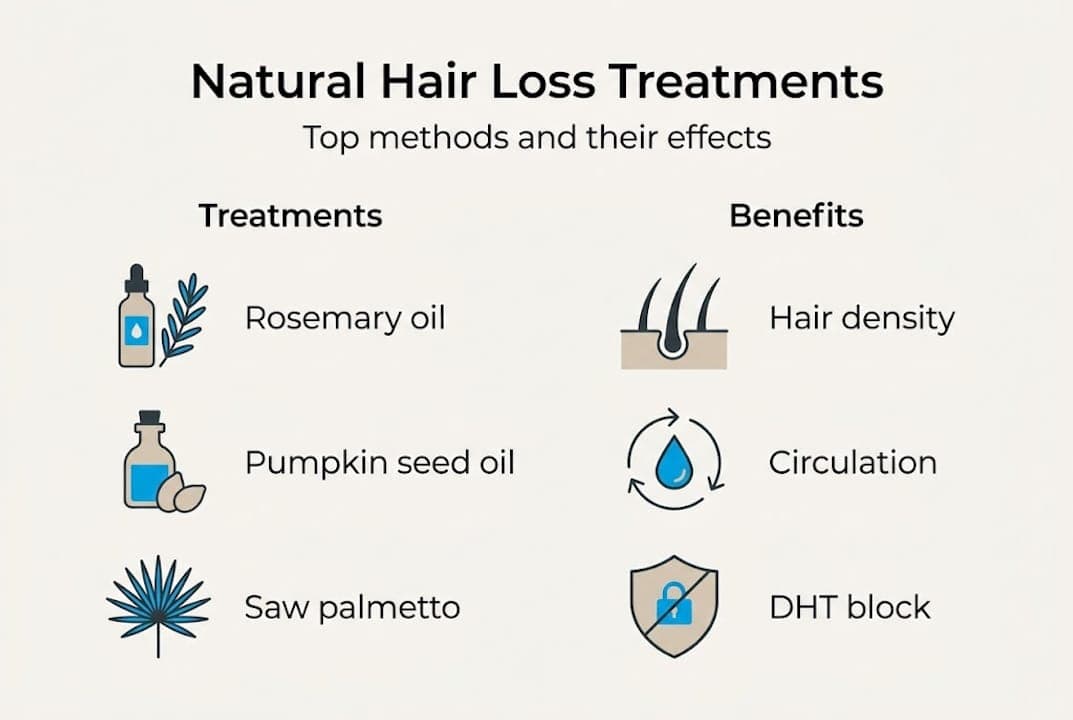
Natural hair treatments are not magic, but they are not useless either. Most effective ones work through a few key biological pathways: blocking DHT (the hormone that shrinks hair follicles), improving blood flow to the scalp, reducing inflammation, and nudging hair follicles back into an active growth phase. Natural treatments targeting DHT, circulation, and inflammation require real consistency to produce results. Think months, not weeks.
Before you spend money on products, understand the evidence landscape. Most herbal remedies are limited by study design and short follow-up periods, which means promising early results do not always hold up at scale. That said, a handful of ingredients have enough clinical backing to be worth your time, especially if you are dealing with treating androgenetic alopecia, the most common form of hair loss in both men and women.
Here is a quick overview of what the evidence currently supports:
| Ingredient | Mechanism | Evidence level | Time to results |
|---|---|---|---|
| Rosemary oil | Circulation, DHT inhibition | Strong (RCT) | 3 to 6 months |
| Pumpkin seed oil | DHT inhibition | Moderate (RCT) | 3 to 6 months |
| Saw palmetto | DHT inhibition | Moderate (clinical) | 3 to 6 months |
| Caffeine | Follicle stimulation | Moderate | 3 to 4 months |
Before starting any new treatment, keep these requirements in mind:
- Patch test first. Apply a small amount to your inner wrist and wait 24 hours before scalp use.
- Check for drug interactions. Saw palmetto, for example, can interact with blood thinners.
- Commit to at least 3 months. Hair cycles are long; shorter trials tell you nothing useful.
- Use research-backed ingredients. Not every "natural" product has evidence behind it.
- Natural does not mean risk-free. Allergic reactions and scalp irritation are real possibilities.
Pro Tip: Keep a simple notes app log of what you apply, when, and any scalp reactions. This data becomes invaluable when you start tracking results later.
Step-by-step: How to use top natural treatments for hair loss
Once you understand the groundwork, applying these treatments correctly is what separates real results from wasted effort. Here is how to use the three most evidence-backed options.
Step 1: Choose your treatment(s)
You do not need to use all three at once. Start with one, assess tolerance, then layer if needed.
Step 2: Apply rosemary oil correctly
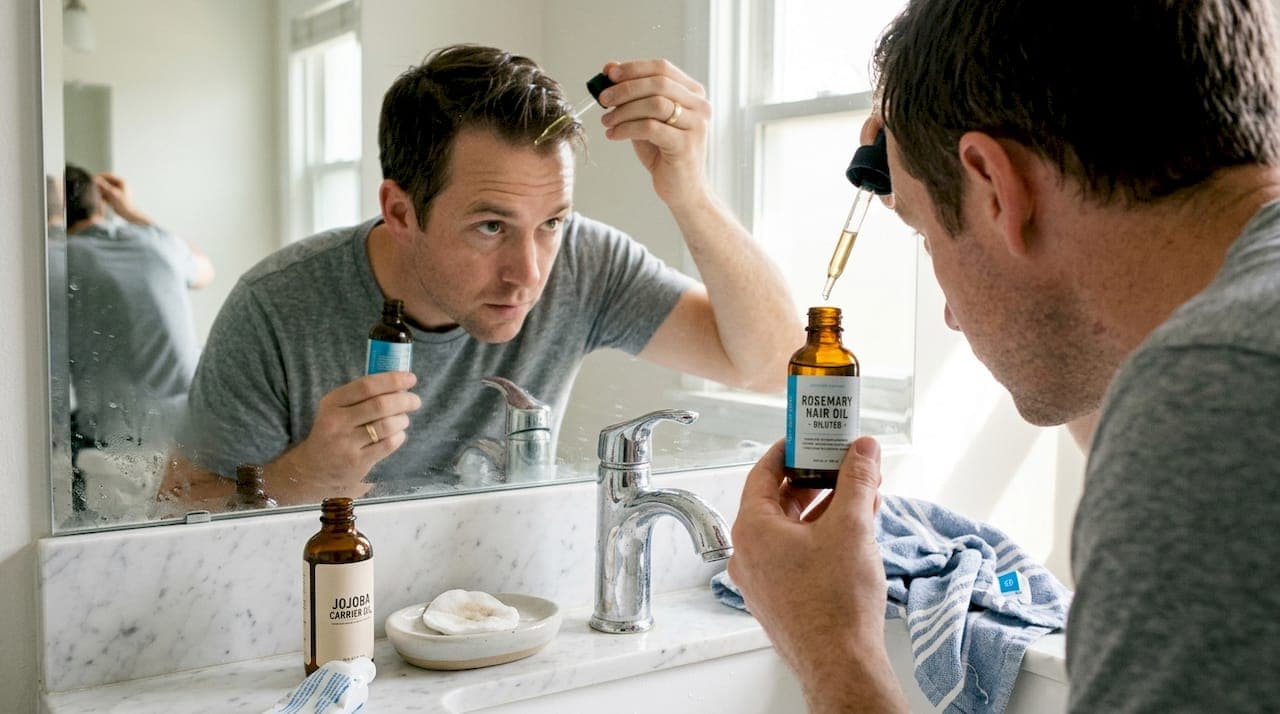
Rosemary oil applied topically performs similarly to 2% minoxidil for androgenetic alopecia after six months. Mix 2 to 3 drops of pure rosemary essential oil into a carrier oil (jojoba or coconut work well), massage into the scalp for 2 minutes, and leave on for at least 30 minutes before washing. Do this daily or at minimum five times per week. You can also find more options in our guide to natural oils for hair loss.
Step 3: Add pumpkin seed oil orally
Pumpkin seed oil at 400mg daily increased hair count by 40% over 24 weeks in clinical trials. Take one standardized capsule with a meal to improve absorption. Do not exceed the recommended dose.
Step 4: Consider saw palmetto
Saw palmetto extract inhibits DHT and shows improved hair density in clinical studies. It is available both topically (in serums) and orally (160 to 320mg daily). Check with your doctor before oral use if you take any medications. For more supplement options, see our breakdown of top hair growth supplements.
Here is a quick comparison to keep your routine organized:
| Treatment | Form | Frequency | Primary effect |
|---|---|---|---|
| Rosemary oil | Topical | Daily | Circulation, DHT block |
| Pumpkin seed oil | Oral capsule | Daily | DHT inhibition |
| Saw palmetto | Oral or topical | Daily | DHT inhibition |
Pro Tip: Apply your topical treatments right after a warm shower. The heat opens up scalp pores and improves absorption significantly.
Troubleshooting and avoiding common mistakes in natural hair care
Even the best ingredients fail when applied inconsistently or incorrectly. Here are the most common mistakes people make and how to fix them.
Common pitfalls to avoid:
- Skipping applications. Missing more than two sessions per week breaks the consistency your follicles need. Set a phone reminder.
- Expecting fast results. Patience and adherence are essential because most herbal remedies lack large, long-term studies, and real change takes time.
- Over-applying oils. More is not better. Excess product can clog follicles and worsen scalp health.
- Ignoring scalp condition. A flaky, inflamed, or oily scalp reduces how well any treatment absorbs. Address scalp health first with a thickening shampoo for hair loss.
- Layering incompatible ingredients. Mixing strong essential oils without proper dilution or combining multiple DHT blockers without guidance can irritate the scalp.
"The scalp is skin. Treat it with the same care you would your face: gently, consistently, and with ingredients you have actually researched."
How to spot and handle allergic reactions:
Watch for redness, itching, swelling, or a burning sensation within 24 to 48 hours of application. If any of these appear, stop use immediately, rinse thoroughly with cool water, and avoid the ingredient for at least two weeks. If symptoms persist, see a dermatologist.
When to change your strategy:
If you have used a treatment correctly for four months with zero change, it may not be the right fit for your hair loss type. Consider switching formulations or exploring natural products for growth suited to your specific pattern.
Pro Tip: Never mix undiluted essential oils directly on your scalp. Always use a carrier oil at a 1 to 2% concentration (about 2 drops per teaspoon of carrier oil).
How to track results and personalize your hair care approach
Feeling like your hair looks better is not the same as knowing it is getting better. Objective tracking is what turns a hopeful routine into a data-driven strategy.
Four ways to measure real progress:
- Monthly photos. Take photos in the same lighting, same angle, same time of day. Compare at 30, 60, and 90 days.
- Hair count method. Count hairs shed during a single wash session and log the number weekly. A decrease over time is a positive sign.
- Texture and strength log. Note whether hair feels thicker, breaks less, or has improved shine. These are early indicators before visible density changes.
- Scalp condition check. Rate scalp oiliness, flakiness, and sensitivity weekly on a simple 1 to 5 scale.
Here is a simple monthly tracking template:
| Week | Shed count | Scalp rating | Texture notes | Photo taken |
|---|---|---|---|---|
| Week 1 | Baseline | Baseline | Baseline | Yes |
| Week 4 | Log number | 1 to 5 | Brief note | Yes |
| Week 8 | Log number | 1 to 5 | Brief note | Yes |
| Week 12 | Log number | 1 to 5 | Brief note | Yes |
For context, clinical studies on pumpkin seed oil showed a 40% increase in hair count over 24 weeks. That is a meaningful benchmark: if you are not seeing any directional improvement by week 12, your regimen likely needs adjusting.
This is where AI-powered tools become genuinely useful. AI-based analysis can individualize hair loss diagnosis and treatment selection far beyond what a mirror and a notebook can do. Platforms that scan your scalp and hair density can detect changes too subtle for the naked eye and flag patterns that suggest a specific hair loss type. Pairing that data with your healthy hair routine steps helps you make smarter adjustments faster.
The key principle: treat your hair care like a personal experiment. Adjust one variable at a time, track the outcome, and iterate.
The real deal with natural hair loss treatments: What most guides leave out
Here is something most natural hair care articles will not tell you: natural treatments alone are rarely enough for moderate to advanced hair loss. They are powerful tools, but they work best as part of a broader strategy.
Minoxidil 5% outperforms most natural options for male androgenetic alopecia in head-to-head comparisons. That does not mean naturals are useless. It means they are most effective as adjuncts, not replacements. The people who see the best results combine evidence-backed natural ingredients with professional guidance, consistent tracking, and sometimes pharmaceutical support.
Personalization is the other piece most guides skip. Hair loss is not one condition. It is dozens of overlapping patterns influenced by genetics, hormones, diet, stress, and scalp health. A regimen that works brilliantly for one person may do nothing for another. The best options for androgenetic alopecia depend entirely on the individual. AI-powered analysis is changing this by making personalized, data-driven hair care accessible without a clinic visit. That shift matters.
Get personalized hair care guidance with AI tech
You now have a solid framework: the right ingredients, the right application methods, a tracking system, and a realistic perspective on what natural treatments can and cannot do. The next step is making it personal.

MyHair.ai uses advanced AI to analyze your scalp and hair health, giving you a personalized hair score and actionable recommendations based on your unique pattern. Instead of guessing which products fit your situation, you get data-backed guidance tailored to you. Get your AI hair score in minutes, or start with a full hair analysis onboarding to map your hair health from the ground up. Stop guessing. Start knowing.
Frequently asked questions
Which natural ingredient is most effective for hair loss?
Rosemary oil, pumpkin seed oil, and saw palmetto have the strongest clinical backing, with studies showing improved hair count and density in androgenetic alopecia, and pumpkin seed oil boosting growth in controlled trials.
How long does it take to see results from natural hair treatments?
Most people need at least 3 to 6 months of consistent use, as rosemary oil shows results comparable to minoxidil only after six months of regular application.
Can natural treatments replace pharmaceutical solutions for hair loss?
Not for moderate to advanced hair loss. Minoxidil outperforms natural OTCs in clinical comparisons, making naturals most valuable as supportive adjuncts rather than standalone replacements.
Are there risks or side effects with natural hair treatments?
Yes. Natural treatments can cause skin sensitivity or adverse reactions, so patch testing and checking for allergies or drug interactions before starting is essential.