Blog
Learning Materials
M-shaped hairline in men: causes and solutions
Updated: April 12, 2026
TL;DR:
- An M-shaped hairline involves temple recession with minimal center loss, common early male pattern baldness.
- DHT sensitivity and lifestyle factors like stress and traction hair loss influence progression.
- Proven treatments include minoxidil, finasteride, combination therapy, and advanced options like PRP and hair transplants.
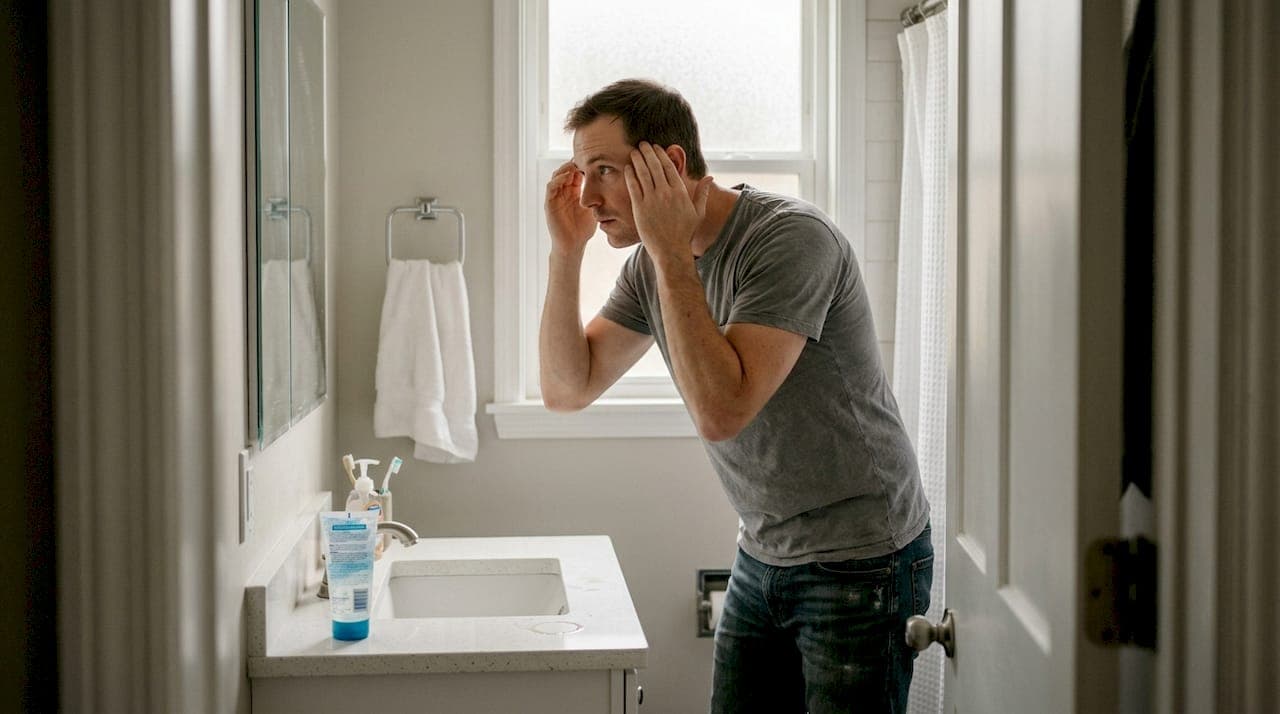
Not every receding hairline tells the same story. Many men notice their temples pulling back first, creating a distinctive M shape, and immediately assume the worst. But the M-shaped hairline is one of the most misunderstood patterns in male hair loss. It can look alarming, yet it often responds well to treatment when caught early. This article breaks down exactly what causes this pattern, how it differs from other hairline types, and which evidence-based solutions actually move the needle. Whether you're just noticing the first signs or have been dealing with this for years, there's a clear path forward.
Table of Contents
- What is an M-shaped hairline?
- Why does an M-shaped hairline appear?
- Evidence-based treatments and home solutions
- Advanced therapies: PRP, clinical treatments, and realistic expectations
- What most men get wrong about M-shaped hairlines
- How MyHair can support your hairline journey
- Frequently asked questions
Key Takeaways
| Point | Details |
|---|---|
| Understand your hairline | Knowing the specifics of an M-shaped hairline helps target appropriate solutions. |
| Prioritize evidence-based treatments | Combination minoxidil and finasteride therapy often yields the best results backed by clinical studies. |
| Choose the right approach | Advanced therapies like PRP may boost satisfaction, but results and costs vary, so set realistic expectations. |
| Protect and optimize | Lifestyle changes, early intervention, and scalp care contribute to slower recession and healthier regrowth. |
| Personalize your plan | Seek customized guidance using tools like AI assessments for the most effective hair regrowth strategies. |
What is an M-shaped hairline?
An M-shaped hairline forms when the hairline recedes at both temples while the center stays relatively intact, creating two peaks that resemble the letter M. It's one of the most recognizable early signs of male hair thinning, and it's far more common than most men realize.
Visually, it's easy to confuse with a few other hairline types. A normal hairline in men typically runs in a relatively straight or slightly curved line across the forehead. A widow's peak has a distinct downward point at the center but doesn't necessarily recede at the temples. A general receding hairline moves back more uniformly. The M shape is unique because the recession is concentrated at the temples first, which gives it that sharp, angular look.
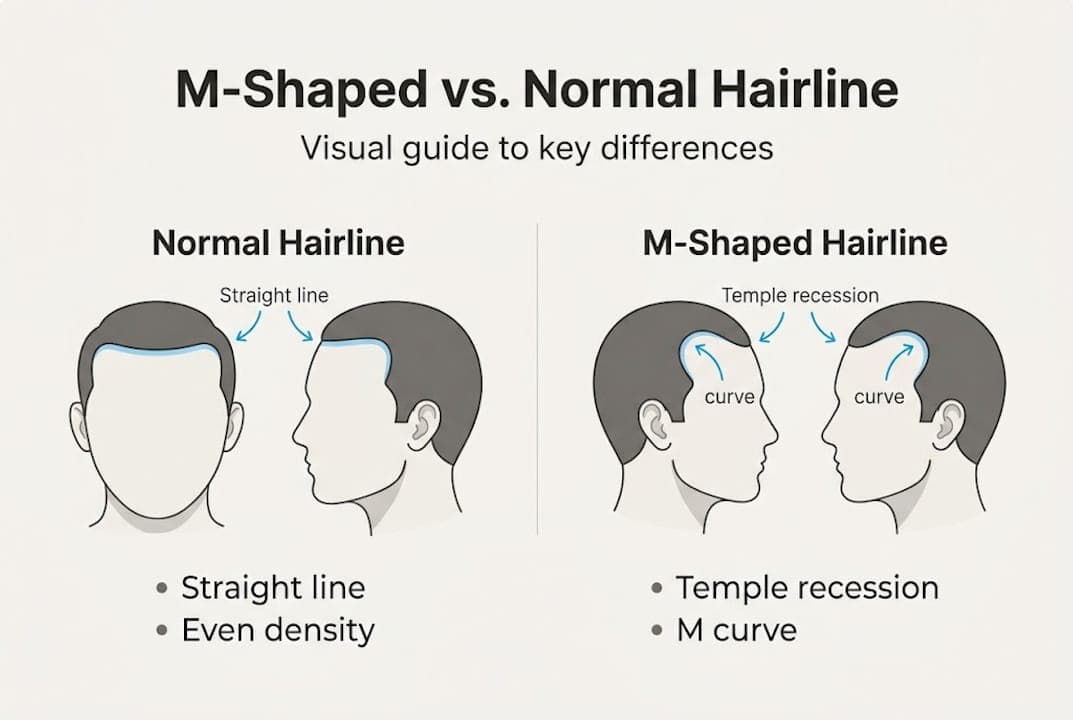
Age plays a significant role in when and how this pattern develops. Most men begin noticing temple recession in their 20s or 30s, though it can start earlier. The progression varies widely. Some men stay at the M stage for years, while others move into more advanced recession within a short window.
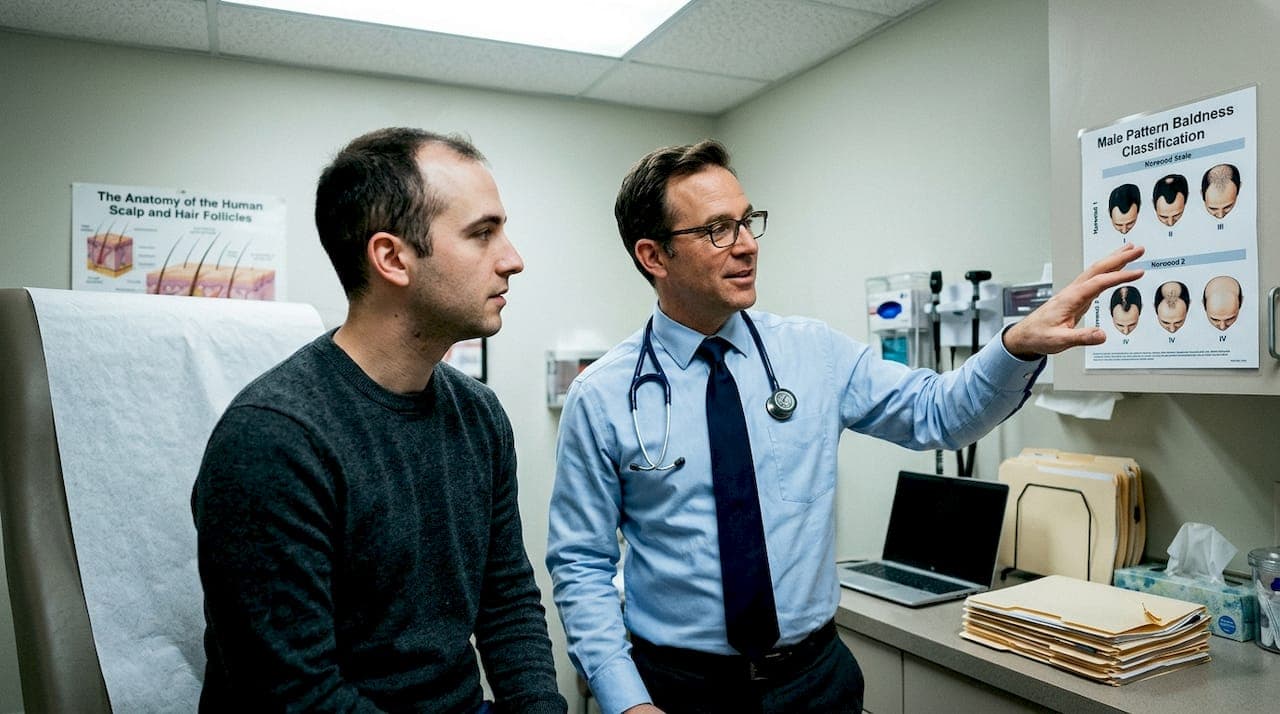
Understanding where you fall on the spectrum matters. The Hamilton-Norwood scale classifies male hair loss from Type I (minimal recession) through Type VII (near-total loss). An M-shaped hairline typically sits at Type II or III, which is actually good news because early-stage patterns respond best to treatment. The primary driver is genetic DHT sensitivity, which causes follicle miniaturization over time.
Here's a quick breakdown of how the M-shaped hairline compares to other common types:
| Hairline type | Temple recession | Center recession | Typical onset |
|---|---|---|---|
| Straight | None | None | Stable |
| Widow's peak | Mild | Pointed center | Varies |
| M-shaped | Significant | Minimal | 20s to 30s |
| Fully receding | Significant | Significant | 30s and beyond |
Key characteristics of an M-shaped hairline include:
- Temple recession that is more pronounced than center recession
- Bilateral symmetry, meaning both sides recede at roughly the same rate
- Gradual progression that can slow or accelerate depending on genetics and lifestyle
- DHT-driven follicle miniaturization as the primary biological mechanism
Understanding your specific male hairline patterns is the first step toward choosing the right intervention. Treating a widow's peak the same way you'd treat an M-shaped hairline won't get you the best results.
Why does an M-shaped hairline appear?
The root cause of an M-shaped hairline is largely biological. Dihydrotestosterone, or DHT, is a hormone derived from testosterone that binds to receptors in hair follicles. In men who are genetically sensitive to it, DHT causes follicles to shrink gradually until they stop producing visible hair. The temples tend to be hit first because follicles in that area are often more sensitive to DHT than those at the crown or back of the scalp.
Genetics determines most of your risk. If your father or maternal grandfather had significant temple recession, your odds increase substantially. But genetics isn't the only factor. Several lifestyle and environmental triggers can speed things up considerably.
Here's a direct comparison of genetic versus non-genetic factors:
| Factor | Type | Impact level | Reversible? |
|---|---|---|---|
| DHT sensitivity | Genetic | High | Partially |
| Age-related changes | Biological | Moderate | No |
| Chronic stress | Lifestyle | Moderate | Yes |
| Tight hairstyles | Lifestyle | Moderate | Yes |
| Poor scalp health | Lifestyle | Low to moderate | Yes |
Chronic stress triggers a condition called telogen effluvium, where a large number of follicles shift into the resting phase at the same time, causing noticeable shedding. While this is usually temporary, repeated stress cycles can compound genetic hair loss and make your M-shape more pronounced faster.
Tight hairstyles are another underrated factor. Constant tension from tight braids, ponytails, or cornrows causes traction alopecia, a form of mechanical hair loss that specifically targets the hairline. If you're already genetically prone to temple recession, repeated tension in that area accelerates the process significantly.
A proper hair loss assessment can help you figure out how much of your recession is genetic versus lifestyle-driven. That distinction changes your treatment strategy entirely.
Pro Tip: If you've recently gone through a major stressor and noticed sudden shedding around your temples, give it three to six months before assuming it's permanent. Stress-related shedding often reverses once the trigger is resolved.
Steps to reduce lifestyle-driven hairline recession:
- Switch to looser hairstyles that don't pull on the temples
- Manage stress through consistent sleep and exercise
- Keep your scalp clean and well-moisturized to support follicle health
- Avoid harsh chemical treatments near the hairline
- Get a professional assessment to separate genetic from lifestyle factors
Understanding what causes male hairlines to change gives you real leverage over the parts you can actually control.
Evidence-based treatments and home solutions
Once you understand the cause, choosing the right treatment becomes much more straightforward. The two most proven options are minoxidil and finasteride, both FDA-approved and backed by decades of clinical research.
Minoxidil works by widening blood vessels around the follicle, increasing nutrient and oxygen delivery. The 5% topical formula is the standard for men and is applied directly to the scalp once or twice daily. Results typically become visible after three to six months of consistent use. It doesn't block DHT, so it works best when combined with something that does.
Finasteride blocks the enzyme that converts testosterone to DHT, reducing DHT levels in the scalp by roughly 70%. It's taken orally as a 1mg daily tablet, though topical versions are increasingly popular for men concerned about systemic side effects. It works best at slowing progression and can produce modest regrowth in many men.
The real breakthrough comes from combining both. A meta-analysis in Frontiers in Medicine found that combination therapy delivers superior results, including +9.22 hairs per cm² in density and +2.26 micrometers in shaft diameter, compared to either treatment alone. That's a meaningful difference you can see.
For men exploring using minoxidil for hairlines, consistency is everything. Missing applications regularly significantly reduces effectiveness.
Home solutions and lifestyle changes that support treatment:
- Scalp massage: Five to ten minutes daily can increase blood flow and may enhance minoxidil absorption
- Biotin and zinc: Nutritional deficiencies can worsen shedding, though supplements only help if you're actually deficient
- Low-level laser therapy (LLLT): At-home laser combs and caps have modest evidence supporting their use as an add-on
- Stress reduction: Directly reduces telogen effluvium-related shedding
For a broader view of hair regrowth treatments for men, it's worth reviewing all available options before committing to a single approach. The best outcomes usually come from layering treatments rather than relying on one alone. You can also explore styling tips for M-shaped hairlines to manage your appearance while treatments take effect.
Advanced therapies: PRP, clinical treatments, and realistic expectations
If home treatments haven't delivered the results you hoped for, or if your recession has progressed significantly, advanced clinical options are worth considering.
Platelet-rich plasma (PRP) therapy involves drawing your own blood, concentrating the growth factors, and injecting them into the scalp to stimulate follicle activity. It sounds intense, but it's a well-tolerated outpatient procedure. The evidence, however, is mixed. A meta-analysis in Aesthetic Plastic Surgery found that PRP sometimes matches minoxidil for hair density outcomes but shows higher patient satisfaction rates, possibly due to the hands-on clinical experience and the perception of a more active intervention.
PRP is not a replacement for proven medical therapies. It works best as a complement to minoxidil or finasteride, not as a standalone solution.
Other advanced options include:
- Microneedling: Creates micro-injuries in the scalp that trigger a healing response and may enhance topical treatment absorption by up to 4 times
- Low-level laser therapy (clinical grade): More powerful than home devices, with stronger evidence for density improvement
- Hair transplant surgery: The most permanent solution, involving follicle grafting from donor areas to the temples. Best for men with stable recession and realistic expectations
How to decide if a clinical treatment is right for you:
- Confirm your hair loss pattern with a professional or AI-based scan
- Check whether you've maximized non-invasive options first
- Research the specific clinic's outcomes and patient reviews
- Set a realistic timeline. Most clinical treatments take 6 to 12 months to show full results
Reviewing all male pattern baldness treatments before committing to an expensive procedure is a smart move. And if you're actively looking, finding a hair loss clinic with experience in early-stage hairline recession specifically will give you better outcomes than a generalist. For the full picture on advanced hair regrowth options, compare clinical evidence across methods before spending.
What most men get wrong about M-shaped hairlines
Here's the uncomfortable truth: most men approach hairline treatment with an all-or-nothing mindset. They want full restoration, and when that doesn't happen, they feel like the treatment failed. But that framing sets you up for frustration.
Hair loss treatment is maintenance, not a cure. The goal isn't to turn back the clock to age 18. It's to slow progression, preserve what you have, and ideally regrow some density in thinning areas. That's a realistic and genuinely achievable outcome for most men.
Combination approaches consistently outperform single treatments. Topical finasteride-minoxidil combinations are now preferred for better efficacy with fewer systemic side effects, and layering in scalp care, stress management, and styling adjustments amplifies those results further.
The men who see the best long-term outcomes are the ones who personalize their hairline approach based on their specific pattern, genetics, and lifestyle rather than copying what worked for someone else. Self-confidence built on a realistic, consistent plan beats chasing perfection every time.
How MyHair can support your hairline journey
Knowing what to do is one thing. Knowing what to do for your specific hairline is another challenge entirely.
MyHair's AI hair analysis tool scans your scalp and hairline to identify your exact pattern, track changes over time, and generate personalized recommendations based on your actual data, not generic advice. It's the difference between guessing and knowing. When you get started with hair analysis, you'll receive a detailed breakdown of your current hair health. You can also check your personalized hair score to understand where you stand and what your best next steps are. Personalized data leads to better decisions and better outcomes.
Frequently asked questions
Is an M-shaped hairline the same as male pattern baldness?
No. An M-shaped hairline is typically an early stage of DHT-driven hair loss but doesn't guarantee full baldness will follow, especially with early treatment.
Are there ways to reverse an M-shaped hairline?
Yes, partially. FDA-approved minoxidil and finasteride can slow or partially reverse recession, with the best results seen when treatment starts early.
Is PRP a better choice than minoxidil or finasteride?
Not necessarily. PRP shows mixed density results compared to minoxidil or finasteride, though patients often report higher satisfaction, making it a useful complement rather than a replacement.
What lifestyle factors worsen an M-shaped hairline?
Chronic stress, aging, poor scalp hygiene, and tight hairstyles causing traction can all accelerate temple recession beyond what genetics alone would cause.