Blog
Learning Materials
Moroccan argan oil for hair: 5 real benefits in 2026
Updated: April 2, 2026
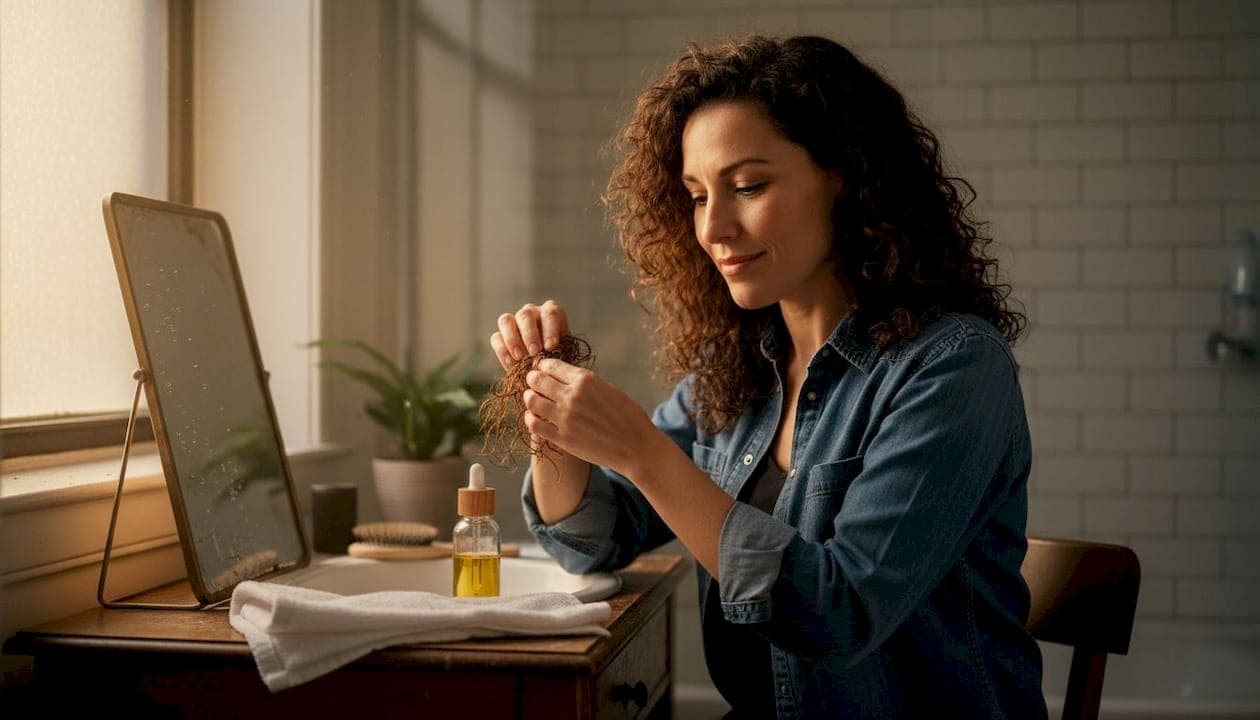
Not all hair oils are created equal. Walk into any beauty store and you'll find shelves packed with products claiming to transform your hair, but most of them share little more than a bottle shape. Moroccan argan oil is different, and not just because of the marketing. It comes from a single tree species, Argania spinosa, grown only in southwestern Morocco, and it's hand-produced by women's cooperatives using methods passed down through generations. This article cuts through the noise to explain exactly what argan oil is, what's inside it, what it genuinely does for your hair, and how to use it without wasting a drop.
Table of Contents
- How Moroccan argan oil is made: From tree to bottle
- What's in argan oil? The science behind its hair benefits
- Real benefits: What Moroccan argan oil actually does for your hair
- How to use argan oil for the best results
- Our take: Why Moroccan argan oil deserves its reputation—minus the hype
- Take your hair care to the next level with personalized analysis
- Frequently asked questions
Key Takeaways
| Point | Details |
|---|---|
| Moroccan origin is key | Authentic argan oil is traditionally produced and nutrient-rich only when sourced in Morocco. |
| Nutrients support hair health | High levels of vitamin E and fatty acids deliver moisture, shine, and scalp balance. |
| Breakage prevention, not regrowth | Argan oil helps retain length by reducing breakage but doesn’t clinically regrow new hair. |
| Application matters | Proper use boosts benefits, while overuse can weigh down hair or cause buildup. |
| Integrate into a routine | Argan oil works best as part of a holistic hair care plan tailored to your type and goals. |
How Moroccan argan oil is made: From tree to bottle
Moroccan argan oil starts with a tree that grows nowhere else on earth. The Argania spinosa is native to a specific region of southwestern Morocco, and the fruit it produces is the foundation of one of the most labor-intensive oils in the beauty world. Understanding how it's made explains why authentic argan oil costs more than most alternatives and why that price often reflects real quality.
Here's what the traditional production process looks like:
- Harvesting: Women collect ripe argan fruits by hand from the trees or the ground.
- Drying: The fruits are sun-dried to loosen the outer flesh.
- Cracking: The hard nut inside is cracked open (by hand or stone) to retrieve the kernels.
- Roasting (for culinary oil only): Cosmetic-grade kernels are kept raw.
- Cold pressing: Kernels are ground into a paste and pressed to release the oil without heat or solvents.
- Filtering: The raw oil is filtered to remove solids.
This is not a factory shortcut. It takes roughly 30 to 40 kilograms of argan fruit to produce just one liter of oil. That's an entire tree's seasonal yield for a single bottle. The UNESCO-protected process uses no heat or chemicals, which is critical because heat destroys the delicate fatty acids and antioxidants that make argan oil effective for hair.
| Feature | Authentic Moroccan argan oil | Mass-produced alternatives |
|---|---|---|
| Origin | Southwestern Morocco only | Various countries |
| Extraction | Cold-pressed, no chemicals | Often solvent-extracted |
| Nutrient retention | High (heat-free process) | Variable or low |
| UNESCO protection | Yes | No |
| Cooperative production | Women's cooperatives | Industrial facilities |
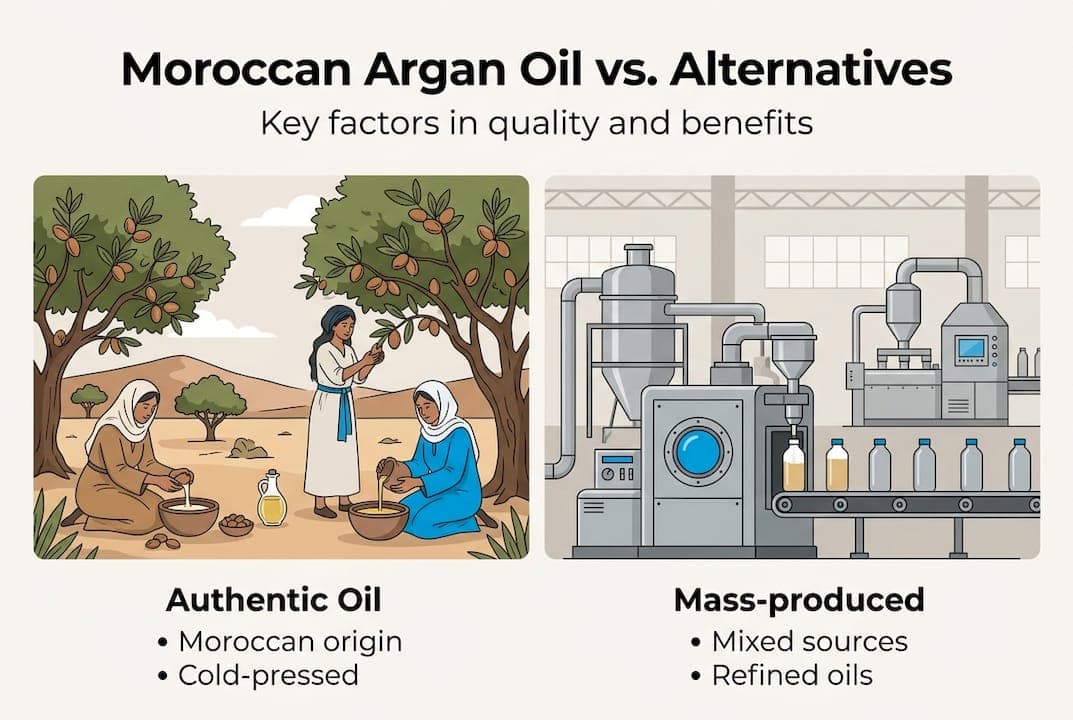
The women's cooperatives that produce argan oil are also an important part of the story. These groups provide economic independence for Berber women in rural Morocco, and buying authentic oil supports that system directly. If a product doesn't list Morocco as the origin or skips the cold-pressed label, you're likely getting something diluted or processed differently.
For your hair, this matters because a Moroccan argan oil hair mask made with authentic cold-pressed oil delivers the full spectrum of nutrients. Cheaper alternatives may carry the name but not the results. Learning to read labels is your first step toward getting the real thing, and the argan oil benefits you've heard about are only achievable with oil that's been properly extracted.
What's in argan oil? The science behind its hair benefits
The reason argan oil performs so well for hair isn't magic. It's chemistry. The specific combination of compounds found in Moroccan argan oil is genuinely unusual, and each one plays a distinct role in how your hair looks and feels.
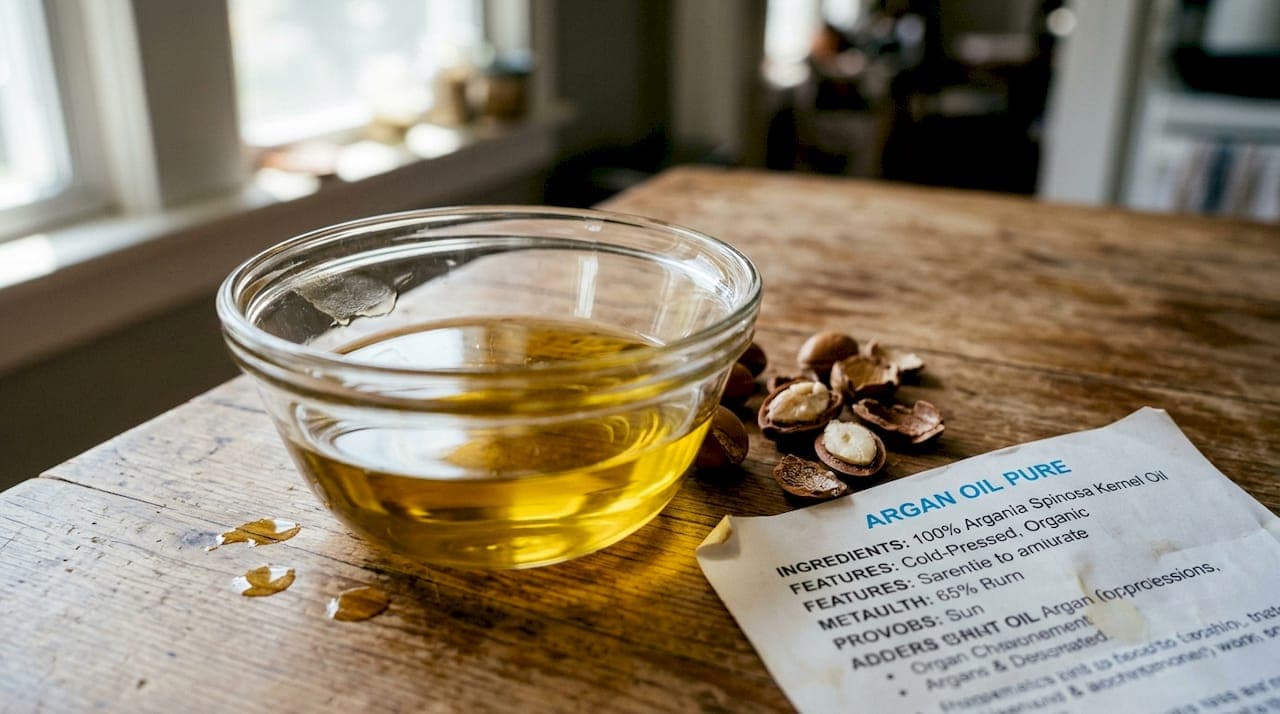
Here's a breakdown of the key components and what they do:
| Compound | What it does for hair |
|---|---|
| Oleic acid (Omega-9) | Penetrates the hair shaft, adds softness and moisture |
| Linoleic acid (Omega-6) | Strengthens the scalp barrier, reduces inflammation |
| γ-Tocopherol (Vitamin E) | Antioxidant protection, reduces oxidative stress on follicles |
| Squalene | Seals moisture, adds shine, lightweight conditioning |
| Polyphenols | Anti-inflammatory, UV protection for the hair surface |
| Plant sterols | Support scalp health and reduce irritation |
These compounds work together. The fatty acids and antioxidants in argan oil, including oleic acid, linoleic acid, gamma-tocopherol, squalene, sterols, and polyphenols, each contribute distinct benefits for hair and scalp health. Oleic acid is heavy enough to penetrate the cortex of the hair strand, which is why argan oil adds genuine moisture rather than just coating the surface. Linoleic acid, on the other hand, is lighter and works better at the scalp level, keeping the skin barrier intact.
Gamma-tocopherol is the form of Vitamin E that's most active in argan oil, and it's more potent than the alpha-tocopherol found in most supplements. It neutralizes free radicals that can damage the hair follicle environment, especially after heat styling or sun exposure.
Statistic: Argan oil contains up to 80% unsaturated fatty acids, making it one of the most nutrient-dense plant oils available for hair care.
Squalene is worth highlighting separately. It's a natural emollient that mimics the sebum your scalp produces, which means it absorbs quickly without leaving a greasy residue. That's why argan oil feels lighter than coconut oil on most hair types.
Pro Tip: If you want argan oil for healthier hair without the grease, look for products where argan oil is the first or second ingredient. When it's listed near the bottom, the concentration is too low to deliver real results.
Polyphenols and sterols are the lesser-known players, but they're important for scalp health. They reduce inflammation at the skin level, which creates a better environment for healthy hair. Understanding the full argan treatment benefits means recognizing that this oil works on both the strand and the scalp, not just one or the other.
Real benefits: What Moroccan argan oil actually does for your hair
Now that you know what's inside Moroccan argan oil, let's talk about what it truly does and doesn't do for your hair.
Here's what the evidence actually supports:
- Moisture retention: The fatty acids penetrate the hair shaft and lock in hydration, reducing dryness and brittleness.
- Frizz control: By smoothing the cuticle layer, argan oil reduces the rough surface that causes frizz, especially in humid conditions.
- Heat protection: Applied before styling, it creates a lightweight barrier that reduces thermal damage from flat irons and blow dryers.
- UV protection: The polyphenols and Vitamin E help shield hair from sun-related color fade and protein breakdown.
- Scalp soothing: Its anti-inflammatory properties calm dry, itchy, or irritated scalps.
- Breakage reduction: Stronger, more moisturized strands are less prone to snapping, which helps you retain length over time.
Argan oil moisturizes, reduces frizz, acts as a heat protectant, and soothes dry scalp, making it one of the most versatile natural oils for everyday hair care. If you struggle with argan oil for dry scalp issues, this is one of the most evidence-backed options available without a prescription.
"Argan oil is one of the few natural oils with documented benefits for both the hair strand and the scalp surface. Its lightweight texture makes it suitable for a wider range of hair types than heavier oils like castor or coconut."
However, there's one claim you should be skeptical of. Many products promise that argan oil will regrow thinning hair or stimulate dormant follicles. The reality is that there's no strong evidence for direct follicle stimulation or new hair growth from argan oil. It can help you retain the hair you have by reducing breakage, but it won't create new strands where follicles are already inactive.
Pro Tip: If hair regrowth is your primary goal, look at other hair growth oils with stronger clinical backing, like rosemary oil, and use argan oil as a supporting treatment for condition and protection.
One edge case to keep in mind: if you have a tree nut allergy, patch test argan oil before applying it to your scalp. Reactions are rare but possible. For people with severe alopecia, argan oil is a supportive tool, not a treatment.
How to use argan oil for the best results
Knowing argan oil is beneficial is one thing. Using it correctly is what actually makes a difference. The most common mistake is using too much, which leaves hair looking greasy rather than glossy.
Here's a step-by-step approach based on your goal:
For shine and frizz control:
- Wash and condition your hair as normal.
- Towel dry gently until hair is damp but not dripping.
- Warm 1 to 2 drops between your palms.
- Apply from mid-length to ends, avoiding the roots.
- Style as usual. No rinsing needed.
For scalp health:
- Section dry hair to expose the scalp.
- Apply 2 to 3 drops directly to the scalp in small sections.
- Massage gently for 3 to 5 minutes to boost circulation.
- Leave on for 20 to 30 minutes, then shampoo as normal.
The application method matters: use 1 to 3 drops on damp hair for daily conditioning, or massage into the scalp before shampooing for a deeper treatment. Note that argan oil is less effective than rosemary oil specifically for stimulating growth, so adjust your expectations accordingly.
Pro Tip: Fine hair types should stick to 1 drop maximum and apply only to the ends. Coarse or thick hair can handle 2 to 3 drops through the mid-lengths and ends. Using different natural oils together, like argan and rosemary, can cover more ground than either one alone.
Frequency matters too. For most hair types, 2 to 3 times per week is enough. Daily use can build up on the scalp and clog follicles over time, especially for those with naturally oily hair. If you're unsure about using hair oil effectively for your specific hair type, starting with less and increasing gradually is always the safer approach.
When not to use argan oil: skip it if you have a nut allergy, if your scalp is already very oily, or if you're dealing with a fungal scalp condition that requires medicated treatment first.
Our take: Why Moroccan argan oil deserves its reputation—minus the hype
After reviewing the science and the sourcing, our honest view is this: Moroccan argan oil is one of the most well-rounded natural hair oils available, and it earns that status through real chemistry, not just clever branding. The combination of fatty acids, Vitamin E, and squalene is genuinely hard to replicate in a lab at the same quality.
But we also think the beauty industry has overclaimed its potential. Argan oil will not regrow hair. It will not reverse genetic hair loss. If you're buying it expecting those results, you'll be disappointed. What it will do is make your existing hair look and feel significantly better, protect it from daily damage, and support a healthier scalp environment.
Our advice: invest in pure, cold-pressed Moroccan argan oil from a verified cooperative source, use it consistently as part of a broader routine, and don't let any brand convince you it's a standalone cure. For a deeper look at how to pair it with other treatments, the deep-dive on Moroccan argan oil is worth reading before you build your next routine.
Take your hair care to the next level with personalized analysis
Argan oil is a powerful tool, but it works best when you know exactly what your hair needs. Generic routines miss the details that matter most, like whether your scalp is dry or oily, whether your strands are protein-deficient, or whether your hair loss pattern needs a different approach entirely.
MyHair.ai uses AI-powered hair analysis to give you a clear picture of your hair health based on your actual scan, not guesswork. From there, the platform generates a your personalized hair score that maps your current condition and tracks changes over time. If you're ready to stop experimenting and start seeing results, hair analysis onboarding takes just a few minutes and gives you a foundation for a routine that actually fits your hair.
Frequently asked questions
Is Moroccan argan oil safe for all hair types?
Yes, it's generally safe for most hair types, but people with nut allergies or very fine hair should use it sparingly or patch test before full application. Fine hair in particular can look greasy with even one drop too many.
Does argan oil make hair grow faster?
No clinical studies confirm that argan oil speeds up hair growth. It lacks evidence for follicle stimulation but helps retain length by reducing breakage, which can make hair appear to grow faster over time.
What's the difference between pure Moroccan argan oil and blended hair oils?
Pure argan oil is cold-pressed from Moroccan kernels using traditional chemical-free methods. Blended products often dilute the concentration with fillers, reducing the actual nutrient content you get per application.
How do you use argan oil for a dry scalp?
Massage 2 to 3 drops directly into the scalp before washing to soothe dryness and add hydration. Leave it on for at least 20 minutes before shampooing for the best results.
Can you use argan oil with other hair growth oils?
Yes, argan oil combines well with oils like rosemary for a broader effect, but keep in mind that rosemary oil has more direct evidence for stimulating growth, so it should take the lead if regrowth is your main goal.