Blog
Learning Materials
Natural oils for hair growth: what actually works
Updated: April 26, 2026

TL;DR:
- Different natural hair oils work through unique mechanisms like DHT blocking, inflammation reduction, and antioxidant protection.
- Consistent application over at least 8 to 12 weeks is key to seeing noticeable hair growth improvements.
- Blending targeted oils tailored to individual hair needs maximizes effectiveness and addresses specific scalp conditions.
Not all natural hair oils are created equal, and treating them as interchangeable is one of the most common mistakes people make on their hair growth journey. Some oils penetrate the hair shaft and protect it from the inside out, while others sit on the surface and do little more than add shine. Research backs this up: an 8-week RCT with 44 women found that an enriched coconut oil blend outperformed plain coconut oil on hair fall, dandruff, and tensile strength. This guide breaks down which oils actually work, the science behind them, and how to build a routine around your specific hair needs.
Table of Contents
- How natural oils support hair growth: science and mechanisms
- Top evidence-based oils for hair growth
- Personalizing your hair oil routine for maximum growth
- DIY blends and practical tips for hair oil success
- The real secret: consistency over hype
- Next-level hair growth: personalize with MyHair
- Frequently asked questions
Key Takeaways
| Point | Details |
|---|---|
| Evidence matters | Not all oils are equally effective—research shows certain blends outperform others for growth. |
| Personalization counts | Your hair type, needs, and habits should guide which oil and routine you choose. |
| Consistency wins | Regular use, rather than hopping between trends, leads to lasting results. |
| DIY is possible | Blending and applying oils at home can work as well as store-bought treatments when done right. |
How natural oils support hair growth: science and mechanisms
If you've ever wondered why one person swears by rosemary oil while another sees nothing from it, the answer is usually about mechanism, not magic. Different oils work through different biological pathways, and understanding those pathways helps you pick the right one for your situation.
The most well-studied oils, including rosemary and pumpkin seed, primarily work by improving scalp circulation and blocking 5-alpha reductase, the enzyme responsible for converting testosterone into DHT. DHT (dihydrotestosterone) is the hormone that shrinks hair follicles over time in people with androgenetic alopecia, which is the most common form of hair thinning. When an oil blocks this conversion, follicles stay larger and healthier for longer.
Beyond DHT, inflammation is a major but often overlooked driver of hair loss. Chronic scalp inflammation damages follicles at the cellular level, slowing growth cycles and pushing follicles into the resting phase prematurely. Oils rich in omega fatty acids and polyphenols, like black seed oil and argan oil, can calm this inflammatory response over time. You can learn more about proven natural oil benefits and how they translate to real growth gains.
Antioxidants are another critical piece. Free radical damage from UV exposure, pollution, and oxidative stress weakens the scalp environment, making it harder for follicles to thrive. Oils with high vitamin E content, such as argan oil, neutralize these free radicals and protect the follicle's surrounding tissue. This is why antioxidant-rich oils are especially valuable for people who spend a lot of time outdoors or live in urban environments.
Here's a quick summary of the primary mechanisms:
- Circulation boost: Improves nutrient delivery to follicles via better blood flow
- DHT blocking: Inhibits 5-alpha reductase to reduce follicle miniaturization
- Inflammation reduction: Calms scalp tissue to extend active growth phases
- Antioxidant protection: Shields follicles from oxidative damage
- Nutrient delivery: Provides fatty acids, vitamins, and minerals directly to the scalp
"The effectiveness of natural oils for hair growth comes down to their specific bioactive compounds. It's not just about moisturizing the scalp, it's about targeting the root causes of follicle disruption at the molecular level." — Frontiers in Nutrition, 2025
Understanding these mechanisms makes it much easier to troubleshoot when an oil isn't working for you. If your main issue is thinning from hormonal causes, DHT-blocking oils are your priority. If your scalp is inflamed and itchy, anti-inflammatory oils should lead your regimen. You can also explore targeted options in our guide to oils for hair loss for more nuanced recommendations.
Top evidence-based oils for hair growth
With a grasp of how oils work, you may wonder which ones deliver the best results. Here's a research-backed comparison of the four oils with the strongest evidence behind them.
| Oil | Primary mechanism | Key benefit | Best for |
|---|---|---|---|
| Coconut oil | Protein retention, fiber penetration | Reduces breakage and protein loss | Dry, damaged, or porous hair |
| Rosemary oil | DHT blocking, circulation | Stimulates follicle activity | Thinning or androgenetic hair loss |
| Pumpkin seed oil | 5-alpha reductase inhibition | Slows follicle miniaturization | Hormonal thinning |
| Black seed oil | Anti-inflammatory, antioxidant | Calms scalp, extends growth phase | Inflamed scalp, chemically treated hair |
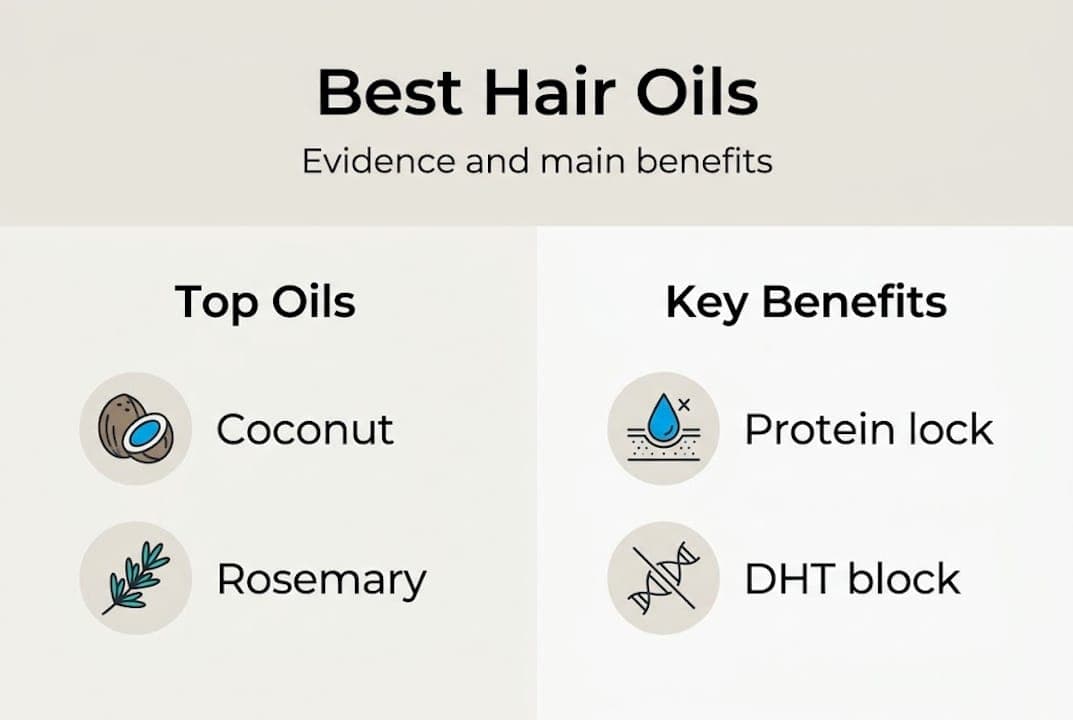
Coconut oil stands out for its unique molecular structure. Unlike most plant oils, it has a small enough molecule to penetrate the actual hair fiber rather than just coating the outside. Studies confirm that it reduces protein loss and breakage more effectively than both mineral oil and sunflower oil, which simply sit on the surface. This makes it particularly powerful as a pre-wash treatment, applied before shampooing to protect fibers from swelling and friction damage during washing.

Rosemary oil is the star of DHT-blocking research. Multiple studies have compared it favorably with minoxidil for scalp stimulation, with fewer side effects. When it's combined with coconut oil in enriched blends, the synergy is even stronger. Research found that enriched coconut oil with rosemary and herbs consistently outperformed plain coconut oil in reducing hair fall and improving overall hair properties across an 8-week study.
Pumpkin seed oil is a rising star in hair loss research, particularly for men with pattern baldness. Its high zinc content and phytosterol compounds directly inhibit the DHT conversion pathway. In one study, men taking pumpkin seed oil saw a 40% increase in hair count compared to a placebo group.
Black seed oil (Nigella sativa) works differently from the others. Its active compound, thymoquinone, is one of the most potent natural anti-inflammatory and antioxidant agents studied in dermatology. For people whose hair loss is driven by scalp inflammation, psoriasis, or seborrheic dermatitis, this oil can be especially transformative.
Pro Tip: Mixing oils multiplies your results. A blend of 70% coconut oil as your base, 10% rosemary oil, 10% pumpkin seed oil, and 10% black seed oil gives you penetration, DHT blocking, circulation boosting, and anti-inflammatory coverage all at once. Browse top oil recommendations and good hair growth oils for 2025 to build your personalized starting point.
Here are the most important evidence-backed takeaways about each oil:
- Coconut oil reduces protein loss by filling gaps in the hair fiber during pre-wash treatment
- Rosemary oil's DHT-blocking properties are comparable to low-concentration minoxidil in clinical settings
- Pumpkin seed oil's phytosterols inhibit 5-alpha reductase through a fat-soluble pathway
- Black seed oil's thymoquinone content gives it anti-inflammatory effects that rival prescription-grade topicals
For a deeper look at how coconut oil specifically fits into your routine, the guide on coconut oil benefits has detailed application methods and real-world outcomes.
Personalizing your hair oil routine for maximum growth
Knowing which oils work, customizing their use is key to seeing consistent hair growth. The same oil that transforms one person's hair can do almost nothing for another if it's applied incorrectly or at the wrong frequency.
Here's a practical table to match your hair type to the best oil strategy:
| Hair type | Best oil(s) | Application frequency | Method |
|---|---|---|---|
| Dry, coarse | Coconut oil, black seed oil | 2-3 times per week | Overnight soak |
| Fine, oily | Rosemary oil diluted in jojoba | Once per week | Scalp massage only |
| Thinning, hair loss | Rosemary, pumpkin seed oil | 2-3 times per week | Scalp massage, 10 min |
| Chemically treated | Coconut oil, argan oil | 2 times per week | Pre-wash or leave-in ends |
| Normal | Blend as preferred | 1-2 times per week | Full scalp and lengths |
Coconut oil's ability to penetrate hair fibers and reduce protein loss makes it the best starting oil for dry or damaged hair types. But if your hair is already low in protein, using too much coconut oil can actually make strands feel stiff and brittle. Balance matters. You can find detailed application guidance in the guide to using hair oil for growth.
Common mistakes that undermine results include:
- Applying too much oil: A thin, even layer is all you need. Excess oil clogs follicles and requires harsh washing to remove, which causes more damage.
- Washing too often to remove oil: Over-washing strips natural sebum and disrupts the scalp's oil balance. Work up to leaving oil on for several hours before washing.
- Wrong oil for your porosity: High-porosity hair drinks up lightweight oils fast. Low-porosity hair needs lighter oils that won't sit on the cuticle and block moisture.
- Mixing incompatible oils: Some combinations cancel out benefits. For example, pairing castor oil with coconut oil can be too heavy for fine hair.
Pro Tip: If you're in a humid climate, lighter oils like rosemary in jojoba work better than heavy oils like castor. In dry climates, richer oils like coconut or black seed prevent moisture loss more effectively. Your scalp environment changes with the seasons, so your routine should adjust accordingly. For more specific guidance, explore the full oil hair routine tips and black seed oil tips for advanced personalization.
You may also want to consult hair treatment expert advice if your hair loss is significant, since oils work best as preventive and supportive tools rather than standalone treatments for advanced alopecia.
DIY blends and practical tips for hair oil success
Ready to try hair oils? Here's how to get hands-on, even if you're new to mixing your own. Creating your own blend is more affordable than buying pre-made products and gives you full control over what goes into it.
Basic growth-boosting blend recipe:
- Start with 4 tablespoons of refined coconut oil as your base. Its proven protein-protective properties make it the ideal carrier for other actives.
- Add 15 drops of rosemary essential oil for DHT-blocking and circulation benefits.
- Add 10 drops of pumpkin seed oil for additional 5-alpha reductase inhibition.
- Add 5 drops of black seed oil for anti-inflammatory support.
- Gently warm the coconut oil to liquid state in a small glass bowl placed in warm water. Never microwave essential oils.
- Stir all ingredients together and transfer to a dark glass bottle with a dropper.
Application method:
- Section your dry hair into four parts before you begin.
- Use the dropper to apply 6 to 8 drops directly to your scalp in each section.
- Use your fingertips (not your nails) to massage in small circular motions for 5 to 10 minutes. This massage step is critical as it physically stimulates blood flow to follicles.
- Work the remaining oil down your lengths and focus extra on the ends.
- Wrap your hair in a warm towel or use a shower cap and leave on for at least 30 minutes. Overnight is even better.
- Wash out with a sulfate-free shampoo, shampoo twice if needed to remove residue.
Troubleshooting common issues:
- Too greasy after washing: You used too much. Cut your application by half and do a double shampoo wash-out.
- Unpleasant odor from black seed oil: Mask it with 3 drops of lavender essential oil in your blend. Lavender also has mild hair growth benefits.
- Buildup on the scalp after a few weeks: Add a clarifying shampoo wash once per month to remove residue from the scalp without stripping it completely.
Pro Tip: Always do a patch test before your first full application. Apply a small amount of your blend to the inside of your elbow and wait 24 hours. If no redness or itching develops, your scalp should tolerate it well. This is especially important with black seed oil and rosemary, which can cause reactions in sensitive individuals.
You can find detailed homemade blend ideas in our homemade oil recipes guide, and if you want to explore 100% natural formulations more broadly, the guide to natural hair products covers how to evaluate product labels and ingredient quality.
The real secret: consistency over hype
Here's something that rarely gets said in hair oil content: switching oils every few weeks because you saw a new trend on social media is the fastest way to see zero results. The biological timeline for hair growth means any intervention takes a minimum of 8 to 12 weeks to show measurable change. If you change your routine every two weeks, you're always in the noise, never in the signal.
The oils you choose matter less than the commitment you make to one routine. A consistent oil routine followed weekly will beat the "perfect" oil used sporadically every single time. Your hair follicles respond to sustained stimulation and nourishment, not one-off treatments.
The other myth worth addressing is the idea of dramatic results in the first month. What actually happens in weeks 1 through 4 is mostly invisible: reduced shedding, a calmer scalp, and stronger strands. Visible length and density gains typically appear between months 3 and 6. Setting this expectation upfront prevents people from abandoning routines that are actually working.
Take before-and-after photos every four weeks under the same lighting. This simple tracking habit reveals gradual progress that you'd otherwise miss when looking in the mirror daily. Progress builds slowly, but it does build.
Next-level hair growth: personalize with MyHair
Consistency and personalization matter, and here's how to get expert support for your journey.
Finding the right oil routine through trial and error takes time you don't need to waste. MyHair.ai uses AI-powered analysis to assess your scalp and hair health, identifying your specific patterns, thinning zones, and follicle density. That data then drives tailored product and oil recommendations matched to your exact hair profile.

Rather than guessing which oil combination suits you, MyHair's hair growth analysis gives you a precise picture of where you stand and what your hair actually needs. You can track changes over time and adjust your routine based on real data, not guesswork. Start your personalized hair onboarding today and let your routine work smarter from day one.
Frequently asked questions
Which natural oil is most effective for hair growth?
Studies show enriched blends combining rosemary with a coconut oil base are most effective: research on 44 women confirmed the enriched version outperformed plain coconut oil for hair fall, strength, and shine over 8 weeks.
How often should I use natural hair oil for hair growth?
Applying oil 1 to 3 times per week covers most hair types, with drier or thinner hair benefiting from more frequent use and oily scalps doing better with weekly applications.
Can I mix different oils for better results?
Yes, blending oils like coconut, rosemary, and pumpkin seed amplifies outcomes because they each target different growth mechanisms, from improving scalp circulation to blocking DHT at the follicle level.
Will hair oils make my scalp greasy or lead to buildup?
Using a small, controlled amount and washing properly with a sulfate-free shampoo prevents greasiness. Adding a monthly clarifying wash keeps your scalp clear of any cumulative residue.
How do I know which oil is right for my hair type?
Match your oil to your main concern: coconut oil for dry or damaged hair, rosemary or pumpkin seed for thinning and hormonal hair loss, and black seed oil for inflammatory scalp conditions like dandruff or seborrheic dermatitis.