Blog
Learning Materials
Natural organic hair oil guide for healthy growth
Updated: May 13, 2026
TL;DR:
- Natural organic hair oils provide nourishment that supports healthy scalp and hair performance, but do not directly promote new growth. Proper application, consistency, and realistic expectations are essential to see benefits over several months, especially for thinning hair. Oils serve as supportive scalp care tools, best combined with proven treatments and personalized analysis for optimal results.
Hair thinning affects millions of people, and the search for solutions often leads straight to the beauty aisle. A natural organic hair oil can be one of the most practical tools in your care routine, offering nourishment to the scalp and conditioning to the hair shaft. Hair oiling is an ancient practice, but expectations matter here. Oils work by building a healthier environment for your hair, not by flipping a switch on dormant follicles. This guide gives you everything you need to choose the right oils, apply them correctly, and track real results over time.
Table of Contents
- Understanding natural organic hair oils and their benefits
- Preparing to use natural organic hair oil: what you need and how to choose
- How to apply natural organic hair oil effectively
- Troubleshooting and common mistakes to avoid
- Measuring progress and verifying results
- Why natural organic hair oil is best seen as supportive scalp care, not a miracle cure
- Explore personalized hair analysis and care solutions with MyHair
- Frequently asked questions
Key Takeaways
| Point | Details |
|---|---|
| Scalp conditioning | Natural organic hair oils nourish and protect the scalp to create a healthy environment for hair growth. |
| Select tailored oils | Choose oils based on your hair and scalp type for maximum conditioning benefits. |
| Application method | Apply small doses directly to the scalp daily with gentle massage for best absorption. |
| Manage expectations | Treatment effects take months and oils support hair health but may not directly cause new growth. |
| Complement treatments | Use oils alongside FDA-approved treatments like minoxidil for pattern hair loss when appropriate. |
Understanding natural organic hair oils and their benefits
A natural organic hair oil is a plant-derived oil, cold-pressed or minimally processed, without synthetic additives or petrochemical fillers. These oils carry the nutrients that actually reach your scalp: vitamins, fatty acids, and antioxidants that a normal hair oil bought off a drugstore shelf often lacks entirely because it is diluted or formulated with silicones instead.
Natural oils like jojoba, coconut, argan, sesame, castor, and amla each bring something distinct to the table. Jojoba's molecular structure is nearly identical to your scalp's natural sebum, which makes it especially useful for balancing an oily scalp without clogging follicles. Coconut oil penetrates the hair shaft more deeply than almost any other oil, reducing protein loss from washing and heat. Argan delivers oleic and linoleic acids that soften the cuticle and dramatically reduce frizz. Amla, a fruit-derived oil from Indian gooseberry, is loaded with vitamin C and antioxidants that fight the oxidative stress linked to hair aging.
The key distinction to internalize: these oils condition the scalp and hair shaft. They do not directly create new hair growth. Think of them the way you would think of a healthy diet. A good diet supports your body's ability to function well, but it does not guarantee that a broken bone will heal faster. Oils work the same way. They create the conditions that support your hair's best possible performance. For a deeper look at how organic hair growth oils differ in their mechanisms, the research is worth exploring.
- Jojoba oil: Balances sebum, lightweight, suits oily scalps
- Coconut oil: Penetrates the shaft, reduces protein loss, best for dry or damaged hair
- Argan oil: Adds moisture, reduces frizz, excellent for chemically treated hair
- Castor oil: Thick, coats the hair, often used on edges and thinning spots
- Amla oil: Antioxidant-rich, supports scalp circulation, traditional use in Ayurvedic organic natural hair care
Pro Tip: If you are new to oiling, start with jojoba. It suits the widest range of scalp types and rarely causes breakouts or irritation, even with daily use.
Now that you know what natural organic hair oils are and their key benefits, let's explore how to prepare for their use effectively.
Preparing to use natural organic hair oil: what you need and how to choose
Before you reach for any bottle, you need a clear read on your scalp. Is it dry and flaky, or does it get oily within a day of washing? Does your hair feel coarse and brittle, or fine and limp? These answers determine everything. Using a rich, heavy oil on an already-oily scalp is the most common mistake beginners make, and it leads to buildup that actually worsens shedding over time.

Choosing oils suited to your hair type or mixing oils customized to your needs is the foundation of effective conditioning. Here is a practical reference:
| Hair/scalp type | Recommended oil | Why it works |
|---|---|---|
| Oily scalp | Jojoba, grapeseed | Lightweight, non-comedogenic |
| Dry scalp | Castor, olive, argan | Rich, occlusive, locks in moisture |
| Fine hair | Sweet almond, argan | Non-greasy, adds shine without weight |
| Coarse or thick hair | Coconut, castor | Deep penetration and coating |
| Thinning hair | Rosemary, peppermint | Stimulates circulation, evidence-backed |
What you need to get started:
- A small dark glass dropper bottle to store your oil blend and protect it from light
- A scalp massager (silicone bristle type) or just your fingertips
- Cotton swabs or a fine-tooth applicator comb for precise sectioning
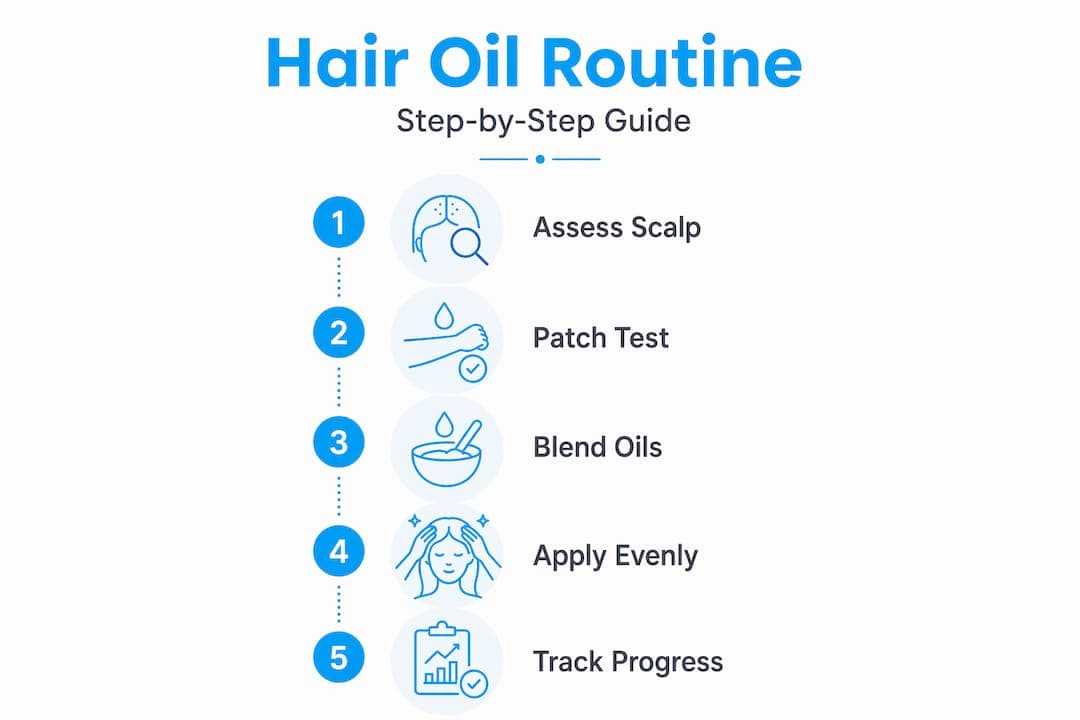
- Your chosen oil or blend, patch-tested on your inner wrist 24 hours before first use
Patch testing is not optional if you are sensitive. Rosemary oil in particular, which is one of the best organic hair oils for thinning concerns, can cause contact dermatitis in people with sensitive skin if applied undiluted.
Pro Tip: Build your own targeted blend by combining a carrier oil (like jojoba) with a therapeutic oil (like rosemary at 1 to 2% concentration). The carrier oil does the conditioning work while the therapeutic oil provides the active benefit. This is the backbone of most DIY hair oil recipes that actually perform.
A well-structured oil hair routine sets the pace for everything that follows. With your oils and tools ready, the next section explains the step-by-step application process and techniques to maximize benefits.
How to apply natural organic hair oil effectively
How you apply an organic hair oil matters as much as which oil you choose. Most people apply too much, too infrequently, and skip the massage entirely. All three of those choices reduce results significantly.
Here is the step-by-step process:
- Start with a clean scalp. Applying oil to a scalp already loaded with product buildup blocks absorption. Wash first if possible, or at minimum remove buildup with a scalp scrub.
- Section your hair. Part it into 4 to 6 sections using clips. This ensures full coverage, not just the top layer.
- Measure your oil. Apply 4 to 6 drops directly to the scalp per section, not to the length of your hair first.
- Massage for 2 to 3 minutes. Use circular movements with your fingertips or a silicone massager. This step is not optional. Massage increases blood flow to the follicle, which improves nutrient delivery and aids oil absorption.
- Work down the shaft. Once the scalp is covered, run any remaining oil through the mid-lengths and ends.
- Leave it in or rinse after 30 minutes. For a restorative treatment, wrap hair in a warm towel and leave for up to two hours. For daily use, a light application on a dry scalp does not require rinsing.
For hair thinning specifically, rosemary oil is the most evidence-backed choice in organic natural hair care. Rosemary oil applied twice daily for 6 months showed comparable hair count gains to 2% minoxidil in a randomized trial. That is a striking finding. It does not make rosemary oil a replacement for minoxidil, but it does make it a serious option as part of a combined approach.
| Application goal | Oil amount | Frequency | Leave-in time |
|---|---|---|---|
| Daily scalp nourishment | 4 to 6 drops | Daily | No rinse needed |
| Deep conditioning treatment | 8 to 10 drops | Once a week | 30 to 120 minutes |
| Targeted thinning spots | 2 to 3 drops | Twice daily | No rinse needed |
Pro Tip: Warm your oil slightly before applying. Roll the dropper bottle between your palms for 30 seconds. Warm oil spreads more easily and absorbs faster, especially into a dry scalp. For more on using hair oil for growth, the science behind carrier and therapeutic oil combinations is worth understanding in full.
Following these application steps sets the foundation for care. Let's discuss common issues and how to avoid missteps.
Troubleshooting and common mistakes to avoid
The number one complaint people have after starting an oiling routine is "it's not working." In most cases, one of these four mistakes is the reason.
- Using too much oil. Excess oil sits on the scalp surface, traps debris, and can actually clog follicles. Four to six drops per section is genuinely enough.
- Being inconsistent. Using oil twice a week for one month and then stopping resets most of the conditioning progress. Regular, sustained use over months is what produces results.
- Expecting regrowth within weeks. Expect timelines measured in months, with visible changes around 3 to 6 months. Oils mainly condition rather than cure hair thinning.
- Ignoring irritation signals. If your scalp itches, burns, or reddens after applying an oil, that is a reaction. Reduce frequency, dilute your blend further, or switch oils entirely.
"Rosemary oil showed fewer side effects than minoxidil in clinical comparison, specifically less scalp itching, making it a well-tolerated option for long-term use." This matters because scalp irritation from a product is one of the top reasons people abandon a routine before results appear.
For people dealing with androgenetic alopecia (the most common pattern hair loss type), oils are supportive tools, not primary treatments. Pairing your natural oil routine with an FDA-approved treatment under medical guidance gives you the best chance of meaningful improvement. Exploring thinning hair products that combine clinical and natural approaches can help you build a more complete strategy.
Understanding these pitfalls ensures a more effective regimen. Next, let's look at measuring and verifying your hair health progress.
Measuring progress and verifying results
You cannot improve what you do not track. Most people starting an oiling routine use the mirror and memory as their only tools, both of which are unreliable. Here is a more structured approach.
Setting your baseline:
- Take photos of your scalp under consistent lighting, from the same angles, on day one.
- Note your current shedding rate. Count the hairs on your brush or in the shower drain over three days and average them.
- Record your scalp condition: level of dryness, itchiness, or flaking on a simple 1 to 5 scale.
- If possible, use a hair scanner app for a precise density reading at the start.
Monthly check-ins:
- Repeat photos at 30, 60, and 90 days.
- Note subjective changes: less shedding, improved shine, softer texture, reduced dryness.
- Compare scalp condition scores.
Clinical studies on hair treatments use standardized microphotographic assessments at 3 and 6-month intervals because that is genuinely how long measurable change takes. You are working on the same timeline.
- 3 months: Improved scalp texture, less flaking, reduced shedding
- 6 months: Possible visible density improvement, notably with rosemary oil or in cases of mild thinning
A dedicated hair growth strength guide can help you understand what progress metrics actually mean for your specific hair loss pattern.
Tracking progress lets you verify benefits from oiling. Now, let's consider expert insights and realistic perspectives on natural organic hair oils.
Why natural organic hair oil is best seen as supportive scalp care, not a miracle cure
Here is the uncomfortable truth that most organic hair care content will not say plainly: for people with androgenetic alopecia, which is genetically driven pattern hair loss, no natural organic hair oil will reverse the process on its own. The mechanism driving that kind of hair loss is hormonal. Oils do not reach follicles at that level.
What oils can do is significant, just different. They reduce scalp inflammation, improve barrier function, deliver antioxidants that slow oxidative damage to the follicle environment, and make hair healthier and more resistant to breakage. In other words, they help you keep the hair you have longer and in better condition. That is genuinely valuable, especially when you are already losing more than you want to.
Oils are best used as scalp conditioners and adjuncts rather than standalone cures for hair loss. The most effective approach combines them with clinically proven options. Rosemary oil alongside 5% minoxidil, for example, may improve tolerability and scalp comfort while the minoxidil handles the follicular stimulation work. That combination makes medical sense.
What we consistently see at MyHair.ai is that people who get good results from natural oil routines are the ones who started with an accurate diagnosis. They know what type of hair loss they are dealing with. They are using oils for the right reasons, as scalp support, not as a substitute for treatments that actually work at the follicular level. Before committing to any product strategy, reviewing best hair growth treatments based on your specific loss pattern is the step most people skip and later regret.
Explore personalized hair analysis and care solutions with MyHair
To complement your natural organic hair oil routine, consider personalized insights and tools to enhance your hair health journey.
Knowing which oils to use is only half the equation. The other half is knowing the state of your scalp right now, because a product that works brilliantly for mild thinning may not be the right choice for someone with more significant hair density loss. MyHair.ai's AI-powered hair analysis gives you a precise scalp and hair density assessment using your phone camera, so your routine is based on your actual condition, not guesswork.

After your scan, the hair analysis onboarding process builds you a personalized care profile, matching your hair loss pattern, scalp type, and goals to the products and practices most likely to help. You can also access the latest hair care research to stay informed as evidence evolves. Track your progress over time, adjust your routine based on real data, and combine the best of natural organic oil care with AI-driven feedback for a plan that actually moves forward.
Frequently asked questions
Does using natural organic hair oil guarantee new hair growth?
Natural organic hair oils mainly improve scalp and hair condition. Evidence remains inconclusive for direct follicle growth, but oils can support better length retention and a healthier hair environment.
How often should I apply natural organic hair oil for best results?
Apply 4 to 6 drops daily on a dry scalp or as a post-wash treatment to maintain consistent scalp nourishment and support hair health over time.
Is rosemary oil as effective as minoxidil for hair loss?
A 2015 clinical trial found rosemary oil comparable to 2% minoxidil over six months for androgenetic alopecia, with the added benefit of producing less scalp itching.
Can I use natural organic hair oils as a replacement for medical hair loss treatments?
Natural oils work best as scalp conditioners alongside medical treatments. Minoxidil remains the only FDA-approved topical treatment for androgenetic alopecia, and oils should supplement rather than replace it without specialist guidance.
How long does it take to see results from using natural organic hair oil?
Visible improvements typically emerge around 3 months of consistent use, with more significant changes possible by 6 months for scalp condition and mild hair thinning.