Blog
Learning Materials
Organic Hair Products: Your No-Nonsense Buyer's Guide
Updated: May 16, 2026
TL;DR:
- Many hair care labels claiming to be "natural" or "organic" are unregulated and often misleading without certification. Authentic certification logos like COSMOS, USDA Organic, or ECOCERT ensure verified organic content through rigorous third-party audits. Building a routine with certified products, reading labels carefully, and understanding ingredient lists help you make informed choices.
Walk down any beauty aisle and you'll find dozens of bottles promising "natural," "organic," and "clean" hair care. The problem? Most of those claims mean absolutely nothing. Organic hair products have surged in popularity as more consumers want to reduce synthetic chemical exposure and make eco-conscious choices, but the labeling confusion is real and brands exploit it constantly. This guide cuts through the noise. You'll learn what authentic organic actually means, which certifications to trust, how to read labels without a chemistry degree, and how to build a routine that genuinely works for your hair.
Table of Contents
- Key takeaways
- What "organic" really means in hair care
- How to read labels on organic hair products
- Building your organic hair care routine
- Common myths and real challenges with organic products
- My honest take on the organic hair product industry
- How Myhair helps you choose smarter
- FAQ
Key takeaways
| Point | Details |
|---|---|
| Certifications are non-negotiable | Look for COSMOS, USDA Organic, or ECOCERT logos to confirm genuine organic content in any product. |
| "Natural" does not mean organic | Products labeled natural can legally contain up to 90% synthetic ingredients without any regulation. |
| Label reading is a skill | Check INCI lists for silicones, parabens, and synthetic fragrance, all banned in certified organic formulas. |
| Organic routines feel different | Expect less lather and milder scents. That is normal and does not mean the product is not working. |
| Personalized data improves choices | AI-powered hair analysis tools can match your specific hair needs to the right certified organic products. |
What "organic" really means in hair care
Here is the uncomfortable truth: the word "organic" on a shampoo bottle is mostly unregulated. In the United States, Japan, and most other markets, cosmetic "organic" labeling carries no legal standard unless a product holds a recognized third-party certification. A brand can print "organic" on a product that contains a single organic botanical extract and synthetic everything else.
The same goes for "natural." There is no statutory definition of natural in cosmetics in most markets, and brands may label products as natural even with 90% synthetic content. This means the label alone tells you almost nothing about what is actually inside.
So where does that leave you? Certifications. Full stop.
The three most credible certifications to look for are:
- COSMOS Organic requires a minimum of 20% organic content of the total formula, or 10% for rinse-off products like shampoos. It also governs how ingredients are sourced and processed.
- COSMOS Natural sits one tier below, requiring 95% or more natural-origin ingredients but no minimum organic content requirement.
- USDA Organic is familiar to food shoppers and can apply to cosmetics but is less common in hair care specifically.
- ECOCERT is the French standard often used by European brands and is widely regarded as credible.
What makes certification genuinely meaningful is the verification process behind it. True organic certification demands annual audits of the entire supply chain, not just the finished product. That includes ingredient sourcing, manufacturing practices, and even packaging controls. When you see a verified logo, you are not just looking at a marketing claim. You are looking at documented, third-party accountability.
One more thing worth knowing: fair trade certification on ingredients like shea butter or argan oil signals social responsibility in sourcing, which complements organic credentials nicely for consumers who care about the full picture.
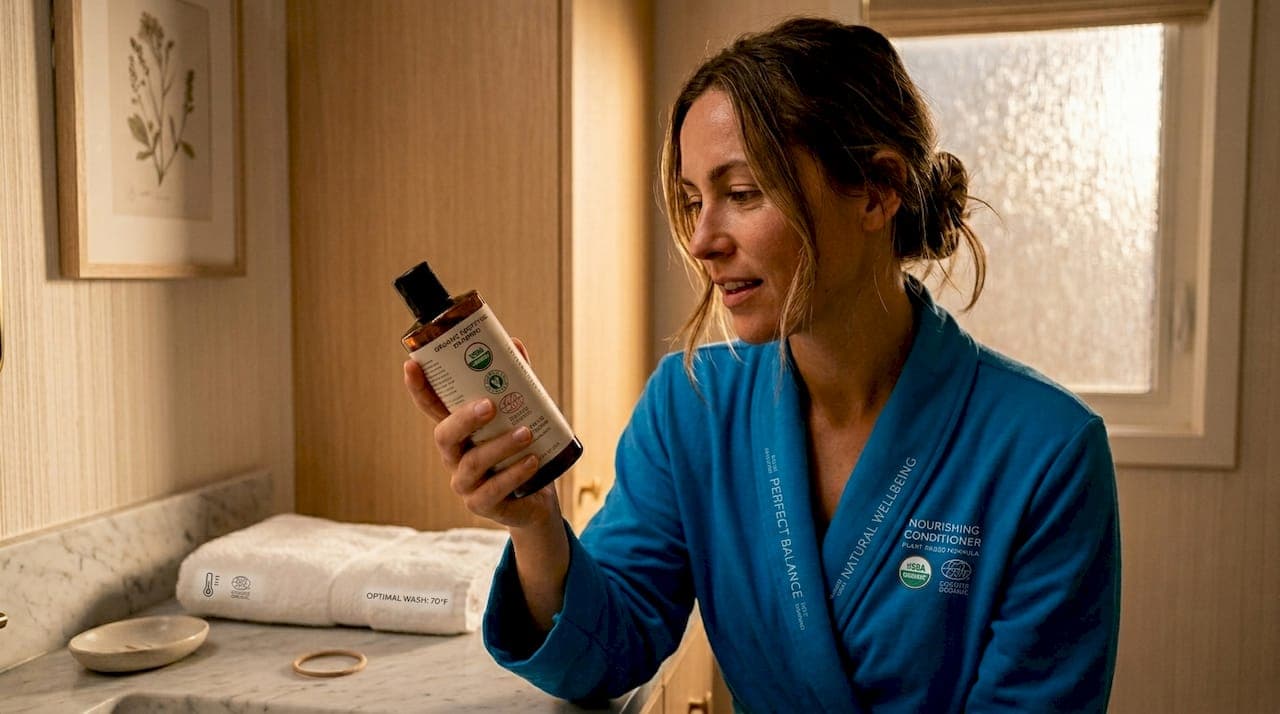
Pro Tip: When you search for the best organic shampoos or organic conditioners, filter your results to show only products with visible COSMOS or ECOCERT logos on the packaging. It saves hours of ingredient-list research.
How to read labels on organic hair products
Labels can feel intimidating, but once you know the structure, they become genuinely useful tools. Here is a practical step-by-step approach.
- Find the certification logo first. It should appear on the front or back of the packaging. No logo means no verified claim, regardless of what the marketing copy says.
- Scan the INCI ingredient list. INCI stands for International Nomenclature of Cosmetic Ingredients. Ingredients are listed in descending order by concentration. Water (aqua) is almost always first in a rinse-off product.
- Look for red-flag synthetics. Silicones, parabens, PEGs, and synthetic fragrances are banned in COSMOS-certified products. Names ending in "-cone" (dimethicone, cyclomethicone) are silicones. Anything ending in "-paraben" is a paraben.
- Check for synthetic fragrance. The word "parfum" or "fragrance" on an INCI list can legally mask hundreds of undisclosed chemical compounds. Certified organic products use named botanicals instead, like lavender oil or rose water.
- Note the EU 2026 update. New EU allergen labeling rules effective July 31, 2026 require fragrance allergens above 0.001% in leave-on products and 0.01% in rinse-off products to be individually declared. This makes it easier to spot potential irritants in European products.
The table below shows common ingredient terms and what they signal at a glance.
| Ingredient term | What it means | Certified organic? |
|---|---|---|
| Aqua / Water | Base solvent | Neutral |
| Butyrospermum parkii (shea butter) | Plant-based, natural origin | Yes, if organically sourced |
| Dimethicone | Silicone coating agent | No, banned in COSMOS |
| Methylparaben | Synthetic preservative | No, banned in COSMOS |
| Parfum / Fragrance | Can mask synthetic chemicals | No |
| Lavandula angustifolia oil | Lavender essential oil | Yes, if certified |
One pattern to watch for is what marketers call "ingredient window dressing." A product might feature a large "with organic aloe vera" callout on the front while that aloe is actually the 15th ingredient in a formula dominated by synthetic surfactants. The INCI list reveals the truth. If you want deeper guidance on picking trustworthy conditioners, the organic conditioner guide at Myhair walks through ingredient reading in detail.
Building your organic hair care routine
The foundation of a good organic routine is not dramatically different from any other hair care routine. You still need to cleanse, condition, treat, and style. What changes is the ingredient quality, the sensory experience, and the environmental footprint.
Here is how to approach each step with intention:
- Cleansing. The best organic shampoos use plant-derived surfactants like sodium cocoyl isethionate or coco glucoside instead of synthetic sodium lauryl sulfate. These clean effectively without stripping your scalp's natural oils. If you have a dry or sensitive scalp, look for certified formulas with ingredients like aloe vera, calendula, or chamomile extract.
- Conditioning. Organic conditioners rely on plant oils (argan, jojoba, camellia) and natural butters to smooth the hair cuticle. They work differently from silicone-heavy conventional conditioners. The slip and softness come from actual nourishment rather than a coating that washes away. For fine hair, lighter oils like soy or rice bran are better choices than dense shea butter.
- Treatment. This is where certified organic products genuinely shine. Weekly masks and scalp treatments built around naturally sourced certified ingredients can deliver concentrated nutrition without the synthetic buildup that accumulates from conventional products over time.
- Styling. Organic styling products typically use natural waxes, flaxseed gel, or aloe vera as hold agents. Expect a lighter finish than chemical-heavy gels or sprays. They are also much less likely to cause scalp irritation for people who react to synthetic fragrance.
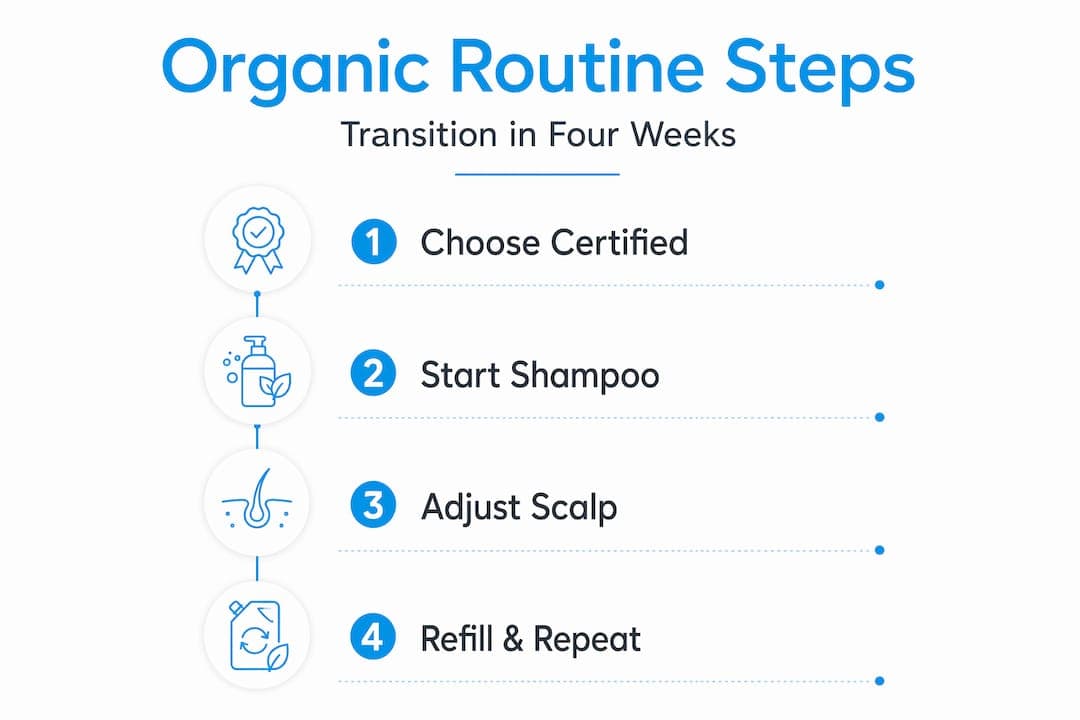
Pro Tip: When switching to an organic routine, give your hair a three to four week adjustment period. Your scalp may overproduce oil briefly as it recalibrates from years of synthetic surfactants. Stay consistent and the balance will shift.
Sustainability pairs naturally with an organic routine. Choosing concentrated products, refillable packaging, or solid shampoo bars reduces plastic waste significantly alongside the reduction in synthetic chemicals. For men and women building essential hair products into a daily practice, these small swaps compound over time into a meaningful lifestyle shift. You can find more guidance on building a natural hair routine that avoids common marketing loopholes at Myhair.
Common myths and real challenges with organic products
Switching to organic hair care comes with a learning curve. Here are the most common misconceptions and practical ways to handle them.
- "If it does not foam, it is not cleaning." This is the single biggest barrier for new users. Organic shampoos clean by clinging to dirt and oil rather than generating chemical foam barriers. The cleaning action is real. The foam is just absent because synthetic surfactants are absent. Trust the process.
- "Organic always means safer for everyone." Not automatically. Plant-derived ingredients can absolutely trigger allergic reactions in sensitive individuals. Essential oils, for example, are potent botanical compounds that some people react to strongly. Always patch test a new product, especially if you have reactive skin.
- "Organic products last as long as conventional ones." They often do not. Preservation in organic cosmetics is genuinely challenging, and paraben alternatives combined with natural antimicrobial agents are less aggressive at inhibiting microbial growth. Check expiration dates, store products away from heat and direct sunlight, and do not use shared applicators that introduce bacteria.
- "Results should be immediate." Conventional hair products often deliver instant-looking results because silicones coat the hair shaft immediately. Organic products build condition over time through actual nourishment. Expect a four to six week window before you accurately assess the impact on your hair's texture and health.
"The difference between a consumer who gets frustrated with organic hair products and one who thrives with them is usually just knowledge. Expectation management is half the battle."
Certified organic ingredients cost two to five times more than conventional ones, which is why authentic certified products carry a higher price point. That price gap is real and justified. What you are paying for is a verified supply chain, not just a marketing promise.
My honest take on the organic hair product industry
I've spent years working through the noise of natural beauty marketing, and I'll say this plainly: the organic hair care space is both genuinely exciting and full of brands that count on your confusion to make a sale.
What I've found is that most consumers do not fail at organic hair care because the products do not work. They fail because they bought uncertified products, expected the same sensory experience as their old synthetic shampoo, and gave up after two weeks. The products were not the problem. The information gap was.
What I've seen work consistently is this: start with one certified product, not a complete overhaul. Get your shampoo right first. Use something with a visible COSMOS or ECOCERT logo. Read the INCI list once so you understand what you are actually applying. Then build from there.
The other thing I've learned is that no single organic shampoo or conditioner is universally right for everyone. Hair type, scalp condition, water hardness, and even your local climate all affect how a product performs. A product her hair thrives with might not work for yours at all. That is not a flaw in organic formulation. It is just hair biology. Tools that analyze your specific hair condition and give you data-backed product matches are genuinely worth using for this reason.
The brands doing this right are transparent, hold real certifications, and do not hide behind vague "green" aesthetics. The ones to avoid are the ones where you cannot find an INCI list, there is no certification logo, and the front of the bottle is covered in leaf imagery with no substance behind it.
— Cyriac
How Myhair helps you choose smarter
Choosing the right organic hair products becomes much easier when you have actual data about your hair, not just general advice.
Myhair uses AI-powered hair analysis to assess your scalp health, hair density, and growth patterns from a simple scan. The platform then matches those insights to product recommendations tailored to your specific condition, taking the guesswork out of building a routine. If you have been cycling through products that did not work, start your hair analysis and find out what your hair actually needs. You can also track changes over time to see whether your organic routine is genuinely improving your hair health. For a full introduction to how the platform works, the Myhair onboarding page walks you through the process in minutes.
FAQ
What makes a hair product truly organic?
A truly organic hair product holds a recognized third-party certification like COSMOS Organic or USDA Organic, which verifies ingredient sourcing, manufacturing, and minimum organic content thresholds. A marketing claim alone does not make a product organic.
Which certifications should I look for on organic hair products?
COSMOS Organic, ECOCERT, and USDA Organic are the three most credible certifications. COSMOS Organic requires at least 20% organic content in the total formula and bans silicones, parabens, and synthetic fragrances.
Why does my organic shampoo produce less foam?
Organic shampoos use plant-derived surfactants instead of synthetic detergents, which naturally produce less lather. The cleaning mechanism still works effectively by binding to dirt and oil on the scalp.
How long does it take to see results from organic hair products?
Most people see meaningful results after four to six weeks of consistent use. Organic ingredients build hair condition gradually through nourishment rather than the instant coating effect of silicones in conventional products.
Are organic hair products safe for sensitive scalps?
Certified organic products eliminate common synthetic irritants like parabens, synthetic fragrance, and PEGs, which benefit most sensitive scalps. However, essential oils and botanical extracts can still cause reactions in some individuals, so patch testing is always recommended.