Blog
Learning Materials
Personalize hair loss treatment with AI for better results
Updated: April 6, 2026
TL;DR:
- AI personalization helps create effective, data-driven hair loss treatment regimens based on individual scalp data.
- Regular AI-led monitoring over at least six months is crucial for measuring progress and adjusting treatments.
- Consistent use and objective tracking greatly improve outcomes compared to generic, trial-and-error approaches.
Most people dealing with hair loss have tried at least one product that promised the world and delivered nothing. The frustration is real, and it often leads to giving up entirely. What changes the outcome is not trying harder with the same generic approach, but switching to a method that actually accounts for your unique biology, hair pattern, and lifestyle. AI-powered personalization is doing exactly that, helping people build regimens based on real scalp data rather than guesswork. This guide walks you through every step, from understanding your options to building a trackable, evidence-based routine that actually moves the needle.
Table of Contents
- Understanding hair loss and treatment options
- How to prepare for a personalized hair treatment plan
- Step-by-step: Building your AI-personalized hair treatment routine
- Tracking results and troubleshooting: How to maximize your hair growth journey
- Why AI-driven personalization is a game-changer, if you use it right
- Start your AI-powered hair regrowth journey
- Frequently asked questions
Key Takeaways
| Point | Details |
|---|---|
| Personalized plans work best | Customizing hair loss treatments with AI boosts success rates over generic approaches. |
| Track results, adjust quickly | Routine scalp photos and app feedback identify what works and when to switch tactics. |
| Combination therapies outperform one-size-fits-all | Using multiple evidence-based methods, guided by your response, delivers optimal outcomes. |
| Not all treatments fit everyone | Always match therapies to your health needs and seek medical input for prescription options. |
Understanding hair loss and treatment options
Hair loss is not one problem. It is many problems that look similar on the surface. The most common type is androgenetic alopecia (AGA), which affects both men and women and is driven by genetic sensitivity to dihydrotestosterone (DHT), a hormone that shrinks hair follicles over time. Telogen effluvium is another frequent cause, triggered by stress, illness, nutritional deficiency, or hormonal shifts, pushing large numbers of hairs into the resting phase at once. Other causes include alopecia areata (an autoimmune condition), scalp inflammation, and medication side effects.
Understanding which type you have is the first step, because treatments are not interchangeable across causes. Treating telogen effluvium with DHT blockers, for example, will not fix the underlying trigger.
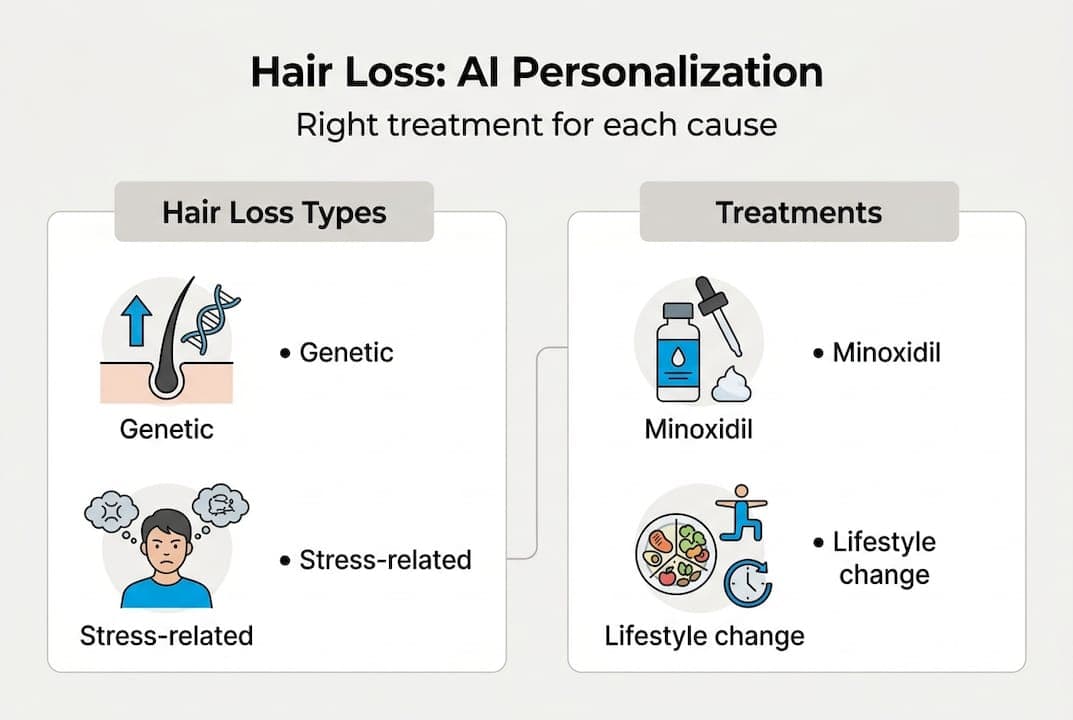
For androgenetic alopecia, the treatment landscape has expanded significantly. FDA-approved treatments include topical minoxidil (2% to 5%) for both men and women, and oral finasteride 1mg daily for men only. Minoxidil works by extending the growth phase of hair follicles and improving blood flow to the scalp. Finasteride blocks the conversion of testosterone to DHT, directly targeting the hormonal root of AGA.
Beyond these two, there is a growing list of off-label and emerging options. Dutasteride is not FDA-approved for hair loss but outperforms finasteride in network meta-analyses. Low-level laser therapy (LLLT) and low-dose oral minoxidil are also used off-label with meaningful clinical backing. Newer agents like clascoterone and topical finasteride are gaining traction as well.
Here is a quick comparison of the major treatment categories:
| Treatment | FDA approved | Best for | Key limitation |
|---|---|---|---|
| Topical minoxidil | Yes | Men and women with AGA | Requires daily use, may cause shedding |
| Oral finasteride | Yes (men) | Male AGA | Not for women of childbearing age |
| Dutasteride | No | Male AGA (off-label) | Longer half-life, systemic exposure |
| LLLT devices | Cleared (not approved) | Mild to moderate AGA | Expensive, time-consuming |
| Low-dose oral minoxidil | No | Broad AGA, women | Off-label, requires physician oversight |
Key safety points to keep in mind:
- Finasteride and dutasteride carry sexual side effect risks in some men
- Oral minoxidil can cause fluid retention and increased body hair
- LLLT is generally well-tolerated but results vary widely
- Always consult a physician before starting any prescription treatment
"The right treatment is the one matched to your specific hair loss type, severity, and health profile, not the one with the most marketing behind it."
This is exactly where AI in hair treatment personalization starts to make a real difference, by connecting your individual data to the options most likely to work for you.
How to prepare for a personalized hair treatment plan
With a grasp of available treatments, let's get ready for a truly personalized plan.
Most people skip the preparation phase and jump straight to buying products. That is a mistake. Without a documented baseline, you have no way to measure whether anything is working. And without knowing your specific hair loss pattern, density, and scalp condition, even the best treatments may be mismatched.
Here is how to set yourself up properly:
- Take standardized baseline photos. Use consistent lighting, distance, and angles. Photograph the crown, hairline, temples, and part line. Date every image.
- Record your symptoms. Note when you first noticed shedding, how fast it progressed, any itching or scalp sensitivity, and seasonal patterns.
- List all current medications and supplements. Many drugs, including antidepressants, blood pressure medications, and even high-dose vitamin A, can contribute to hair loss.
- Get relevant lab work. Thyroid function, ferritin (iron storage), vitamin D, and hormone panels can reveal treatable underlying causes.
- Use an AI scalp analysis tool. Upload your photos to an AI platform that can map follicle density, detect thinning zones, and generate a hair health score.
The difference between AI-assisted planning and doing it manually is significant. AI-driven personalized regimens using scalp image analysis have shown 37% shedding reduction and 88% improvement in clinical assessments over six months. Manual guesswork cannot compete with that level of precision.

| Feature | AI-assisted planning | Manual planning |
|---|---|---|
| Scalp analysis accuracy | High (image-based) | Low (visual estimate) |
| Regimen personalization | Data-driven | Generic or trial and error |
| Progress tracking | Automated, objective | Subjective, inconsistent |
| Time to identify non-response | Weeks | Months |
Exploring personalized AI hair loss solutions before you start can help you understand what data to collect and how platforms use it to build your plan. You can also review how personalized growth with AI differs from standard one-size-fits-all approaches.
Pro Tip: Take your baseline photos under natural light, not bathroom lighting. Shadows and warm artificial light can make thinning look worse or better than it actually is, throwing off your tracking accuracy from day one.
Step-by-step: Building your AI-personalized hair treatment routine
Now that you're prepared, here's how to put your personalized plan into action.
Building a regimen is not about stacking every product available. It is about choosing the right combination for your specific pattern and sticking with it long enough to get real data. Here is a practical framework:
- Start with your AI hair score. Use a platform like MyHair.ai to scan your scalp and generate a baseline score. This tells you where you stand on density, coverage, and shedding rate.
- Select your core treatment. For most people with AGA, this means topical minoxidil applied once or twice daily. Men with confirmed AGA should discuss finasteride with their physician.
- Add a complementary layer. Combination therapies such as minoxidil plus finasteride, or LLLT combined with minoxidil, consistently outperform single treatments. Your AI platform can recommend pairings based on your severity and response history.
- Incorporate supportive products. Biotin, saw palmetto, and caffeine-based topicals are not replacements for proven treatments, but they can support scalp health when used alongside them.
- Schedule your AI check-ins. Set a reminder every four weeks to re-scan and upload new photos. Your AI dashboard will compare them against your baseline and flag changes in density or shedding.
- Adjust based on data, not feelings. Hair growth is slow and non-linear. Use your AI-tracked metrics to decide whether to stay the course or modify your approach.
The numbers behind this approach are compelling. AI-tracked regimens produced 88% improvement and 37% less shedding over 24 weeks in a clinical trial, compared to standard care. That is not a marginal gain.
Pro Tip: Apply topical minoxidil to a dry scalp, not damp hair. Absorption drops significantly when the scalp is wet, reducing the treatment's effectiveness over time.
For a deeper breakdown of the process, the AI hair growth therapy steps guide covers regimen assembly in detail. You can also explore AI-powered hair growth insights to understand how the algorithm interprets your scan data.
Tracking results and troubleshooting: How to maximize your hair growth journey
Completing your routine is just the start. Ongoing monitoring and fine-tuning deliver lasting success.
The most common reason hair loss treatments fail is not that they don't work. It is that people stop too early or apply them inconsistently. Hair follicles operate on a cycle of roughly 90 to 120 days, which means you won't see meaningful regrowth until at least three to six months in.
Here is how to track and troubleshoot effectively:
- Use your AI dashboard monthly. Upload photos at the same time of day, in the same lighting, from the same angles. The AI compares pixel-level density changes you can't see with the naked eye.
- Watch your hair score trend, not individual readings. One bad week of shedding does not mean the treatment is failing. Look at the three-month trend line.
- Expect initial shedding. It is counterintuitive, but effective treatments like minoxidil often trigger a short shedding phase as old hairs make way for new growth. This is normal and temporary.
- Flag true non-response at six months. If your AI score shows no improvement after six consistent months, it is time to revisit your regimen with a physician.
- Avoid the most common mistakes: stopping treatment the moment you see improvement, skipping applications during travel, or switching products every few weeks out of impatience.
"Consistency is the variable most within your control, and it is the one most people underestimate."
The management of non-responders is a real clinical challenge. The minoxidil non-responder rate sits around 40%, and advanced cases may eventually need surgical options like hair transplantation. AI tracking helps identify non-response faster, so you don't waste months on something that isn't working.
For a side-by-side look at the tools available, the best AI hair care apps comparison covers what to look for in a tracking platform.
Why AI-driven personalization is a game-changer, if you use it right
Here is the part most articles skip: AI is only as powerful as your commitment to using it consistently. The technology can map your follicle density, flag early thinning, and recommend the optimal product stack. But if you scan once and forget about it for four months, you have wasted the tool's biggest advantage, which is real-time course correction.
The real enemy of hair regrowth success is not a lack of options. It is the gap between knowing what to do and actually doing it week after week. Generic treatments fail because they are built for the average person. AI personalization fails when users treat it like a one-time quiz rather than an ongoing feedback loop.
What we see consistently is that people who track objectively, even when progress feels slow, stay the course longer and get better outcomes. Objective data removes the emotional noise. When your AI score shows a 12% density improvement at month four, you don't quit at month five. Without that data, you might.
For men specifically, understanding how the hairline changes over time is critical. The AI-powered hairline growth for men resource breaks down how to interpret those early changes before they become harder to reverse.
Start your AI-powered hair regrowth journey
Ready to take the next step toward measurable progress?
Everything covered in this guide points to one core truth: personalized, data-driven treatment consistently outperforms generic approaches. MyHair.ai puts that power directly in your hands.
Start by using the AI hair analyzer to get your first scalp scan and hair health score in minutes. From there, get started with personalized hair tracking to build a regimen matched to your actual hair pattern, not a template. Week by week, you can track your hair score and watch objective data replace guesswork. The platform is built for people who are serious about results and want the clarity that only real data can provide.
Frequently asked questions
What is the best hair treatment for hair loss?
FDA-approved treatments are topical minoxidil for men and women, and oral finasteride for men, while AI-personalized regimens layer these with individual tracking to optimize outcomes. The best treatment is the one matched to your specific hair loss type and consistently followed.
How long does it take to see results from hair loss treatments?
Most users see meaningful changes after three to six months of consistent use, and minoxidil shows 20-40% density increase after six months in clinical trials. AI progress tracking can detect density shifts before they are visible to the naked eye.
Is AI-powered hair loss treatment safe?
AI personalization tools guide regimen selection and tracking without introducing medication risks, and AI-driven personalized regimens deliver significant improvement without direct medication side effects. Always consult a physician before starting any prescription product.
Does everyone respond to minoxidil or finasteride?
About 60% respond to minoxidil after three to six months of consistent use, and most men see results with finasteride. Non-response is most common with minoxidil and should be evaluated at the six-month mark.
What if I see initial shedding with a new treatment?
Initial shedding is common with effective treatments and typically resolves within the first few months as new growth cycles begin. Continue your regimen as prescribed and use AI tracking to confirm that density is recovering on schedule.