Blog
Learning Materials
Stop Believing 8 Hair Care Myths: Biology and Clinician Fixes
Updated: September 6, 2026
Most hair care "rules" people swear by are oversimplified or flat wrong. Trims don't speed up follicle-level growth, washing frequency depends on your scalp rather than a fixed calendar, and heat styling causes real structural damage that no amount of coconut oil reverses. Supplements only move the needle if you're actually deficient, and silicones or sulfates aren't the villains most routines treat them as. Every myth below gets checked against the biology and the evidence, with a clear next step attached.
TL;DR:
- Washing frequency should be tailored to your scalp type, with oily scalps typically benefiting from every one to two days and dry scalps from less frequent washes.
- Supplements like biotin or collagen only support growth when correcting deficiencies and do not accelerate hair growth in healthy individuals.
- Heat styling damages hair primarily through high temperatures and poor technique, so always use the lowest effective setting and apply heat protectant products.
- The belief that cold water seals cuticles or brushing excessively improves health is inaccurate; these are mainly short-term cosmetic effects or can cause damage.
- Hair porosity varies across the scalp and is best used as a guide for product choice rather than a fixed trait, with high-porosity hair benefiting from richer products and low-porosity from lighter, water-based formulas.
Table of Contents
- Prevalent Hair Care Misconceptions, Myth by Myth
- Why These Hair Myths Refuse to Die
- What to Actually Do: Evidence-Based Hair Care Rules
- How Myhair Helps You Separate Fact From Habit
- Does Washing Your Hair Too Often Cause It to Fall Out?
- Does Dyeing Your Hair Actually Wreck It?
- Do Natural Remedies Actually Regrow Hair?
- Is Hair Porosity Just Another Trend, or Does It Actually Matter?
- Does What You Eat and Drink Really Change Your Hair?
- An Editorial Take on Why These Myths Keep Winning
- Sources
- FAQ
Prevalent Hair Care Misconceptions, Myth by Myth
Hair care advice spreads faster than the science behind it, which is exactly why so many prevalent hair care misconceptions have outlived their shelf life by decades. A peer-reviewed review found that a huge share of common beliefs about hair persist specifically because people judge hair health by what they can see on the shaft, not what's happening at the follicle. That gap between appearance and biology is where nearly every myth on this list takes root.
1. Trimming makes hair grow faster
Verdict: Fiction. Cutting the ends of your hair does nothing to the follicle sitting in your scalp, which is the only place growth actually happens. The Institute of Trichologists is blunt about this: trims are cosmetic. They remove split ends and reduce breakage, which makes hair look thicker and healthier over time because you're not losing length to fraying. That's a real benefit. It's just not growth.
What to do instead: get trims on a schedule that matches your breakage, typically every 8 to 12 weeks, and stop expecting a haircut to influence your growth rate. If you want to actually track whether your hair is getting longer or thinning, a tool like Myhair's AI-powered hair analysis can measure change over time from scan data instead of guesswork in the mirror.
2. Daily washing strips your scalp and causes hair loss
Verdict: Fact with nuance. Washing frequency should be driven by your scalp type, not a blanket rule. The Institute of Trichologists notes that regular washing, often every 1 to 2 days depending on oil production, keeps the scalp environment healthy rather than damaging it. Oily scalps that go unwashed accumulate sebum and buildup that can clog follicles and worsen conditions like dandruff. Very dry or textured hair, on the other hand, often does better stretching washes out longer to avoid stripping natural oils.
There's no universal number here. The mistake isn't washing too often. It's applying someone else's routine to a scalp that doesn't match theirs.
3. Silicones and sulfates ruin your hair
Verdict: Fiction, mostly. This one gets repeated constantly on social media, and it's a good example of how a kernel of truth gets stretched into a blanket ban. A comprehensive review of silicone use in hair products found that lightweight, water-soluble silicones can actually help reduce frizz and provide a protective barrier during heat styling. Heavier, insoluble silicones can build up on fine or low-porosity hair, but that's a formulation problem, not proof that the entire ingredient category is harmful.
Sulfates follow a similar pattern. They're detergents that clean effectively, and for most scalp and hair types they're not damaging in normal use. People with very dry, chemically treated, or curly hair sometimes do better with sulfate-free formulas because those cleansers are gentler, but that's a preference based on hair type, not evidence that sulfates are universally toxic to hair.
4. A cold-water rinse closes your cuticles and adds shine
Verdict: Fiction, with a cosmetic caveat. Hair cuticles aren't hinges that snap open and shut based on water temperature. They're overlapping layers of dead keratin cells, and there's no mechanism by which a cold rinse "seals" them shut. What a cold rinse can do is temporarily smooth the cuticle layer and boost light reflection, which reads as shine in the mirror. That's a real, if short-lived, cosmetic effect.
If shine is the goal, a cold rinse costs nothing and won't hurt. Just don't expect it to protect your hair from damage the way people online often claim.
5. Brushing 100 strokes a day makes hair healthier
Verdict: Fiction. This one dates back to an era before modern hair care science, and it doesn't hold up under scrutiny. Excessive brushing does the opposite of what the myth promises: it increases mechanical stress on the hair shaft, which raises the risk of breakage, especially on wet or fragile hair. Brushing does help distribute natural oils and detangle, but the useful amount is closer to what it takes to detangle gently, not a fixed ritual count.
Use a wide-tooth comb or a detangling brush, work from the ends up, and stop once knots are out. More strokes isn't more health.
6. Supplements like biotin, rosemary oil, and collagen reliably grow hair
Verdict: Fact with major nuance. This is one of the most misunderstood corners of hair care. Supplements can help, but only when they're correcting an actual deficiency. If your iron, vitamin D, or biotin levels are normal, adding more of those nutrients typically won't accelerate growth beyond what your biology already supports.
Clinical guidance summarized by NewBeauty points out that minoxidil remains the best-supported over-the-counter option for stimulating growth, backed by randomized trials and FDA approval. Rosemary oil has drawn attention as a topical alternative, but the evidence behind it is weaker and far less consistent than the data behind minoxidil. Collagen supplements have even less direct support for hair specifically.
Pro Tip: High-dose biotin supplements can interfere with common lab tests, including thyroid panels, and cause false readings. If you're taking biotin and getting bloodwork done, tell your doctor and consider stopping the supplement a few days beforehand.
Average daily shedding: Losing somewhere between 50 and 100 hairs a day is a normal part of the growth cycle, not a sign that something is wrong. Panic sets in when people notice shedding without knowing this baseline exists.
7. Heat styling only damages hair if you use it every day
Verdict: Fact, but the threshold is lower than people think. Heat damage isn't just about frequency. It's about temperature and technique. Testing from Consumer Reports found that how you use heat tools, including the setting and the distance from the hair, materially changes how much damage occurs, sometimes more than how often you style. A single pass at an excessively high temperature can cause more structural harm than several sessions at a moderate one.
What to do instead: use the lowest effective heat setting, apply a heat protectant every time, and keep tools moving rather than holding them in one spot. If you're air-drying instead, that's not automatically safer either; rough towel-drying and aggressive detangling on wet hair causes its own damage.
8. Dandruff means your scalp is dirty
Verdict: Fiction. Dandruff isn't primarily a hygiene issue. According to the Mayo Clinic, it's most often caused by an overgrowth of Malassezia yeast, a naturally occurring organism on the scalp, along with factors like dry skin, sensitivity to hair products, or skin conditions such as seborrheic dermatitis. Washing more often doesn't fix an underlying yeast or skin issue, and washing too aggressively with the wrong products can actually irritate things further.
Medicated shampoos containing zinc pyrithione, ketoconazole, or selenium sulfide are the first-line management most clinicians recommend, used consistently rather than as a one-time fix. If over-the-counter options don't clear it up after several weeks, that's a signal to see a dermatologist rather than keep experimenting.
Why These Hair Myths Refuse to Die
The core reason these misconceptions survive comes down to a mismatch between what you can see and what's actually changing biologically. You can watch your hair shaft in real time. You cannot watch your follicle. That gap is exactly what the research on hair care beliefs identifies as the biggest driver of misinformation: people evaluate a treatment by whether their hair looks shinier or smoother tomorrow, not by whether it's doing anything to the living tissue underneath the skin.
Social media accelerates the problem because visual, short-term results are exactly what performs well on video. A cold rinse genuinely does add shine for a few hours. A rosemary oil massage genuinely does feel soothing and can temporarily plump the scalp. Neither does much for the follicle itself, but both make for a satisfying before-and-after clip.
Cultural habit plays a role too. Rules like the 100 brush strokes or "never wash daily" get passed down without anyone revisiting whether they still hold up. Before trusting the next viral hair tip, run it through three quick checks:
- Does the source cite an actual study, clinical guidance, or dermatology organization, or is it just a personal anecdote?
- Is the claimed evidence a randomized trial or a small, uncontrolled observation?
- Does the claim describe a cosmetic, shaft-level effect (shine, smoothness) or an actual follicle-level outcome (growth, density, thickness)?
If a claim fails all three, treat it as unproven rather than repeat it.
What to Actually Do: Evidence-Based Hair Care Rules
Cutting through hair care myths only matters if it changes what you do in the shower and at the mirror. Here's the practical version, organized by what your scalp actually needs.
- Match washing frequency to scalp type. Oily scalps generally do better washing every 1 to 2 days; dry or curly hair often stretches to every 3 to 5 days. Use a gentle, sulfate-free cleanser if your scalp or hair skews dry, and add an occasional clarifying shampoo every few weeks if you use a lot of styling products or dry shampoo.
- Treat supplements as a deficiency fix, not a growth hack. Get bloodwork before adding iron, vitamin D, or biotin. If levels are normal, minoxidil has the strongest over-the-counter evidence for actually stimulating growth; talk to a clinician before starting it.
- Protect hair from heat every time, not just on high-heat days. Apply a heat protectant before blow-drying, flat-ironing, or curling, and keep the tool below the highest setting whenever possible.
- Address dandruff with medicated shampoo, not more washing. Give an OTC option 3 to 4 weeks of consistent use before deciding it isn't working.
Pro Tip: If you're testing a new routine, don't change five variables at once. Adjust one thing, like washing frequency or a new shampoo, and give it a full month before judging results. Hair growth cycles are slow enough that faster judgments are usually wrong.
See a dermatologist or trichologist promptly if you notice sudden, patchy hair loss, scarring on the scalp, severe itching or inflammation that doesn't respond to medicated shampoo, or shedding that's clearly accelerating rather than staying steady.
How Myhair Helps You Separate Fact From Habit
Platforms exist that use AI-powered analysis of user-submitted scans to assess hair health, track changes over time, and generate personalized product recommendations based on what the scan actually shows rather than generic advice.
That matters because the myths above all share one problem: they treat every scalp and every hair type the same way. An AI scan can't replace a clinical diagnosis, but it can give you a consistent, repeatable baseline to measure against instead of relying on how your hair looks in the bathroom mirror on a given morning.
- Scan-based tracking shows whether density or thickness is actually changing over months, not just how hair feels day to day.
- Product recommendations are tailored to the scan data rather than a one-size-fits-all routine.
- A clinic directory connects users to specialists when a scan or symptoms suggest something beyond what a routine change can fix.
. For deeper reading on specific routines, Myhair's guide to common hair growth myths and its breakdown of daily hair care tips for growth both expand on points covered here.
Does Washing Your Hair Too Often Cause It to Fall Out?
No, and this myth causes real damage when people stop washing to "save" their hair. Frequent shampooing doesn't pull hair out of the follicle. What you're seeing when more hair comes out during a wash is telogen hairs, strands that had already finished their growth cycle and were ready to shed, getting dislodged by water and lather rather than staying tangled in unwashed hair until the next wash days later.
Skipping washes doesn't reduce how much hair you lose. It just delays when you see it, often in a bigger, more alarming clump. Meanwhile, going too long between washes on an oily scalp lets sebum and product residue build up, which can irritate follicles and worsen conditions like dandruff that genuinely do affect hair health.
The confusion usually starts with people conflating shedding, which is normal and constant, with hair loss, which refers to a change in your growth-to-shedding ratio over time. Washing daily doesn't change that ratio. What does change it: hormonal shifts, genetics, certain medications, and scalp conditions that go untreated. If you're shedding noticeably more than usual regardless of how often you wash, that's worth tracking and discussing with a professional rather than adjusting your shower schedule and hoping it resolves on its own.
Wash based on what your scalp needs, and stop treating shower frequency as a hair-loss lever it was never designed to be.
Does Dyeing Your Hair Actually Wreck It?
Coloring your hair changes its structure, but "ruins" overstates what's actually happening for most people, most of the time. Permanent color works by opening the cuticle and altering the internal pigment structure of the hair shaft, which does make hair somewhat more porous and prone to dryness afterward. That's a real trade-off, not a myth. What is a myth is the assumption that any coloring service inevitably causes severe, irreversible damage or that natural hair color is automatically healthier.
Semi-permanent and demi-permanent dyes coat the shaft rather than penetrating it, causing far less structural change than permanent color or bleach. Bleach is the most aggressive of the group because it strips pigment entirely, which is why heavily lightened hair often needs more moisture and protein support afterward.
The bigger misconception is that damage from coloring is uniform across everyone. Hair that's already fine, previously chemically treated, or naturally low in elasticity shows dye-related dryness and breakage faster than thicker, more resilient hair. That's why the same box dye can leave one person's hair feeling fine and another's feeling straw-like.
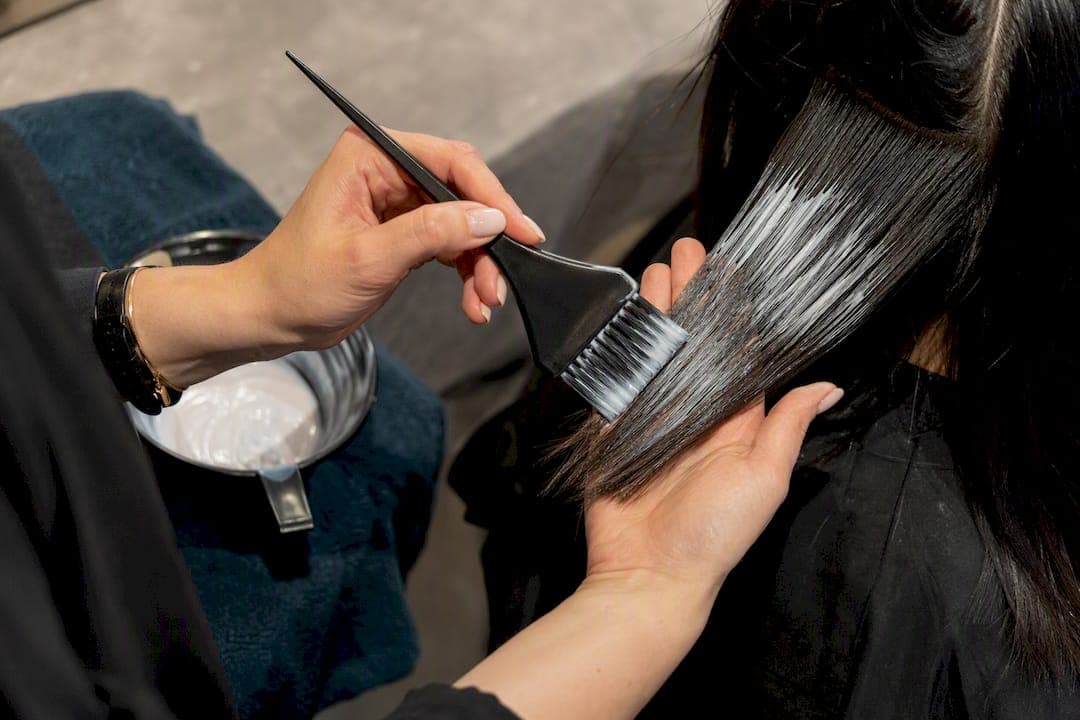
If you color regularly, the fix isn't avoiding color altogether. It's spacing out chemical processing, using bond-building or protein treatments after lightening services, and being honest about how porous your hair already is before adding another round of processing on top.
Do Natural Remedies Actually Regrow Hair?
Some do something. Very few do what the internet claims. Rosemary oil has become the poster child for "natural" hair growth remedies, and it does have some supporting research, but clinical guidance summarized by NewBeauty is clear that the evidence behind it is considerably weaker and less consistent than the data behind minoxidil. That doesn't mean it's useless. It means it shouldn't be marketed as an equivalent substitute for a treatment with FDA-backed clinical trials behind it.
Other popular remedies, like onion juice, rice water, or scalp massage with essential oils, mostly lack rigorous trial data altogether. Scalp massage does have a plausible mechanism: it can temporarily improve blood flow to the area, and some small studies suggest a modest effect on hair thickness with consistent, prolonged use. But "plausible mechanism" and "proven growth treatment" are very different claims, and most marketing around natural remedies blurs that line intentionally.
The pattern worth remembering: judge a natural remedy by the same standard you'd judge any treatment. Randomized controlled trials and regulatory approval carry more weight than a testimonial thread or a single small study with a handful of participants. If a natural option feels good, smells nice, and doesn't irritate your scalp, there's little downside to using it. Just don't let it replace a treatment with actual trial data if genuine hair loss is your concern.
Is Hair Porosity Just Another Trend, or Does It Actually Matter?
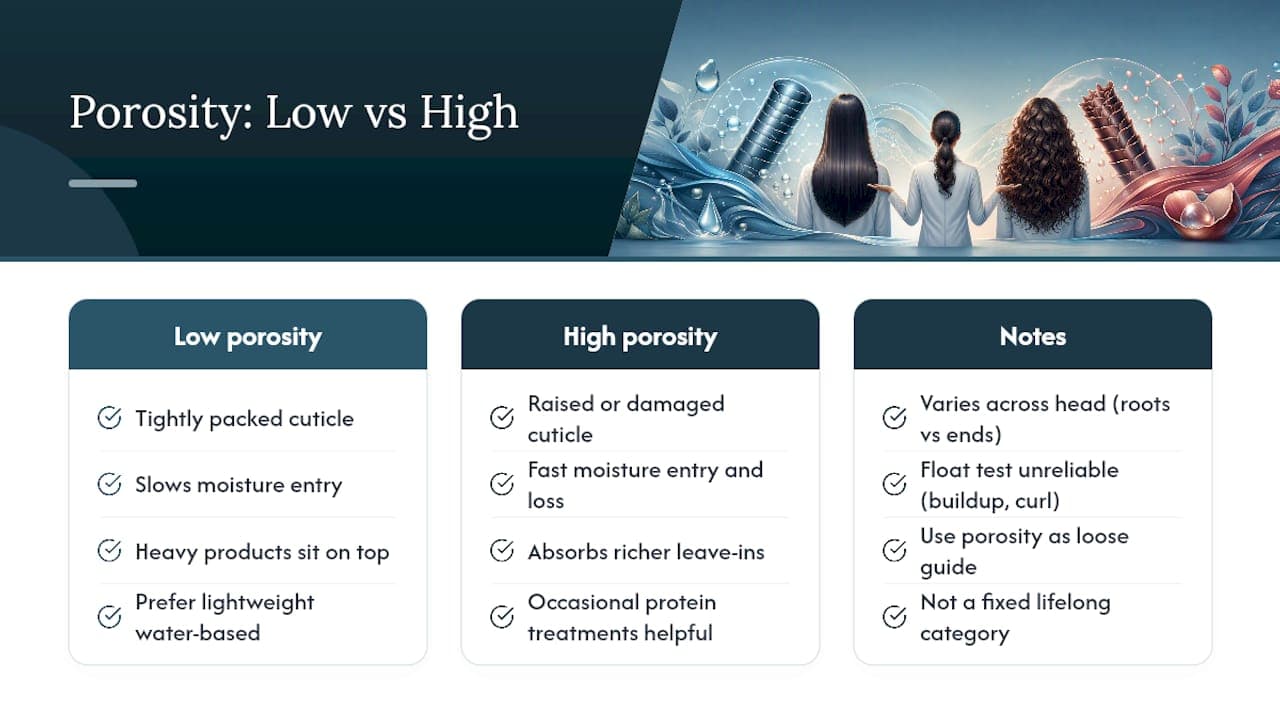
Porosity is real, but the online version of it has turned into an oversimplified sorting system that doesn't match how hair actually behaves. Porosity refers to how easily your hair's cuticle lets moisture in and out. Low-porosity hair has tightly packed cuticles that resist moisture absorption; high-porosity hair has more raised or damaged cuticles that let moisture in and out quickly, often losing it just as fast as it absorbs it.
The misconception isn't that porosity exists. It's the assumption that everyone's hair fits neatly into one of three fixed categories forever, when in reality porosity can vary across different parts of the same head, especially with damage, chemical processing, or heat exposure concentrated on the ends versus the roots. The float test that's popular online, where you drop a strand in water and see whether it sinks or floats, is also far less reliable than people treat it, since it can be thrown off by hair cleanliness, product buildup, or how much the strand curls in water.
Practically, porosity matters most for choosing between lightweight versus heavier moisturizing products and deciding whether protein treatments help or hurt. High-porosity hair generally benefits from richer leave-ins and occasional protein treatments to fill gaps in the cuticle. Low-porosity hair often does better with lighter, water-based products applied to damp hair, since heavy products tend to sit on top rather than absorb. Treat porosity as a loose guide for product texture, not a rigid identity category that dictates every step of your routine.
Does What You Eat and Drink Really Change Your Hair?
Yes, but the effect is slower and less dramatic than diet culture around hair growth suggests. Hair follicles are metabolically active tissue, and chronic deficiencies in protein, iron, zinc, or certain B vitamins can absolutely show up as increased shedding or slower growth. That part isn't a myth. The misconception is treating diet as a fast lever you can pull for quick results, or assuming that if some protein and iron are good, more must be better.
Hydration follows a similar pattern. Drinking enough water supports overall skin and scalp health, but chugging extra water beyond what your body needs won't visibly change hair thickness or growth speed, since hair shafts themselves are already dead tissue that doesn't rehydrate the way skin does. The idea that dehydration alone causes dry, brittle hair oversimplifies what's usually a combination of styling habits, climate, and product choice.
The nutrients with the clearest evidence tied to hair health are iron, protein, and, in deficient individuals, zinc and biotin. Megadosing beyond normal levels doesn't add benefit and, in biotin's case specifically, can interfere with lab testing. A balanced diet with adequate protein does more for long-term hair health than any single "hair growth food" trend circulating online. For a deeper breakdown of specific nutrients and how they connect to growth, Myhair's guide on hair nutrition and growth covers the food side in more detail.
An Editorial Take on Why These Myths Keep Winning
The uncomfortable truth here is that most hair care advice isn't wrong because people are careless. It's wrong because it's optimized for how hair looks in three days, not how a follicle behaves over three months. That's a forgivable mistake, but it's an expensive one if you're spending money on rosemary oil instead of minoxidil, or blaming your shampoo frequency for shedding that's actually hormonal.
Where conventional advice falls short is treating hair care as one-size-fits-all: one washing schedule, one supplement stack, one styling rule for every scalp. The evidence points the other direction. Porosity, oil production, and follicle health vary enough between individuals that generic rules will always be wrong for someone.
If you take one thing from this, prioritize distinguishing cosmetic fixes from biological ones. Shine, softness, and smell are worth chasing for how they feel today. Growth, density, and follicle health are a different problem entirely, and they deserve evidence, not habit.
— Cyriac
This article is general information, not a substitute for advice from a qualified doctor. Consult a qualified healthcare professional about your own circumstances before acting on anything here.
Sources
The claims above draw on clinical and research sources rather than anecdote. The Institute of Trichologists' hair myths guide covers trimming and washing frequency directly. The peer-reviewed review in PMC explains why so many hair beliefs persist despite weak evidence. Mayo Clinic's dandruff overview covers causes and treatment. Consumer Reports testing informs the heat styling guidance, and NewBeauty's expert roundup backs the supplement and minoxidil claims.
- The Great Hair Myths – The Institute of Trichologists
- Preconceived ideas in hair care - PMC
- 10 Hair Myths Experts Wish You’d Stop Believing | NewBeauty
- Dandruff - Symptoms and causes - Mayo Clinic
- Which is better for your hair: blow-drying or air-dry? | Consumer Reports
FAQ
Which fruit stops hair fall?
No single fruit stops hair fall. Fruits rich in vitamin C, like citrus and berries, support collagen production and iron absorption, which matters if you're deficient, but no fruit reverses hair loss caused by genetics, hormones, or medical conditions.
Which organ is connected to hair?
Hair grows from follicles rooted in the skin, but hair health is closely tied to the thyroid gland and overall hormone regulation, since thyroid imbalances are a well-documented cause of increased shedding.
What is the Japanese hair washing technique?
There's no single standardized method marketed under that name with strong clinical backing; approaches associated with it generally emphasize thorough scalp massage, pre-wash detangling, and rinsing at a comfortable warm temperature rather than any specific proven protocol.
What are some common hair care mistakes to avoid?
The biggest ones covered here: skipping washes to prevent "hair loss," using high heat without a protectant, assuming natural remedies match minoxidil's evidence, and ignoring dandruff instead of treating it with a medicated shampoo.
Does trimming your hair make it grow back thicker or faster?
No. Trimming affects the dead hair shaft, not the living follicle, so it has no effect on growth rate; it simply reduces breakage and split ends, which can make hair appear fuller.