Blog
Learning Materials
5 Causes of Slow Hair Growth: Tell Breakage from Follicle Slowdown
Updated: September 7, 2026
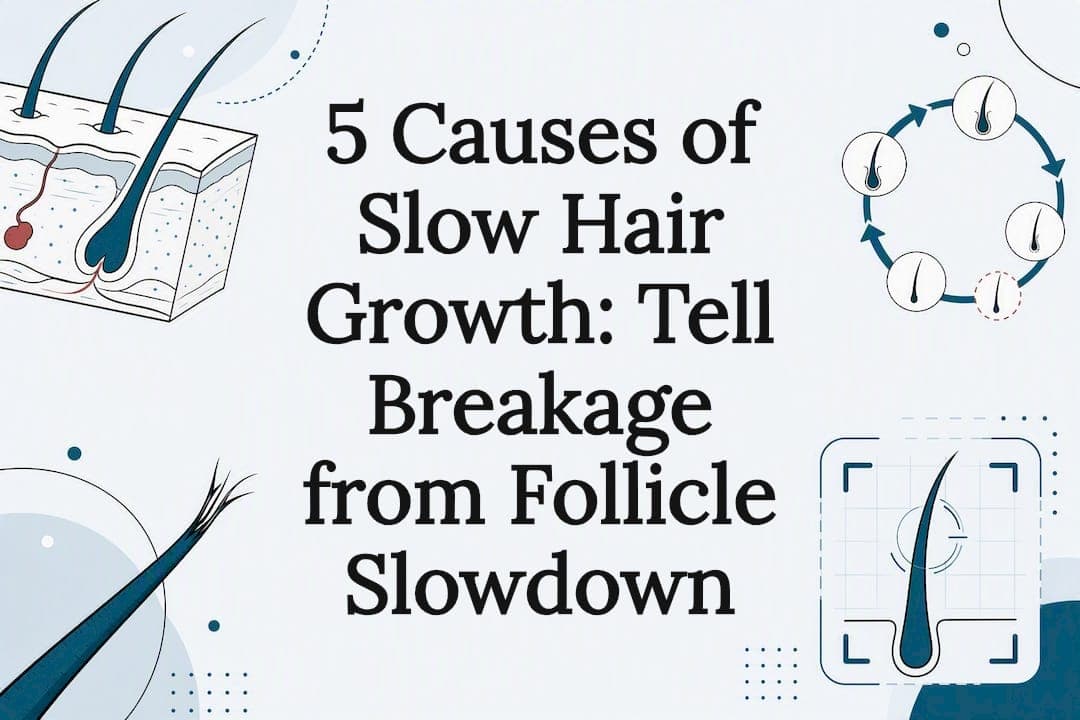
Most cases of slow hair growth come down to one of five things: genetics and age, a hormonal shift (thyroid, postpartum, or menopause), a nutritional gap, stress-triggered shedding, or scalp inflammation and breakage that just makes hair look stuck. Start by checking your last three to six months: any crash diets, new medications, major stress, or weight changes? Look at your diet next. If shedding is sudden, patchy, or comes with fatigue, skin changes, or scalp pain, skip the guessing and see a clinician.
TL;DR:
- Most slow hair growth cases are caused by factors like genetics, hormonal shifts, stress, or scalp inflammation rather than an inability to grow hair.
- Detecting whether thinning is due to breakage or actual follicle slowdown requires examining hair ends, shedding patterns, and timing of hair changes after triggers.
- Addressing scalp inflammation, correcting actual nutrient deficiencies, and treating hormonal issues offer the most effective way to promote healthier hair growth.
- Blood tests and AI scalp analysis help identify root causes and track improvements, preventing unnecessary treatments or supplements.
- Early clinical evaluation is crucial if rapid or patchy hair loss occurs, with treatments like minoxidil taking months to show results.
Table of Contents
- Reasons for Slow Hair Growth: How the Hair Cycle Actually Works
- Major Causes of Slow Hair Growth
- Is It Breakage or Is Growth Actually Slowing Down?
- What Actually Helps Hair Grow Faster and Stronger
- When to See a Clinician (and What Tests to Expect)
- How AI Hair Analysis Helps You Prioritize What to Test
- The Gap Between What Hair Growth Advice Promises and What Works
- Sources
- FAQ
Reasons for Slow Hair Growth: How the Hair Cycle Actually Works
Every strand on your head runs through four phases, and where a follicle sits in that cycle determines whether you notice growth at all.
- Anagen is the active growth phase, lasting two to seven years depending on genetics.
- Catagen is a short transition period, around two to three weeks, where the follicle shuts down production.
- Telogen is the resting phase, lasting roughly three months, before the strand releases.
- Exogen is the actual shedding, when the old hair falls out to make room for a new one.
Scalp hair grows at an average of about 0.35 millimeters a day, close to 1 centimeter a month, though your own rate depends on genetics and age. A shorter anagen phase caps how long your hair can ever get, no matter how well you treat it. And here's the part people miss: if more follicles than usual shift into telogen at once, or exogen speeds up, your hair can look like it stopped growing even though individual strands are lengthening normally underneath. It's not always a growth problem. Sometimes it's a timing problem.
Major Causes of Slow Hair Growth
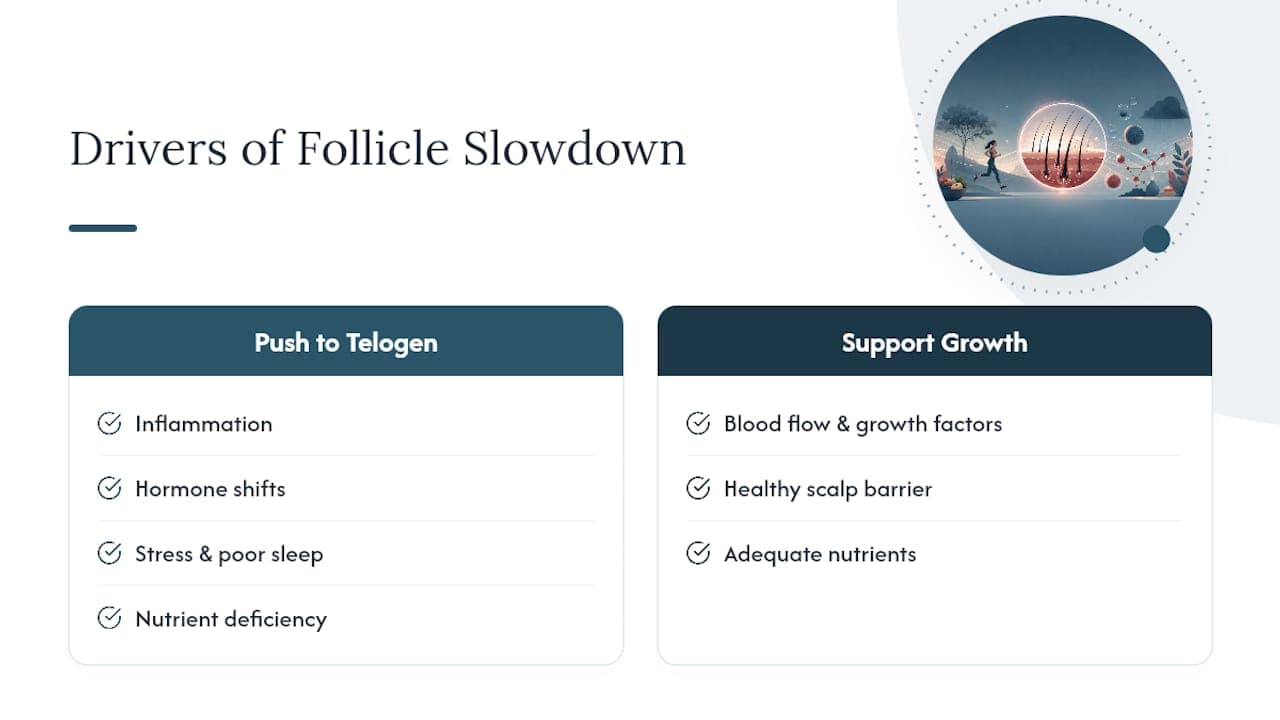
Inflammation, hormone shifts, stress, poor sleep, and nutrient shortfalls can all push follicles out of anagen and into telogen early, while good blood flow and growth factors do the opposite, according to research on hair cycle regulation. Here's how the major causes break down.
Genetics and age. Androgenetic changes cause follicles to miniaturize over time, shortening each anagen cycle and producing thinner, finer strands with each pass. This shows up as gradual thinning at the crown or hairline rather than sudden shedding, and it tends to run in families.
Hormonal causes. Thyroid dysfunction (both underactive and overactive), postpartum hormone crashes, menopause, and androgen sensitivity (DHT) are among the most common hormonal drivers. Suspect a hormonal cause if hair thinning arrives alongside fatigue, weight changes, irregular cycles, or happens in a predictable window like three to six months after childbirth.
Nutrition and diet. Protein, iron, vitamin D, and zinc all support follicle activity, but the evidence supports testing before treating. Iron deficiency is linked to hair loss, though routine screening is only recommended when clinical risk factors are present — not as a blanket test for anyone with thinning hair. Hair follicles are among the most metabolically active cells in the body, but the link between mild, subclinical deficiencies and actual growth rate is genuinely complex and varies person to person. That matters because high-dose supplementation without a diagnosed deficiency carries its own risks and rarely helps if your levels are already normal.
Stress and telogen effluvium. A major physical or emotional trigger, a crash diet, surgery, illness, or a new medication, can push a wave of follicles into premature telogen. The catch is timing: shedding typically shows up two to three months after the trigger, which is why people often can't connect the dots right away. Most cases resolve within six to nine months once the trigger passes.
Scalp health and inflammation. Dandruff, seborrheic dermatitis, psoriasis, and scalp infections all interfere with the environment follicles need to cycle normally. The scalp's barrier function and microbiome are increasingly recognized as determinants of hair longevity, and treating scalp inflammation can shift follicles back into active growth.
Medications and systemic illness. Chemotherapy is the most dramatic example, but certain antihypertensives, retinoids, and autoimmune diseases like lupus or alopecia errata can also slow or disrupt growth.
Styling damage and breakage. Heat tools, chemical treatments, and tight hairstyles don't touch the follicle at all. They just snap the shaft, which makes hair look like it isn't growing when it's actually just not surviving long enough to show length.
Is It Breakage or Is Growth Actually Slowing Down?
Figuring out which category you're in changes everything about what to do next.
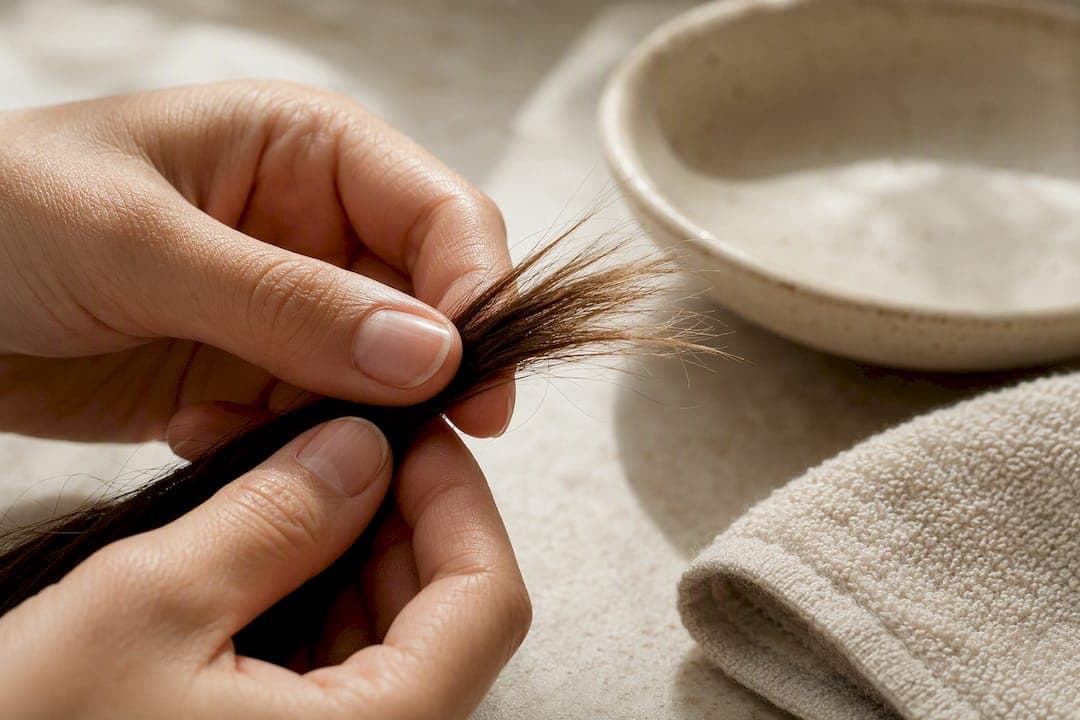
- Check the ends. Frayed, see-through, or unevenly short ends, especially near friction points like collars or hair ties, point to breakage. Diffuse thinning with more visible scalp points to reduced follicle output.
- Watch the shed. More hair than usual on your pillow, in the shower drain, or in your brush suggests a shedding issue rather than a length issue.
- Try the gentle pull test. Grasp a small section of hair and pull gently. Losing more than a few strands signals active shedding, not just breakage.
- Track the timeline. If thinning started two to three months after a stressful event, illness, or medication change, telogen effluvium is a likely culprit.
Escalate to a clinician if you notice rapid or patchy loss, scalp pain, redness, or systemic symptoms like fatigue or weight changes.
Pro Tip: Take a monthly photo of the same section of scalp under the same lighting. Breakage looks different from shedding once you can compare frames side by side, and a photo record beats memory every time.
What Actually Helps Hair Grow Faster and Stronger
Not everything marketed as a hair growth remedy is worth your money, and some of it is worth skipping entirely.
- Fix nutrition with evidence, not guesswork. Get adequate protein and only correct iron, vitamin D, or zinc levels when a blood test actually shows a deficiency. A balanced diet with whole foods generally outperforms unverified supplement stacks, and results still take months to show.
- Treat your scalp like skin, because it is. Address dandruff or seborrheic dermatitis directly, cut back on high heat and harsh chemical processing, and avoid styles that pull at the root.
- Talk to a clinician about medical options. Topical minoxidil is backed by clinical evidence for increasing anagen density in pattern hair loss, and treating an underlying thyroid or hormonal disorder often resolves shedding tied to that cause. Set expectations around months, not weeks.
- Support the basics. Sleep, stress management, and overall health reduce the inflammation that can cut anagen phases short.
Combination approaches, addressing scalp inflammation alongside a medical treatment, for instance, tend to outperform any single fix on its own, according to research on hair loss therapeutics. For the day-to-day side of this, a consistent hair care routine that limits mechanical stress does more for visible length than most people expect.
Pro Tip: If you start a new intervention, whether that's a supplement, a topical treatment, or a diet change, give it a full growth cycle (at least three to four months) before judging whether it worked. Hair responds slowly by nature.
When to See a Clinician (and What Tests to Expect)
See a clinician promptly if you notice sudden heavy shedding, patchy bald spots, scalp pain, or symptoms elsewhere in the body like fatigue or unexplained weight change.
A typical workup includes:
- CBC with ferritin and iron studies to rule out iron deficiency anemia.
- TSH and a broader thyroid panel to check for hypo or hyperthyroidism.
- 25-hydroxy vitamin D to assess deficiency.
- Targeted tests when indicated, such as autoimmune screens or a scalp biopsy for pattern or scarring hair loss.
Results change the plan directly: iron gets replaced only if you're actually deficient, thyroid disorders get treated medically, and patterned or scarring hair loss usually gets referred to dermatology. Diet also plays into which labs matter, so it's worth reviewing your eating habits before your appointment.
How AI Hair Analysis Helps You Prioritize What to Test
Photo tracking and periodic counting are already standard ways clinicians recommend monitoring hair changes over months. An AI-powered platform can scan your scalp to estimate hair counts, density trends, and an overall hair score over time, which helps separate a breakage pattern from a genuine density decline before you spend money on the wrong fix.

Such tools typically flag which labs or lifestyle factors are worth prioritizing and let you track whether an intervention, dietary change, scalp treatment, or medical therapy is actually moving the needle. It's a tracking and prioritization tool, not a diagnosis, so bring your reports to a clinician rather than treating them as a final answer. Scan quality and lighting affect accuracy, and the platform works best as one input alongside an actual medical evaluation.
The Gap Between What Hair Growth Advice Promises and What Works
Most advice on slow hair growth treats every case the same way: take biotin, use rosemary oil, be patient. That approach ignores the single most useful distinction in this whole topic, which is whether you're dealing with breakage or an actual change in follicle output. Those two problems have completely different fixes, and conflating them wastes months.
The conventional wisdom oversells supplements and undersells the scalp. Iron and vitamin D only help if you're actually deficient, and dumping extra zinc or biotin into a body that isn't short on it does nothing measurable. Meanwhile, scalp inflammation, an unglamorous, often ignored factor, is one of the more fixable levers people skip entirely.
If you take one thing from this, prioritize figuring out which category you're in before you spend money on anything. A photo record, a pull test, and a basic panel of bloodwork will tell you more in a month than any product claim will tell you in a year.
— Cyriac
This article is general information, not a substitute for advice from a qualified doctor. Consult a qualified healthcare professional about your own circumstances before acting on anything here.
Sources
- Physiology, Hair - StatPearls - NCBI Bookshelf
- Nutritional factors and hair loss - PMC (2017)
- Hair loss — Mayo Clinic
FAQ
Why is my hair growing so slowly?
Slow-looking hair growth usually reflects one of a few things: genetics shortening your anagen phase, a hormonal shift, a nutrient deficiency, stress-triggered telogen effluvium, or breakage that keeps strands from ever reaching visible length. Growth itself, at the follicle level, is fairly consistent at around 1 centimeter a month unless one of these factors is interfering.
How do you treat slow hair growth?
Start by identifying the actual cause: get bloodwork if deficiency or thyroid dysfunction is suspected, treat any scalp inflammation, cut back on styling damage, and manage stress. Topical minoxidil is a clinician-guided option with real evidence behind it for pattern-related thinning, but any fix needs three to four months before you can judge results.
Can stress really stop hair from growing?
Stress doesn't stop growth directly, but it can push follicles into the resting phase early, causing a wave of shedding that typically shows up two to three months after the stressful event. Most stress-related shedding resolves on its own within six to nine months once the trigger is gone.
Is slow hair growth reversible?
Many causes, including nutritional deficiencies, thyroid problems, stress-related shedding, and scalp inflammation, are treatable or reversible once the underlying driver is addressed. Genetic thinning tends to be more manageable than fully reversible, which is why an early clinical evaluation matters.
Do vitamins actually speed up hair growth?
Only if you're deficient. Supplementing iron, vitamin D, or zinc without a diagnosed shortfall generally does not accelerate growth and can carry its own risks, so testing before supplementing is the safer approach.