Blog
Learning Materials
Receding hairline: Evidence-based solutions and personalized advice
Updated: May 3, 2026
TL;DR:
- More than half of men experience noticeable hair loss by age 50, often relying on ineffective remedies. Personalized AI tools and combination treatments like minoxidil and finasteride significantly improve hair density and progression management. Recognizing natural hairline changes versus active recession is crucial for effective, tailored intervention.
More than 50% of men experience noticeable hair loss by age 50, yet most still try the same generic shampoos and vitamins before seeking anything more targeted. The problem is that not all hair loss is the same, and treating it without understanding the underlying cause wastes time and money. Research now shows that combination topical minoxidil-finasteride produces significantly superior density gains compared to using either product alone. In this guide, you'll learn how to identify what's actually happening at your hairline, which treatments have real evidence behind them, and how personalized AI-powered tools are helping people build smarter, faster, more effective routines.
Table of Contents
- Understanding a receding hairline: Causes and how it differs from a mature hairline
- Top proven treatments: What actually works for a receding hairline?
- Personalizing your hairline recovery: The rise of AI and tailored regimens
- Setting realistic expectations: What to know about timelines, results, and maintenance
- The uncomfortable truth about treating a receding hairline: What most guides won't tell you
- Start your personalized hair growth journey today
- Frequently asked questions
Key Takeaways
| Point | Details |
|---|---|
| Distinguish receding vs. mature hairline | Not every changing hairline is progressive—some stabilize naturally, so assessment is key. |
| Evidence-based therapies work best | Combination treatments like minoxidil-finasteride and oral dutasteride yield the greatest results in studies. |
| Personalization maximizes outcomes | AI-powered assessment helps match treatment to your genetics, lifestyle, and progress for better results. |
| Progress takes patience | Visible improvement usually takes at least 3-6 months, and maintenance is ongoing. |
| No miracle cures exist | Even the most advanced science helps manage—rarely fully reverse—genetic hair loss. |
Understanding a receding hairline: Causes and how it differs from a mature hairline
Not every hairline change is cause for alarm. This distinction matters more than most people realize, because misidentifying a natural shift as aggressive hair loss leads to unnecessary anxiety and, sometimes, the wrong treatments.
A receding hairline is characterized by progressive temple recession and a rising frontal boundary that does not stabilize on its own. A maturing hairline, on the other hand, is a normal developmental shift that typically occurs in men in their late teens and early twenties. It moves back slightly and evenly across the forehead and then stops. According to this comparison of hairline changes, the key difference is progression: a mature hairline stabilizes naturally, while a receding one keeps moving back over months and years.
Common signs that your hairline is actively receding:
- Temples pulling back asymmetrically or more aggressively than the front center
- Increased shedding when washing or styling
- The hairline continues to move after the age of 25
- Noticeable thinning of the density just behind the frontal edge
- Formation of an M-shape at the temples
Women are not immune either. A specific pattern called frontal fibrosing alopecia (FFA) creates a band-like recession along the front and sides of the scalp. FFA is a scarring form of hair loss, meaning it can permanently damage hair follicles if left untreated, making early diagnosis especially critical for women experiencing these symptoms.
A receding hairline driven by genetics is not preventable in the traditional sense, but identifying it early gives you significantly more options for slowing and managing the process. Understanding the hairline causes and stages of your specific loss pattern is the starting point for any effective plan.
The main driver behind androgenetic alopecia (the clinical name for pattern hair loss) is sensitivity to dihydrotestosterone, or DHT. DHT is a hormone derived from testosterone that binds to receptors in genetically susceptible follicles, shrinking them over time in a process called miniaturization. Lifestyle factors like chronic stress, nutrient deficiencies, and poor scalp health can accelerate this process, but they rarely cause the pattern alone when genetics are involved. Understanding this helps set a realistic foundation before exploring what treatments can actually do.

Top proven treatments: What actually works for a receding hairline?
Once you know the type and cause, the next key question is: what treatments actually work?
The short answer is that only a handful of treatments have enough clinical evidence to be worth your time and money. The longer answer involves understanding how they work, which forms deliver the best results, and how combining them changes the equation dramatically.
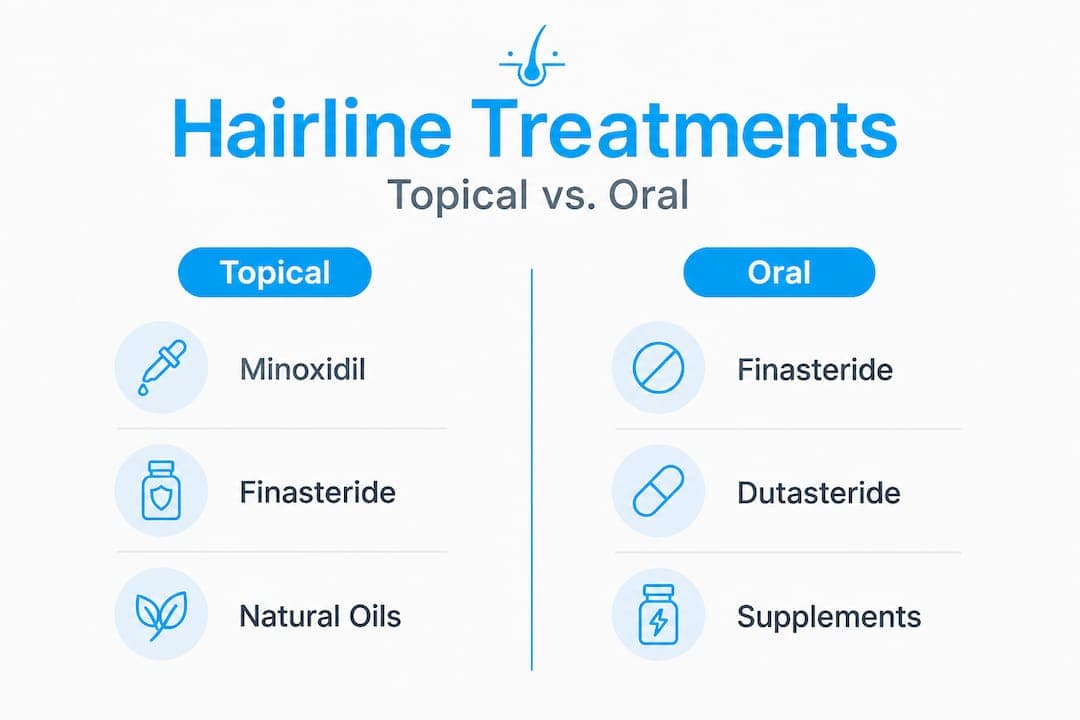
| Treatment | Form | Efficacy level | Key side effects |
|---|---|---|---|
| Minoxidil | Topical / Oral | Moderate | Scalp irritation, initial shedding |
| Finasteride | Oral / Topical | Moderate to High | Sexual dysfunction (oral), minimal (topical) |
| Dutasteride | Oral | High | Sexual dysfunction, reduced libido |
| Minoxidil + Finasteride | Topical combo | Very High | Minimal when topical |
The data behind combination therapy is striking. A meta-analysis of 7 randomized controlled trials (N=396) found that topical minoxidil plus finasteride produced a density gain of +9.22 hairs per square centimeter and a hair diameter increase of +2.26 micrometers compared to minoxidil alone. These aren't cosmetic numbers; they represent measurable follicle recovery. Meanwhile, oral dutasteride 0.5mg demonstrated 92% DHT reduction, making it the most potent single-agent treatment available, though it carries more systemic risks than topical options.
Why topical formulations are gaining ground:
Oral finasteride and dutasteride work systemically, meaning the drug circulates throughout your entire body, not just your scalp. That's where most sexual and hormonal side effects originate. Topical versions deliver the active ingredient directly to the follicle with much lower systemic absorption, which dramatically reduces the risk profile. For many people, topical combination therapy offers a compelling middle ground between efficacy and tolerability.
If you want a practical starting point for using minoxidil, the Rogaine step-by-step guide walks through the application method, frequency, and what to expect in the first few weeks. For a broader view of what's available, the full comparison of hair regrowth options for men covers both prescription and over-the-counter routes.
A word on natural treatments: ingredients like rosemary oil, pumpkin seed oil, and saw palmetto have some emerging evidence, but none have shown the ability to reverse genetic hair loss at the follicle level. They may support scalp health and could complement a medical regimen, but they should not be your primary strategy if you're dealing with progressive recession.
Pro Tip: Combining a topical finasteride-minoxidil formula with a consistent scalp massage routine (5 minutes daily) may enhance absorption and improve local blood flow, giving your treatment regimen a better shot at reaching the follicles that need it most.
Personalizing your hairline recovery: The rise of AI and tailored regimens
Science-based treatments are only half the picture. Here's why individualized approaches are increasingly outperforming one-size-fits-all methods.
The problem with most standard hair loss advice is that it treats every person the same. But the rate at which your hairline recedes, the density of remaining hair, your age at onset, your family history, and your past responses to treatment all shape which regimen will work best for you. That's exactly what AI-powered assessment tools are designed to address.
Here's how a personalized AI assessment process typically works:
- Scalp scan upload: You submit a close-up photo or video of your hairline and scalp, which the algorithm analyzes for follicle density, thinning zones, and recession patterns.
- History intake: The system collects information about your age, family history of hair loss, previous treatments, and current health status.
- Pattern classification: The AI matches your images and data against a database of documented hair loss patterns to assign a stage and trajectory.
- Regimen generation: Based on the findings, the platform suggests specific treatments, products, and lifestyle adjustments tailored to your profile.
- Progress tracking: Follow-up scans are compared over time, allowing the system to refine recommendations based on how your hair actually responds.
This kind of personalization matters because combination topical therapy delivers its best results when applied consistently to the right areas, at the right concentration, for the right user profile. A young man with early-stage M-shaped recession has different needs than a woman managing frontal fibrosing alopecia, and AI can recognize those distinctions in ways a generic product recommendation cannot.
| Profile factor | Why it matters for treatment |
|---|---|
| Age at onset | Earlier onset often means more aggressive course; earlier intervention helps |
| Family history | Predicts likely progression rate and ultimate pattern |
| Current density | Determines whether preservation or regrowth is the primary goal |
| Thinning rate | Fast thinners may need stronger DHT blockers sooner |
| Past treatment response | Informs whether switching or stacking treatments is beneficial |
If you're dealing with a bald spot at the front hairline, AI tools can specifically assess whether that zone has dormant follicles still capable of responding to treatment. For those with a classic M-shaped hairline, the assessment can identify whether the temples are progressing faster than the center and adjust the product focus accordingly.
Pro Tip: Use AI tracking at a fixed interval, monthly or every six weeks, under the same lighting conditions and camera angle. Consistency in your tracking photos is what makes the trend data reliable and actionable over time.
Setting realistic expectations: What to know about timelines, results, and maintenance
Even with advanced interventions, realistic goals are essential. Here's how you can monitor and manage your progress without losing motivation.
One of the biggest reasons people abandon effective treatments is simple impatience. Hair grows approximately half an inch per month, and follicle recovery at a cellular level takes even longer. Clinical studies consistently show that most people begin to see visible changes between the 3 and 6 month mark, with maximum results typically appearing at 12 months or beyond.
What to watch for during treatment:
- Initial shedding in weeks 2 to 6: This is normal and signals that the hair cycle is resetting. It is not a sign the treatment is failing.
- Fuzz or fine hairs at the hairline by month 3: These are early regrowth indicators, even if they're not yet cosmetically significant.
- Density improvement at month 6: Measurable thickening in the thinning zone is the primary benchmark for most treatments.
- Stabilization of recession by month 9: Stopping further loss is often as important as growing new hair.
- Full visual results by month 12: This is when most clinical trials measure their primary endpoints.
It's worth being honest about what oral dutasteride, finasteride, and minoxidil can realistically deliver. Oral dutasteride outperforms finasteride in head-to-head comparisons, and both outperform minoxidil alone. However, topical combinations reduce systemic side effects significantly, making them more sustainable long-term. Home remedies, while helpful for scalp maintenance, have not been shown in clinical data to reverse genetic hair loss at the follicle level.
Maintenance is non-negotiable. This is where many people stumble after early success. Once you stop treatment, DHT sensitivity doesn't disappear. Follicles that have recovered will begin miniaturizing again within months of stopping, meaning the gains you worked hard for can reverse within a year. Think of it like managing blood pressure: the medication works while you take it, and the condition returns when you don't.
For a broader framework of reverse balding solutions and a full hair regrowth guide covering every stage from early thinning to advanced recession, both resources offer actionable, research-backed detail on maintaining your results over the long term.
Pro Tip: Take a dated photo of your hairline every 4 to 6 weeks in natural lighting. It's easy to lose sight of incremental improvements day to day, but comparing photos from 6 months apart often reveals meaningful progress that isn't visible in the mirror.
The uncomfortable truth about treating a receding hairline: What most guides won't tell you
Most articles on hair loss end with something optimistic, a five-step plan, a list of promising products, a promise that if you just follow the steps, you'll get your hair back. That's not the full story, and we think you deserve the full story.
The honest reality is this: treating a receding hairline is almost always about management, not reversal. Even the most effective therapies, dutasteride, topical combination formulas, hair transplants, slow the process, preserve what's there, and partially restore some of what's been lost. They don't reset your genetics. They don't give you the hairline you had at 20. And for many people, that expectation gap is where the real frustration lives.
Many people get discouraged around months 2 to 4 when they don't see dramatic changes. They quit, which is the exact point where consistency starts paying off. The research is clear that home remedies don't reverse genetic hair loss, yet they remain the most commonly tried first step, partly because they feel low-risk and partly because good marketing fills the gap where clinical evidence is thin.
What actually moves the needle is combining the right evidence-based treatment with honest, consistent tracking and the patience to let biology work on its schedule. Tools like male pattern baldness treatment protocols help, but only if you commit to the timeline. Psychological resilience matters just as much as topical formulas. People who approach hair loss as a long-term health management project, rather than a cosmetic crisis to fix quickly, get better results and stick with their regimens longer.
Your genetics set the ceiling. Advanced science and personalized technology help you reach it.
Start your personalized hair growth journey today
You now understand what's driving your hairline recession, which treatments are backed by real clinical data, and why a personalized approach consistently outperforms generic routines.
The next step is getting a clear picture of where you actually stand right now. MyHair.ai's hair analysis scanner uses advanced AI to assess your unique hair density, recession pattern, and follicle health in minutes, giving you a data-driven baseline instead of guesswork. From there, you can start your onboarding to receive a personalized regimen built around your specific profile. Regular check-ins let you track your hair score over time so you can see real progress and adjust your plan as your hair responds. Stop guessing and start with data.
Frequently asked questions
Can a receding hairline be stopped completely?
Genetic hair loss cannot be fully prevented, but consistent use of proven treatments can significantly slow progression and, in many cases, partially restore density.
How long does it take to see results from treatment?
Most people see initial changes between 3 and 6 months, with combination topical therapy showing measurable density and diameter improvements in clinical trials within that window.
Are topical treatments safer than oral medications for hairline recession?
Yes, in terms of side effects. Topical combinations reduce systemic absorption and virtually eliminate the sexual dysfunction risk associated with oral finasteride or dutasteride, while still delivering meaningful clinical results.
Does a receding hairline mean I'll go fully bald?
Not necessarily. Some hairlines stabilize with early treatment, and the rate of progression varies significantly based on genetics, age at onset, and consistency of care.
Recommended
- Stop thinning: solutions for a bald spot at the front hairline | MyHair
- Best Natural Treatment for Receding Hairline in 2025: Safe & Effective Solutions | MyHair
- Hair Receding in 2025: Causes, Stages, and Personalized Solutions | MyHair
- Use Rogaine for Receding Hairline: A Step-by-Step Guide | MyHair
- Tips för bättre hår: Kosttillskott och matvanor för starkare hår – vitaminone.se