Blog
Learning Materials
Round hairline in women: treatments and tips that work
Updated: April 28, 2026
TL;DR:
- A round hairline is a normal variation largely influenced by genetics, but changes can indicate hair loss.
- Early detection through monitoring and addressing hormonal, nutritional, or stress factors can prevent permanent damage.
- Proven treatments include minoxidil, lifestyle adjustments, proper nutrition, and advanced procedures like PRP or hair transplants.
Many women assume their round hairline is simply genetic, permanent, or too minor to address. That assumption sells you short. While genetics do play a role in hairline shape, research increasingly shows that hormonal shifts, daily styling habits, and targeted treatments can visibly change the picture. Whether you're dealing with a naturally curved hairline, noticing new thinning at your temples, or watching your part slowly widen, this guide walks through the real causes, proven treatments, and practical daily habits that make a measurable difference.
Table of Contents
- What causes a round hairline in women?
- Recognizing when your hairline signals a problem
- Proven treatments for round hairlines and thinning
- Daily habits and lifestyle changes for a stronger hairline
- Why a round hairline is normal—but your approach doesn't have to be
- Personalize your hairline journey with AI-powered insights
- Frequently asked questions
Key Takeaways
| Point | Details |
|---|---|
| Round hairline is common | Many women naturally have round hairlines from genetics or early development. |
| Proven science-backed solutions | Medications, procedures, and lifestyle shifts all contribute to better hairline health. |
| Track for real progress | Monitoring your hairline helps you spot positive changes and adjust your approach effectively. |
| Nutrition and gentle care matter | A diet rich in iron, protein, and vitamins, plus gentle styling, makes a real difference over time. |
What causes a round hairline in women?
Understanding your hairline starts with separating what's natural from what's a warning sign. A round hairline simply means the front edge of your hair follows a gentle, curved arc rather than a more angular "M" shape or a straight line. For many women, this is just how their hair grows. Genetics largely set the template for hairline shape, just as they set your eye color or natural curl pattern.
But not all round hairlines are created equal, and not all changes to one are harmless. Here's where it gets important.
Natural variation vs. hair loss patterns
| Feature | Natural round hairline | Receding/thinning hairline |
|---|---|---|
| Hairline position | Stable over time | Moving backward gradually |
| Temple density | Full, even coverage | Thinning or see-through |
| Part width | Consistent | Widening over months |
| Scalp visibility | Minimal | Increasing |
| Miniaturization | Not present | Shorter, finer hairs visible |
A natural round hairline is stable. Thinning, recession, or miniaturization (where hairs get finer and shorter over cycles) are the signals that something beyond genetics is happening.
Several factors can push a stable hairline toward active thinning:
- Hormonal changes: Postpartum shifts, perimenopause, and thyroid irregularities are among the most common triggers for hairline changes in women.
- Nutritional gaps: Low iron (ferritin), insufficient protein, and deficiencies in B vitamins, zinc, and vitamin D all weaken the hair growth cycle.
- Mechanical stress: Repeated tension from tight ponytails, braids, or extensions causes a specific type of hair loss called traction alopecia, which starts exactly where your hairline meets your styling habits.
- Chronic stress: Elevated cortisol can push hair follicles into a resting phase prematurely, causing diffuse shedding that often shows first at the hairline.
Good to know: Preventive care for your hairline means avoiding tight hairstyles, ensuring adequate nutrition (especially iron, protein, and vitamins), managing stress, and practicing gentle scalp care. These aren't optional extras. They're the foundation.
The key takeaway here is that your round hairline might be perfectly natural, or it might be showing early signs of change. Telling the difference requires paying close attention to whether things are stable or shifting.
Recognizing when your hairline signals a problem
Now that you understand what shapes a round hairline, let's look at when to worry about changes. Catching a problem early is genuinely the single most important factor in how well you'll respond to treatment. Hairline conditions that are reversible in month three can become permanent by month eighteen if left unaddressed.
Signs your round hairline may be in trouble:
- Temples that look thinner or more transparent than they did a year ago
- A part that appears wider when you look at photos side by side
- Baby hairs at the hairline that seem shorter and finer rather than growing longer
- Scalp redness, flaking, or itching along the hairline (which can accompany scarring conditions)
- Noticeable shedding when you wash, brush, or style your hair
- A gradual shift backward in where your hairline sits
Three distinct conditions show up most often in women with hairline concerns. Traction alopecia develops from repeated mechanical pulling and is fully reversible if caught early, but can cause permanent follicle damage if the tension continues for years. Female pattern hair loss (FPHL) is driven by androgen sensitivity in hair follicles and typically starts with a widening part and diffuse thinning at the crown before affecting the hairline directly. Frontal fibrosing alopecia (FFA) is a scarring condition that slowly moves the hairline backward and becomes irreversible if advanced, affecting roughly 1 in 142 postmenopausal women.
The practical difference between these conditions matters enormously for treatment. Traction alopecia responds well to lifestyle changes alone if treated early. FPHL often requires medical support. FFA needs specialist care urgently because every month of delay can mean permanent recession.
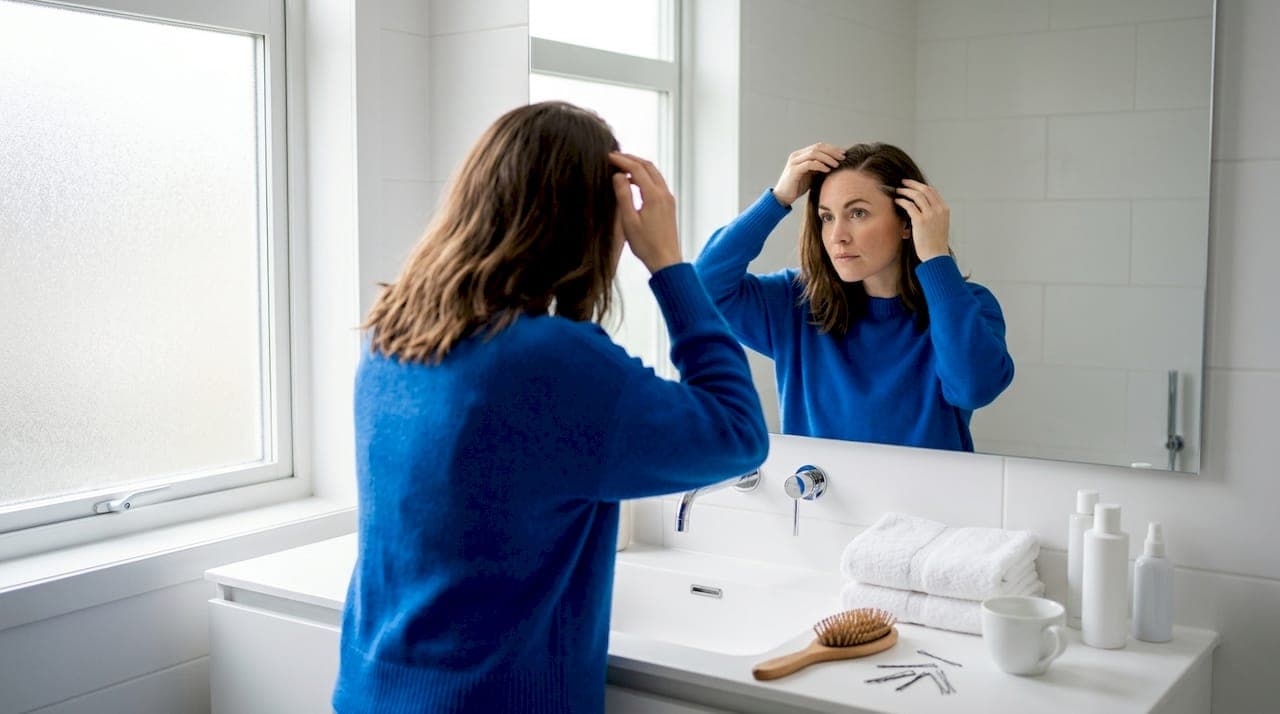
Tracking your hairline over time is the most underrated tool in your arsenal. Most women only notice gradual changes when they compare photos from months or years apart, not day to day.
Pro Tip: Take a photo of your hairline under consistent lighting every four weeks. Keep them in a dedicated album. Small changes that are invisible in the mirror become obvious when you flip between images taken months apart.
It's also worth noting that stress and hair loss are more tightly linked than most people realize. When you're under prolonged stress, the telogen effluvium (a stress-triggered shedding phase) that follows can dramatically thin the hairline within three to six months of a stressful event. Supporting your system with the right hair loss vitamins during high-stress periods adds meaningful protection to your follicles.
Proven treatments for round hairlines and thinning
Once you spot an issue, what actually works? Let's break down proven solutions.
The treatment landscape for women's hairline issues has expanded considerably in recent years, and the old advice of "just try minoxidil and wait" is no longer the complete picture. Here's a structured look at what the evidence supports.
First-line medical treatments:
| Treatment | How it works | Timeline for results | Best for |
|---|---|---|---|
| Topical minoxidil (2 to 5%) | Increases blood flow to follicles | 3 to 6 months | FPHL, general thinning |
| Oral minoxidil (low dose) | Systemic follicle stimulation | 4 to 6 months | Those who prefer oral |
| Spironolactone | Anti-androgen effect | 6 to 12 months | Hormonal hair loss |
| Finasteride (off-label) | Blocks DHT | 6 to 12 months | Post-menopausal women |
Topical minoxidil remains the FDA-approved gold standard for female hair loss. It works by prolonging the anagen (growth) phase of each hair cycle and increasing follicle size. Consistency is non-negotiable. Missing applications regularly can cause the gains you've made to reverse within months.
Procedural and adjunct options:
- Platelet-rich plasma (PRP): Uses growth factors from your own blood, injected into the scalp. Multiple sessions are required (typically three to six), and studies show meaningful density improvements, especially when combined with minoxidil.
- Microneedling: Tiny needles create micro-injuries at the scalp, stimulating growth factors and improving minoxidil absorption. Best used alongside topical treatments rather than as a standalone.
- Low-level light therapy (LLLT): Uses red light wavelengths to stimulate follicle activity. Safe, painless, and increasingly supported by clinical data. Helmets and combs are available for home use.
- FUE hair transplant: Follicular unit extraction moves individual follicles from a donor zone to thinning areas. For women, 1,000 to 1,500 grafts are often used to improve density at the hairline. Best reserved for stable, advanced loss where medical treatments have plateaued.
The smartest approach is layered. Start with minoxidil and lifestyle adjustments. Add an anti-androgen if there are signs of elevated androgens (irregular periods, acne, excess facial hair). Consider PRP or LLLT for a non-drug boost. Reserve transplant for stable, advanced cases after monitoring for six to twelve months.
Pro Tip: Ask your dermatologist specifically about oral minoxidil at a very low dose (0.25 to 1mg). Many women see excellent results without the scalp irritation that sometimes comes with topical application, and newer research is making this a more mainstream first option.
Managing your expectations honestly matters here too. Hair growth is measured in months, not weeks. The follicle cycle runs roughly three months long, which is why virtually all treatments require at least that long before you see anything meaningful. Combine stress hair loss remedies with your medical treatment plan because no topical product will overcome the impact of chronic elevated cortisol on your follicles.
Daily habits and lifestyle changes for a stronger hairline
Besides medical treatments, simple daily changes may protect your hairline for years to come. In fact, for women in the early stages of thinning, lifestyle changes alone can sometimes halt and partially reverse changes before medical treatment becomes necessary.
Styling habits to protect your hairline:
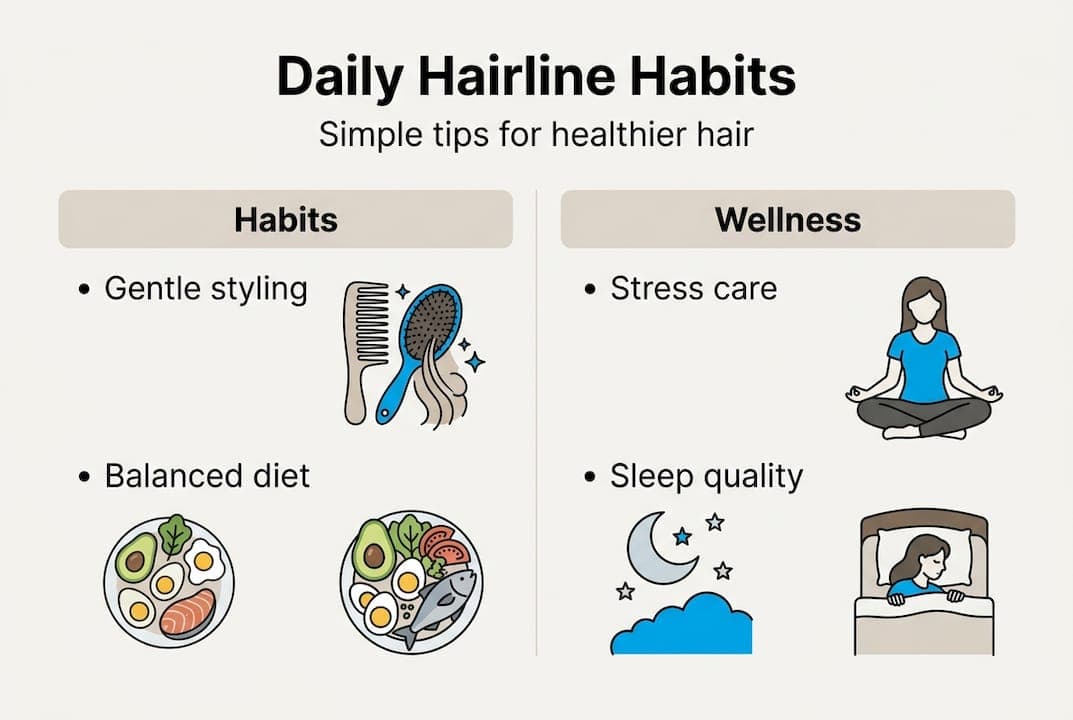
- Switch high ponytails for low, loose buns or braids
- Use scrunchies or fabric-covered bands instead of elastic ties with metal clasps
- Rotate your part rather than always dividing hair in the same place
- Take breaks from extensions, weaves, or braids if you wear them regularly
- Avoid heat styling directly at the hairline where hair is already more fragile
These adjustments reduce the cumulative mechanical load on your follicles. Tight hairstyles and traction are responsible for a significant proportion of preventable hairline recession in women, and the damage builds quietly over years before it becomes visible.
Nutrition for hairline health:
Your hair needs specific building blocks to grow properly. The most impactful nutrients for hairline health include:
- Iron (ferritin): Low ferritin is one of the most common and underdiagnosed causes of female hair loss. Aim for ferritin above 70 mcg/L for optimal hair growth.
- Protein: Hair is primarily made of keratin, a protein. Consuming at least 0.8g of protein per pound of body weight daily supports the growth cycle.
- Biotin and B vitamins: Critical for keratin infrastructure. B12 deficiency, especially in vegetarians, frequently shows up as hair thinning.
- Zinc and vitamin D: Both play regulatory roles in the follicle cycle. Deficiencies in either are consistently linked to increased shedding.
A hair loss diet built around eggs, fatty fish, legumes, leafy greens, seeds, and fortified foods covers most of these bases naturally. Supplementing is a smart backup, but it works best when your diet is already solid.
Sleep matters more than most hair care conversations acknowledge. During deep sleep, your body produces growth hormone, which directly supports follicle repair and regeneration. Chronic poor sleep elevates cortisol, disrupts the anagen phase, and can make every other intervention you're trying less effective. Addressing stress bald spots always has to include sleep quality, not just daytime stress management techniques.
Pro Tip: Get a full blood panel before investing heavily in supplements. Testing ferritin, vitamin D, zinc, thyroid hormones, and androgens gives you a clear picture of where your gaps are. Random supplementation without knowing your baseline is expensive guesswork.
The real power comes from stacking these habits together. Nutrition, gentle styling, stress management, adequate sleep, and medical treatment working simultaneously produce results that none of them can achieve in isolation.
Why a round hairline is normal—but your approach doesn't have to be
Here's a perspective you probably won't find in a beauty magazine: the industry around hairline "improvement" is deeply motivated to make you feel like your natural features are problems to fix. A round hairline, on its own, is not a flaw. It is simply one of many normal, healthy variations in human anatomy.
That said, there is a meaningful difference between embracing your natural hairline and ignoring genuine signs of hair loss because you've told yourself it's "just how you are." We see this distinction collapse constantly, and it costs women months of reversible window time.
The honest truth is that understanding your own hairline causes and patterns is not about chasing an ideal. It's about knowing what is normal for you, and noticing when that changes. Most women would benefit far more from systematic, personalized monitoring than from any single product or trend treatment.
The other thing worth saying plainly: progress in hair health requires patience in a culture obsessed with quick transformations. Women who do best are those who build consistent habits, track changes objectively rather than anxiously, and adjust their approach based on what they actually observe. Perfection is not the goal. Sustainable, personalized attention to your specific pattern is.
Trust your instincts when something looks different. And trust evidence over aesthetics when choosing how to respond.
Personalize your hairline journey with AI-powered insights
Ready to take the next step on your hair health journey? Knowing the information is one thing. Applying it to your specific hairline, your particular pattern of change, and your individual history is where most generic advice falls short.
MyHair.ai uses advanced AI to analyze your hair health score based on real scan data, giving you a personalized baseline and tracking changes over time rather than relying on memory or guesswork. The scanner tool captures detailed hairline data so you can see exactly what's shifting, month by month. From there, the platform generates tailored product and treatment recommendations matched to your unique hair profile. Getting started is simple through the guided onboarding process, which walks you through your first assessment in minutes. When every woman's hairline story is different, a personalized approach is the most powerful one you can take.
Frequently asked questions
Is a round hairline normal for women?
Yes, a round hairline is a common and normal variation, largely shaped by genetics. It only becomes a concern when you notice active thinning or recession rather than a stable shape.
How do I know if my round hairline is a sign of hair loss?
Look for new thinning, a widening part, or temples that look more transparent over time. These changes, unlike a stable round shape, can signal FPHL or other conditions, with FFA affecting roughly 1 in 142 postmenopausal women.
What is the best treatment for a thinning round hairline?
Topical minoxidil in 2 to 5% concentration is the FDA-approved first-line option, paired with nutritional support and eliminating tight hairstyles for best results.
Are hair transplants effective for women with a round hairline?
FUE hair transplants can meaningfully improve density, with 1,000 to 1,500 grafts typically used for women, though transplants are most effective when hair loss has stabilized first.
Can lifestyle changes stop a receding or thinning hairline?
Yes, particularly in the early stages. Gentle styling, improved iron and protein intake, and active stress management can protect and sometimes partially reverse early hairline changes before they become permanent.