Blog
Learning Materials
6 Step Photo Self Check for an Unhealthy Scalp
Updated: September 11, 2026
Persistent itching, flaking, unusual oiliness, redness, bumps, tenderness, and hair thinning are the clearest signs of an unhealthy scalp. Most cases respond to gentle, consistent care within a few weeks. If you notice pain, pus, bleeding, rapid patchy hair loss, or fever, skip the home remedies and see a dermatologist.
TL;DR:
- Most scalp symptoms improve with consistent, gentle care within a few weeks, but red flags like pus, bleeding, or rapid hair loss require immediate dermatological attention.
- Identifying the underlying cause—such as fungal infection, inflammation, contact reaction, or traction—is essential for selecting effective treatment.
- Over-the-counter medicated shampoos should be used two to three times weekly, not daily, and should be rotated with hydrating products to prevent irritation.
- Regular home scalp exams with photos and notes help detect early changes and guide timely clinical intervention.
- Persistent bad odor, severe pain, or symptoms unresponsive to standard care may signal infection or damage, necessitating professional diagnosis and treatment.
Table of Contents
- What Are the Warning Signs of an Unhealthy Scalp?
- What Causes an Unhealthy Scalp?
- How Do You Check Your Scalp at Home?
- What Actually Helps: Treatment and Prevention That Works
- When Should You See a Dermatologist?
- Can an Unhealthy Scalp Smell Bad?
- Is Scalp Pain Different From Tenderness?
- How Do You Keep Your Scalp Healthy Long-Term?
- Does Diet Actually Affect Your Scalp?
- Is All Hair Shedding a Bad Sign?
- What I'd Tell a Friend About Reading Their Own Scalp
- What Myhair Can (and Can't) Do for Your Scalp
- Sources
- FAQ
What Are the Warning Signs of an Unhealthy Scalp?
An unhealthy scalp rarely announces itself with just one symptom. It usually shows up as a cluster of small, annoying signals that build over weeks, and each one tends to point toward a different underlying cause.
Persistent itching is the most common complaint, and it's also the most misdiagnosed. Dry skin causes itch, but so do dandruff, seborrheic dermatitis, fungal infections like tinea capitis, and contact dermatitis from a new shampoo or hair dye. The itch itself doesn't tell you which one you have. What matters is how it behaves: itch that fades with a basic moisturizing shampoo is probably dryness, while itch that keeps returning despite treatment often signals something fungal or inflammatory underneath.
Flaking comes in three distinct flavors, and mixing them up leads to the wrong treatment. Dry scalp produces small, white, powdery flakes that shed easily and often pair with tight, dry skin elsewhere on the body. Dandruff, by contrast, tends to show up on an oilier scalp and involves a yeast called Malassezia, which is why antifungal shampoo works for dandruff but does nothing for simple dryness. Psoriasis flakes look different again: thick, silvery-white, and often stacked on raised red plaques that can extend past the hairline onto the forehead or behind the ears.
Excessive oiliness shows up as hair that looks greasy again within a day of washing, sometimes accompanied by a heavier buildup around the crown. This isn't just cosmetic. Oil that mixes with dead skin cells and old product residue creates a film that can clog follicles and feed the yeast responsible for dandruff.
Redness or inflamed patches deserve attention because they signal your immune system is already reacting to something, whether that's infection, an allergic trigger, or an autoimmune condition like psoriasis. Redness that spreads quickly, feels hot to the touch, or comes with swelling is not something to wait out.
- Bumps, pustules, or small cysts often mean an infected or inflamed hair follicle, a condition called folliculitis.
- Tenderness or pain when you touch or brush a specific area can appear before any visible bump shows up, and early tenderness around follicles is often the first sign of emerging folliculitis or traction damage, which means catching it early gives you a much simpler fix.
- Noticeable thinning or patchy bald spots differ from ordinary shedding in pattern: diffuse thinning across the whole scalp suggests a systemic trigger, while a distinct bald patch points to something localized, like fungal infection or alopecia areata.
- Persistent product buildup that survives a normal wash cycle often worsens flaking and makes the scalp feel unusually tight, almost like it's being stretched.
Board-certified dermatologists note that persistent bumps, scabs, and redness are inflammatory signals that, left untreated, can progress to permanent hair loss in the affected area, which is exactly why these symptoms shouldn't get filed under "probably nothing." The gap between a minor irritation and a scarring condition is often just time and neglect. Catching the pattern early, whether it's the type of flake, the texture of a bump, or where tenderness concentrates, gives you and any clinician you eventually see a much faster path to the right treatment.
What Causes an Unhealthy Scalp?
Every visible sign traces back to one of a handful of root causes, and knowing which category you're dealing with narrows down treatment fast.
Infections are a major driver. Tinea capitis, a fungal infection common in children, causes intense itching, scaly patches, and brittle hair that snaps off close to the scalp. Bacterial folliculitis produces small, tender pustules, often in clusters, sometimes triggered by tight hats, sweat, or shaving.
Inflammatory skin conditions behave differently from infections because they aren't contagious and tend to flare and calm in cycles. Seborrheic dermatitis brings greasy yellow scale and redness, usually along the hairline and behind the ears. Psoriasis produces thicker, more sharply defined plaques. Eczema tends to show up alongside dry, cracked skin patches elsewhere on the body.
Allergic and contact reactions come from something you put on your scalp: a new dye, a sulfate-heavy shampoo, or a styling product with fragrance. The tell is timing. Symptoms that start within a day or two of switching products are almost always contact dermatitis.
Mechanical causes are easy to overlook because they feel more like a hairstyle problem than a health one. Tight ponytails, braids, or weaves pull on the follicle until it becomes inflamed, a pattern known as traction alopecia. The scalp tenderness that comes with it is a direct warning sign, not just discomfort to push through.
- Fungal infections: intense itch, scaling, brittle hair breakage
- Bacterial folliculitis: clustered tender pustules, often after sweating or shaving
- Seborrheic dermatitis: greasy yellow scale along the hairline
- Contact dermatitis: sudden reaction tied to a new product
- Traction alopecia: gradual thinning at the hairline from tight styles
Age plays a role too. Cradle cap is common in infants, head lice show up most in school-age children, and tinea capitis is more frequent in younger kids than adults. In adults, telogen effluvium (a stress or hormone-driven shedding phase) and general hormonal shifts are more likely culprits behind diffuse thinning than any of the localized infections above.
How Do You Check Your Scalp at Home?
A five-minute self-exam under good light beats guessing, and it gives you real documentation if you end up needing a dermatologist visit.
- Find bright, natural light if possible, or a bathroom light plus a handheld mirror. Overhead lighting alone tends to wash out redness and hide subtle scale.
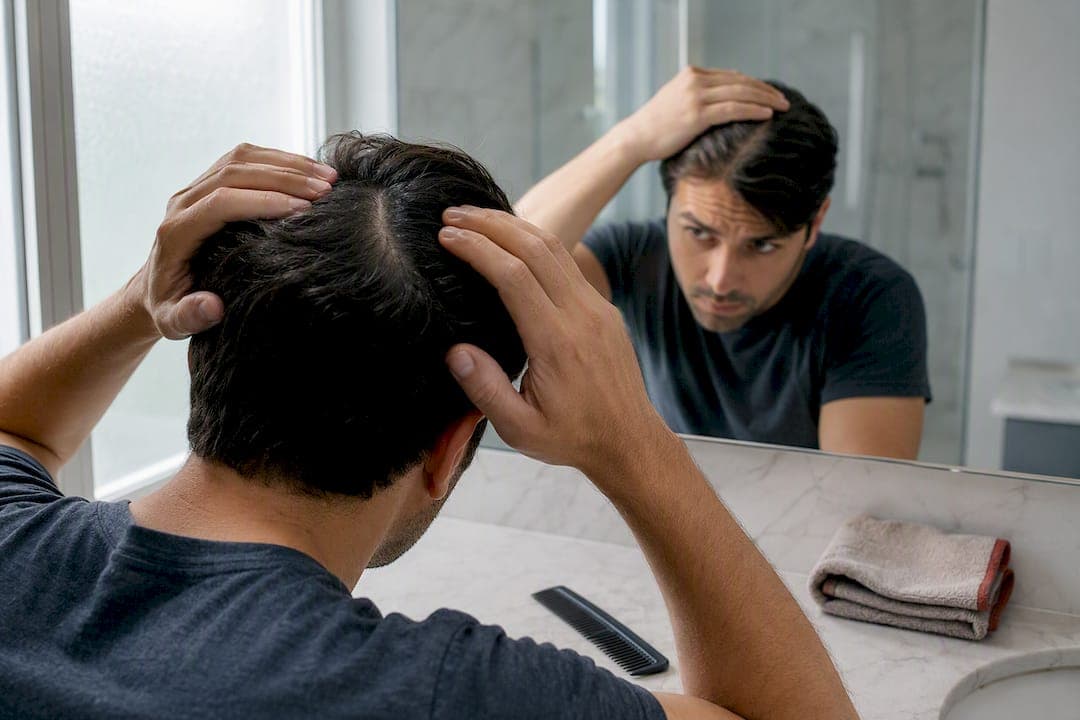
- Part your hair in small sections, working from the front hairline back, and check the crown, temples, nape, and the skin just behind your ears, where inflammation often hides first.
- Take photos weekly using the same angle, distance, and lighting each time. If you're documenting a specific bump or patch, place a coin or small ruler next to it for scale.
- Run a gentle comb test: pull a comb slowly through dry hair and count what falls out. Losing more than a strand or two per pass consistently, over several days, is worth tracking.
- Press lightly on any tender spot with a fingertip. Note whether the pain is sharp, dull, or tied to a visible bump.
- Write down a simple timeline: when symptoms started, any new products, recent illness, medication changes, or unusually stressful weeks.
Pro Tip: Keep your weekly photos in one folder labeled by date. Consistent, dated images catch a widening part or a spreading patch far earlier than memory alone, and clinicians rely on exactly this kind of visual timeline to track how a treatment is working.
What Actually Helps: Treatment and Prevention That Works
Most mild scalp issues respond to the right over-the-counter product used consistently, not aggressively.
Medicated shampoos are the first-line option for dandruff and fungal-related flaking. Look for active ingredients like ketoconazole, zinc pyrithione, or selenium sulfide. Topical antifungals such as ketoconazole are commonly used for fungal or yeast-related scalp conditions, and they typically need two to three uses a week, left on for several minutes before rinsing, rather than a quick daily lather.
Moisturizing versus antifungal is the fork in the road most people get wrong. If your flakes are small, dry, and not accompanied by oiliness, an antifungal shampoo can actually make things worse by stripping what little moisture remains. Save the medicated formulas for scalps that are visibly oily or scaly, and reach for a gentle, hydrating conditioner or scalp oil for straightforward dryness. Our guide to an effective oil hair routine walks through how to balance oil without triggering breakouts, and if your flaking shows up specifically on a shaved or very short scalp, dandruff on a bald head behaves a little differently and needs its own approach.
- Use medicated shampoo 2 to 3 times weekly, not daily, for dandruff or fungal flaking.
- Switch to a hydrating conditioner or lightweight oil if flakes are dry and small.
- Avoid scrubbing or scratching, which breaks the skin barrier and invites infection.
- Rotate hairstyles and loosen tight ponytails or braids to relieve tension on follicles.
- Limit heat styling and chemical processing while the scalp is visibly inflamed.
Overdoing it is a real risk. Aggressive use of harsh medicated shampoos on an already irritated scalp can strip natural oils and worsen sensitivity, which is the opposite of what most people expect from a "treatment" product. If your scalp feels raw, alternate a medicated wash with a gentle, fragrance-free one instead of using the strong formula every single day.
Diet won't fix an infection, but omega-3 fatty acids and adequate protein intake support the kind of scalp environment that heals faster and sheds less. Think of dietary support as a helpful adjunct sitting alongside topical treatment, not a replacement for it.
Give consistent, appropriate care several weeks before judging whether it's working. That's roughly the time for a full shedding and regrowth cycle to show visible change. If symptoms are stable or improving, keep going. If they're getting worse, or you hit any of the red flags below, that timeline shortens considerably.
Pro Tip: If you switch products, change only one variable at a time. Swapping shampoo, conditioner, and styling product all in the same week makes it impossible to tell what actually helped or hurt.
When Should You See a Dermatologist?
Certain signs mean skip the wait and book an appointment: painful pustules, bleeding, visible pus, fever, rapidly spreading patchy hair loss, or any scarring. Symptoms lasting several weeks without improvement, a widening part, or thinning that affects your confidence also warrant a professional evaluation.
A dermatologist visit usually starts with a straightforward exam, sometimes followed by dermoscopy or trichoscopy, a magnified look at the scalp and hair shafts that can distinguish inflammatory conditions from infectious ones without an immediate biopsy. If infection is suspected, a swab or culture identifies the specific fungus or bacteria involved. Unclear plaques sometimes warrant a small biopsy.
Treatment moves fast once a cause is confirmed. Fungal infections generally respond to oral antifungals within several weeks. Inflammatory conditions like psoriasis or severe seborrheic dermatitis often improve with topical or oral steroids within days to a couple of weeks. Bacterial folliculitis typically clears with a short course of antibiotics.
Can an Unhealthy Scalp Smell Bad?
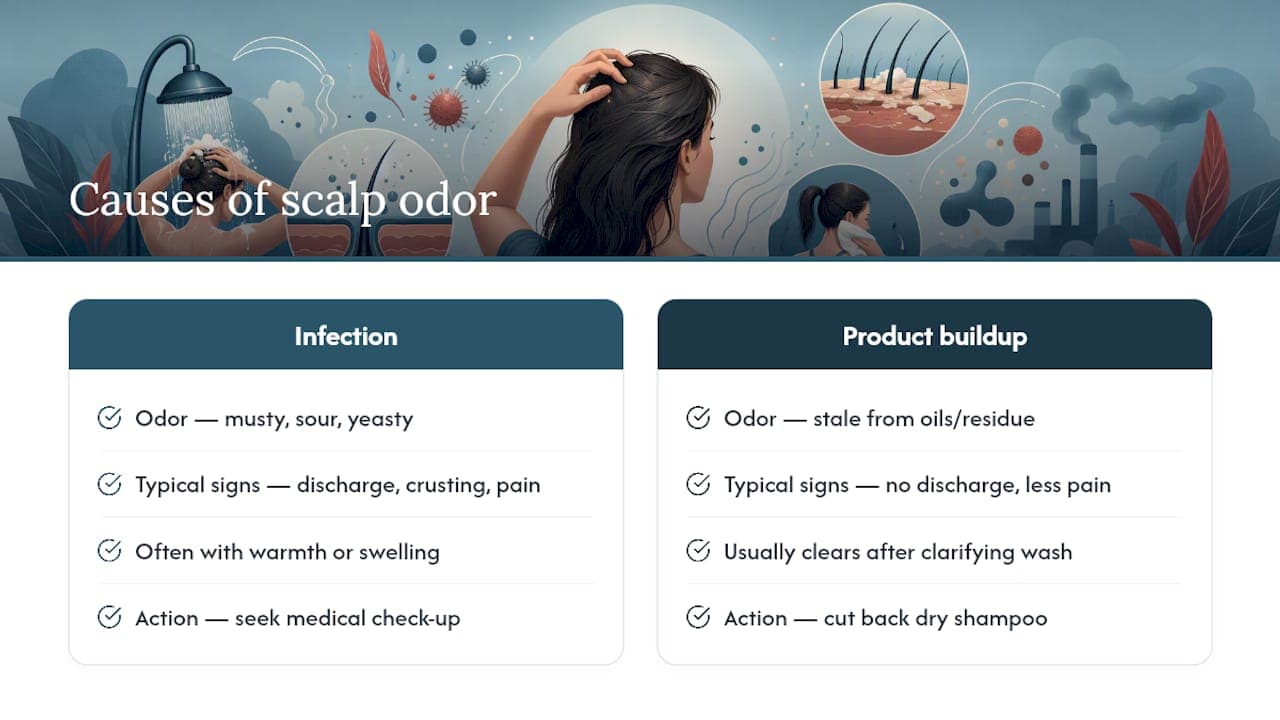
Yes, and it's a sign worth taking seriously rather than covering up with more shampoo. A musty, sour, or yeasty odor that persists even after washing usually points to an overgrowth of bacteria or fungus feeding on trapped oil, sweat, and dead skin cells.
Seborrheic dermatitis and severe dandruff both create the kind of oily, warm environment where odor-causing microbes thrive. Folliculitis can add a sharper, almost sour smell when pustules are actively draining or healing. If the odor comes with visible discharge, crusting, or pain, that combination points toward active infection rather than simple buildup.
A milder, more common cause is straightforward product buildup: oils, dry shampoo, and styling residue layering up between washes until they start to smell stale. This version usually clears within a wash or two once you switch to a clarifying shampoo and cut back on dry shampoo between washes.
The distinction matters because treating odor with more fragrance, rather than addressing the underlying oil or infection, just masks the signal your scalp is sending. If a persistent smell shows up alongside itching, flaking, or tenderness, treat it as part of the same underlying issue rather than a separate cosmetic problem. And if clarifying shampoo and a week of gentle care don't resolve it, that persistence itself is a reason to get it checked, especially if you also notice warmth or swelling in the area.
Is Scalp Pain Different From Tenderness?
Tenderness is a mild, localized soreness you might only notice when you touch or brush a specific spot. Pain is a step beyond that: it can be sharp, throbbing, or present even without touching the area, and it often signals something has progressed further than simple irritation.
Pain that radiates, burns constantly, or intensifies over a day or two suggests active inflammation or infection rather than a passing irritation. Folliculitis that goes untreated can shift from tender bumps to genuinely painful, swollen pustules. Traction from tight hairstyles can escalate from mild tenderness to a deep, aching soreness that lingers even after you take the style down.
Nerve-related scalp pain is its own category, sometimes described as burning, tingling, or a sensation like the scalp is "tight" or "on fire" without any visible rash or bump. This can be linked to tension headaches, occipital neuralgia, or stress, and it doesn't always show up alongside the visible signs covered earlier in this guide.
The practical rule: tenderness is worth watching and gentle care. Pain that's constant, worsening, or paired with any visible swelling, discharge, or fever belongs in the same red-flag category as pus or bleeding, and it's a reason to move up your timeline for seeing a clinician rather than waiting out the usual 4 to 6 weeks of home care.
How Do You Keep Your Scalp Healthy Long-Term?
Prevention is less about any single product and more about consistency and restraint. Wash on a schedule that matches your scalp type. Oily scalps often do better washing every other day, while dry or sensitive scalps can stretch to twice a week without buildup becoming a problem.
Choose a gentle, sulfate-free cleanser as your daily driver and save medicated or clarifying shampoos for when symptoms actually appear, not as a permanent replacement. Rotate hairstyles regularly so the same follicles aren't under constant tension. Loosen ponytails and braids, and give your scalp a break from tight styles at least a few days a week.
Protect your scalp from sun exposure along the part line, where skin is often thinner and more exposed than people realize. Limit heat styling directly at the roots, and space out chemical treatments like coloring or relaxing rather than stacking them close together.
Brush gently, starting from the ends and working up, rather than dragging a brush straight through tangled roots. And build in that weekly photo check from earlier in this guide. Catching a subtle change in week three beats discovering it in month three, when the treatment window has narrowed considerably.
Does Diet Actually Affect Your Scalp?
Diet doesn't cure an infection or clear up psoriasis on its own, but it shapes how resilient your scalp is and how fast it recovers from irritation. A diet low in protein, iron, or essential fatty acids can leave the scalp's skin barrier weaker and slower to heal, which makes existing symptoms linger longer than they should.
Omega-3 fatty acids, found in fatty fish, walnuts, and flaxseed, support the skin's natural oil balance and may ease inflammation-driven irritation. Adequate protein intake matters because hair follicles are metabolically active and among the first tissues to show stress when nutrition drops. Chronic stress, meanwhile, raises cortisol levels, and cortisol is one of the known triggers behind telogen effluvium, the diffuse shedding phase that can follow a hard illness, a major life event, or months of poor sleep.
Hydration plays a smaller but real role too. A dehydrated body tends to produce drier skin overall, scalp included, which can worsen flaking that's already borderline.
None of this replaces topical treatment or a dermatologist visit when symptoms are active and specific. But as a background factor influencing how quickly your scalp bounces back, diet and stress management sit closer to the foundation than most people assume.
Is All Hair Shedding a Bad Sign?
No, and this is one of the most common sources of unnecessary worry. The average scalp sheds somewhere in the range of dozens to just over a hundred hairs a day as part of a normal growth cycle, where each follicle cycles through growth, rest, and shedding phases on its own independent timeline.
Normal shedding is diffuse, meaning it's spread evenly across the scalp rather than concentrated in one spot, and it doesn't come with visible skin changes underneath. You'll see it in your shower drain or hairbrush, but you won't see a bald patch, redness, or scaling where it's happening.
Unhealthy hair loss looks different in pattern and often in the skin beneath it. A distinct bald patch, a widening part that keeps widening, thinning concentrated at the crown or hairline, or shedding that comes with any of the scalp signs covered earlier in this guide (redness, scaling, tenderness) points toward something more specific than routine turnover.
Timing is another clue. Sudden, heavy shedding two to three months after an illness, surgery, major stress, or childbirth usually points to telogen effluvium, which is temporary and typically resolves within several months once the trigger passes. Gradual thinning that never really stops, especially with a family history of hair loss, points more toward pattern hair loss, which behaves very differently and benefits from earlier intervention.
What I'd Tell a Friend About Reading Their Own Scalp
Flakes don't always mean dry scalp. Half the people convinced they have "dry scalp" actually have early dandruff, and reaching for a heavier moisturizer just feeds the yeast causing it. Diagnosis by symptom-matching only gets you so far.
What actually helps is documentation. Photos, timing, and a plain-language log of what changed beat guesswork every time, whether you're managing it yourself or handing the timeline to a dermatologist. A tool like MyHair's hair score tracking can help you spot a widening part or a new patch before it's obvious to the eye. It's a monitoring aid, not a diagnosis. Red flags still mean a real doctor visit.
— Cyriac
What Myhair Can (and Can't) Do for Your Scalp
Myhair is built for the gap between "something seems off" and "I have a diagnosis." It's not a replacement for a dermatologist visit when you're dealing with pain, pus, or rapid hair loss. It's the tool that helps you figure out whether you're even in that territory yet.
The platform's AI-powered scalp and hair analysis works from photos you take yourself, tracking changes in density, texture, and visible scalp condition over time instead of relying on memory or a single snapshot. That matters most for the people this guide is written for: anyone testing a new OTC routine and wanting proof it's actually working, or anyone building a symptom timeline before a clinician appointment. Myhair also surfaces product suggestions matched to what your scans show, so you're not guessing between a clarifying shampoo and a hydrating one. If you're ready to start tracking instead of wondering, set up your first scan and see what your scalp's actual pattern looks like over a few weeks.
Sources
- Why scalp health is the foundation of healthy hair - Mountain Dermatology
- Scalp problems - WebMD
- Ketoconazole topical: Mayo Clinic (drug info) and related scalp condition guidance - Mayo Clinic
This article is general information, not a substitute for advice from a qualified doctor. Consult a qualified healthcare professional about your own circumstances before acting on anything here.
FAQ
How Do You Tell if You Have an Unhealthy Scalp?
Watch for persistent itching, flaking, oiliness that returns quickly after washing, redness, bumps, tenderness, or noticeable thinning. Two or more of these together, especially lasting beyond a couple of weeks, point to a scalp issue worth treating directly.
How Do You Know if You Have a Bad Scalp?
A "bad" scalp usually shows visible signs like scale, redness, or persistent oiliness rather than staying quietly uncomfortable. If symptoms don't ease with a gentle, consistent routine over 2 to 4 weeks, that's your signal to look closer or see a dermatologist.
How Can I Tell if My Scalp Is Damaged?
Damage often shows as tenderness, patchy hair loss, scarring, or skin that feels unusually tight or raw to the touch. Weekly photo comparisons, as described earlier in this guide, catch subtle damage like a widening part far earlier than casual observation.
What's the Difference Between Dandruff and Dry Scalp?
Dandruff involves an oilier scalp and yeast overgrowth, producing flakes alongside greasiness, while dry scalp produces small, powdery flakes without excess oil. They need different treatments: antifungal shampoo for dandruff, hydrating care for dryness.
When Should I See a Dermatologist for Scalp Symptoms?
See a dermatologist for painful pustules, bleeding, pus, fever, rapid patchy hair loss, or any symptom that hasn't improved after several weeks of consistent, appropriate home care.