Blog
Learning Materials
10 Mistakes Sabotaging Hair Growth, With Dermatologist Backed Fixes
Updated: September 13, 2026
Most slow or stalled hair growth traces back to a handful of daily habits: grooming damage from heat and rough handling, scalp neglect from buildup or the wrong wash schedule, chemical damage from over-processing, and systemic issues like poor nutrition or chronic stress. Fixing these usually shows results within a few months. If shedding or thinning continues, it's worth checking for a medical cause, since treatments like minoxidil exist for diagnosed conditions.
TL;DR:
- Correct wash frequency depends on scalp type; oily scalps need washing every one to two days, while dry or textured hair may go four to seven days.
- Using high heat without protection or lowering the heat setting to below 350°F can significantly reduce hair damage and breakage.
- Tight hairstyles pulled frequently or with snagging metal clips cause traction alopecia, which can become permanent if not moderated.
- Chemical treatments like bleaching and relaxing should be spaced at least eight to ten weeks apart to prevent damaging the hair's structural bonds.
- Consistent product use, proper hydration, and limiting product switching help maintain scalp health and support steady hair growth.
Table of Contents
- Top Mistakes Sabotaging Hair Growth (and the Fix for Each)
- When Habit Fixes Aren't Enough: What a Deeper Look Involves
- Why Switching Products Constantly Backfires
- Hydration's Overlooked Role in Hair Health
- Ditch the Metal Clips and Tight Elastics
- What Readers Miss About Timelines and Small Wins
- Get a Clearer Picture With a Personalized Hair Scan
- Sources
- FAQ
Top Mistakes Sabotaging Hair Growth (and the Fix for Each)
Hair doesn't stop growing because of one dramatic event. It slows down because of small, repeated habits that add up over months. Here are the ten most common culprits, in the order dermatologists see them show up in daily routines, along with what actually fixes each one.
1. Washing on the wrong schedule for your scalp type
Overwashing strips natural oils and can irritate the scalp, but underwashing lets sebum and product residue build up and smother follicles. Neither extreme helps hair grow. The right frequency depends on your scalp, not a generic rule: oily scalps often need washing every one to two days, dry or textured hair can go four to seven days, and everyone in between should watch for the signs rather than follow a calendar. If your scalp itches, flakes, or feels tight and greasy at the same time, that's usually a sign your current schedule is mismatched. Research on the scalp microbiome shows that both extremes disrupt the bacterial balance that keeps follicles functioning normally.
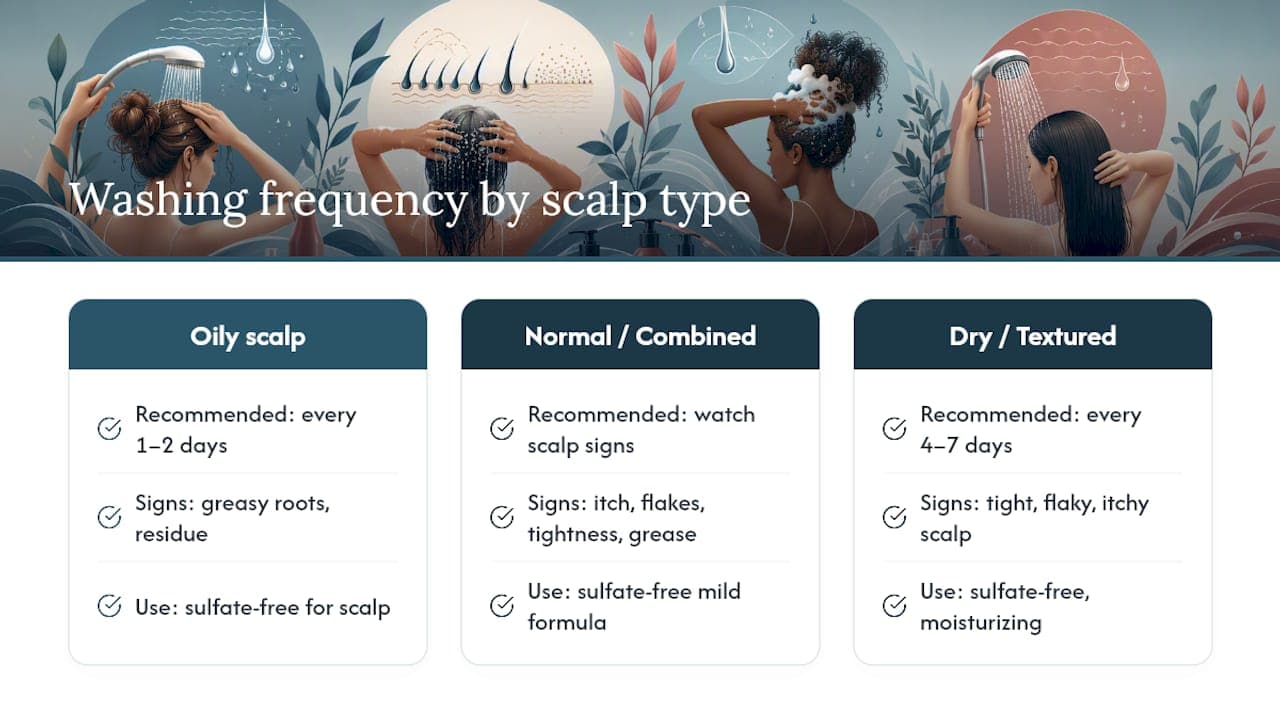
Fix: Match your wash frequency to how your scalp actually behaves that week, not a fixed number of days. Use a sulfate-free shampoo formulated for your scalp type and pay attention to whether roots feel clean 24 hours after washing.
2. Heat styling without protection or temperature control
Flat irons and curling wands can reach 400°F or higher, well past the point where hair's protein structure starts to break down. Repeated high-heat exposure lifts the outer cuticle layer, leaving strands rough, prone to split ends, and more likely to snap before they reach any meaningful length.
A 2019 review found that using a heat protectant before styling meaningfully cuts down on this kind of breakage, and lowering your tool's temperature setting compounds that benefit.
Fix: Keep styling tools at or below 350°F for most hair types, apply a heat protectant every time, and give hair heat-free days between sessions.
3. Tight hairstyles that pull on the follicle
Ponytails, buns, and braids pulled too tight create constant tension on the follicle. Do this often enough and you risk traction alopecia, a form of hair loss that starts as thinning at the hairline and temples and can become permanent if the follicle scars over. Dermatologists warn that repeated tension, not one tight ponytail, is what causes lasting damage.
Fix: Alternate tight styles with looser ones, avoid pulling the same section of hairline every day, and if you notice small bumps or soreness at the root after taking a style down, that's your scalp telling you to ease up.
4. Brushing wet hair with the wrong tool
Wet hair stretches further and snaps more easily than dry hair, especially with a standard bristle brush dragged straight through knots. The American Academy of Dermatology lists this among the most common hair-damaging habits people do without thinking.
Fix: Detangle with a wide-tooth comb or wet brush starting at the ends, working upward in small sections, and apply a leave-in conditioner first to reduce friction.
5. Rough towel drying instead of gentle drying
Rubbing a terrycloth towel over wet hair roughs up the cuticle and creates frizz and breakage, the same mechanism as aggressive brushing but applied to every strand at once.
Fix: Squeeze out excess water with a microfiber towel or an old cotton T-shirt instead of rubbing. Sleeping on a silk or satin pillowcase reduces overnight friction that undoes your careful drying the next morning.
6. Skipping clarifying washes and scalp exfoliation
Dry shampoo, silicones, and styling products build up at the root over time, even with regular washing, if you never use a clarifying formula. That buildup can trap oil and dead skin cells against the scalp, and a growing body of scalp-health guidance frames this as a real barrier to follicle function, not just a cosmetic issue.
Signs of buildup include a dull, waxy feel at the roots, slower-than-usual absorption when you apply products, and itchiness that regular shampoo doesn't resolve.
Fix: Use a clarifying shampoo or scalp scrub once every one to two weeks depending on product use, since scalp care is increasingly treated as its own category separate from hair care.
7. Over-processing with bleach, dye, or relaxers
Chemical services break down the disulfide bonds that give hair its structure. One process is manageable; stacking bleach on top of previous color, or relaxing hair every few weeks, doesn't give those bonds time to rebuild, and the result is hair that snaps before it ever gets long.
Fix: Space chemical services at least eight to ten weeks apart, and consider lower-damage alternatives like balayage or gloss treatments between full color sessions.
8. Applying conditioner to the scalp instead of the ends
Putting conditioner at the root doesn't nourish anything; scalps already produce their own oil. What it does do is contribute to the same follicle-clogging buildup covered above. Practitioners specifically point to scalp-applied conditioner as a buildup driver, since the product sits at the root rather than rinsing cleanly away.
Fix: Apply conditioner starting at the mid-lengths and working down to the ends, where hair is oldest and driest and actually needs it.
9. Restrictive dieting and guessing at supplements
Crash diets, very low-calorie eating, and inadequate protein intake are a well-documented trigger for telogen effluvium, a stress-related shedding pattern that shows up two to three months after the dietary change. Clinicians commonly recommend getting roughly 50 grams of protein a day for many adults, since hair is largely built from protein and a shortfall shows up there first.
Buying biotin gummies because an ad promised faster growth is a common misstep. Cleveland Clinic is direct about this: there's no miracle supplement, and the better move is testing for actual deficiencies in iron, vitamin D, or biotin before adding anything to your routine.
Fix: Get a blood panel before supplementing, eat enough protein daily, and avoid extreme calorie restriction if you want hair to keep growing on schedule.
10. Ignoring stress, sleep, and other medical causes
Chronic stress and poor sleep raise cortisol and contribute to the same telogen effluvium pattern seen with restrictive dieting. Systemic oxidative stress from smoking, poor diet, or disrupted sleep can also accelerate follicle aging over time, working against hair health from the inside rather than at the surface.
If shedding is sudden, patchy, or accompanied by scalp pain or scarring, that's beyond a habit fix and needs a clinician.
Statistic Callout: Topical minoxidil (5%) is FDA-approved and can slow hair loss with daily use over a few months, while in-clinic PRP sessions typically run in the range of a few hundred to over a thousand dollars each, a useful benchmark if you're weighing medical options against habit changes.
Pro Tip: Track your progress with photos taken under the same lighting every two weeks. Hair changes are gradual enough that memory alone will tell you nothing changed, when in fact it has.
Habits worth reviewing in one glance:
- Wash frequency matched to scalp type, not a fixed schedule
- Heat protectant applied every time tools exceed 300°F
- Conditioner on mid-lengths and ends only, never the scalp
- Clarifying wash every one to two weeks if you use styling products often
- Protein intake checked against roughly 50 grams a day before adding supplements
When Habit Fixes Aren't Enough: What a Deeper Look Involves
General advice covers most cases, but not all of them. If you've corrected washing, heat, and diet for a few months and shedding hasn't slowed, something else may be driving it, and that calls for more than a routine adjustment.
Watch for these red flags, which point toward a medical evaluation rather than a habit fix:
- Sudden, heavy shedding over a few weeks rather than a gradual thinning
- Patchy hair loss in distinct spots rather than overall thinning
- Scalp pain, scarring, or visible inflammation at the roots
- Thinning that started abruptly after illness, surgery, or a major life change
A doctor working through unexplained hair loss typically starts with a CBC and iron studies, a vitamin D check, and thyroid function tests, since deficiencies or thyroid imbalance in any of these show up in hair before they show up anywhere else. This is exactly where a dermatologist evaluation earns its place over another round of guessing.
This is also where AI-powered tools fit in, not as a diagnosis, but as a way to organize what's actually happening on your scalp and track it over time. Such tools can scan your hair and scalp, flag patterns worth discussing with a clinician, and prioritize which routine factors are most likely contributing before you spend months guessing at fixes.
Why Switching Products Constantly Backfires
Chasing every new shampoo or serum that promises faster growth is its own mistake, separate from picking the wrong product in the first place. Every time you introduce a new formula, your scalp has to adjust to a different mix of surfactants, fragrances, and active ingredients, and that adjustment period often looks like irritation: itching, redness, or unexpected flaking that has nothing to do with an underlying scalp condition.
Constant switching also makes it nearly impossible to tell what's actually working. If you change your shampoo, conditioner, and a leave-in treatment all within the same month and then notice less breakage, you have no way to know which change caused it. Dermatologic guidance on everyday hair habits consistently points to consistency itself as part of a healthy routine, not just the products chosen.
Fix: Pick a shampoo and conditioner suited to your scalp type and stick with them for at least four to six weeks before judging results, unless you have an active reaction like burning or hives. When you do want to switch, change one product at a time rather than overhauling your entire routine at once. That gives your scalp a chance to settle and gives you a real signal about what's helping and what isn't.
Hydration's Overlooked Role in Hair Health
Dehydration affects hair the same way it affects skin: it shows up as dullness, brittleness, and a scalp that produces either too much oil or too little. Hair itself is largely made of protein, but water is what keeps the strand flexible enough to resist snapping under normal daily stress like brushing or tying it back.
A dehydrated scalp often overcompensates by producing excess sebum, which then contributes to the buildup problem covered earlier in this list. It's a cycle: not enough water leads to a stressed scalp, a stressed scalp overproduces oil, and that oil traps more debris at the root.
Hydration works from the inside out here more than any topical product can. Drinking enough water throughout the day, and adding water-rich foods like cucumber, watermelon, and citrus to your diet, supports the same follicle environment that adequate protein intake supports. Neither replaces the other. If you're already tracking protein intake per the nutrition section above, add hydration as the second half of that same equation rather than treating it as a separate wellness goal.
Fix: Aim for consistent water intake throughout the day rather than a big glass right before bed, and treat a persistently oily or persistently dry scalp as a signal worth investigating alongside your usual hydration habits.
Ditch the Metal Clips and Tight Elastics
Metal clips, snag-prone elastic bands, and rubber ties are small culprits that cause outsized damage. Metal edges catch on strands and create micro-tears in the cuticle every time you clip or unclip them, and the classic thin rubber band grips hair so tightly that removing it often pulls out strands along with the tie.
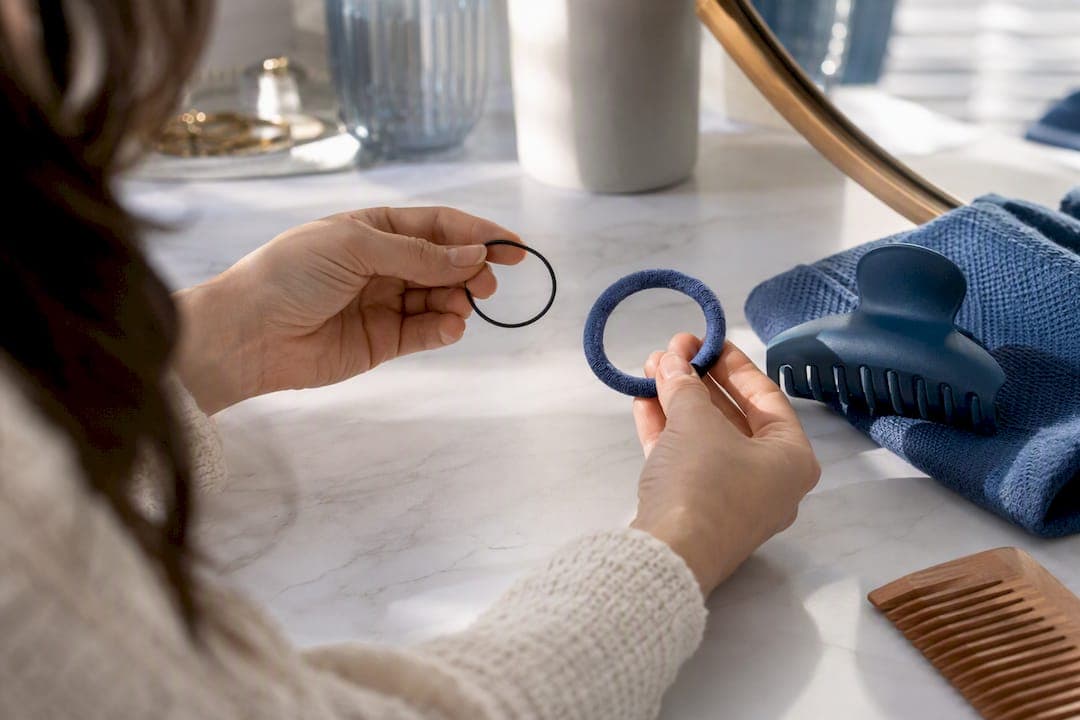
This matters more than it sounds. Repeated snagging in the same spot, usually right where a ponytail holder sits, creates a weak point that breaks under normal tension. Over months, that shows up as a visible thinner patch right at the ponytail height, which people often mistake for hair loss when it's actually cumulative breakage.
Fix: Switch to fabric-covered elastics, silk scrunchies, or claw clips with rounded, coated teeth instead of metal or thin rubber. Rotate the height of your ponytail or bun so the same section of hair isn't bearing the tension every single day. Loosening the accessory itself, not just the hairstyle, is a fix most people skip entirely.
What Readers Miss About Timelines and Small Wins
The pattern that shows up again and again is that people aren't making one catastrophic mistake. They're usually running two or three of the habits covered above at once, often heat styling combined with tight ponytails and a wash schedule that's wrong for their scalp. Fixing all three matters more than fixing any single one perfectly.
Hair grows at roughly half an inch per month for most people, which means visible length change takes patience that most routines don't build in. What changes faster, usually within four to eight weeks, is texture and shedding: less hair in the drain, less breakage on the pillow, a scalp that feels calmer.
Track those smaller signals instead of measuring length every week. Fewer strands in your brush and a fuller-looking part line are the early proof that your fixes are working, long before you'll see a measurable length difference. Expecting dramatic growth in a month sets you up to abandon habits that were actually helping.
— Cyriac
Get a Clearer Picture With a Personalized Hair Scan
Reading a list of ten mistakes is useful, but figuring out which two or three actually apply to you is harder to do in a mirror. MyHair uses AI-powered analysis of your scan to generate a hair health score, flag the habits most likely affecting your specific scalp and strand pattern, and track changes over time as you make corrections.
It's built for the exact situation this article covers: you've tried adjusting your wash routine or cutting back on heat, and you want to know what to prioritize next instead of guessing at another product. The scan won't replace a dermatologist's evaluation for red-flag symptoms like patchy loss or scalp scarring, but for the everyday habits driving slow growth, it gives you a starting point that's specific to your hair rather than generic advice. Start with the hair analysis scanner or head to app onboarding to upload your first scan and see where your routine stands today.
This article is general information, not a substitute for advice from a qualified doctor. Consult a qualified healthcare professional about your own circumstances before acting on anything here.
Sources
- It's not too late to save thinning hair | Harvard Health
- 10 hair care habits that can damage your hair | American Academy of Dermatology (AAD)
- Review on scalp microbiome and scalp health (PMC)
- What makes hair grow? | Healthline
FAQ
What can stunt your hair growth?
The most common causes are heat and chemical damage, scalp buildup from infrequent clarifying, tight hairstyles that strain the follicle, restrictive dieting, and chronic stress, all of which push more hairs into a resting or shedding phase.
What is the biggest hair mistake every woman over 50 makes?
Skipping regular trims and continuing high-heat styling on hair that's already thinner and more fragile due to age-related changes tends to compound breakage faster than at younger ages, making split ends and snapped strands more visible.
What are the big three for hair regrowth?
Most dermatology guidance centers on consistent scalp care matched to your scalp type, adequate protein and nutrient intake confirmed through testing rather than guessing, and medically supported options like topical minoxidil for diagnosed thinning.
Why shouldn't you pluck your chin hair?
Plucking repeatedly can irritate the follicle and occasionally cause ingrown hairs or scarring in that area, and it doesn't slow regrowth. This is a facial hair issue separate from scalp hair growth, so it isn't a habit that affects hair on your head.
How often should I get a trim to support hair growth?
Every eight to twelve weeks is a reasonable default for most people, since trimming split ends before they travel up the shaft prevents breakage that would otherwise force you to cut off more length later.