Blog
Learning Materials
Transform your hair naturally: evidence-based product guide
Updated: April 14, 2026

TL;DR:
- Natural ingredients like rosemary oil and Redensyl have clinical evidence supporting their effectiveness for hair growth. Proper application and consistency over 3 to 6 months are key to seeing results. AI tools can personalize routines to optimize natural hair care outcomes.
Most people assume that if a hair product doesn't come from a lab with a long chemical name on the label, it probably doesn't work. That assumption is wrong. Rosemary oil rivals 2% minoxidil for promoting hair growth in androgenetic alopecia, and with fewer side effects. The science behind all natural hair products has matured significantly, and the results are turning heads. In this guide, you'll find out exactly which natural ingredients have clinical backing, how they compare to synthetic options, and how to build a personalized routine that actually delivers.
Table of Contents
- What makes a hair product 'all natural'?
- Clinically proven natural ingredients for hair growth
- How do all natural hair products compare to synthetic solutions?
- Maximizing your results: Application, consistency, and personalizing with AI
- Why most people underestimate the power of all natural hair products
- Get personalized hair growth results with AI guidance
- Frequently asked questions
Key Takeaways
| Point | Details |
|---|---|
| Natural rivals clinical | All natural products can rival pharmaceutical solutions in hair growth efficacy, backed by clinical evidence. |
| Key actives matter | Ingredients like rosemary, coconut oil blends, caffeine, and botanicals drive real results. |
| Consistency is essential | Sustained use over 3-6 months delivers the biggest hair health gains. |
| Personalization boosts success | AI-powered analysis ensures your routine is tailored for optimal hair growth. |
What makes a hair product 'all natural'?
Not every product with a leaf on the label deserves the "natural" title. Truly all natural hair products use plant-based or mineral ingredients as their active and supporting components. They avoid synthetic perfumes, artificial dyes, parabens, sulfates, and petroleum-derived compounds. That's the definition, but the reality in stores is messier.
Greenwashing is rampant in the hair care industry. A product can legally call itself "natural" while containing only a small percentage of botanical ingredients alongside a long list of synthetics. To cut through the noise, look for certifications like COSMOS Organic or USDA Organic, and read ingredient lists from top to bottom. Ingredients are listed by concentration, so if water and silicone appear before any plant extract, that's a red flag.
Here are the key actives to look for when choosing natural hair products:
- Rosemary oil: Stimulates scalp circulation and follicle activity
- Coconut oil: Penetrates the hair shaft to reduce protein loss
- Caffeine: Blocks DHT (dihydrotestosterone, a hormone linked to hair loss) at the follicle level
- Adenosine: Promotes the growth phase of the hair cycle
- Redensyl: A botanical compound that activates hair follicle stem cells
- Peptides: Signal proteins that encourage follicle repair and regrowth
Science-backed actives like caffeine, adenosine, peptides, and botanicals reduce fallout and improve density in measurable ways. These aren't folk remedies. They're ingredients with peer-reviewed evidence behind them.
The benefits of going natural extend beyond just avoiding chemicals. Natural products tend to be gentler on the scalp, which matters if you're dealing with sensitivity or inflammation. They also reduce the risk of dependency, meaning your hair doesn't become reliant on a synthetic compound to maintain its current state. Understanding natural hair product safety is the first step toward making smarter choices for long-term hair health.
Clinically proven natural ingredients for hair growth
Let's get into the actual numbers, because this is where natural hair care gets genuinely exciting.
Rosemary oil has been studied head-to-head against minoxidil, the gold-standard pharmaceutical for hair loss. The results showed rosemary oil comparable to minoxidil for promoting hair growth in androgenetic alopecia, with participants reporting significantly less scalp itching with rosemary. That's a botanical ingredient matching a prescription-level result.

Redensyl-based serums that combine rosemary with other botanicals push results even further. A clinical study on Soulflower Rosemary Redensyl Serum found it increased hair growth rate by 46.71%, density by 37.92%, thickness by 80.85%, and reduced hair fall by 64.89%. Those are dramatic numbers from a natural formula.
| Ingredient | Key benefit | Clinical result |
|---|---|---|
| Rosemary oil | Follicle stimulation | Comparable to 2% minoxidil |
| Redensyl serum | Stem cell activation | 46.71% growth rate increase |
| Caffeine | DHT blocking | Reduced fallout, improved density |
| Coconut oil blend | Protein retention | Reduced breakage, improved shine |
| Adenosine | Growth phase extension | Improved density over 3-6 months |
"The gap between natural and pharmaceutical hair care is narrowing fast. Clinical trials now show botanicals achieving 30 to 80 percent improvements in key hair metrics, results that were once considered exclusive to synthetic compounds."
Coconut oil blends also outperform plain coconut oil. When combined with complementary botanicals, they reduce hair fall more effectively and deliver visible improvements in shine and manageability. Explore natural oils for hair loss and hair growth oils to understand which combinations work best for your hair type.
Pro Tip: Don't just pick one active ingredient and call it a routine. The strongest clinical results come from formulas that combine multiple proven actives, like rosemary with Redensyl, or caffeine with peptides. Look for products for growth and hair loss that stack these ingredients intentionally.
How do all natural hair products compare to synthetic solutions?
This is the question most people have but rarely get a straight answer to. So here it is.
In terms of raw efficacy, synthetics like minoxidil and finasteride have a larger body of long-term evidence. But the gap is closing. Botanicals show 30 to 60 percent improvements in density and fall reduction over 3 to 6 months, which puts them in the same performance tier as many pharmaceutical options for mild to moderate hair loss.
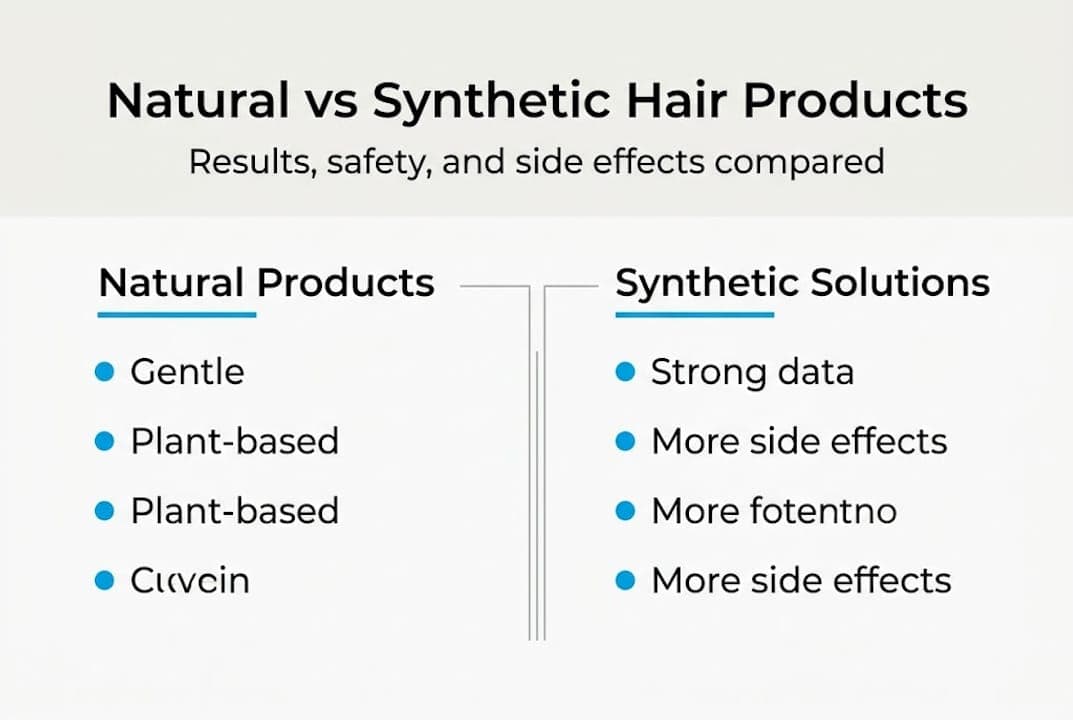
| Factor | All natural products | Synthetic solutions |
|---|---|---|
| Efficacy (3-6 months) | 30-80% improvement in key metrics | Consistent, broad evidence base |
| Side effects | Mild, rare (scalp sensitivity possible) | Itching, dryness, hormonal effects |
| Dependency risk | Low, builds sustainable results | High, rapid loss if discontinued |
| Cost over time | Often more affordable | Can be expensive long term |
| Environmental impact | Lower, biodegradable ingredients | Higher, synthetic manufacturing |
The dependency issue is real and underreported. Many people who stop using minoxidil experience rapid shedding within months. Natural actives, by contrast, tend to support the scalp environment in ways that build on themselves over time. Your follicles get healthier, not more dependent.
Key stat: Topical application twice daily with massage, combined with pre-wash oil treatments for penetration, produces the benchmark 35 to 80 percent metric improvements seen in trials. Method matters as much as formula.
For a complete guide to natural hair growth that covers both ingredient science and application strategy, the evidence consistently points to consistency and correct technique as the deciding factors between average and excellent results.
Maximizing your results: Application, consistency, and personalizing with AI
Knowing which ingredients work is only half the equation. How and when you apply them determines whether you get clinical-grade results or just a nice-smelling scalp.
Here's a step-by-step approach based on what the clinical trials actually used:
- Start with a pre-wash oil treatment. Apply a natural oil blend (rosemary, coconut, or a Redensyl formula) to dry hair and scalp 30 to 60 minutes before washing. This allows deeper penetration into the follicle.
- Massage for 4 to 5 minutes. Scalp massage increases blood flow to follicles and improves absorption. Use your fingertips, not your nails.
- Apply your serum or treatment after washing. On clean, slightly damp hair, apply your active serum directly to the scalp. Don't rinse it out.
- Repeat twice daily for serums. Topical application twice daily is the protocol used in clinical trials that produced the strongest results.
- Commit to a minimum of 3 to 6 months. Hair growth cycles are long. You won't see full results in a few weeks, and that's normal.
Pro Tip: Layer your treatments strategically. Use heavier oils as pre-wash treatments and lighter serums as leave-in actives. Mixing them together reduces absorption and dilutes the active concentration.
Building a natural hair care routine that you'll actually stick to matters more than finding the perfect product. Consistency beats perfection every time.
This is where AI-powered tools change the game. Instead of guessing which actives suit your specific hair type, density, and loss pattern, platforms like MyHair.ai analyze your hair through a scan and match you to evidence-based products and routines. You get a personalized protocol, not a generic recommendation. Explore essential natural products as a starting point, then let AI refine your routine based on your actual hair data.
Why most people underestimate the power of all natural hair products
There's a deeply ingrained belief that "natural" means gentle, and gentle means weak. It's a cultural hangover from decades of pharmaceutical marketing that positioned synthetic compounds as the serious option and botanicals as the alternative for people who couldn't afford real medicine.
That framing is outdated. The clinical benchmarks now show otherwise. Real users who commit to evidence-based natural routines are reporting faster, more sustainable improvements than they experienced with synthetics, without the side effects or the fear of what happens if they stop.
The uncomfortable truth is that most people who "tried natural and it didn't work" never used the right actives, never applied them correctly, and never gave the routine enough time. They used a shampoo with a rosemary scent and expected minoxidil-level results.
With the right formulas and an AI-driven routine, real-world natural product results are closing the gap with synthetics faster than most people realize. The evidence is there. The gap is narrower than the marketing suggests.
Get personalized hair growth results with AI guidance
You've seen the evidence. Now the question is whether your current routine is actually matched to your hair's specific needs, or whether you're applying the right ingredients the wrong way for your hair type.
MyHair.ai uses advanced AI to analyze your hair through a simple scan, identifying your unique patterns of loss, density, and scalp health. From there, it builds a personalized protocol using proven natural actives, tracks your progress over time, and adjusts recommendations as your hair changes. Start your personalized onboarding today and stop guessing. Or discover your hair score to get an instant read on where your hair health stands right now.
Frequently asked questions
What are the best all natural ingredients for hair growth?
Rosemary oil, coconut oil blends, caffeine, and Redensyl serums with botanicals show proven results in clinical studies. A Redensyl serum study found growth rate increases of 46.71% alongside significant reductions in hair fall.
How soon can I see results from all natural hair products?
Noticeable improvements usually appear after 3 to 6 months of consistent use, similar to synthetic solutions. Clinical benchmarks confirm 30 to 60 percent improvements in density and fall reduction within that window.
Are all natural hair products safe for sensitive scalps?
Yes, most natural actives are gentler and well-suited for sensitive scalps, but always spot test new formulas. Studies show natural actives produce fewer adverse effects compared to synthetic alternatives like minoxidil.
Can AI really improve my hair product choices?
AI-powered tools analyze your specific hair patterns and match you to evidence-based, all natural solutions tailored to your needs, removing the guesswork that causes most natural routines to underperform.
Recommended
- 100 natural hair products: choose the best for healthy growth | MyHair
- Improve Hair Health Naturally: Step-by-Step Guide for Results | MyHair
- Healthy Natural Hair Products: Better Growth and Safety | MyHair
- Le rituel complet pour cheveux naturels - Karethic : pionnière du karite brut naturel, éthique et écologique.