Blog
Learning Materials
Protect Color Treated Hair With 4 High Impact Habits and a MyHair Scan
Updated: September 15, 2026
To keep color-treated hair vibrant, do four things: wash less, seal in moisture, block sun and chlorine, and protect against heat. Cut washes to a few times a week, switch to color-safe sulfate-free products, deep condition regularly, and always use a heat protectant or UV spray. Skipping these steps can cause color to fade faster than ideal.
TL;DR:
- Washing should be limited to two to three times a week, with a 48-hour wait after coloring before washing to allow pigment bonding.
- Using lukewarm water with a cool rinse, along with color-safe sulfate-free products and weekly deep conditioning, helps maintain vibrancy.
- Protect hair from sun and chlorine by pre-wetting, using water-resistant leave-ins, and wearing UV-protective sprays or hats during outdoor activities.
- Applying heat protectant before styling and sleeping on silk or satin minimizes damage that accelerates color fading.
- An AI-based hair analysis can identify your hair’s porosity and damage, guiding personalized product choices and routine adjustments.
Table of Contents
- The Daily and Weekly Checklist for Protecting Color-Treated Hair
- How to Protect Hair Color From Swimming and Sun
- What to Look for in Products for Colored Hair
- Protecting Color From Heat Tools and Everyday Handling
- A Simple Weekly and Monthly Routine for Lasting Color
- How MyHair Personalizes Your Color Protection Plan
- A Realistic Take on Color Upkeep
- Get a Color-Care Routine Built Around Your Actual Hair
- Sources
- FAQ
The Daily and Weekly Checklist for Protecting Color-Treated Hair
Color fade isn't random. It's the direct result of water temperature, wash frequency, and what touches your hair between salon visits. Here's the order of operations that actually moves the needle:
- Wait 48 hours before the first wash. Color molecules need time to settle and the cuticle needs time to close after a color service. Washing too soon strips pigment that hasn't fully bonded yet.
- Use lukewarm water, finish with a cool rinse. Hot water opens the cuticle and lets color bleed out with every wash; a cool final rinse helps seal it shut, a point echoed by Preventive Medicine Daily.
- Switch to color-safe, sulfate-free shampoo and conditioner. Sulfates are efficient at stripping oil, which also means they're efficient at stripping dye.
- Reach for dry shampoo between washes. It refreshes roots without exposing hair to water at all, which stretches your wash schedule without looking greasy.
- Add a leave-in conditioner or lightweight serum, focused on the ends. This seals the cuticle and helps trap pigment where hair is oldest and most porous.
- Apply heat protectant before any hot tool, every time. No exceptions, even for a "quick" flat iron pass.
- Do one deep-conditioning or bond-repair mask weekly. Coloring raises porosity, and weekly moisture-restoring treatments rebuild the cuticle barrier that chemical processing wears down.
Pro Tip: Keep a travel-size heat protectant in your bag or car. The habit falls apart fastest when the product isn't within arm's reach at the moment you're about to pick up a curling iron.
How to Protect Hair Color From Swimming and Sun
Chlorine and sun do more damage in one afternoon than a week of regular washing. Both work the same way: oxidizing pigment molecules until color looks duller and warmer than it should.
- Before swimming, wet your hair with fresh water and coat it with a water-resistant leave-in or a light oil. Saturated hair absorbs less pool or ocean water, so there's less room for chlorine or salt to get in, a strategy backed by USMS.
- Wear a swim cap, or twist hair up and away from the water when a cap isn't practical.
- Rinse immediately after swimming with fresh water, and use a clarifying or metal-purifying wash occasionally, only when you notice buildup or a greenish cast.
- For sun protection, wear a hat or use a UV-filtering hair spray. UV exposure oxidizes color molecules the same way bleach does, just slower.
- Look for antioxidant-containing leave-ins during long outdoor stretches. They counter some of the free-radical damage sun exposure triggers in the hair shaft.
What to Look for in Products for Colored Hair
Color-safe, sulfate-free shampoo exists for a reason: sulfates lift color along with dirt and oil. Save clarifying shampoo for rare buildup situations, not weekly rotation. Used too often, it strips the same pigment you're trying to protect.
Beyond avoiding sulfates, ingredient labels tell you a lot:
- Seek out amino acids, ceramides, and antioxidants. They rebuild the protein structure damage weakens and help slow oxidative fade.
- Metal-purifying formulas are worth having on hand, but only for mineral buildup from hard water or pools. Overusing them can accelerate dryness and fading rather than prevent it, per Allure.
- Limit harsh alcohols in styling products, especially on already-porous, color-treated strands.
- Purple and blue shampoos and masks neutralize brassy or orange tones using complementary pigments. Blondes and cool brunettes typically need them weekly; warmer, darker shades might only need one every few weeks.
Roughly 4 out of 5 colorists recommend a sulfate-free system paired with weekly moisture treatment as the baseline for any client walking out of the chair with fresh color, based on the wash-frequency guidance from HairByMarielle. Pigmented masks work best chosen by your specific shade and porosity, not grabbed off the shelf at random.
Protecting Color From Heat Tools and Everyday Handling
Heat and friction do quiet, cumulative damage that shows up as both color fade and split ends. The fix doesn't require giving up styling tools, just using them smarter.
- Always apply a heat protectant spray or cream before blow dryers, flat irons, or curling irons touch your hair.
- Drop your tool's temperature and cut back on how often you style with heat; air-drying or diffusing a couple of days a week makes a real difference.
- Skip the rough towel rub after washing. A microfiber towel or gentle blot pulls out water without roughing up the cuticle.
- Sleep on silk or satin. Cotton pillowcases create friction overnight that leads to split ends and frizz, undoing whatever protection your routine built during the day.
Pro Tip: If you can't switch your whole pillowcase, a silk hair wrap or bonnet does almost the same job for a fraction of the cost.
A Simple Weekly and Monthly Routine for Lasting Color
Turning all of this into a habit is easier with a set schedule instead of guesswork every morning.
- Weekly: one deep-conditioning or bond-repair mask, plus a toning shampoo or mask only if brassiness is showing.
- 2 to 3 times a week: color-safe wash, lukewarm water, cool rinse. Fill the gaps with dry shampoo.
- Monthly or quarterly: a clarifying or metal-purifying treatment, but only if you're noticing mineral buildup from hard water or pool exposure.
- Every 6 to 8 weeks: a salon visit for touch-ups and trims. Trims don't just manage split ends. They remove the most porous, most faded inches of hair, which keeps the overall color looking fresh.
Hydration matters here too. Dry, undernourished hair holds color poorly no matter how careful you are with products, so water intake and a diet with enough protein and healthy fats support what your topical routine is doing.
How MyHair Personalizes Your Color Protection Plan
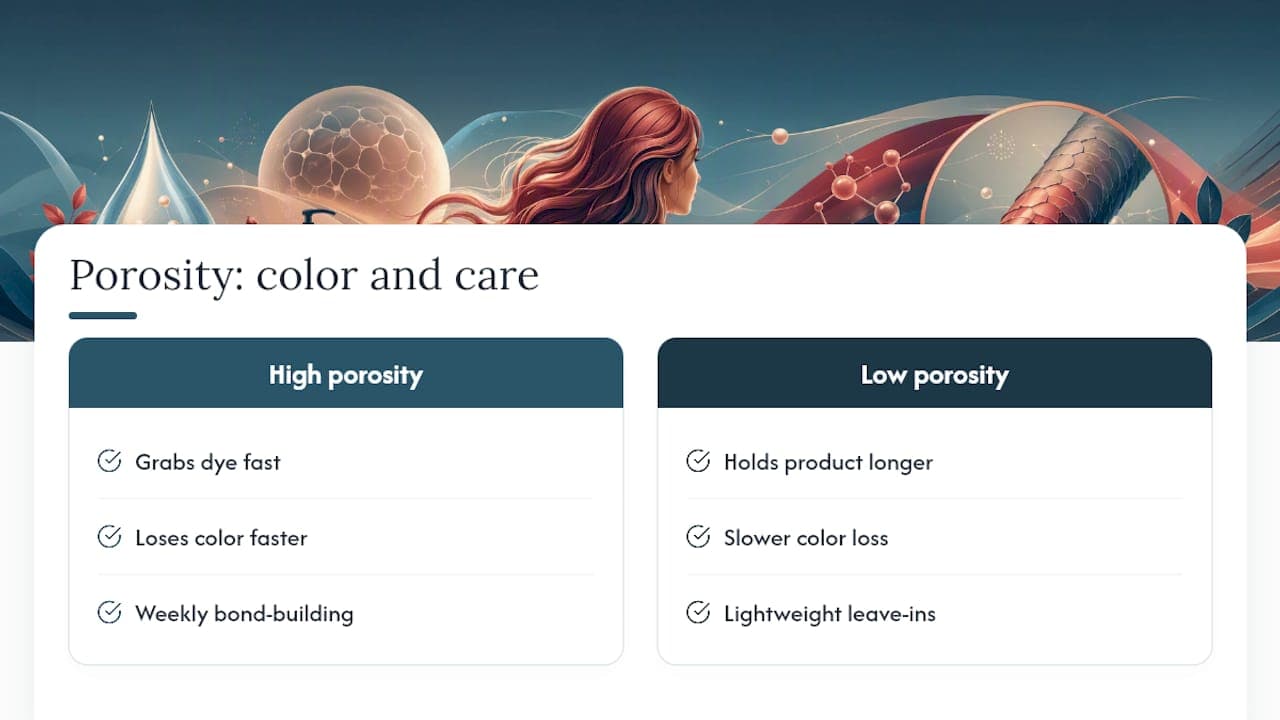
Porosity drives everything about how hair takes and loses color. High-porosity hair grabs dye fast but also bleeds it out faster, which usually calls for weekly bond-building treatments. Low-porosity hair holds onto product and benefits more from lightweight leave-ins than heavy oils. Some AI-powered hair analysis platforms read porosity and damage patterns directly, then adjust product and frequency recommendations instead of leaving you to guess which mask actually fits your strands. Explore the research behind these assessments to see how the analysis works.
A Realistic Take on Color Upkeep
Nobody sticks with a routine that demands perfection, so aim for the handful of habits that carry the most weight: wash less, block sun and chlorine, and do one weekly mask. Skip a day of heat protectant occasionally and your color survives; skip the weekly mask for a month and you'll notice. Prioritize accordingly, and if you want the routine tailored to your actual hair instead of a generic list, a scan through MyHair will tell you where to focus first.
— Cyriac
Get a Color-Care Routine Built Around Your Actual Hair
Guesswork is the biggest reason color-protection routines fail. What works for high-porosity, chemically processed hair can actively dry out low-porosity strands, and most people never find out which category they fall into until something goes wrong. An AI-powered scan can read hair's porosity, damage level, and current condition, then generate product and frequency recommendations built around what the hair is actually doing, not a generic wash schedule.
The scan takes a few minutes through the hair analysis tool, and setup walks you through onboarding step by step. If you're dealing with more advanced damage or want an in-person follow-up, MyHair also connects you to specialists through its clinic network. None of this replaces the basics in this guide. It just tells you which of those basics matter most for your specific hair. Run a scan and see where your routine actually needs adjusting.
Sources
- The Ultimate Guide to Caring for Color-Treated Hair — Vogue
- The 9 Best Shampoos for Color-Treated Hair of 2026, Tested — Byrdie
- Tips for Protecting Color-Treated Hair from Chlorine — USMS
- Best shampoo and conditioner for color-treated hair — Allure
- Colored hair care guide — Wella Professionals
FAQ
How Often Should I Wash Color-Treated Hair?
Two to three times a week is the range most colorists recommend limiting pigment loss while keeping hair clean.
How Long Should I Wait to Wash After Coloring?
Wait about 48 hours so color molecules can settle and the cuticle has time to close fully.
Do I Need a Swim Cap for Colored Hair?
A swim cap is the most reliable barrier against chlorine and salt water; pre-wetting hair and rinsing immediately after are strong backups when a cap isn't practical.
Can Purple Shampoo Be Used Every Day?
No. Purple and blue shampoos are meant for occasional use, typically weekly for blondes, since daily use can overcorrect tone and leave hair looking dull or purple-tinted.
Does Diet Affect How Long Hair Color Lasts?
Hair that's poorly hydrated or protein-deficient holds color less evenly, so adequate water and protein intake support the results of any topical routine.
How Can I Find Out What My Hair Actually Needs?
A porosity and damage scan through MyHair shows whether your hair needs more moisture, bond repair, or a lighter routine, rather than guessing from generic advice.