Blog
Learning Materials
Wet dandruff remedies: clear scalp, healthier hair fast
Updated: April 26, 2026
TL;DR:
- Wet dandruff is caused by excess oil, fungi, and disrupted scalp barrier, requiring targeted treatment.
- Effective management involves medicated shampoos with ketoconazole or selenium sulfide, applied with proper technique.
- Personalized, consistent treatment and scalp monitoring are crucial for lasting dandruff relief.
That oily, yellowish crust sitting at your hairline is not just a cosmetic annoyance. Wet dandruff clings to your scalp, weighs down your hair, and can quietly chip away at your confidence every single day. Unlike the dry, powdery flakes that drift off easily, wet dandruff stays put, fueled by excess oil, a disrupted scalp barrier, and an overgrowth of naturally occurring fungi. The good news is that clinical research now points to clear, specific remedies that can dramatically reduce flaking, itching, and grease within weeks. This guide walks you through every step, from understanding what you're dealing with to tracking your real results over time.
Table of Contents
- What is wet dandruff and why does it occur?
- Essentials for starting your wet dandruff remedy
- How to use medicated shampoos and scalp care steps
- Checking results and what to do if dandruff persists
- Why wet dandruff solutions demand a personalized approach
- Get expert, AI-powered support for stubborn dandruff
- Frequently asked questions
Key Takeaways
| Point | Details |
|---|---|
| Wet dandruff basics | Wet dandruff is best treated with medicated shampoos targeting scalp oil and fungus. |
| Essential care toolkit | Using proven shampoos, gentle scalp tools, and clean routines boosts remedy success. |
| Steps for results | Follow a step-by-step regimen and adjust frequency for best outcomes. |
| Know when to escalate | If standard treatments fail, consult a professional for advanced prescriptions. |
| Personalize for success | Adapting your remedy to your hair type and lifestyle improves long-term scalp health. |
What is wet dandruff and why does it occur?
Wet dandruff, sometimes called oily dandruff or seborrheic dermatitis, is characterized by thick, yellowish or white flakes that stick to the scalp and hair shafts rather than falling off. You might notice a greasy film on your scalp even a day after washing, along with redness, persistent itching, and that distinct musty odor that no amount of regular shampoo seems to fix. These flakes are essentially dead skin cells that have clumped together because excess sebum (your scalp's natural oil) acts like a glue.
The root cause of wet dandruff comes down to three interconnected factors. First, your sebaceous glands are producing more oil than your scalp needs. This excess sebum creates a warm, moist environment. Second, a naturally occurring yeast called Malassezia thrives in exactly that environment, feeding on fatty acids in sebum and releasing metabolites that irritate the scalp. Third, that irritation disrupts the scalp's skin barrier, causing the cells to turn over too rapidly and produce the clumped, greasy flakes you can see.
Wet dandruff vs. dry dandruff: key differences
| Feature | Wet dandruff | Dry dandruff |
|---|---|---|
| Flake texture | Thick, oily, yellowish | Fine, white, powdery |
| Adherence | Sticks to scalp/hair | Falls off easily |
| Scalp feel | Greasy, sometimes red | Tight, dry, itchy |
| Primary cause | Excess sebum, Malassezia | Dry scalp, dehydration |
| Best treatment | Antifungal, sebum-regulating shampoos | Hydrating, gentle cleansers |
Several factors can push your scalp into overdrive and trigger wet dandruff:
- Hormonal fluctuations that increase androgen levels, which in turn ramp up sebum production
- Chronic stress, which disrupts immune regulation and can worsen fungal overgrowth
- Infrequent or improper shampooing, allowing oil and Malassezia to accumulate
- Seasonal changes, particularly cold, dry weather that stresses the scalp barrier
- Certain skincare or hair products that leave heavy residues feeding fungal growth
Understanding this is critical because wet dandruff and dry dandruff need fundamentally different approaches. Applying a deeply moisturizing treatment to wet dandruff can worsen it by adding more oil to an already saturated environment. If you've been treating your flakes generically and seeing little improvement, this distinction matters. You can also learn more about how dandruff and hair loss causes are linked, because untreated seborrheic dermatitis can create scalp inflammation that contributes to temporary shedding over time.
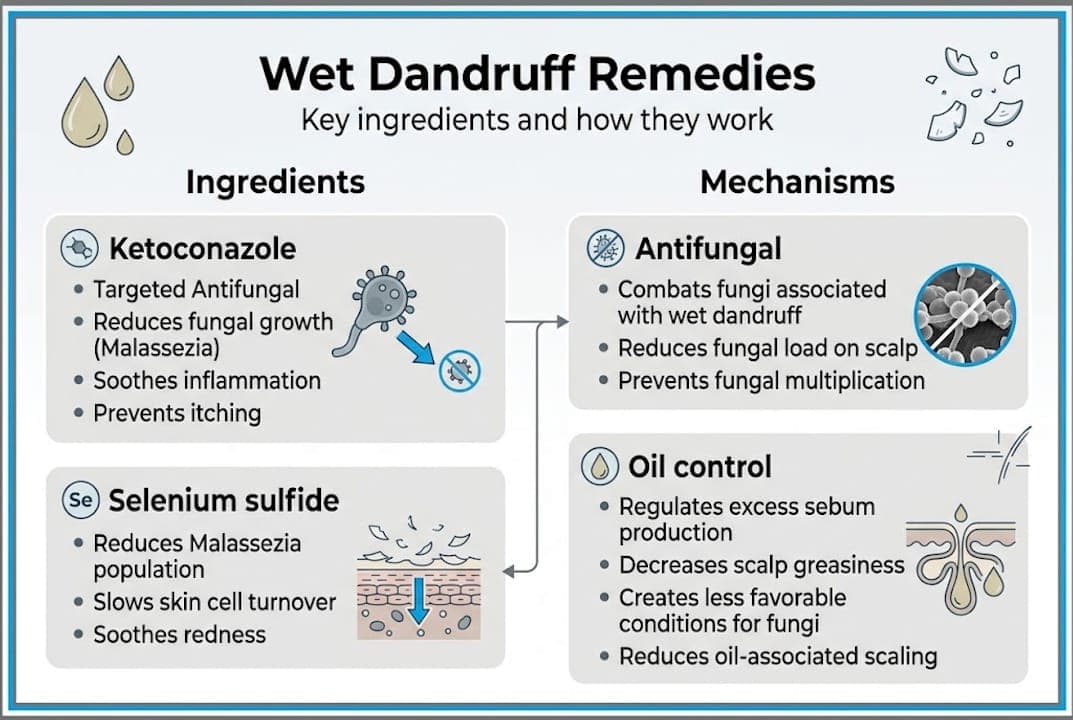
Knowing your specific type is the first, most important step. Research confirms that selenium sulfide shampoos reduce dandruff by 69 to 78%, making them highly effective specifically for the oily, fungal-driven pattern that defines wet dandruff. Generic anti-itch products, on the other hand, address only the symptom and leave the underlying cause untouched.
Now that you know what makes wet dandruff unique, let's gather the essentials and set up your at-home remedy routine.
Essentials for starting your wet dandruff remedy
Before you can see real improvement, you need the right tools in place. Walking into a pharmacy and grabbing any dandruff shampoo is rarely enough. Wet dandruff demands specific active ingredients that target fungal overgrowth and excess sebum simultaneously. Here is exactly what you need and why each item earns its spot on your shelf.
Your wet dandruff remedy checklist:
- Medicated shampoo with ketoconazole 2% or selenium sulfide 1 to 2.5% as the primary treatment
- A gentle, sulfate-free daily shampoo to use on non-medicated wash days
- A soft scalp brush or silicone massager for even product distribution and gentle exfoliation
- Clean, lint-free towels changed at least every two to three days to prevent bacterial reintroduction
- A lightweight, oil-free conditioner applied only to the mid-lengths and ends, never the scalp
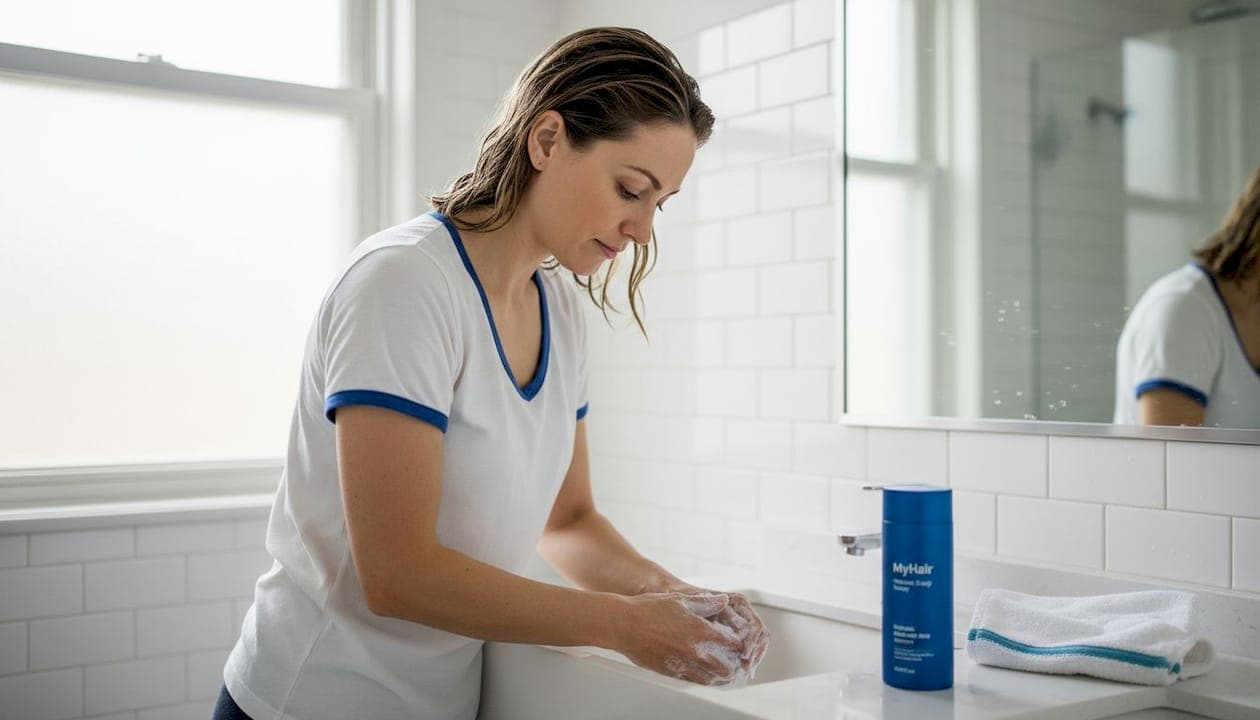
The medicated shampoo is your frontline weapon. Clinical trials show that ketoconazole 2% achieves 73 to 91% clinical response in randomized controlled trials for severe dandruff and seborrheic dermatitis, making it one of the most consistently powerful over-the-counter options available. Selenium sulfide works through a different mechanism, directly slowing down the rate at which skin cells replicate while also suppressing Malassezia activity. Both are legitimate first-line choices, and your decision may come down to how your scalp tolerates each one.
Comparing medicated shampoo ingredients
| Ingredient | Mechanism | Strength range | Best for |
|---|---|---|---|
| Ketoconazole | Antifungal (azole class) | 1% to 2% | Moderate to severe wet dandruff |
| Selenium sulfide | Antifungal + cytostatic | 1% to 2.5% | Oily scalp, thick flaking |
| Zinc pyrithione | Antimicrobial + antifungal | 0.25% to 2% | Mild dandruff, maintenance |
| Ciclopirox | Broad antifungal | 1% | Prescription-level resistant cases |
For guidance on picking the right product for your specific scalp type, reviewing tips for choosing dandruff shampoo can save you significant trial and error. A soft scalp brush matters more than most people realize. It ensures the medicated shampoo reaches the scalp surface evenly, dislodges buildup without scratching, and improves circulation in the process. You can also find hair care tips for hair growth that complement your dandruff routine and support overall scalp health simultaneously. For more advanced cases, exploring professional hair treatments can offer clinical-grade options beyond what OTC products provide.
Pro Tip: Alternate your medicated shampoo with a gentle, sulfate-free cleanser every other wash. This prevents scalp irritation from daily active ingredient exposure while maintaining a clean scalp environment between treatments.
With all your essentials ready, you're set to start the treatment routine. Let's walk through each step for the best results.
How to use medicated shampoos and scalp care steps
Most people use medicated shampoos incorrectly, which is the single biggest reason they don't see results. You might be applying too little product, rinsing too quickly, or using water that's too hot. Any one of these mistakes can undercut even the most clinically proven formula. Here is the correct, step-by-step approach.
- Rinse your hair thoroughly with lukewarm water. Hot water opens up sebaceous glands and can increase oil production after washing. Lukewarm water is enough to soften buildup.
- Apply a generous amount of medicated shampoo directly to your scalp, not just your hair. Focus on areas where flaking and redness are most concentrated: your crown, hairline, and behind the ears.
- Work the shampoo in using your fingertips in small, circular motions. Cover every section of your scalp methodically, spending at least 60 seconds on full coverage.
- Leave the shampoo on your scalp for 5 to 10 minutes. Set a timer. This contact time is what allows the active ingredients to penetrate and suppress fungal activity. Rinsing immediately after lathering wastes most of the product's potential.
- Rinse thoroughly with lukewarm water until no product remains. Residue left on the scalp can cause irritation and paradoxically worsen flaking.
- Repeat the application if the product label instructs it. Some formulas recommend a second lather for the first few uses.
- Apply a lightweight conditioner to mid-lengths and ends only. Avoid the scalp entirely, as heavy conditioning at the root can feed the oily environment that Malassezia thrives in.
For moderate dandruff, use your medicated shampoo three times per week. For severe cases with thick buildup and significant redness, daily use for the first two weeks may be appropriate before scaling back. Research shows that selenium sulfide shampoos reduce flaking by 69 to 78% with consistent use over a few weeks, but only when applied with adequate contact time.
Pro Tip: Use your fingertips, not your nails, when massaging shampoo into your scalp. Nails create tiny micro-injuries that can introduce bacteria and worsen inflammation, especially on an already-sensitized scalp.
Common mistakes that slow your progress include over-washing without giving active ingredients time to work, applying shampoo only to your hair lengths instead of the scalp, and using styling products with heavy oils or silicones between washes that create a barrier over the scalp. For a complete framework that connects your dandruff routine to a broader healthy practice, reviewing hair care routine steps can help you build a system that protects your hair from root to tip.
Safety warning: Keep all medicated shampoos away from your eyes and mucous membranes. If contact occurs, rinse immediately with large amounts of cool water. If irritation, burning, or unusual hair changes appear, stop use and consult a healthcare provider.
After completing your routine, it's important to know what results you can expect and when to consider stronger interventions.
Checking results and what to do if dandruff persists
Patience is part of the process, but you also need to know when patience has a limit. Most people using medicated shampoos correctly start seeing measurable changes within the first week. Here is a realistic timeline to track against.
Signs your treatment is working:
- Reduced scalp itching within 5 to 7 days of starting
- Noticeably less oily feeling at the scalp within 1 to 2 weeks
- Fewer visible flakes on clothing and in hair by the end of week 2
- Redness and irritation fading by weeks 3 to 4
- Hair feeling lighter and cleaner for longer between washes
Signs treatment may not be working:
- No change in itch or grease after 3 full weeks of consistent use
- Increased redness or a spreading rash
- Scalp soreness or burning that gets worse with each wash
- New flaking patterns or colors appearing
If you're not seeing improvement after four weeks of consistent use, it's time to pivot. You can try switching between ketoconazole and selenium sulfide, since some scalp microbiomes respond better to one than the other. You should also review your routine for the common mistakes described in the previous section.
Home treatment vs. clinical options
| Approach | Examples | Timeline | When to use |
|---|---|---|---|
| OTC medicated shampoo | Ketoconazole 2%, selenium sulfide | 2 to 4 weeks | First-line treatment |
| Prescription topical | Ciclopirox, topical steroids | 4 to 8 weeks | OTC treatment failure |
| Prescription systemic | Oral antifungals | 4 to 12 weeks | Severe, widespread SD |
| Emerging options | Roflumilast foam | 24 to 52 weeks | Treatment-resistant cases |
For cases that don't respond to over-the-counter options, clinical data points to prescription treatments for resistant seborrheic dermatitis including ciclopirox, short-term topical corticosteroids, and roflumilast foam, with 76 to 80% of patients achieving near-clear scalp after 24 weeks of consistent use. These are not last resorts to be feared. They are the next logical step when standard shampoos have been given a genuine chance and fallen short.
If you're dealing with persistent flaking on areas beyond the scalp, such as eyebrows, nose folds, or behind the ears, a dermatologist evaluation is particularly important. You can also explore dandruff solutions for stubborn cases and tips for healthy hair to build a more resilient scalp foundation while you pursue clinical options. For cases requiring professional intervention, reviewing advanced hair treatment options can also open doors to clinical-grade scalp therapies.
Why wet dandruff solutions demand a personalized approach
Here is something most dandruff articles won't tell you: the reason many people cycle through product after product without lasting relief is not that the products don't work. It's that they're applying a generic solution to a highly individual problem.
Your scalp microbiome, the ecosystem of bacteria and fungi living on your skin, is as unique as your fingerprint. Two people using the same ketoconazole shampoo with the same diligence can see completely different outcomes, and that's entirely expected. One person's scalp may have a more aggressive Malassezia strain, while another may have underlying hormonal fluctuations driving excess sebum that no shampoo alone can fully address.
The most effective approach treats your scalp as a living system that changes over time. What works in the winter may need adjustment in summer when heat and sweat shift your scalp's chemistry. What clears your dandruff at 25 may need revisiting at 35 when hormones shift again. Tracking how your scalp responds week by week, not just reacting when things get bad, is what separates people who find lasting relief from those stuck in endless cycles of flare and retreat. If one approach stalls, pivoting quickly to the next clinical option is not failure. It's intelligent iteration. Following natural hair treatment steps alongside medicated routines can also help maintain scalp balance between treatment cycles.
Get expert, AI-powered support for stubborn dandruff
Managing wet dandruff is far more effective when you have a clear picture of your scalp's actual condition, not just your best guess. That's exactly what MyHair.ai was built to provide.

With AI-powered hair analysis, you get a detailed, personalized assessment of your scalp health that tells you what's actually happening beneath the surface, not just what's visible. The platform analyzes your unique hair and scalp patterns, then delivers tailored product recommendations that adapt as your condition changes. You can also track your hair score over time to see real, measurable progress. Start your personalized journey today through hair analysis onboarding and stop guessing what your scalp actually needs.
Frequently asked questions
How often should I use medicated shampoo for wet dandruff?
Most people benefit from using medicated shampoo two to three times a week, but always follow the product label and adjust based on your scalp's response. Clinical trials on ketoconazole and selenium sulfide show strong results with this frequency when treatment contact time is respected.
Is there a difference between wet and dry dandruff treatment?
Yes, wet dandruff often requires medicated shampoos that target excess oil and fungi, while dry dandruff treatment focuses more on hydration and mild cleansers. Research confirms that selenium sulfide reduces oily dandruff by up to 78%, a mechanism that would not suit a dry, dehydrated scalp.
What should I do if nothing works for my wet dandruff?
If standard shampoos and routines don't help after four weeks, see a dermatologist who can prescribe advanced treatments. Prescription options for treatment-resistant cases include ciclopirox, topical steroids, and roflumilast foam, which achieves 76 to 80% clearance rates in clinical studies.
Can wet dandruff cause hair loss?
Wet dandruff does not directly cause permanent hair loss, but ongoing scalp inflammation can contribute to temporary shedding, especially if left untreated for months. Research confirms that dandruff can contribute to hair issues when the inflammatory cycle goes unchecked, making early treatment the smartest protective step.