Blog
Learning Materials
Dandruff Causes – How Scalp Health Suffers
Updated: December 22, 2025

Over half of all British adults will deal with dandruff at some point, yet few realize how many daily habits and biological factors contribute to this stubborn scalp issue. For many, those white flakes are more than a minor inconvenience, often impacting confidence and quality of life. This guide brings together the latest research and easy-to-understand insights about dandruff, why it happens, and how British people can address it effectively.
Table of Contents
- What Is Dandruff And Why It Occurs
- Types Of Dandruff And Key Differences
- Main Triggers Behind Dandruff Flare-Ups
- How Dandruff Affects Hair Growth
- Preventing And Managing Dandruff Effectively
Key Takeaways
| Point | Details |
|---|---|
| Dandruff Causes | Dandruff is primarily caused by factors such as Malassezia yeast, excessive sebum production, and individual scalp sensitivity. Understanding these factors is crucial for effective management. |
| Types of Dandruff | Dandruff is classified into three main types: Dry Scalp Dandruff, Oily Scalp Dandruff, and Seborrheic Dermatitis, each requiring specific treatment approaches. |
| Impact on Hair Growth | Dandruff can disrupt scalp health and impede hair growth due to inflammation and barrier function disruption. Early intervention is vital to maintain healthy hair. |
| Management Strategies | Effective dandruff management involves selecting targeted shampoos with active ingredients and incorporating lifestyle changes to reduce triggers and improve scalp health. |
What Is Dandruff And Why It Occurs
Dandruff is a common scalp condition characterised by white flakes of dead skin cells that visibly shed from the scalp area. While seemingly harmless, it represents a complex interplay of biological factors affecting skin health. Research from Harvard Medical School suggests dandruff occurs as a mild form of seborrheic dermatitis, primarily triggered by the presence of Malassezia yeast residing naturally on human scalps.
The development of dandruff involves multiple interconnected mechanisms. Malassezia fungi play a critical role by metabolising sebum, the natural oil produced by scalp sebaceous glands. During this process, these microorganisms generate free fatty acids that can provoke inflammatory responses, leading to increased skin cell turnover and noticeable flaking. Scientific studies from PubMed confirm that individual susceptibility varies significantly, meaning some people are more prone to experiencing dandruff than others.
Key factors contributing to dandruff include:
- Excessive sebum production
- Presence of Malassezia fungus
- Individual scalp sensitivity
- Hormonal changes
- Stress levels
- Dietary habits
- Genetic predisposition
Pro Tip for Scalp Management: Regular scalp hygiene and using targeted antifungal shampoos can help manage dandruff by reducing Malassezia population and controlling skin cell shedding.
Types Of Dandruff And Key Differences
Dandruff presents in multiple variations, each with distinct characteristics and underlying mechanisms. According to Harvard Medical School research, these variations range from mild flaking to more complex scalp conditions that require targeted treatment approaches.
The primary types of dandruff include:
- Dry Scalp Dandruff
- Characterised by small, white flakes
- Caused by skin dehydration
- Often accompanied by itching and skin tightness
- Typically responsive to moisturising treatments
- Oily Scalp Dandruff
- Larger, more yellowish flakes
- Associated with excessive sebum production
- Linked to Malassezia fungus proliferation
- More challenging to manage
- Seborrheic Dermatitis Variant Research from medical sources indicates this represents the most severe form of dandruff, featuring greasy, yellowish scales with potential underlying skin inflammation. Unlike mild dandruff, this condition presents with noticeable redness and can spread beyond the scalp to areas like eyebrows and facial regions.
Each dandruff type requires a nuanced approach, recognising that scalp health is not a one-size-fits-all scenario. Understanding these distinctions helps individuals select more targeted treatment strategies.
Here’s a comparison of the main types of dandruff and their distinguishing features:
| Dandruff Type | Flake Appearance | Typical Triggers | Treatment Focus |
|---|---|---|---|
| Dry Scalp Dandruff | Small, white, powdery | Skin dehydration, cold air | Moisturising, gentle care |
| Oily Scalp Dandruff | Large, yellowish, oily | Excess sebum, fungus growth | Sebum control, antifungals |
| Seborrheic Dermatitis Type | Greasy, thick, yellow | Inflammation, fungus, stress | Medical scalp treatments |
Pro Tip for Dandruff Management: Conduct a thorough scalp assessment to identify your specific dandruff type before selecting treatment, as misdiagnosis can lead to ineffective management.
Main Triggers Behind Dandruff Flare-Ups
Dandruff represents a complex scalp condition influenced by multiple environmental and physiological factors. Research from medical sources reveals that certain triggers can significantly disrupt the delicate balance of scalp health, leading to increased flaking and irritation.
The primary triggers behind dandruff flare-ups include:
-
Stress and Hormonal Changes
- Elevated stress levels compromise immune response
- Hormonal fluctuations increase sebum production
- Weakens natural scalp microbiome defences
-
Environmental Factors
- Cold and dry climates
- Extreme temperature variations
- Low humidity conditions
- Excessive exposure to harsh environmental elements
-
Microbial Interactions Scientific studies from PubMed highlight the critical role of Malassezia fungi in dandruff development. These microorganisms thrive on sebum, metabolising skin oils and potentially triggering inflammatory responses that accelerate skin cell turnover.
Individuals with certain genetic predispositions, compromised immune systems, or specific skin conditions may experience more frequent and severe dandruff episodes. Understanding these triggers enables more targeted and effective management strategies.

Pro Tip for Trigger Management: Monitor your personal stress levels, dietary habits, and environmental exposures, as these can collectively influence the frequency and severity of your dandruff flare-ups.
How Dandruff Affects Hair Growth
Scalp health directly influences hair growth, with dandruff emerging as a significant disruptive factor. Research from PubMed reveals that dandruff fundamentally compromises the scalp's protective barrier, creating an environment that can impede healthy hair development.
The primary mechanisms by which dandruff negatively impacts hair growth include:
-
Barrier Function Disruption
- Decreased intercellular lipid levels
- Increased transepidermal water loss
- Compromised stratum corneum integrity
- Reduced natural scalp protection
-
Inflammatory Response
- Chronic scalp inflammation
- Increased oxidative stress
- Potential disruption of hair follicle cycles
- Acceleration of potential hair thinning processes
Scientific investigations demonstrate that persistent dandruff can create a cascade of physiological responses that potentially interrupt normal hair growth cycles. The persistent inflammation and compromised scalp environment can lead to weakened hair roots, reduced hair shaft quality, and potentially accelerated hair loss.
Individuals experiencing prolonged dandruff should recognize these potential consequences and seek comprehensive scalp management strategies to mitigate long-term hair health risks.
Pro Tip for Hair Protection: Address dandruff early and comprehensively, understanding that scalp health is fundamental to maintaining robust and healthy hair growth.
Preventing And Managing Dandruff Effectively
Dandruff management requires a comprehensive and systematic approach targeting multiple aspects of scalp health. Research from Harvard Medical School highlights the importance of selecting targeted treatments that address the underlying causes of scalp irritation and flaking.
Effective prevention and management strategies include:
- Targeted Shampoo Selection Choose anti-dandruff shampoos containing active ingredients such as:
- Selenium sulfide
- Zinc pyrithione
- Ketoconazole
- Salicylic acid
- Coal tar
- Application Techniques
- Leave shampoo on scalp for 3-5 minutes before rinsing
- Massage thoroughly to ensure complete coverage
- Use lukewarm water to prevent scalp irritation
- Rinse completely to avoid product buildup
Scientific investigations from medical research demonstrate that consistent and proper application of medicated shampoos can significantly reduce Malassezia yeast populations, thereby minimising dandruff progression. Regular treatment interrupts the cycle of scalp inflammation and skin cell overproduction.
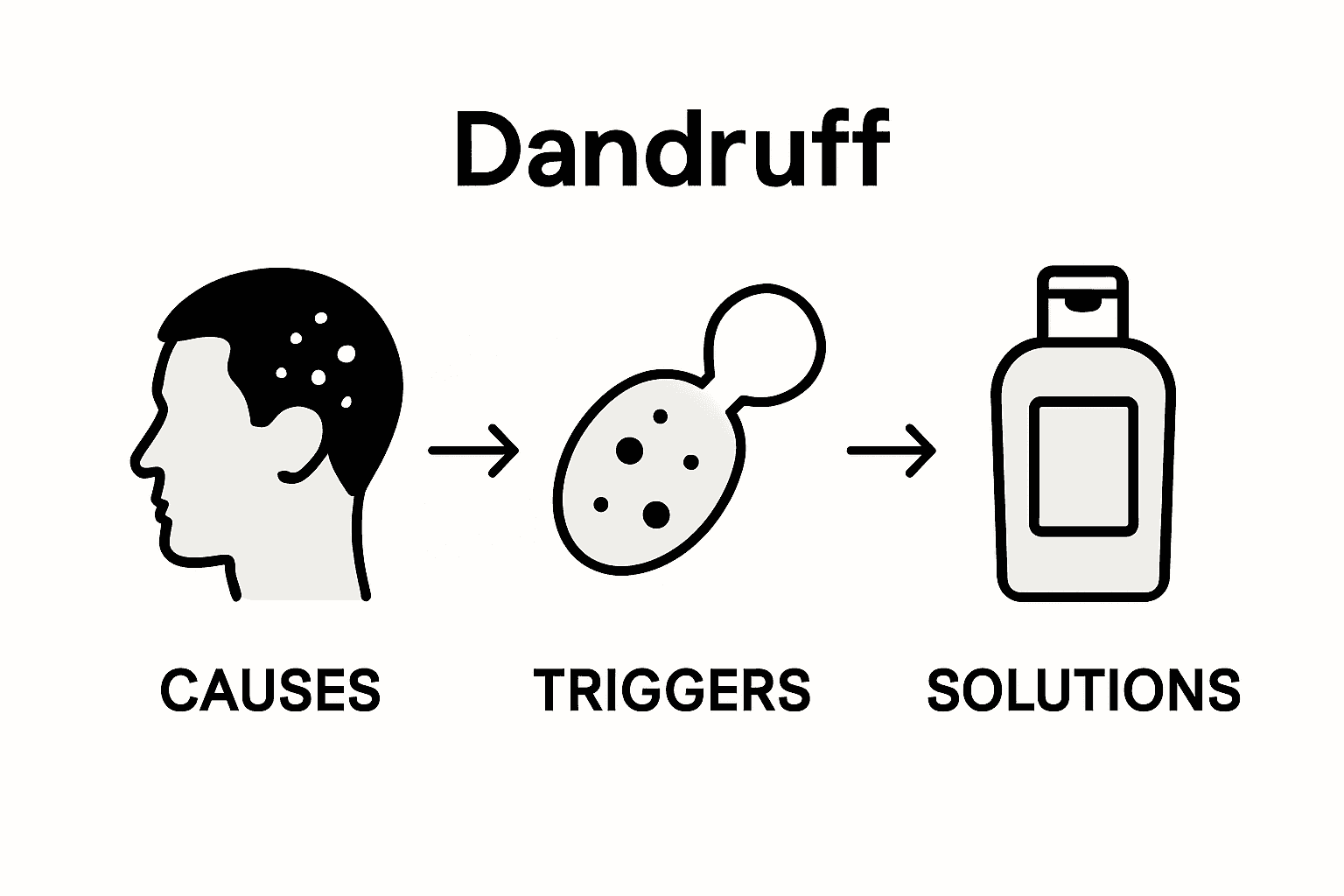
Additional management strategies involve addressing lifestyle factors such as stress reduction, maintaining a balanced diet, and avoiding harsh hair products that can exacerbate scalp conditions.
For quick reference, here’s how common anti-dandruff shampoo ingredients target underlying causes:
| Ingredient | Primary Role | Best for Scalp Condition |
|---|---|---|
| Zinc Pyrithione | Fungal and bacteria control | Mild to moderate flaking |
| Ketoconazole | Strong antifungal action | Stubborn dandruff, inflammation |
| Salicylic Acid | Exfoliates dead skin | Thick scales, oily scalp |
| Selenium Sulphide | Slows skin cell turnover | Greasy flakes, fungal issues |
| Coal Tar | Reduces cell production | Chronic, severe scaling |
Pro Tip for Dandruff Control: Rotate between two different anti-dandruff shampoos to prevent fungal resistance and maintain maximum treatment effectiveness.
Take Control of Your Scalp Health and Hair Growth Today
Dandruff can be more than just an embarrassing nuisance. As this article highlights, issues like Malassezia yeast overgrowth, scalp inflammation and disrupted barrier functions deeply affect hair growth and overall scalp wellness. If you are struggling with persistent flaking, irritation or worries about hair thinning, personalised insights are essential to managing your scalp effectively. MyHair.ai offers advanced AI-based hair health analysis that enables you to understand your unique scalp condition and dandruff triggers with precision.
Discover how customised growth projections and tailored product recommendations from MyHair.ai can help restore your scalp balance and protect your hair follicles. Take the first step now by visiting MyHair.ai to upload your hair scan and start tracking improvements with expert guidance. Empower yourself with knowledge and targeted solutions before dandruff affects your hair growth further. Learn more about AI-based hair health analysis and let personalised care take your scalp health to the next level.
Frequently Asked Questions
What causes dandruff on the scalp?
Dandruff is primarily caused by the overproduction of sebum, the presence of Malassezia yeast, and individual scalp sensitivity. Factors like hormonal changes, stress, and poor dietary habits can also contribute to its development.
How can I manage dandruff effectively?
Effective dandruff management includes using targeted anti-dandruff shampoos containing ingredients like zinc pyrithione, ketoconazole, or salicylic acid. Regular scalp hygiene and therapeutic applications can help reduce flaking and irritation.
What are the different types of dandruff and their characteristics?
Dandruff primarily presents as dry scalp dandruff, oily scalp dandruff, and seborrheic dermatitis. Each type has distinct features, with dry dandruff appearing as small white flakes, oily dandruff as larger yellowish flakes, and seborrheic dermatitis as greasy scales often accompanied by inflammation.
Can dandruff affect hair growth?
Yes, dandruff can negatively impact hair growth by disrupting the scalp's protective barrier and causing chronic inflammation, which may weaken hair follicles and lead to hair thinning or loss.